Why Does My Room Feel Cramped? (5 Fixes, Keep Everything)
Why your room feels cramped: too little open floor, not too few square feet. See the 5 layout fixes, from a 30 inch path to a bigger rug, nothing tossed.
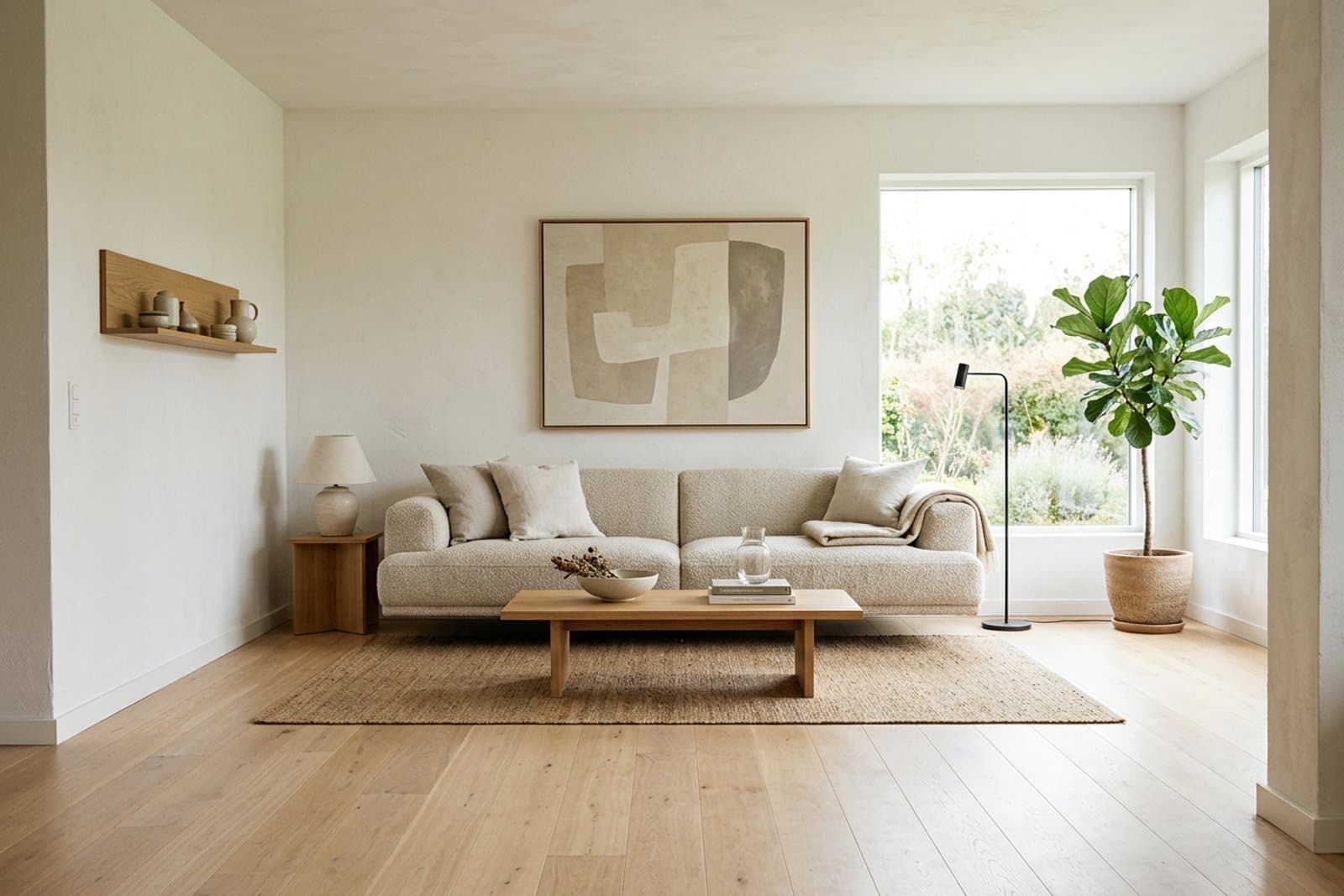
Your room feels cramped because it shows too little open floor, not because it has too few square feet. When furniture lines every wall, the path from the door to the window is blocked, and no patch of floor or wall is left empty, a normal sized room reads as tight and closed in.
The fix is rarely tossing things. Pull two large pieces off the walls, clear a path at least 30 inches wide from the door to the window, and leave one surface and one patch of floor empty. Cramped is a layout problem, not a space problem.
This is for the room that measures fine and still feels wrong in a way you cannot name. If your space is genuinely tiny, the studio zoning guide comes first. If the ceiling is what presses down on you, start with making a low ceiling feel taller instead.
What does a cramped room mean, and how is it different from cluttered or stuffy?
A cramped room feels too small for the life you live in it, even though the floor plan is fine. The cause is layout: furniture crowding the walking area and walls closing in at eye level. Cluttered is about too many objects, stuffy is about air, and dark is about light, and each has a different first fix.
People use these words loosely, so it helps to name the one you feel before you move anything. If the room feels tight when you walk through it, that is cramped, and this guide is the right place. If it feels busy even after you clean, that is a room that feels cluttered when it is clean. If it feels close and airless, the cause is ventilation, which the stuffy room guide covers. If it looks styled but lifeless, it is flat, and if the corners disappear, it is dark.
| What you feel | What is usually wrong | First move |
|---|---|---|
| Tight, hard to move through | Furniture eating the walkable floor | Float two pieces, clear a 30 inch path |
| Busy even when clean | Too many visible objects | Cut the object count |
| Close, airless | Not enough fresh air | Open a window, check ventilation |
| Styled but lifeless | No depth or layering | Vary heights and light |
| Gloomy corners | Not enough light reaching the walls | Layer lamps, lighten the walls |
Why does my room feel cramped when it isn't small?
The eye does not measure a room with a tape. It reads how much floor it can see open and walkable, and how close the nearest boundaries sit. Two rooms of the same size can feel very different: the one with a clear run of floor to the far window reads as larger.
That is close to what the research found. In experiments published in the journal Environment and Behavior, researcher Arthur Stamps reported that perceived spaciousness was most strongly tied to the area a person could walk across, and that boundaries matter most for a feeling of enclosure when they are closest to the viewer. Furniture is a boundary. Push enough of it into the walking area and the room shrinks, whatever the floor plan says.
Three things usually cause it, and they tend to show up together:
- Furniture pushed flat against all four walls, so the room reads as a solid perimeter with a hole in the middle.
- A blocked sight line to the window or the far corner, so the eye never reaches the deepest point in the room.
- No empty space at eye level, so every wall and surface competes for attention at once.
Negative space is what the eye reads as room. Take it away and the square footage stops mattering.
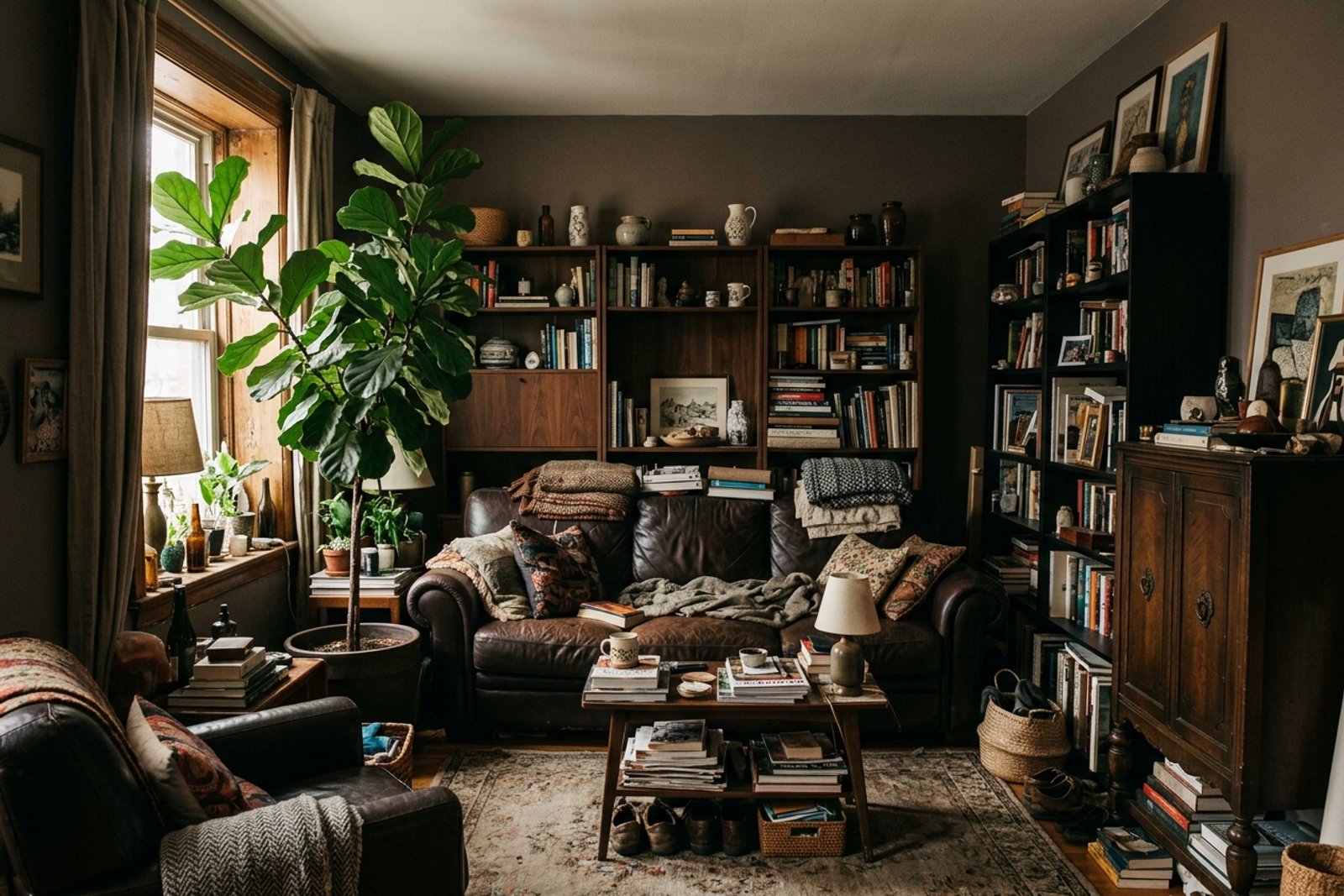
Is my furniture too big, or just in the wrong place?
Usually it is placement, not size. A sofa that fits the wall can still crowd a room if it boxes in the walking path. Scale matters, but placement matters more, and placement is free to fix. In a living room the fixed features usually decide it, which is why a TV and fireplace set the layout before the furniture does.
Visual weight is the quieter culprit. Five small pieces read busier than one large anchor, because the eye has to stop and account for each one. Most cramped rooms hold too many small things, and the one oversized piece people blame is rarely the problem. For a quick scale check, use the two thirds rule: a sofa about two thirds the length of its wall, a coffee table about two thirds the length of the sofa.
Do this before you consider replacing anything:
- Count the pieces of furniture touching the walls. If it is most of them, placement is your problem.
- Float the two largest pieces a few inches off the wall so the room gets a middle instead of a hollow center. The living room layout mistakes guide covers the rest of the arrangement.
- Replace three small competing pieces with one that anchors the space. One large piece calms a room; three small ones just argue.
How do I clear the sight lines that make a room feel closed in?
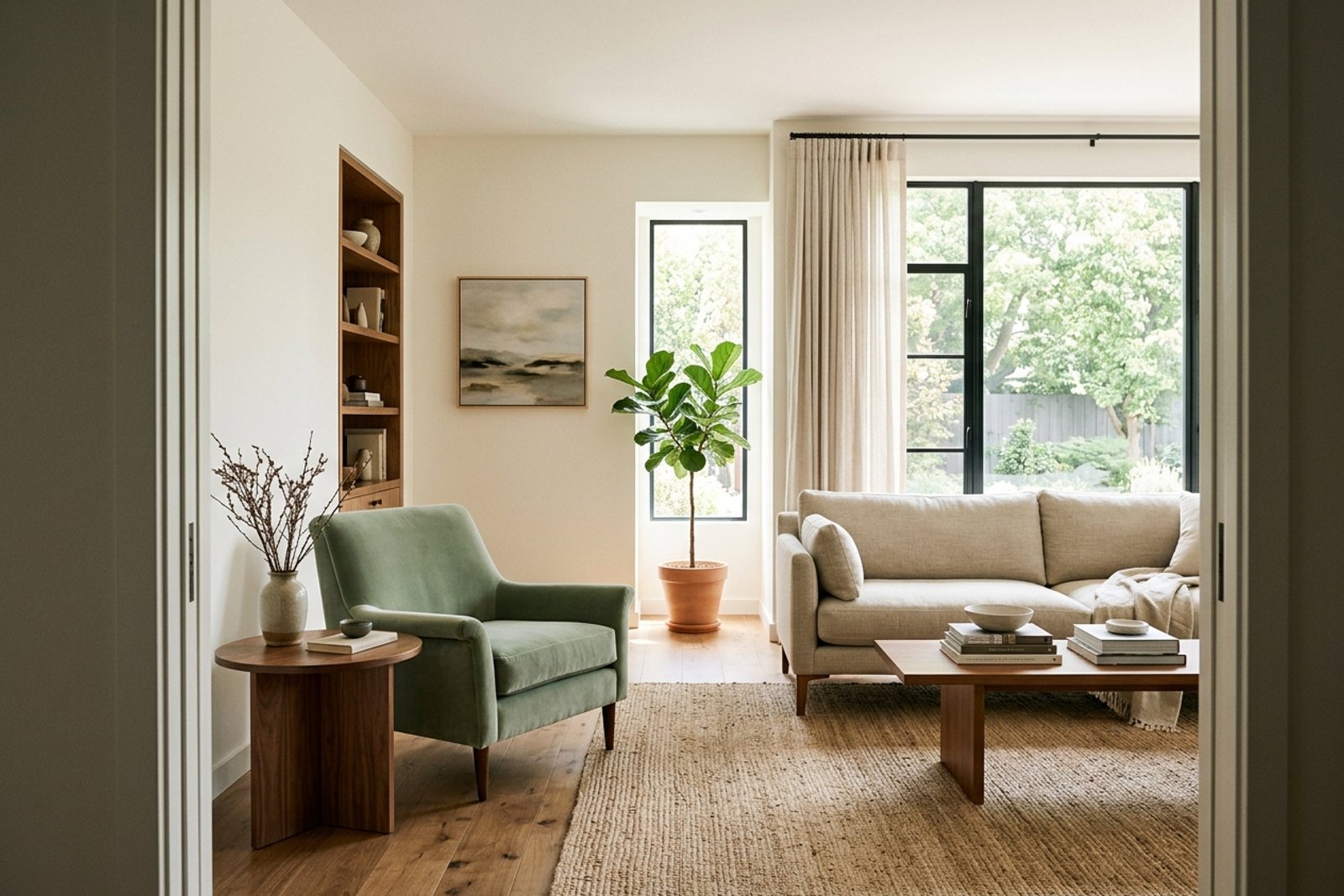
Protect the diagonal. The longest line of sight in most rooms runs from the doorway to the opposite window or far corner, and it shows you the most floor at once. Keep that line open and the room reads as one space. Block it with a shelf or a chair back and the room seems to end there.
This takes about five minutes and costs nothing:
- Stand in the doorway and find the farthest point you can see, usually a window or a far corner.
- Move anything interrupting that line: a tall plant, a high chair back, an open bookshelf used as a divider.
- Keep one clear walking path at least 30 inches wide running from the door through the room. Many designers use 30 to 36 inches for main walkways, and the 2010 ADA Standards for Accessible Design set 36 inches as the minimum clear width for an accessible route, so treat 30 inches as the floor and 36 as the comfortable target.
A room where you can see all the way to the window from the door will feel larger than a room the same size that makes your eye stop three feet in. If the room also feels close and airless once the path is clear, that part is about air, not layout, and opening the window you just uncovered is the first test.
Does a small rug make a room feel cramped?
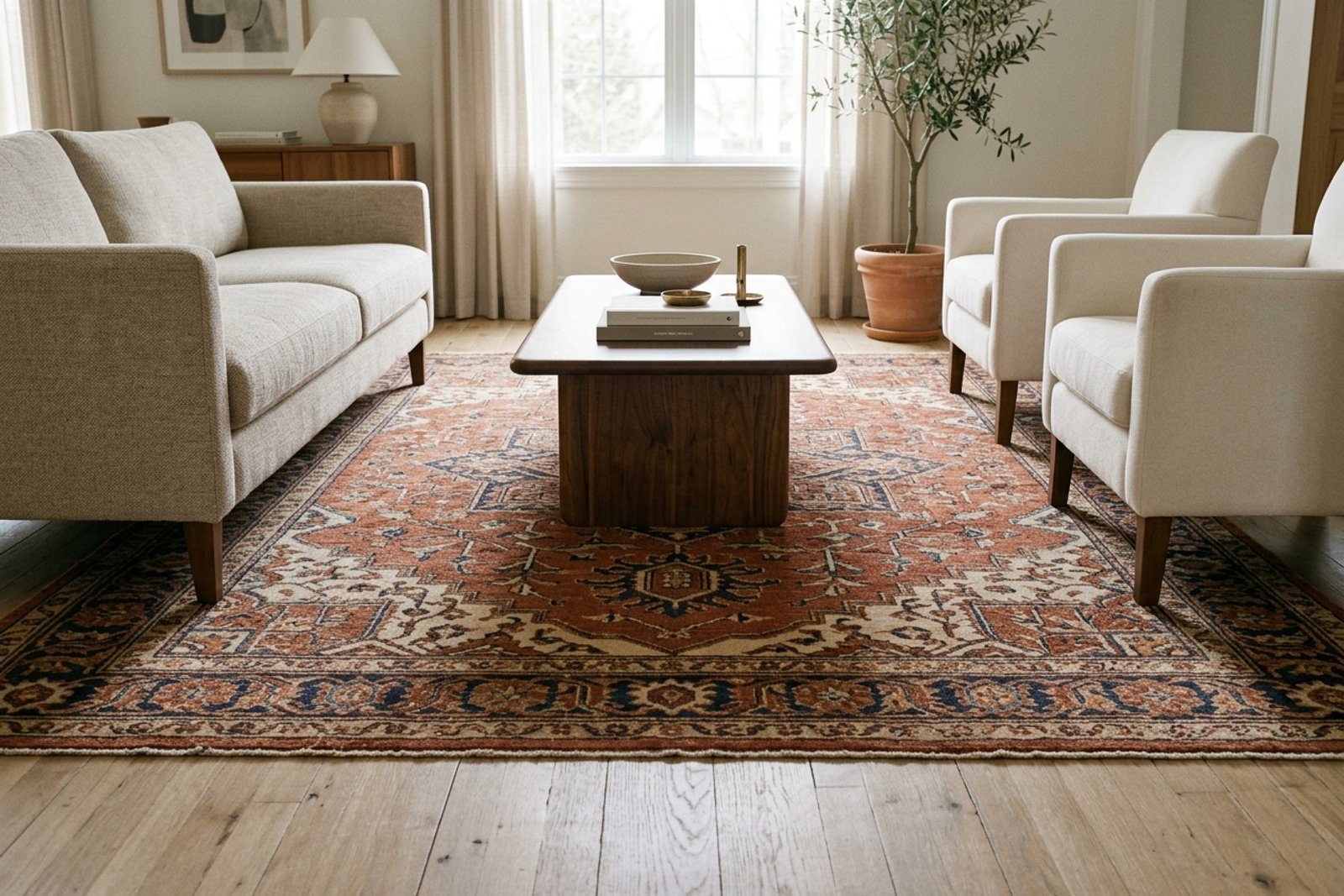
More than most people expect. A rug that floats in the center with the furniture sitting off it chops the floor into a small island, and the eye reads that island as the room's real size. A rug that is too small can shrink a room more than an extra piece of furniture does.
The fix is to let the rug tie the seating into one floor plane instead of cutting a hole in it:
- Put the front legs of the sofa and the chairs on the rug, not floating beside it.
- Size up. Most living rooms want an 8 by 10 or a 9 by 12; a 5 by 7 marooned in the center is the classic mistake.
- Leave a band of bare floor around the rug, commonly 12 to 18 inches to the walls in a standard living room, so the room reads as bigger than the rug.
One connected floor plane tells the eye the room is one space. A tiny rug tells it the room is only as big as the island.
Why does my room still feel cramped after I declutter?
Because decluttering clears the horizontal surfaces, and cramped is often a vertical problem. You clear the counters and the coffee table, but the pressure sits at standing eye level, roughly between your shoulders and the top of your head. Busy walls, dark heavy pieces, and a band packed with stuff keep a clean room feeling tight.
The surfaces are clear; the eye level band is not. Ease the pressure where the eye looks:
- Leave one wall, or one large patch above eye level, deliberately empty. Gallery walls that run edge to edge close a room in.
- Lighten the heaviest thing at eye level. Swap dark closed storage for open or paler pieces so the wall does not read as a solid mass.
- Use pale walls so the boundary seems to sit farther back. A soft white like Benjamin Moore White Dove (OC-17, LRV 83.16) lifts the walls without going stark, and Benjamin Moore Simply White (OC-117, LRV 89.52) is the brighter, crisper option if White Dove looks too soft in your light.
Does lighting make a room feel cramped?
It can, when one overhead fixture is the only light. A single ceiling light leaves the corners and the far wall dim, and a boundary you cannot see clearly seems closer than it is. Lighting the edges of the room pushes them back.
You do not need a lighting plan for this, just light at the boundaries:
- Put a table lamp or floor lamp in the far corner from the door, so the deepest point in the room is the brightest one after dark.
- Add a second lamp beside the seat you actually use, and leave the overhead off in the evening.
- Keep the bulbs warm white at 2700K, such as a Philips Hue White A19 (E26, 2700K, dimmable), and avoid mixing in a cooler 4000K bulb.
The dark room guide goes further on layering lamps and choosing wall colors by light reflectance.
The fixes compound, or they don't work
No single move fixes a cramped room. Floating the sofa without clearing the sight line just moves the wall of furniture six inches inward. Sizing up the rug without lightening the eye level band leaves the room feeling heavy on a bigger floor. Lightening the walls and then lighting them with one harsh ceiling fixture hands back the gloom you just paid to remove. Open rooms are usually doing all five things at the same time, and nobody notices any of them individually.
Which of the five is yours, though, is the part that resists a checklist. A room hands you one symptom and four suspects. Work down the list in order and stop at the first move that changes how the room feels when you walk in. That is the one. Archie will name it from a photo if you would rather not guess.
Cramped room FAQ
What is the 2/3 rule for living rooms?
Pick a sofa about two thirds the length of the wall it sits against, and a coffee table about two thirds the length of the sofa. Keeping the big pieces in that proportion stops any one of them from crowding the wall or the walking path, which is half of why a room reads as cramped.
Is a cramped room the same as a cluttered room?
No. Cluttered means too many visible objects; cramped means too little open, walkable floor. A cluttered room can feel roomy once you clear it, while a cramped room can be spotless and still feel tight, because the furniture itself is in the way. Fix clutter by removing things and fix cramped by moving them.
How do I make a small room look bigger with paint?
Paint the walls a pale color with a high light reflectance value (LRV), then carry a similar tone onto the trim so the eye does not stop at a strong contrast line. A soft white like Benjamin Moore White Dove (OC-17) pushes the visual boundary back. Skip a dark accent wall, which pulls that surface forward and closes the room in.
How do I make a room feel less claustrophobic?
Open the longest diagonal first. Stand in the doorway and clear everything blocking the line to the farthest window or corner, so you can see the most open floor at once. Then float the largest pieces a few inches off the walls and leave one surface bare. Claustrophobic usually means the eye has nowhere to travel, not that the room is genuinely small.
The Noticer
For thoughtful people who notice spaces.
What did you notice?
Did something in this story make you see your own space differently?
Ask Archie why your room feels cramped
Send Archie a photo of the room that feels tight. Archie names the specific reason it reads as cramped, whether that is the wall hugging furniture, the blocked sight line, the undersized rug, or the busy eye level band, and returns the one move that opens it up the most.
Diagnose my room with ArchieAdvertisement. Archie is made by STUDIO DID IT, the studio that publishes Spatia.
Related Articles
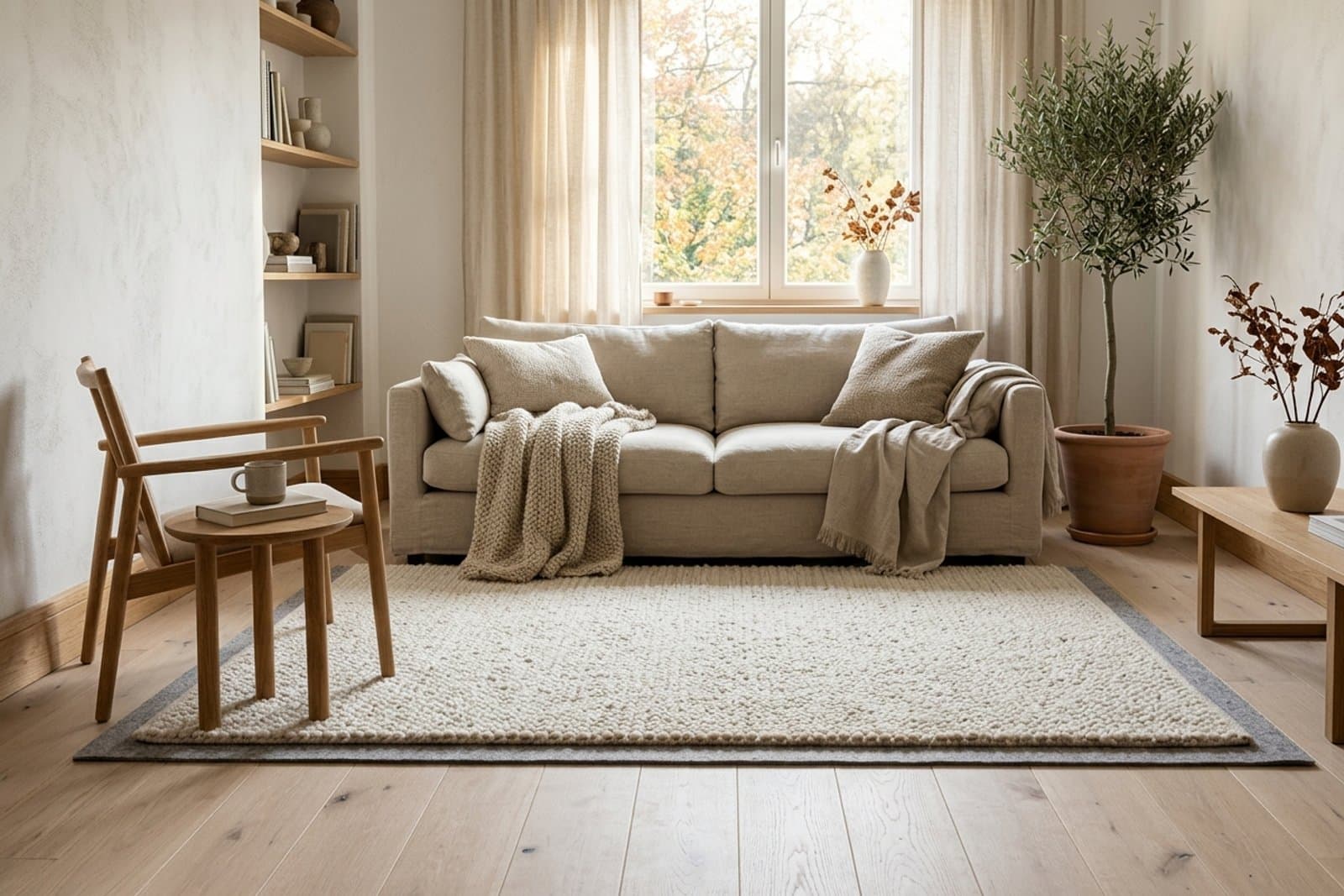
Cold Floors in an Apartment: What a Rug Actually Fixes
Cold floors in an apartment are a surface problem, not a thermostat problem. See the tested R values, and why the pad under the rug does most of the work.
Why Does My Room Feel Stuffy? (5 Real Causes)
Stuffy air comes down to stale air, trapped moisture, and no exchange path, and temperature barely enters into it. See the 5 causes and the 5 minute winter fix.
How to Ventilate a Bathroom Without a Window (6 Ways)
See how to ventilate a bathroom without a window: size the fan at 1 CFM per square foot, duct it outdoors, and run it 20 minutes after every shower.