How to Make a Low Ceiling Room Feel Taller
A low ceiling room feels taller when the eye has fewer horizontal stops. Hang curtains high, keep furniture low, and light the walls before you renovate.
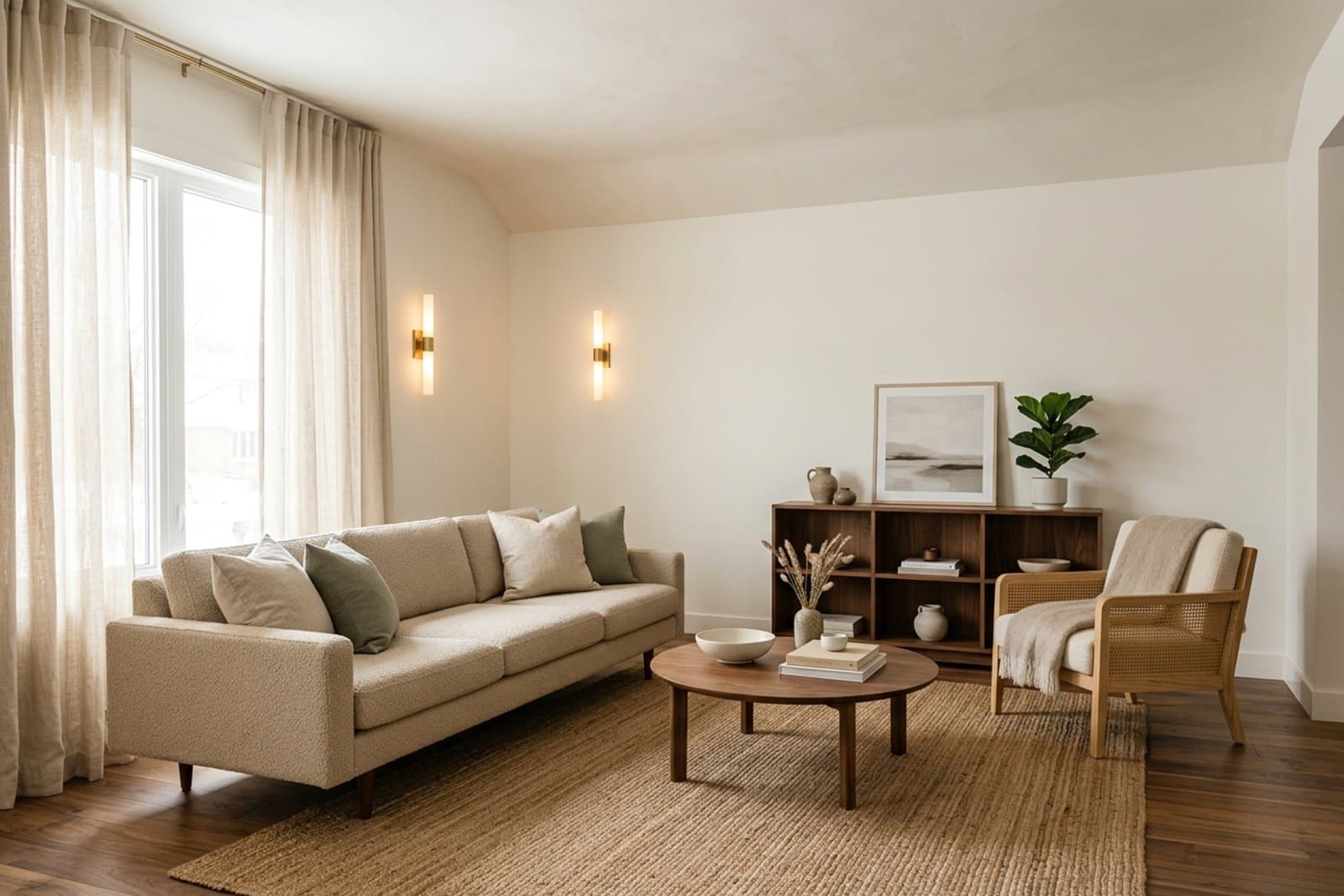
To make a low ceiling room feel taller, reduce the number of horizontal lines the eye has to cross. Hang curtains within 2 to 4 inches of the ceiling, choose lower furniture, use vertical lighting, keep wall and ceiling colors close, and leave a clean strip of visible wall above major pieces. The room does not need to be white or empty. It needs one clear upward path through the room.
Start with the largest visual cuts: curtain rods too low, tall bookcases stopping below the ceiling, dark ceiling paint, bulky sofas, and one overhead light that flattens the room. Fix those first, then add vertical details such as tall lamps, narrow art, and floor to ceiling panels. In most 8 foot rooms, those changes matter more than buying smaller decor because they change how the whole wall is read.
This guide is for rooms that feel pressed down, especially apartments, basements, older homes, and small living rooms. If the room is also dim, pair it with why your room feels dark and where to put lamps in a dark room. If the room feels crowded too, start with why your room feels cramped.
Why does a low ceiling make a room feel smaller?
Because the eye reads the top boundary too quickly. When the ceiling line, curtain rod, sofa back, bookcase top, and picture rail all sit at different heights, the room feels chopped into layers. Each line says "stop here." For context, the International Residential Code sets a 7 foot minimum ceiling height for habitable rooms, so many basements and older homes sit right at that 7 to 8 foot floor and feel it the most.
You can make the ceiling feel taller without changing the actual height by making those stops quieter. The best rooms with 8 foot ceilings do not hide the ceiling. They guide the eye up to it smoothly, with fewer breaks on the way.

Should curtains go to the ceiling in a low room?
Yes, and closer than most people hang them. Mounting the rod 2 to 4 inches below the ceiling, or just under crown molding, makes the window read taller than it is. The panel should reach the floor so the line feels continuous.
Avoid rods mounted right above the window frame. That creates a short dark cap above the glass and makes the wall feel squat. Use simple panels in linen, cotton, or a matte blend. Heavy puddled fabric can drag the eye down, especially in a small room.
Use this quick curtain check:
- Rod close to the ceiling, not close to the frame.
- Panels resting on the floor or barely kissing it.
- Fabric similar in tone to the wall.
- Hardware slim enough not to become the main line.
What furniture makes a low ceiling room feel taller?
Lower furniture usually helps more than smaller furniture. A low sofa, open leg chair, slim coffee table, and console under 32 inches leave more wall visible above the main pieces. That open wall is what gives the ceiling breathing room.
Do not fill every vertical inch with storage unless the piece reaches the ceiling cleanly. A bookcase that stops 18 inches short can make the ceiling feel lower because it creates another top line. Either go low and horizontal with art above it, or go full height and make the cabinet look intentional.

What paint colors help a low ceiling feel higher?
The safest paint move is low contrast between the walls and ceiling. A bright white ceiling over dark walls can work in a tall room, but in a low room it often draws a hard lid. Instead, use a ceiling color one shade lighter than the walls, or carry the same warm white across both.
Look for colors with enough light reflectance to keep the upper wall from going heavy. Warm whites, soft greiges, pale taupes, and muted clay tones can all work. A soft warm white such as Benjamin Moore White Dove OC-17 carries across the wall and ceiling without drawing a hard line, which is exactly what a low room wants. If the room is north facing or shaded, check our north facing room paint guide before choosing a cool gray.
Where should lighting go in a room with low ceilings?
Up the wall, not only into the center of the floor. A single flush mount often makes a low room feel flatter because it creates one bright spot overhead and shadowed edges around it.
Use at least three sources:
- A ceiling fixture that sits tight and diffuses softly.
- A tall floor lamp that throws light upward or across the wall.
- A table lamp or wall sconce near the darkest corner.
Wall washing matters here. When the upper wall is lit, the ceiling feels less like a lid. This is the same reason layered lamps help a dark room: the corners stop disappearing.

Does vertical art really make a ceiling feel higher?
It helps when the rest of the room is already pointing up. A tall narrow frame, a stacked pair of prints, a slim mirror, or vertical paneling gives the eye an upward route. That route works best when nearby furniture stays low.
Scale matters. One tall piece is usually better than a busy gallery wall with many small frames. Keep the top of the art closer to the ceiling than feels normal, but leave enough margin that it looks deliberate rather than squeezed.
What mistakes make a low ceiling look even lower?
The fastest way to lower a room visually is to stack horizontal breaks. Low curtain rods, high contrast trim, chunky crown molding, tall furniture that almost reaches the ceiling, and dark overhead fixtures all pull attention to the ceiling line.
Watch for these common mistakes:
- Painting the ceiling stark white against saturated walls.
- Using a deep drum pendant that hangs too low.
- Choosing a high back sofa in a short room.
- Stopping bookcases just below the ceiling.
- Hanging art at one perfectly even mid wall line around the room.
None of these are disasters alone. Together, they make the room feel capped.
Here is the same idea as a quick swap:
| Lifts the eye | Caps the room |
|---|---|
| Curtains mounted near the ceiling | Rods set just above the window frame |
| Low sofa with open legs | High back sofa in a short room |
| Wall and ceiling close in tone | Stark white ceiling over dark walls |
| One tall vertical artwork | A grid of small frames at mid wall |
| Floor lamp washing the upper wall | One flush mount lighting only the center |
Count the Stops in a Black and White Photo
Here is the test I give clients who feel pressed down by a ceiling: photograph the room, convert the photo to black and white, and count every horizontal line between the floor and the ceiling. Rod, sofa back, radiator top, frame edges, trim. Rooms that feel low usually show seven or eight stops; calm ones show three or four. The photo removes the color that hides those lines in person. One more habit from my practice: I specify ceilings in a dead flat finish, never eggshell, because any sheen catches lamplight and announces the ceiling plane. A flat ceiling in a color close to the walls simply recedes, and the room stops measuring itself.
A simple order for fixing the room this weekend
Start with the changes that remove the biggest visual stops. Raise the curtain rods first if the windows are capped. Swap one bulky lamp shade or low pendant for a slimmer fixture. Move tall storage to the least visible wall, or style the top so it meets the ceiling cleanly.
Then tune the color and furniture proportions. If the wall and ceiling contrast is harsh, test a softer ceiling color. If the sofa is tall and heavy, lighten what surrounds it before replacing it. A pale rug, lower table, and taller lamp can shift the room enough to avoid a bigger purchase.
A low ceiling does not have to feel like a flaw. It can feel calm, sheltered, and finished when the room stops arguing with its height.
Frequently asked questions
Are 7 foot ceilings too low?
No, 7 foot ceilings are legal and livable, just at the low end. Building codes allow habitable rooms down to 7 feet, and many apartments and basements sit between 7 and 8 feet. The moves in this guide, high curtains and low furniture, matter most in that range.
Does crown molding make a low ceiling look higher or lower?
It can go either way. Slim, simple molding painted the same color as the ceiling blurs the top line and can read taller. Deep, ornate, or high contrast molding does the opposite, drawing a heavy band right where the wall meets the ceiling and making the room feel capped.
How do you make a low ceiling feel taller without renovating?
Raise the curtain rods close to the ceiling, swap tall or bulky furniture for lower pieces, add a floor lamp that washes the wall, and soften the contrast between wall and ceiling color. These moves change how the height reads without touching the structure or the actual ceiling.
The Noticer
For thoughtful people who notice spaces.
What did you notice?
Did something in this story make you see your own space differently?
Check your room height plan before you buy
Send Archie a photo of the room that feels compressed. Archie can point out the horizontal breaks, lighting gaps, and furniture proportions that are making the ceiling read lower than it is.
Plan my room with ArchieAdvertisement. Archie is made by STUDIO DID IT, the studio that publishes Spatia.
Related Articles

7 Living Room Layout Mistakes (and How to Fix Them)
The 7 living room layout mistakes that make a space feel off. Get the fix for each: exact clearances, rug sizes, and a quick doorway test.
Why Does My Room Feel Off? A Designer's 3-Question Context Check
A room usually feels off when a choice doesn't fit its context. Use three designer questions about the people, the space, and the whole to find what's wrong.
Small Living Room Layout With a TV and Fireplace (4 Setups)
Four wall setups decide a small living room layout with a TV and fireplace. See which one you have, the seating distance that fits, and when not to mount the TV.