Best Paint Colors for North Facing Rooms
North facing rooms need warm paint near LRV 60 to 85 to fix cool daylight. See the best warm whites, neutral families, and sample checks before you repaint.

The best paint colors for north facing rooms are warm, light to mid colors at an LRV of 60 to 85. North light is steady but cool, so pure white, blue gray, and cool greige often turn flat. Creamy white, warm taupe, mushroom, pale clay, and muted sage work better because they add warmth without fighting the room. The right color makes skin, wood, and trim read calmer, not yellower.
Sample every color on two walls and check it in morning, afternoon, and after sunset with your actual bulbs. If the room still feels dim, fix the light path first: clear the window, add a mirror, and layer lamps before choosing a stronger paint. Paint is the final adjustment after daylight, furniture, and bulbs stop pulling the room cold.
This guide is for homeowners and renters with a room that feels gray even on clear days. If the whole room feels dim, start with why your room feels dark. If the room has light but no depth, use our flat room guide. For color behavior beyond north light, see interior color psychology and the bedroom lighting guide.
Why do north facing rooms make paint look cold?
North facing rooms receive indirect daylight most of the day. That light is consistent, which is useful for reading and work, but it has a cooler cast than southern or western sun. Paint colors with blue, green, or gray undertones can look sharper and flatter than they did on the sample card.
The room also changes less through the day, so a color that starts cold in the morning may stay cold until evening. The goal is not to make the room yellow. The goal is to balance the cool daylight with warmth, reflection, and layered lighting.
What LRV works best in a north facing room?
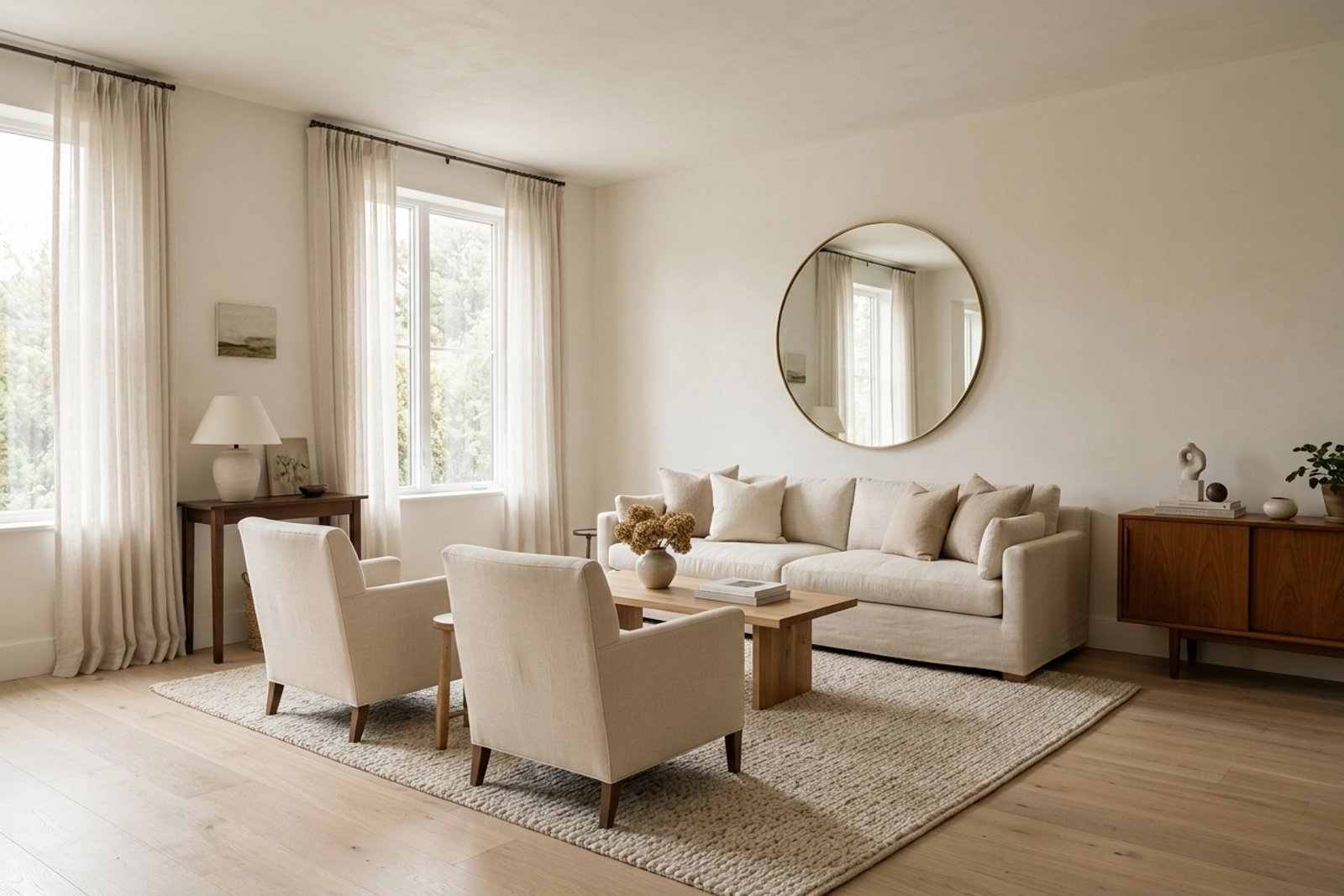
For most north facing rooms, start with paint in the 60 to 85 LRV range. LRV means light reflectance value, a 0 to 100 scale that describes how much visible light a color reflects. The lower the number, the more light the wall absorbs.
Use the range this way:
- 80 to 85: warm whites for small rooms, hallways, and low light bedrooms.
- 70 to 79: creams and pale neutrals that feel soft but still bright.
- 60 to 69: taupe, mushroom, and pale clay when you want more depth.
- Below 60: use carefully, usually with strong lamps and light trim.
A high LRV alone does not guarantee warmth. A cool white at LRV 85 can still feel icy. Undertone matters as much as brightness.
Are warm whites better than pure white in north facing rooms?
Warm whites are usually better than pure white in a north facing room because they give cool daylight something to soften. Pure white can look clean in a paint store and gray at home. In north light, it often exposes every shadow instead of bouncing warmth back into the room.
Look for whites with cream, ivory, or very soft beige undertones. Benjamin Moore White Dove (OC-17), Benjamin Moore Swiss Coffee (OC-45), Sherwin Williams Alabaster (SW 7008), and Farrow & Ball Pointing (No. 2003) are useful reference points. Benjamin Moore lists White Dove at an LRV of 85 and Swiss Coffee at about 82, and Sherwin Williams lists Alabaster at 82, so all three sit near the top of the north facing range and differ mainly by undertone. Do not choose from the name alone. Paint a large sample and compare it against the floor, trim, and sofa fabric.
Which neutral paint colors make a north facing room feel warmer?
The most reliable neutral families are creamy white, oatmeal, warm greige, mushroom, pale clay, and soft taupe. They add enough warmth to balance blue daylight, but they are calm enough for a living room or bedroom you use every day.
A simple shortlist:
- Creamy white for a small room that needs lift.
- Oatmeal beige for a room with oak, rattan, or linen.
- Warm greige for a current look that still works with gray furniture.
- Mushroom for depth without making the room dark.
- Pale clay for warmth when the floor is cool or gray.
Avoid strong yellow beige if the room has warm bulbs and honey wood. It can turn heavy at night.
Can green or blue work in a north facing room?
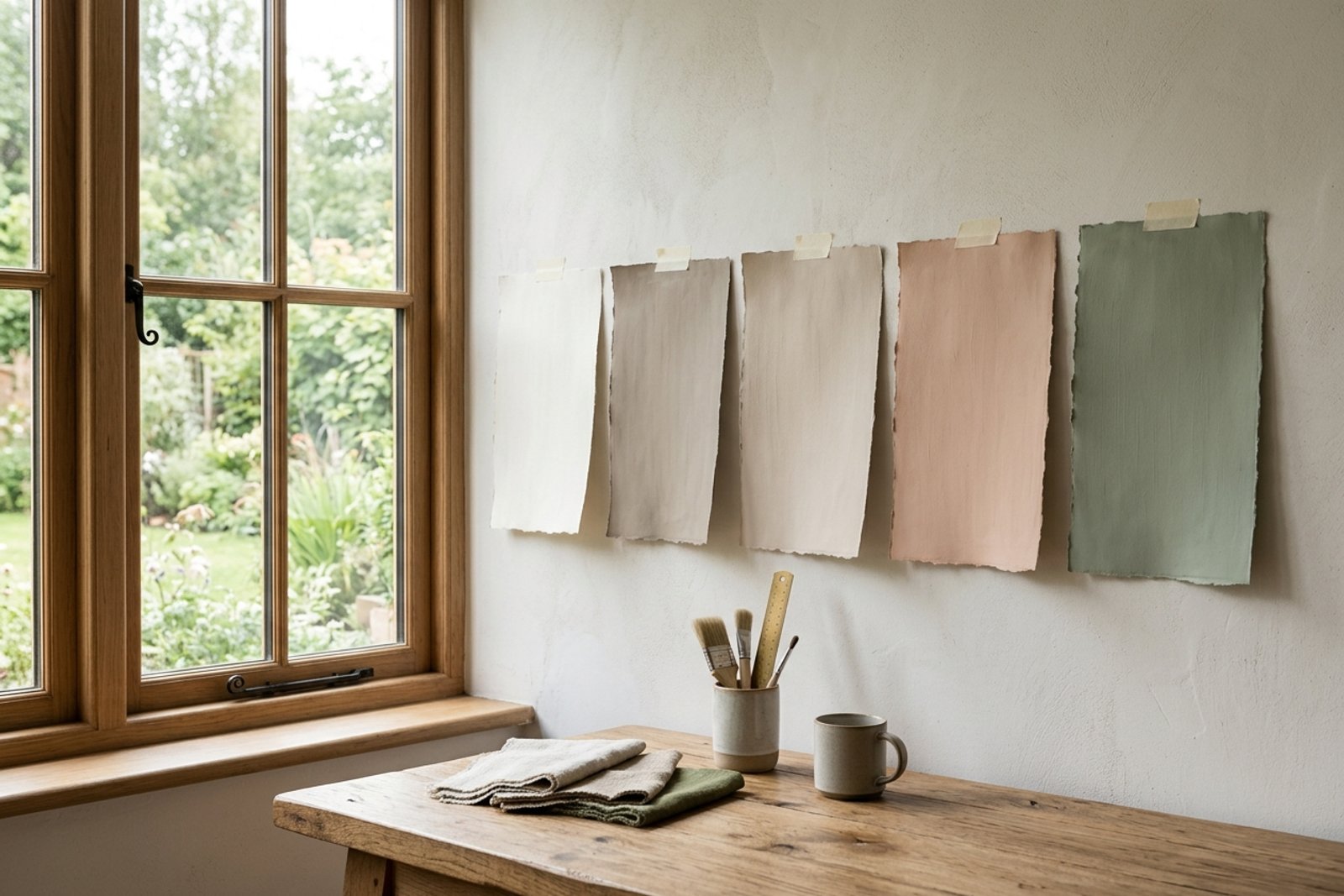
Green can work beautifully in north light when it is muted, warm, and slightly gray. Sage, olive gray, and eucalyptus tones feel more natural than mint or blue green. The best versions read like dried leaves or garden herbs, not sea glass.
Blue is harder. North light already has a blue cast, so pale blue can turn chilly fast. If you want blue, choose a smoky denim, slate with warmth, or deep inky blue used as an accent rather than on every wall. Balance it with warm lamps, wood, cream textiles, and brass or woven details.
What paint finish should you use in a north facing room?
Use eggshell or satin on walls if the room needs more bounce. Flat matte paint hides wall flaws, but it absorbs more light and can make a north facing room feel chalky. A soft sheen reflects just enough light to keep the wall alive without looking glossy.
Keep ceilings brighter than the walls. A clean warm white ceiling helps pull daylight farther into the room, especially when the floor is dark. On trim, use the same white family as the wall, only a little cleaner or glossier. A stark white trim next to a warm wall can make the wall look dirty.
How should you sample paint before committing?
Sample paint in the room, not on a tiny card. Put each color on a peel and stick sheet or a primed board at least 12 by 12 inches. Move it between two walls: one near the window and one deeper in the room. A color that works beside the glass can look dull ten feet away.
Check the sample at four moments:
- Morning, when the room is coolest.
- Midday, when daylight is most even.
- Late afternoon, when shadows stretch.
- Night, with the bulbs you actually use.
If the color looks good only once, it is not the right color. The winning paint should be acceptable at every moment, not perfect for one photo.
What if every paint sample still looks dull?
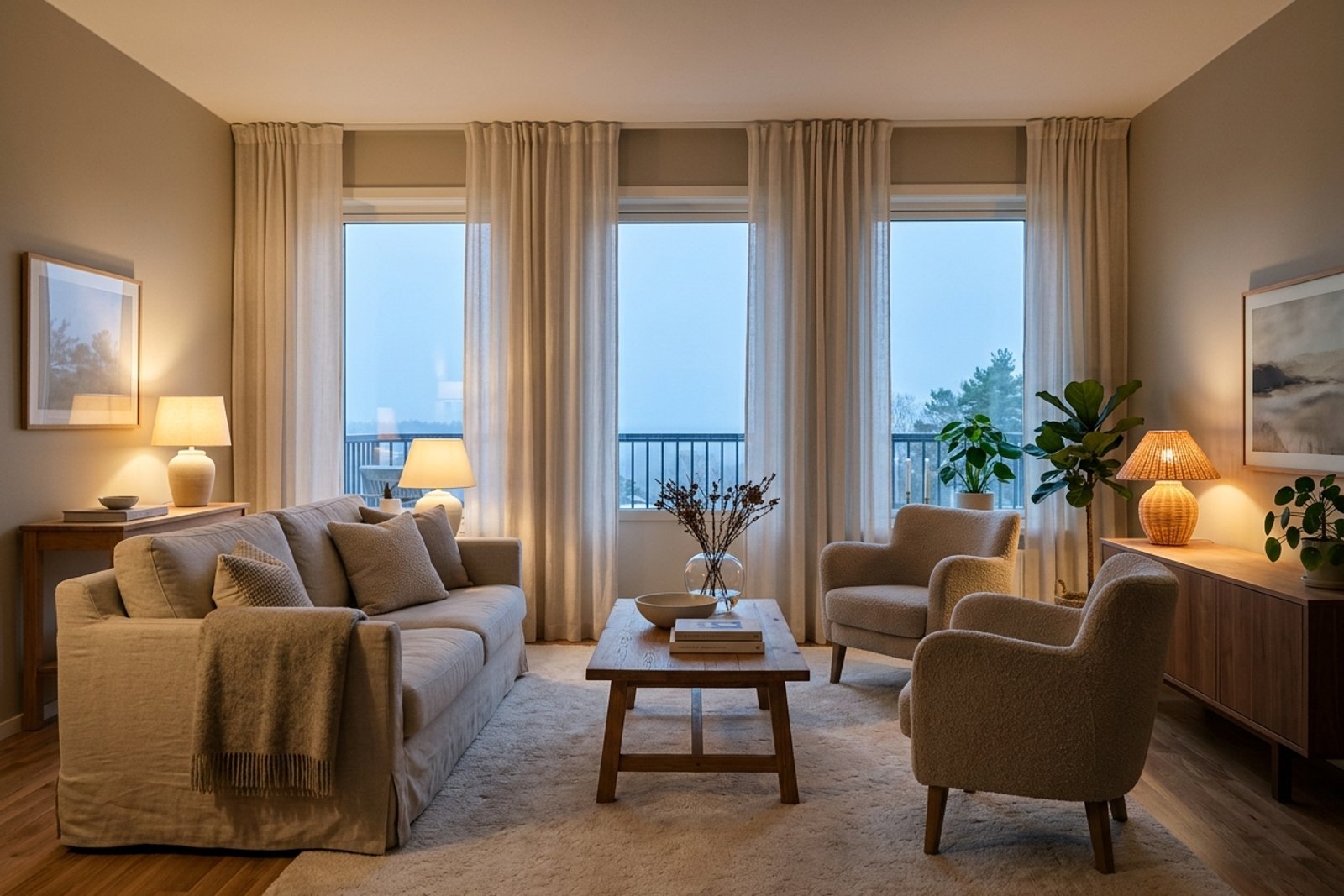
If every sample looks dull, the paint may not be the main problem. North facing rooms often need a better light path before they need another color. Clear the window, hang curtains high and wide, place one large mirror where it catches daylight, and add lamps at three heights.
Then retest the same samples. A warm white that looked gray beside blocked glass can look right once daylight reaches the back of the room. Paint should finish the correction, not carry the entire room alone. If the room is also visually busy, pair this with our clean but cluttered room guide before choosing a deeper color.
A simple north facing paint shortlist
If you need a starting point, build the shortlist by room mood rather than brand names. For a calm living room, test creamy white, warm greige, and mushroom. For a bedroom, test warm white, pale clay, and muted sage. For a home office, test oatmeal, soft taupe, and a darker warm neutral behind the desk.
Use one wall color, one ceiling color, and one trim color from the same temperature family. That keeps the room from splitting into cool daylight, warm lamps, and random white trim. North light rewards restraint. The best color is usually the one that lets the room feel warmer without announcing itself.
A Note from Jihyun Lee
Galleries pay a premium for the exact light this guide is fighting. In museum work, north light is prized because it stays steady and cool all day, which is kind to artwork and hard on warm domestic color. That steadiness is also why a north facing room cannot wait for better light the way a west facing one can: what you see at 10 a.m. is what you live with. So I never judge a sample against white primer. Paint two boards, stand them against the actual wall, and look at them beside the sofa and the floor that will live there, because in cool constant light the undertones of everything in the room negotiate with each other all day long.
Frequently asked questions
What Sherwin Williams paint color is best for a north facing room?
Sherwin Williams Alabaster (SW 7008), at an LRV of 82, is a dependable warm white for north light. When you want more depth, Accessible Beige (SW 7036, LRV 58) and Agreeable Gray (SW 7029, LRV 60) read as warm greiges that resist the cool cast. Sample each on two walls before you commit.
What is the best warm white for a north facing room?
Warm whites with cream or soft beige undertones work best. Benjamin Moore White Dove (OC-17, LRV 85) and Swiss Coffee (OC-45, LRV about 82) stay bright while softening cool daylight. Avoid stark, blue based whites, which north light can push toward gray. Test each near the window and ten feet back.
Do north facing rooms need low light paint colors?
Not exactly. A north facing room needs warm, reflective color, not only a pale one. Aim for an LRV of 60 to 85, then fix the light path with a clear window, a mirror, and layered lamps. A high LRV warm neutral does more for a dim room than a cool white.
Ask Archie before you buy paint. A photo, the window direction, your floor tone, and the furniture you are keeping are enough to spot whether the color is likely to go gray, yellow, muddy, or too dark.
Test the room before you buy paint
Archie reads your room photo, window direction, floor tone, and lighting plan so you can choose a color with more confidence before spending on gallons, painters, or furniture.
Check my color with ArchieRelated Articles

Why Does My Dark Room Still Look Dark After Painting?
Painted your dark room and it still looks dark? Paint only changes the wall. Check windows, bulbs, undertones, LRV, sheen, and dark furniture first.

Black House Paint Exterior: What to Know First
Black house paint on an exterior looks expensive and runs hot. See the real heat numbers, the colors that hold up, and the trim that makes it work.

Evergreen Fog (Sherwin-Williams): Still Trending in 2026?
Why Sherwin-Williams Evergreen Fog is spiking in search again. See its real undertones, what it pairs with, and where the green-gray works best.