Why Does My Bedroom Feel Hard to Sleep In? (5 Room Fixes)
A bedroom feels hard to sleep in when layout, light, heat, and visual noise keep you alert. Run this room check before you buy a new mattress.
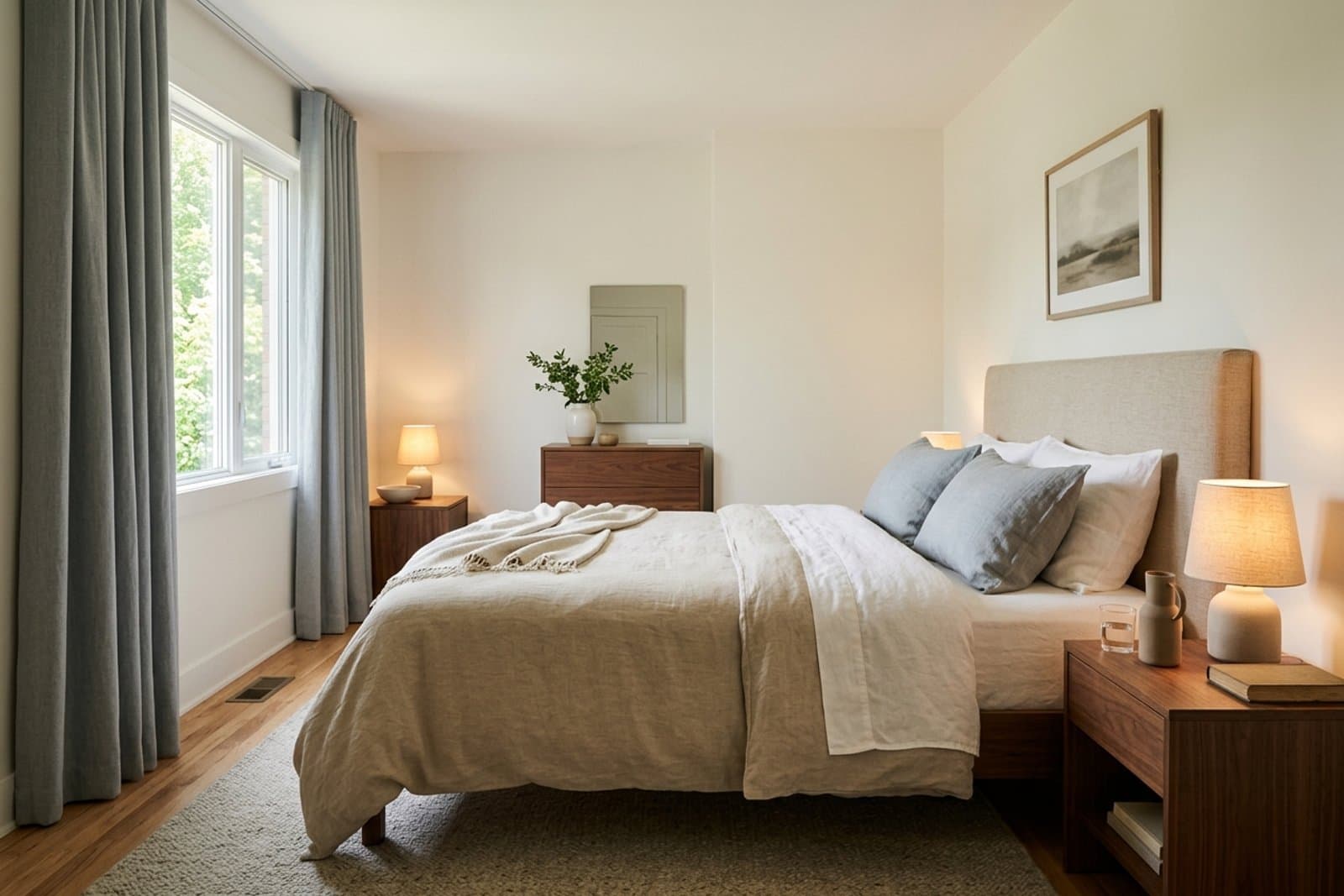
A bedroom feels hard to sleep in when the room keeps sending alert signals after your body is ready to shut down. The usual culprits are not decorative taste: a blocked path to the bed, cool overhead light instead of a warm 2700K glow, a room warmer than the 65°F the Sleep Foundation calls best for sleep, heat trapping bedding, and too much contrast in your last view.
Fix the room like a pre sleep system: clear the bed path, lower and warm the light, cool the sleeping zone, simplify the nightstand, and make the view from the pillow boring in a good way.
This guide is for a bedroom that looks fine in photos but does not help you fall asleep. If heat is the main issue, start with the cool bedroom for sleep guide; if the room also feels dim by day, see the dark room guide; if it feels styled but lifeless, the flat room guide or the cluttered room guide covers the bigger pattern.
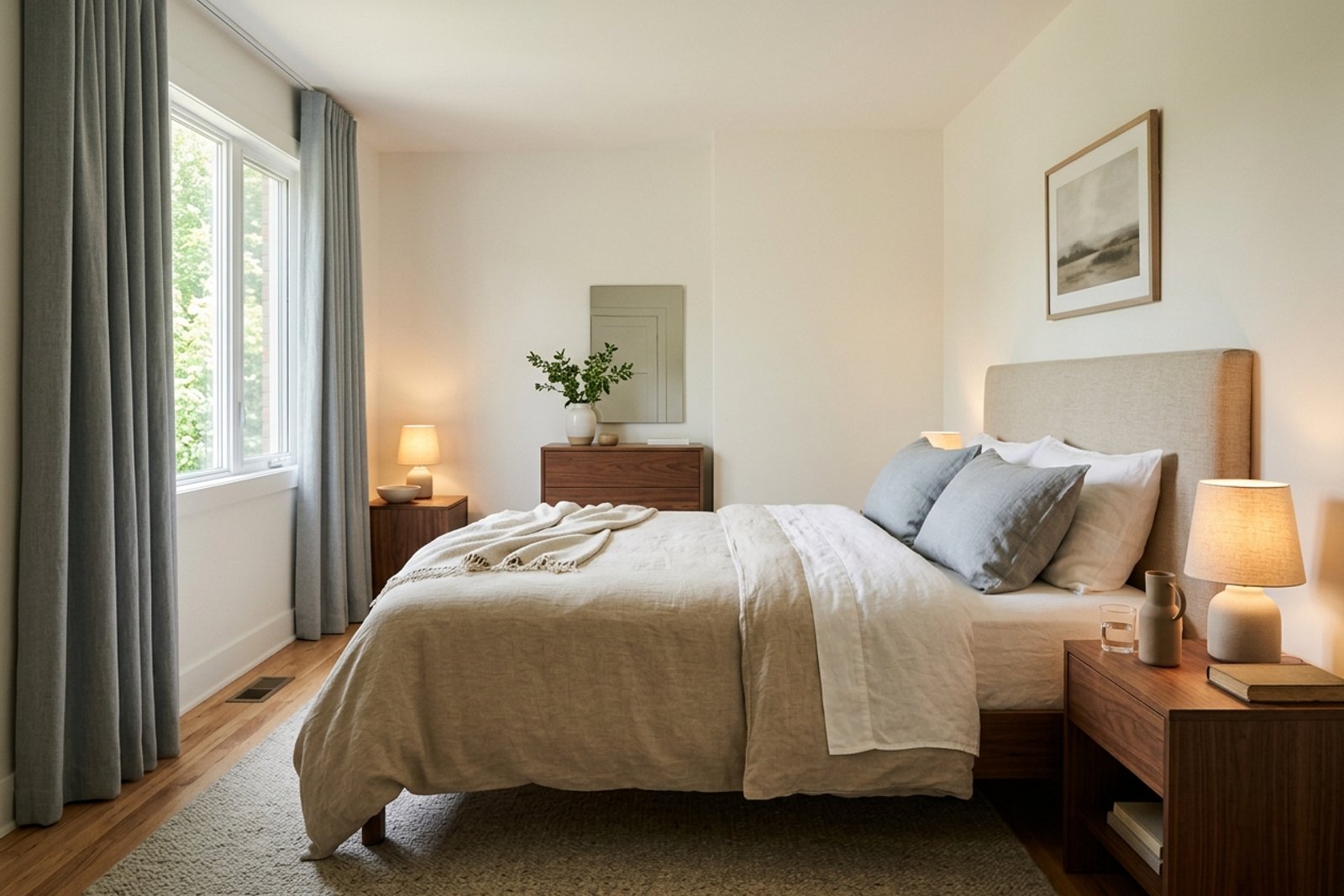
Why does my bedroom feel hard to sleep in even when it looks nice?
A nice bedroom can still be a poor sleep room because styling and sleep readiness are different jobs. Styling asks whether the bed, art, rug, and lamps look good together. Sleep readiness asks whether your body can stop scanning the space.
The room adds alertness in small ways. If the route to the bed is tight, your nervous system reads the room as crowded. If the overhead light is bright, your eyes stay in daytime mode. If the nightstand holds bills, devices, medication bottles, and half finished projects, your last visual input is a to do list.
A good sleep room removes small forms of friction before they become noticeable: clear walking space, soft light below eye level, breathable bedding, quiet surfaces, and a view from the pillow that contains very little decision making. The goal is not a perfect bedroom. The goal is a room that gives your brain fewer reasons to stay on duty.
How much clearance should a sleep friendly bedroom have?
A sleep friendly bedroom should have enough clearance that getting into bed feels automatic, not negotiated. Aim for:
- 24 inches of walking space on at least one side of the bed
- 30 inches if two people use the room every night
- a direct path from the door to the mattress without stepping around baskets, shoes, or a chair
These numbers matter because the body reads cramped movement as effort. When the room makes you squeeze past a dresser or crawl over one corner of the bed, bedtime starts with a small obstacle. That does not ruin sleep on its own, but it adds alertness at exactly the wrong moment.
If the room is small, trade a bulky nightstand for a wall shelf, use sconces instead of table lamps, or choose under bed storage that opens from the foot. Keep the last five steps to bed boring.
What lighting makes a bedroom easier to sleep in?
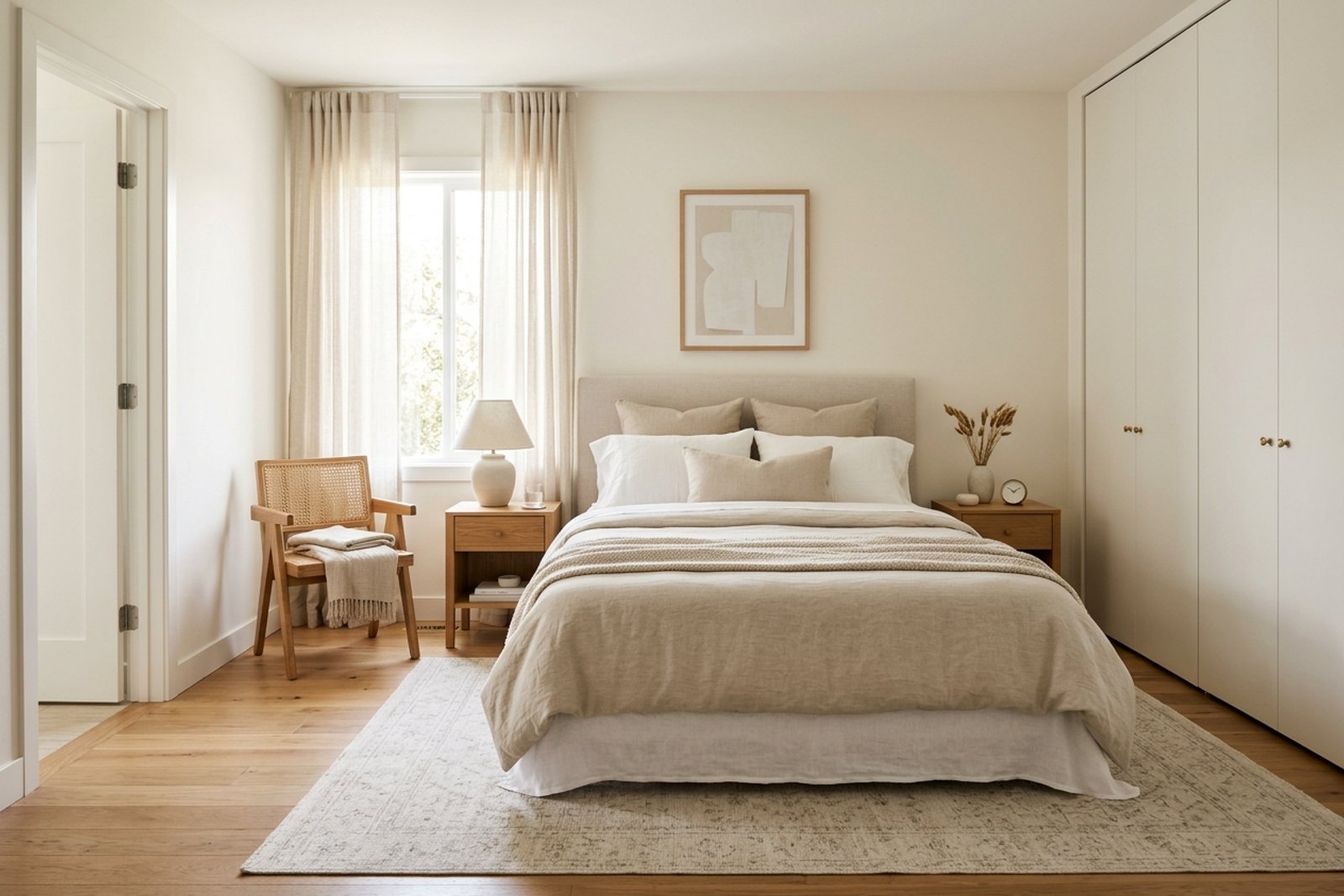
The best bedroom lighting for sleep is low, warm, and indirect. Use 2700K bulbs or warmer, keep the brightest source below standing eye level, and stop using the overhead light for the last hour of the night. The bedroom lighting guide covers which fixtures to use. Overhead light is useful for laundry and cleaning, but it is a bad bedtime signal because it fills the room evenly from above and keeps your eyes working.
Bedside lamps with fabric shades, wall sconces angled toward the wall, or a small lamp across the room are softer because they create pools of light instead of a bright wash. Put the switch where you can reach it from bed, since walking across the room to turn off a ceiling fixture wakes you back up.
If you read before sleep, use one focused lamp aimed at the page, not the whole room. The room should slowly narrow, not announce itself.
What should you see from the pillow?
From the pillow, you should see the calmest wall in the room, not the room's problem area. This is the easiest test most bedrooms fail. Lie down and look straight ahead. If the first view is an open closet, laundry basket, work desk, exercise equipment, or a wall of high contrast art, your bedroom is asking you to process information when you are trying to stop.
You do not need to remove every object. You need to reduce the number of decisions in that view:
- close closet doors
- move the laundry basket outside the sight line
- turn a desk so the screen is not visible from bed
- choose one large quiet artwork over six small frames
If the wall opposite the bed is blank, that can be good. Blank is not unfinished when the room's job is sleep.
Why does my bedroom feel restless at night?
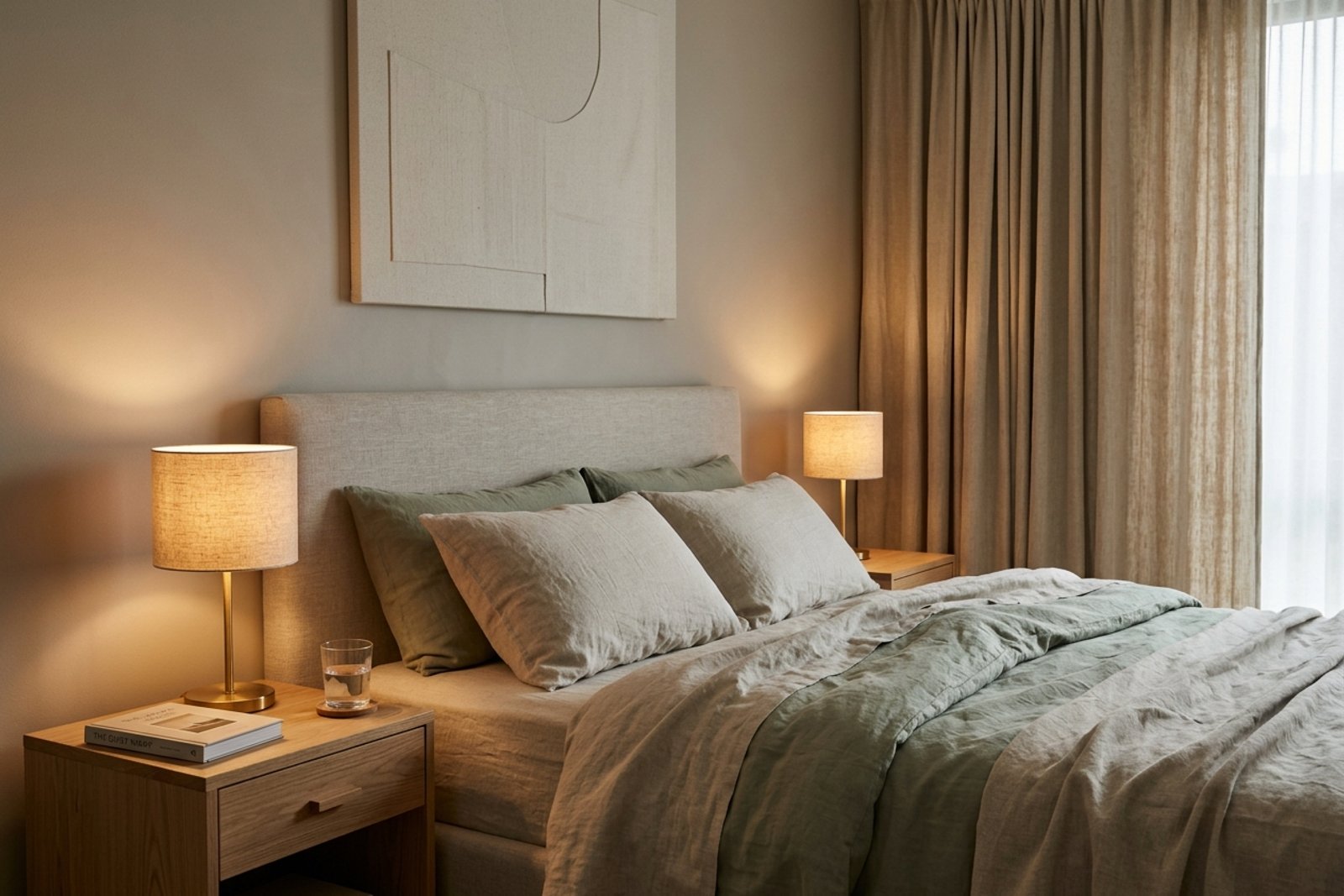
A bedroom often feels restless at night because daytime objects stay visible after their job is done. The chair becomes a clothing pile. The phone charger turns the nightstand into a command center. Decorative pillows land on the floor. A work laptop sits half closed near the bed. Each object is small, but together they keep the room in active mode.
Make a closing routine that the room can support in under three minutes. Put a tray or drawer near the bed for the items you need, and move everything else out of the sleep zone. Keep one book, one water glass, one lamp, and one small object you like on the nightstand. If you need medication or skincare there, use a lidded box.
The point is not minimalism. The point is that bedtime should not involve editing the room while tired.
Can bedding make a bedroom harder to sleep in?
Yes. Bedding can make sleep harder when it looks inviting at 8 p.m. but traps heat at 2 a.m. The Sleep Foundation puts the best sleeping temperature at about 65°F (18°C), so bedding that holds heat above that pushes the body back toward alert. Heavy comforters, dense polyester fills, high pile throws, and stacks of decorative pillows can make the bed feel warmer and more complicated than the room needs.
Start with breathable layers: cotton percale or linen sheets, a lighter duvet insert, and one washable throw that can move on or off the bed easily. In summer, keep a fan moving air across the room rather than directly at your face. In winter, add warmth by layering one breathable blanket instead of jumping to the heaviest insert.
| Helps the bed settle | Keeps the bed alert |
|---|---|
| Cotton percale or linen sheets | Dense polyester or microfiber |
| One lighter duvet insert | Heavy all season comforter |
| A single washable throw | Stacks of decorative pillows |
| A fan moving air across the room | Still, trapped warm air |
Texture matters too. Scratchy pillowcases, bulky seams, or a rug edge under bare feet can keep the body aware of the room. A good sleep bed feels simple to enter, easy to adjust, and quiet against the skin.
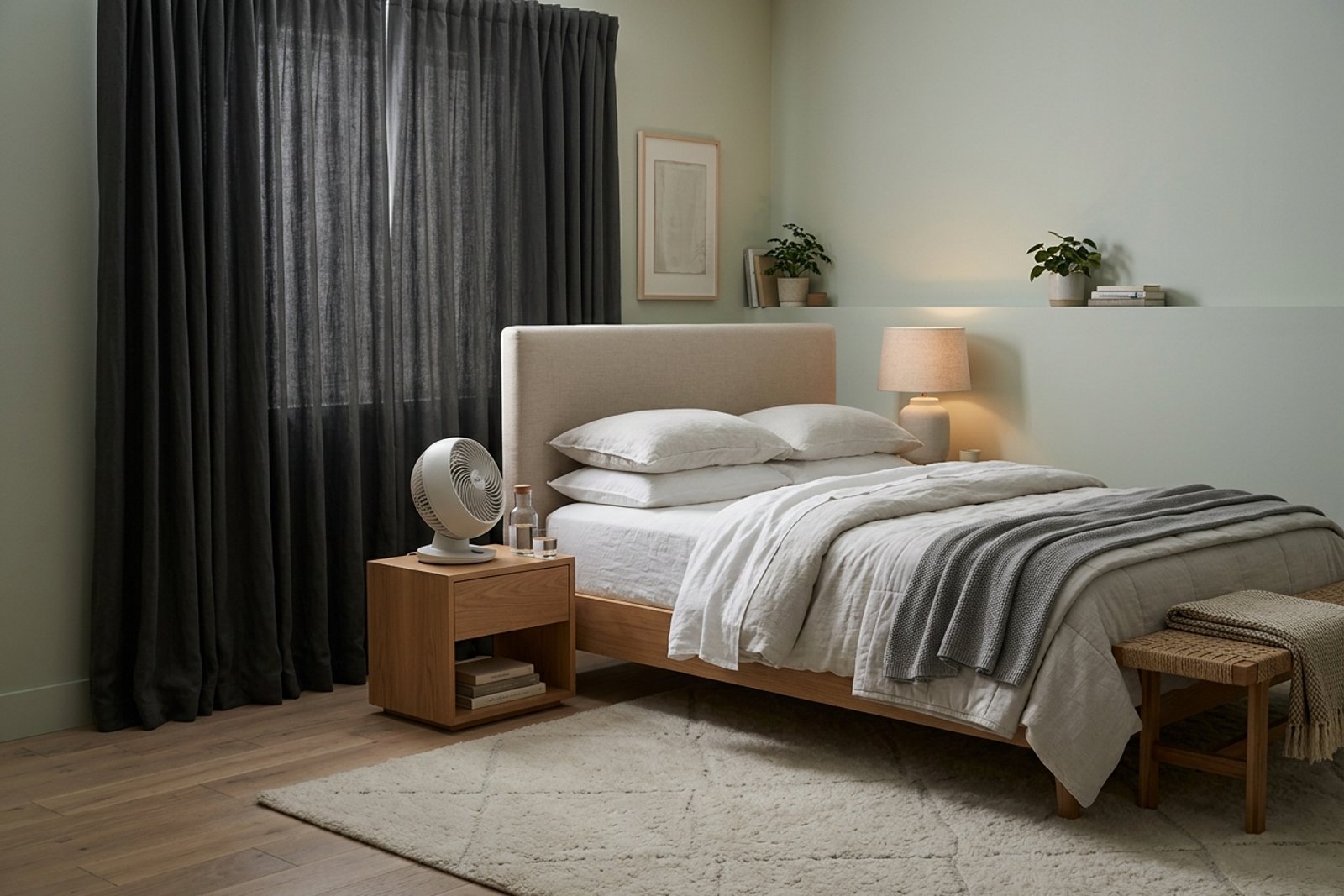
Which colors help a bedroom feel quieter?
Quieter bedroom colors usually sit in the middle: warm white, soft mushroom, muted sage, dusty blue, pale clay, or a quiet gray beige. The exact color matters less than contrast. A room with black metal frames, bright white bedding, strong wall art, and high contrast patterned pillows asks the eye to jump around.
For sleep, lower the jumps. Keep the largest surfaces close in value, then use texture instead of sharp color contrast for interest. If you love dark walls, keep the bedding and curtains low contrast so the bed does not flash against the room. If you prefer pale walls, avoid making every accent black.
The bedroom can still have personality, but the last hour of the night is not the best time for visual punctuation. Let the room get softer as your eyes get tired.
Snap your fingers on the bed and listen
Sound is the layer most bedroom advice skips, and it is half of why a room refuses to settle. Sit on the bed and snap your fingers once. A sharp ring back means the room is all hard surfaces, and a space that echoes keeps the ear on duty the same way bright light keeps the eye on duty. Every quiet room I have designed absorbs its own noise: full curtains rather than a bare blind, a rug reaching under the bed, an upholstered headboard instead of painted wall behind the pillow. Those pieces get chosen for looks, but their real job is acoustic. If your bedroom passes every visual check above and still feels alert, listen to it. Softening the sound often works before anything visual changes.
What is the fastest bedroom sleep check tonight?
Do the five minute version before buying anything:
- Clear the path from the door to the bed.
- Remove everything from the nightstand except the few things you use overnight.
- Turn off the overhead and use one warm lamp.
- Close the closet or cover the visual mess that faces the bed.
- Pull one hot layer off the bedding and leave it folded at the foot so you can adjust temperature without getting up.
- Lie down and look at the room from the pillow. If your eye still lands on a task, move that task out of sight.
The fast check works because it changes the room's bedtime signals first. Mattress quality matters, but many bedrooms are not asking for a new mattress. They are asking to stop acting like a second living room.
A bedroom that helps sleep is rarely dramatic. It is easy to enter, dim without being gloomy, cool without feeling bare, and quiet in the places your eyes naturally land. That is also why it can be hard to diagnose from inside the room. You are used to the obstacles. Archie is useful because it looks at the photo cold and names which signal is loudest.
Frequently asked questions
What is the ideal bedroom temperature for sleep?
Around 65°F (18°C). The Sleep Foundation calls roughly 65 degrees the best sleeping temperature for most adults, with a comfortable range near 60 to 67°F. A room that drifts warmer than that tends to surface you at 2 a.m., so cool the sleeping zone before you upgrade the mattress.
How do I make my bedroom more calming?
Lower the number of decisions in the room. Clear the path to the bed, drop the brightest light below eye level and warm it to 2700K, and reduce contrast on the wall you face from the pillow. Calm comes from fewer alert signals, not from adding more decor.
What color helps you sleep better at night?
Muted mid tone colors read as quietest: warm white, soft mushroom, muted sage, dusty blue, or a gray beige. The exact hue matters less than keeping large surfaces close in value, so the eye is not pulled between sharp light and dark contrast as you fall asleep.
The Noticer
For thoughtful people who notice spaces.
What did you notice?
Did something in this story make you see your own space differently?
Ask Archie what is keeping your bedroom alert
Send Archie a photo of the bedroom that will not let you settle. Archie checks the layout, light, temperature cues, surfaces, and visual noise, then gives you the smallest room change most likely to help tonight.
Diagnose my bedroom with ArchieAdvertisement. Archie is made by STUDIO DID IT, the studio that publishes Spatia.
Related Articles
Why Are My Bedroom Windows Wet in the Morning? (6 Fixes)
Bedroom windows wet every morning? It is your room's humidity meeting cold glass. See the humidity numbers to aim for and 6 fixes a renter can make tonight.
Why Is One Room in My House So Cold? (6 Causes You Can See)
Why is one room in my house so cold? Usually a surface problem, not a furnace problem. See the 6 causes you can spot by eye and the free fix to try first.
How to Cool a Bedroom Without AC for Sleep: 12 Moves for Summer 2026
Cool a bedroom without AC for sleep: 12 layered moves that stack curtains, airflow, and bedding so the room stays cooler all night, from under $250.