How to Cool a Bedroom Without AC for Sleep: 12 Moves for Summer 2026
Cool a bedroom without AC for sleep: 12 layered moves that stack curtains, airflow, and bedding to hold it 6 to 10°F cooler all night, from under $250.

A bedroom that sleeps cool through a heat wave is built in layers, not bought as one product. The twelve moves below stack light control, airflow, bedding, and room finish into one system that holds bedroom temperature 6 to 10°F lower without running the AC all night.
This is for a homeowner or renter who wakes at 3 a.m. overheated and wants the room to do the cooling work, not a thermostat running dry and loud through the night. If your bedroom is the kind of south facing afternoon furnace that needs window film and box fan ventilation, our south facing room cooling guide covers that case in detail. For broader summer styling beyond the bedroom, see the solo living interior design guide, and for warm bulb planning by room orientation see the bedroom lighting guide.
What is the most effective way to cool a bedroom for sleep without AC?
The most effective approach combines four levers at once, not any single trick. Block solar heat at the window before noon (thermal blackout curtains hung within an inch of the glass cut heat gain by up to 33%, per the U.S. Department of Energy). Pull stored heat out after sundown (a box fan facing outward in one window, with a window cracked on the opposite wall, drops room temperature 4 to 7°F overnight). Strip heat sources inside the room (electronics, dark synthetic textiles, the winter comforter on the bed). And cool the body itself with breathable bedding (linen or percale cotton, skip the top sheet). Each fix alone shaves a degree or two. Stacked together they drop a typical bedroom from 82°F at midnight to the 72 to 75°F window where sleep stays deep, without the AC running through the night.
How cold should a bedroom be for good sleep?
The Sleep Foundation and most sleep researchers converge on 65 to 68°F (18 to 20°C) as the ideal bedroom temperature for deep sleep. Body core temperature drops about 2°F overnight, and a cooler room helps that drop happen on schedule; a room above 75°F delays it and fragments REM cycles. The catch: most bedrooms hit 78 to 82°F by midnight in July, and most thermostats sit in the hallway, so the bedroom reads warmer than the displayed number. Aim for 68°F at the pillow, not at the thermostat. A $12 probe thermometer (ThermoPro on Amazon) on the nightstand for one week tells you which fix in the list below to prioritize. If the bedroom stays under 72°F overnight, you can usually stop at fix 6. If it does not, the bedding and palette fixes (8 through 12) close the rest of the gap.
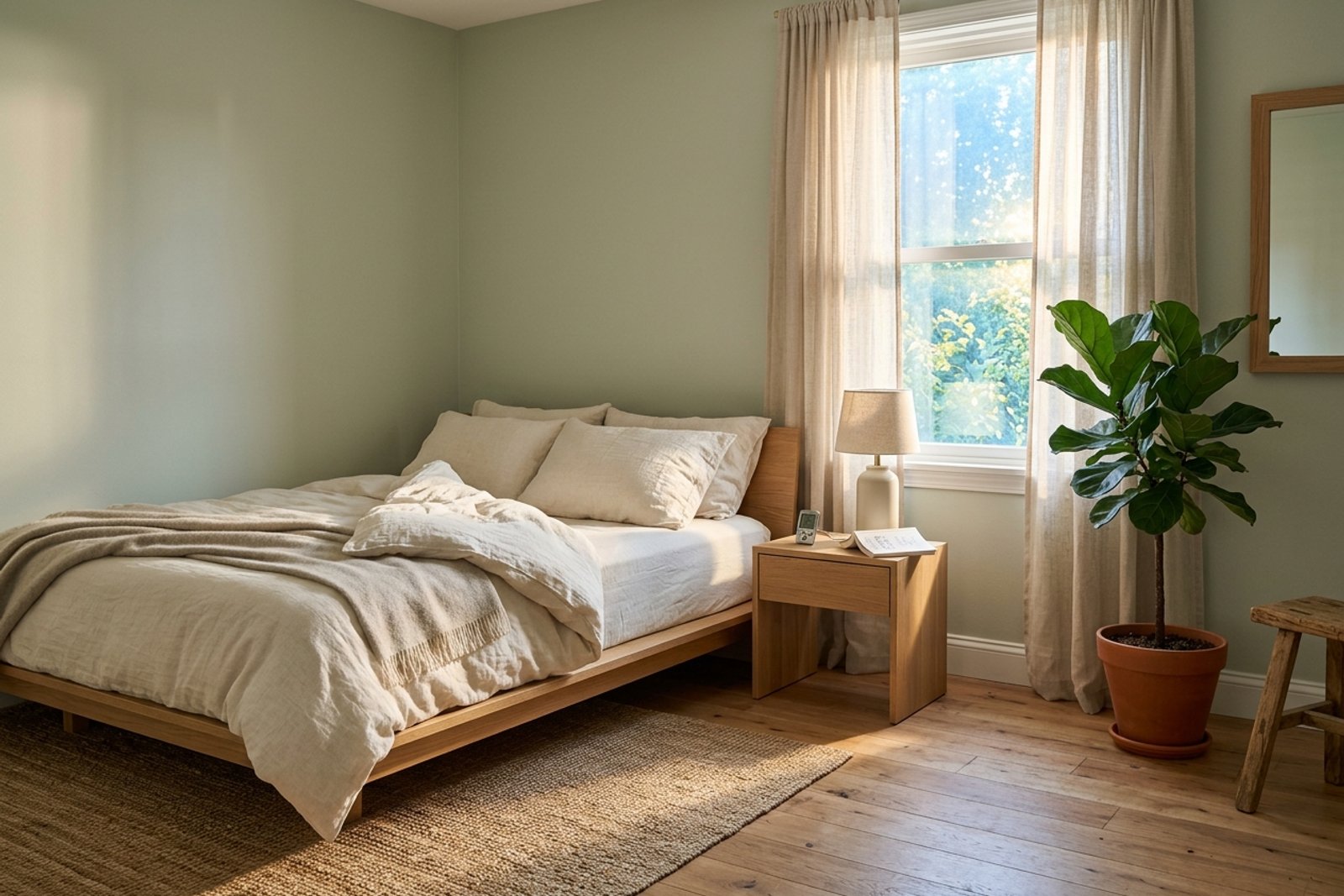
12 moves to cool a bedroom for sleep without AC
The list runs in suggested order, light control first, then airflow, then heat sources, then bedding, then the room finish. Most rooms see the largest drop from moves 1 through 6; moves 7 through 12 close the last 2 to 4°F that decide whether sleep stays deep through the night.
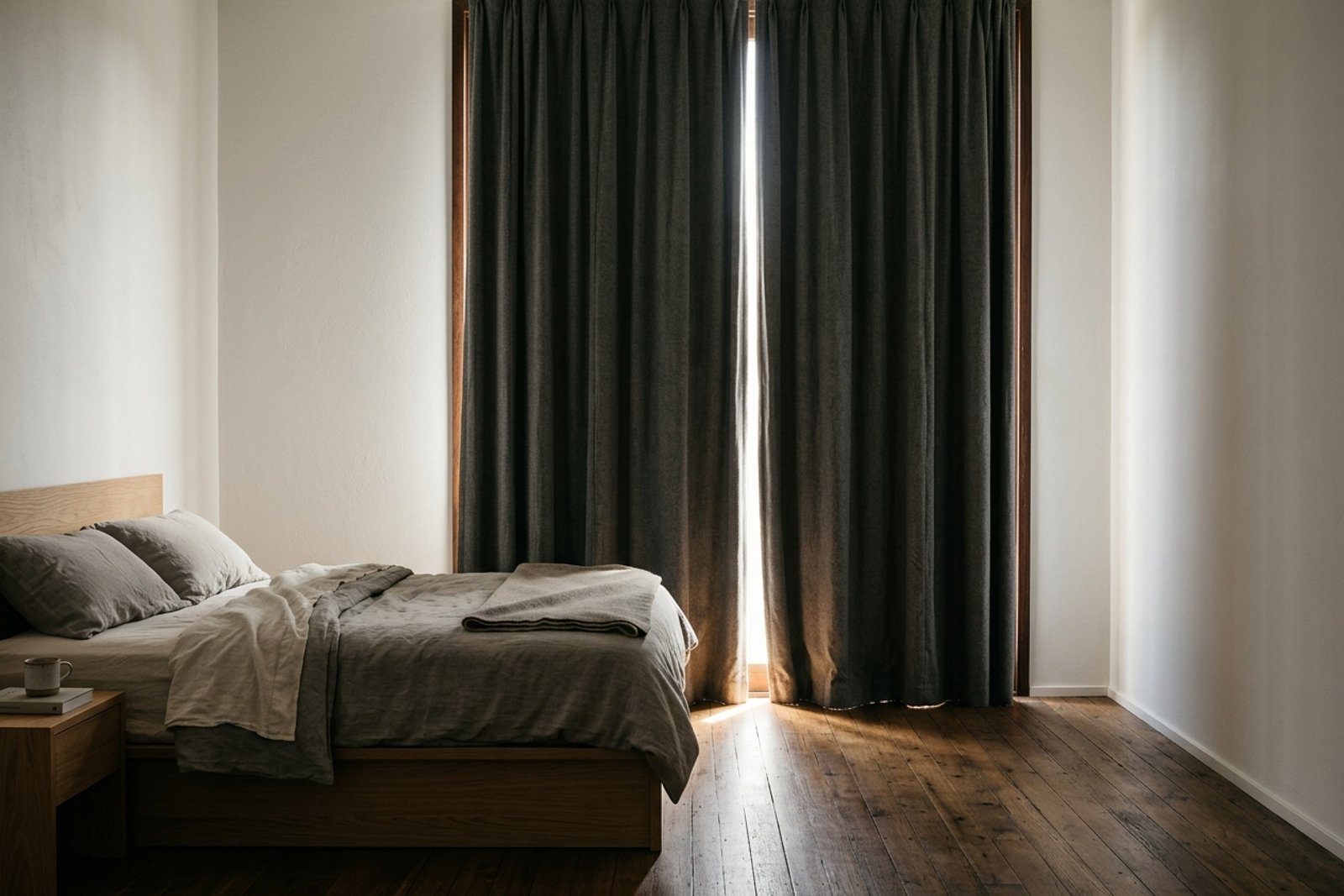
1. Hang blackout curtains within one inch of the glass
Thermal blackout curtains rated R3 or higher, with a reflective white backing facing the window, do most of the daytime cooling work. Hang them as close to the glass as the rod and ceiling height allow. Any air gap above the rod, below the hem, or on the sides leaks heat into the room. The curtain face color matters less than the backing; a white or cream face reflects roughly 80% of solar radiation, but the reflective lining is what blocks the rest. Look for IKEA Bengta ($35 a panel), Pottery Barn Emery thermal lining (around $100 a panel), or West Elm linen with a separate blackout liner. Hang the rod 2 to 4 inches below the ceiling and let the panel touch the floor.
2. Set a curtain timing routine
Close the curtains before the sun hits the window directly. For most U.S. bedrooms that means before 11 a.m. for a south or west window, before 9 a.m. for an east window. Keep them closed through the hottest hours and open them after 8 p.m. once outdoor temperature drops below indoor. Every uncovered hour during peak sun adds 1 to 2°F to the room, and walls and furniture hold that heat for hours after sundown. A $25 smart plug paired with a wall mounted timer, or a $40 smart shade controller (SwitchBot, IKEA Fyrtur), does the job if you work away from home or tend to forget. The routine matters more than the curtain brand.
3. Apply removable reflective film to the sunniest pane
For a bedroom window the afternoon sun bakes directly, a static cling reflective film cuts solar heat at the glass before it converts to room temperature. Gila Heat Control Platinum ($40 a roll, enough for one large window) applies with water and a squeegee and peels off at move out with no residue. Skip the darker tints; they absorb heat at the glass and can stress single pane windows, which a landlord may charge to replace if they crack. Photograph the window's existing condition before installing anything. The film adds another 2 to 4°F of cooling on top of the curtains, and it is the one rental safe upgrade that holds even on days the sun is so direct the closed curtains warm up by 2 p.m.
4. Run overnight cross ventilation with two windows
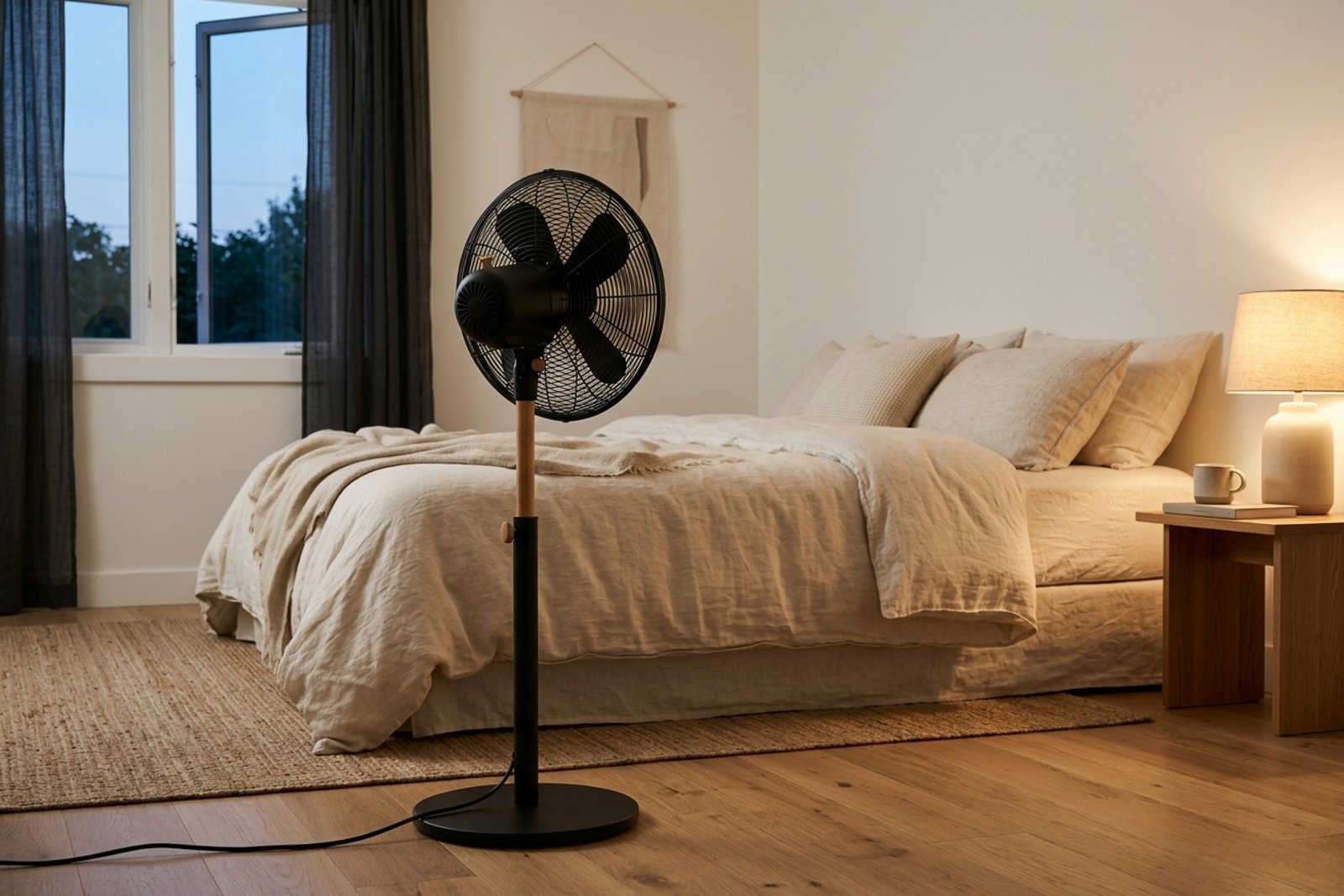
After 8 p.m., when outdoor temperature drops below indoor, open the curtains and set up a flush. One box fan ($30, Lasko 20 inch) faces outward in the warmest window, pushing the hottest air out. Crack a second window on the opposite cool wall and let cooler outdoor air pull in. Once the outdoor air is cooler than the room, this overnight flush can drop a bedroom by 4 to 7°F before morning. Reverse the routine at sunrise: close both windows, close the curtains, and trap the cooler air inside. A timer on the fan ($15 mechanical, $25 smart) shuts everything off at 6 a.m. so the room stays sealed before the sun rises.
5. Aim a bedside fan at the body, not the wall
Air on skin evaporates sweat, which is what cools the body, not the fan stirring room temperature air around. A tower or pedestal fan placed three feet from the bed, pointed at chest height, cools the sleeper without lowering room temperature. A Vornado 533 ($60), a Dyson AM07 ($300 if you want quiet), or a clip on personal fan ($25 on Amazon) all do the job. The placement matters more than the price. Tilt the fan slightly upward so the airflow crosses the upper body, not just the legs. For sound sensitive sleepers, a tower fan at the lowest setting reads as white noise around 38 to 42 decibels, which sits below normal conversation volume.
6. Reverse the ceiling fan to counterclockwise
A ceiling fan rotated counterclockwise (looking up) pushes air downward across the bed in a column, which cools the body the same way a bedside fan does. Most ceiling fans have a small switch on the motor housing for direction; flip it to summer mode at the start of June. Aim for a low to medium speed; a fast setting pushes around so much air it dries out the room and disturbs sleep. If the ceiling fan is hardwired without a remote, a smart switch (Lutron Caséta, Leviton Decora) adds remote and timer control for under $50.
7. Move heat generating electronics out of the bedroom
A TV, a laptop on the desk, a phone charger, a power strip with red LEDs, and a router all generate heat. A single laptop charging on the nightstand can put out 30 to 50 watts of waste heat, roughly equivalent to a 40 watt incandescent bulb left on through the night. The room reads warmer than it should because the heat lives in the same air the sleeper breathes. Move chargers to a power strip in the hallway, send the laptop to the kitchen for the night, and turn off the TV at the wall, not the remote. Standby mode still draws and radiates a small amount. The combined drop is usually 1 to 2°F by morning, which is the difference between waking up at 3 a.m. and sleeping through.
8. Kill the overhead and switch to warm 2700K bulbs
Incandescent and halogen overheads radiate heat as well as light. Even LED downlights warm a small bedroom by a measurable degree if they run for two or three hours before bed. Switch off the overhead after 8 p.m. and use two warm lamps at different heights: one on the nightstand, one across the room. Pick 2700K bulbs; the warmer color temperature is also a circadian signal that helps the body release melatonin on schedule. Phillips Hue Warm Glow, GE Reveal, or any 2700K LED works. The combined effect is a cooler room and a deeper first 90 minutes of sleep. For dimmer control on existing lamps without rewiring, a Lutron Caséta plug in dimmer ($40) adds smooth dim to any plug.
9. Swap to linen or percale cotton sheets, no top sheet
Bedding does more for summer sleep temperature than most cooling gear. Linen is the gold standard for breathability and pulls heat off the body faster than synthetic blends. Percale cotton is the runner up at half the price. Skip the top sheet (Danish style, duvet only) so the only fabric over the body is the duvet cover. Brands worth knowing: Quince European linen ($90), Parachute washed linen ($150), Brooklinen percale ($150), Target Casaluna percale ($55). White, sand, or pale clay reflects ambient heat. Avoid satin and sateen blends for summer; they trap perspiration and read as warm by 3 a.m.
| Summer sheet fabric | Breathability | Rough cost (queen set) | Best for |
|---|---|---|---|
| Linen | Highest, pulls heat off fast | $90 to $150 | Sleepers who run hot |
| Percale cotton | High, crisp and cool | $55 to $150 | Best value all rounder |
| Sateen / satin blend | Low, traps perspiration | Varies | Skip for summer |
10. Drop the comforter for a summer quilt under 200 gsm
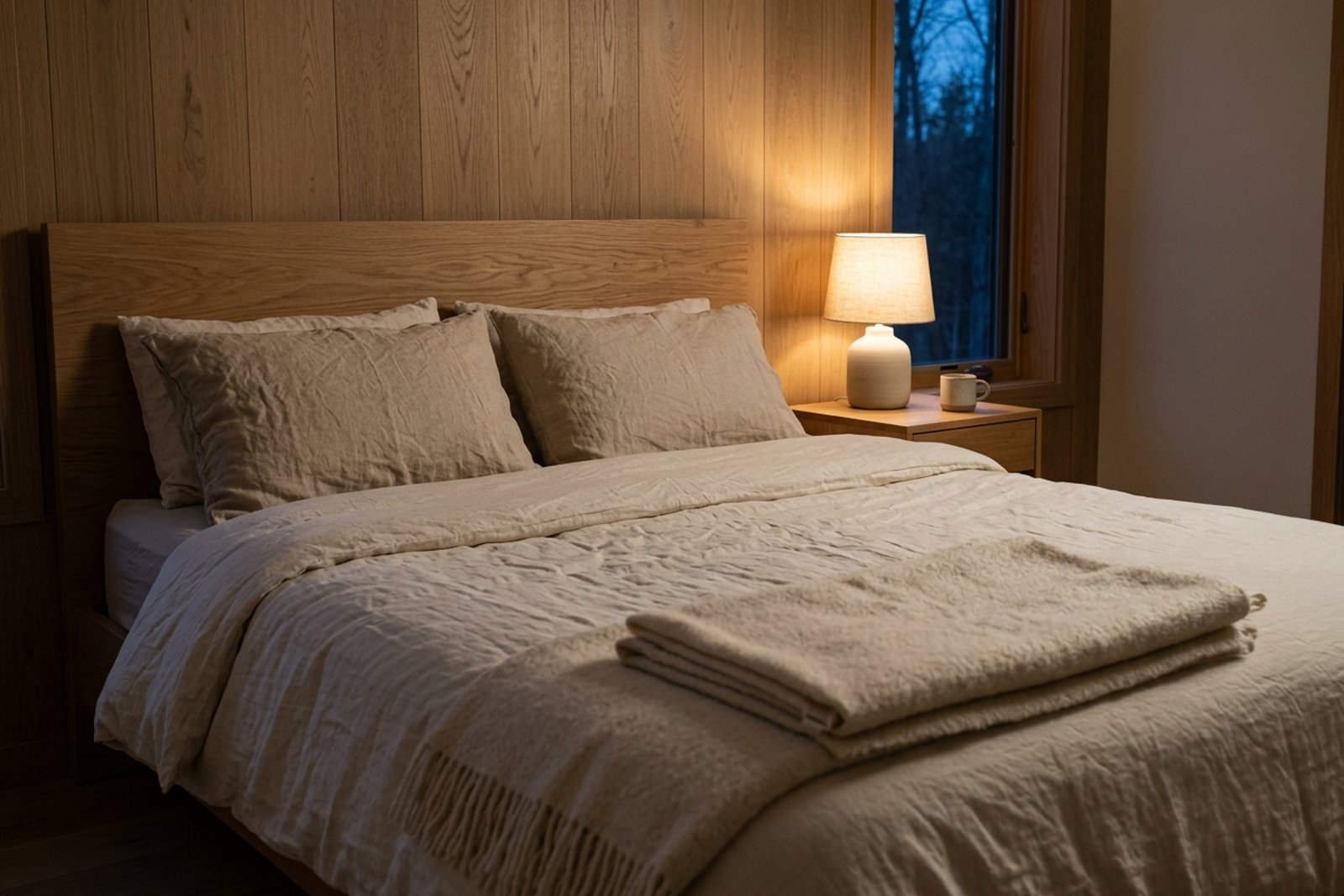
A winter comforter at 400 gsm is engineered to trap body heat. For summer, swap it for a lightweight quilt under 200 gsm, or even a single woven cotton blanket. Coyuchi organic cotton quilts run $200 to $300, IKEA Stjarnflocka summer quilts $40, and any 100% cotton waffle blanket under $60 works for sleepers who run hot. Wash and dry once before the first use so the cotton fully shrinks; the texture softens and breathes better after the first cycle. A second blanket folded at the foot of the bed gives the sleeper the option to pull over only the legs if the room cools through the night.
11. Use a buckwheat or gel cooled pillow with a wool topper
Standard memory foam pillows and toppers absorb body heat and radiate it back through the night, which is why a foam mattress reads hot by 2 a.m. A buckwheat pillow ($60, Hullo) stays cool by design; the hulls do not retain heat. A gel infused cooling pillow ($40 to $100, Coop Home Goods, Tempur Cloud Breeze) is the alternative for sleepers who do not like the firmness of buckwheat. For the mattress itself, a wool or cotton topper ($150 to $300, Avocado, Coyuchi) laid over existing foam pulls heat off the body without buying a new bed. Wool wicks moisture and stays roughly four degrees cooler than foam.
12. Pull dark synthetic upholstery off the bedside wall
Dark velvet, polyester, and synthetic blends on a bedhead or accent wall absorb radiant heat through the day and release it slowly through the night. Swap them for linen, cotton, or rattan; natural fibers breathe and do not store body heat the way synthetics do. The same logic applies to floor surface: a thick wool rug under the bed adds 1 to 2°F of perceived warmth at the pillow. Roll it up for July and August and let bare floor or a low jute rug sit in its place. Lighter wall colors (soft white, warm cream, pale sage) reflect more solar radiation than dark walls and lower the radiant heat the body feels at the pillow. The palette overlap is the same one in our interior color psychology guide, which covers how color registers thermally on the body, not just visually.
Final thought
A bedroom that sleeps cool in July is not built from one expensive purchase. It is the stack: curtains close before 11 a.m., film goes up on the sunniest pane, fans flip direction at sunset, electronics leave the room by 9 p.m., linen replaces polyester, the comforter goes in the closet until October. The full system runs $250 to $500 if you already own a bed and one fan, and most of it comes off the wall the day the season changes. Sleep deepens within the first week, and the AC stays off most nights from June through August, which is roughly the same energy bill drop as switching off a window unit entirely.
Frequently asked questions about cooling a bedroom without AC
Is 72 degrees too hot to sleep?
For most people 72°F sits at the warm edge of comfortable, not too hot, but it is above the 65 to 68°F range the Sleep Foundation links to the deepest sleep. If you wake sweating at 72°F, aim a fan at the body and switch to linen bedding to close the gap.
How do you push hot air out of a room fast?
Put a box fan in the warmest window facing outward so it exhausts the hottest air, then crack a second window on the opposite wall to pull cooler air in. This cross draft works only once the outdoor air is cooler than the room, usually after 8 p.m. in summer.
How do you cool a bedroom with no windows or only one window?
With one window, run a single box fan facing outward late at night and leave the bedroom door open so air pulls through the rest of the home. With no window, lean on the levers that need no airflow: kill heat generating electronics, switch to linen bedding, and add a buckwheat pillow.
Is it healthy to sleep without AC in summer?
Yes, as long as the room stays under about 75°F and you stay hydrated. A cooler room without AC avoids the dry throat and noise many light sleepers get from a unit running all night, and it supports the natural 2°F overnight drop in core body temperature that deepens sleep.
When it stops being a warm week and becomes an actual heat wave, switch to the heat wave plan for a bedroom.
Written by the Spatia Editorial Team. Spatia drafts most summer cooling guides from a 580 sq ft Brooklyn one bedroom whose west facing bedroom hits 29°C by midnight every July.
Plan a bedroom that sleeps cool
Archie maps how curtains, fan placement, and textile choices interact in your specific bedroom, so the room does the cooling instead of the thermostat running dry and loud all night.
Plan my bedroom with ArchieRelated Articles

How to Keep a Bedroom Cool During a Heat Wave Without AC
Keep a bedroom cool during a heat wave without AC: seal out heat before noon, flush stored heat after sunset, dry the air, and cool the sleep zone first.

Bedroom Lighting Ideas: 3 Layers to Set the Mood
Bedroom lighting works best in three layers. See how to combine ambient, task, and accent light at 2700K for a room that shifts from morning to night.

How to Cool a Humid Room Without AC (7 Steps)
Cool a humid room without AC by controlling moisture first, then airflow. A renter safe routine to exhaust damp air, dry textiles, and place fans right.