How to Cool a Humid Room Without AC (7 Steps)
Cool a humid room without AC by controlling moisture first, then airflow. A renter safe routine to exhaust damp air, dry textiles, and place fans right.

To cool a humid room without AC, remove moisture first, then move air. Start by closing windows when outdoor humidity is higher than indoor humidity, running the bathroom or kitchen exhaust fan for 20 to 30 minutes after showers or cooking, and drying towels, bedding, and laundry outside the room. A fan helps only after the room has a path for damp air to leave.
The best no AC sequence is simple: block sun during the day, exhaust humid air at the source, use one fan to push stale air out after sunset, and point a second fan across your body for comfort. In a small apartment, this usually feels cooler within one evening because your skin can evaporate sweat again and the room stops holding dampness in bedding, towels, curtains, rugs, and upholstery.
If the room feels sticky even when the thermometer is not extreme, this is the cooling guide to start with. For rooms that are mainly hot from direct sun, or an apartment that traps heat all day, pair this routine with our guide to cooling a room without AC, which covers west and south facing windows, fans, and curtains.
This guide is for renters and homeowners trying to cool a bedroom, living room, or studio without a window unit. If your main problem is sleep, our bedroom cooling guide goes deeper on bedding and night routines.
Why does a humid room feel hotter than the temperature says?
Moisture slows the body's main cooling system, which is evaporation. When sweat cannot evaporate from skin, a 78°F room can feel closer to the low 80s, even if the thermostat has not changed. That is why a fan sometimes feels useless in a damp bedroom. It moves air, but the air is already carrying too much water.
The room itself also holds moisture. Towels, cotton bedding, heavy curtains, rugs, and upholstered chairs absorb damp air during the day, then release it slowly at night. In a small space, those soft surfaces can keep the room sticky long after the window closes. Cooling a humid room means drying the room, not just stirring it. Those same damp soft surfaces are one reason a closed room starts to feel stuffy in any season.

Should you open windows when a room is humid?
Open windows only when outdoor air is cooler or drier than the room. In many U.S. and Canadian cities, summer mornings can be damp, afternoons can be hot, and evenings may finally give you a useful cooling window. If the air outside feels heavy on your skin, opening the window can make the room worse, especially in a basement, top floor apartment, or bathroom adjacent bedroom.
Use a simple test if you do not own a hygrometer: step outside for two minutes, then come back in. If your skin feels wetter outside, keep the room sealed and run exhaust instead. If outside air feels lighter and cooler, open the window and set up a short flush.
| Outdoor air feels... | What to do |
|---|---|
| Cooler and lighter than the room | Open a window and run a short flush |
| Warmer or heavier and muggy | Keep windows sealed, run exhaust plus a personal fan |
| About the same as indoors | Wait for sunset, then retest before opening |
For better timing, buy a small digital thermometer and humidity meter. Keep one near the bed or sofa. The U.S. Environmental Protection Agency (EPA) recommends keeping indoor relative humidity between 30 and 50 percent, and once a room climbs above roughly 55 to 60 percent it starts to feel sticky. Aim for a room where towels dry overnight, sheets do not feel clammy, and a fan cools your skin again.
Where should fans go in a humid room?
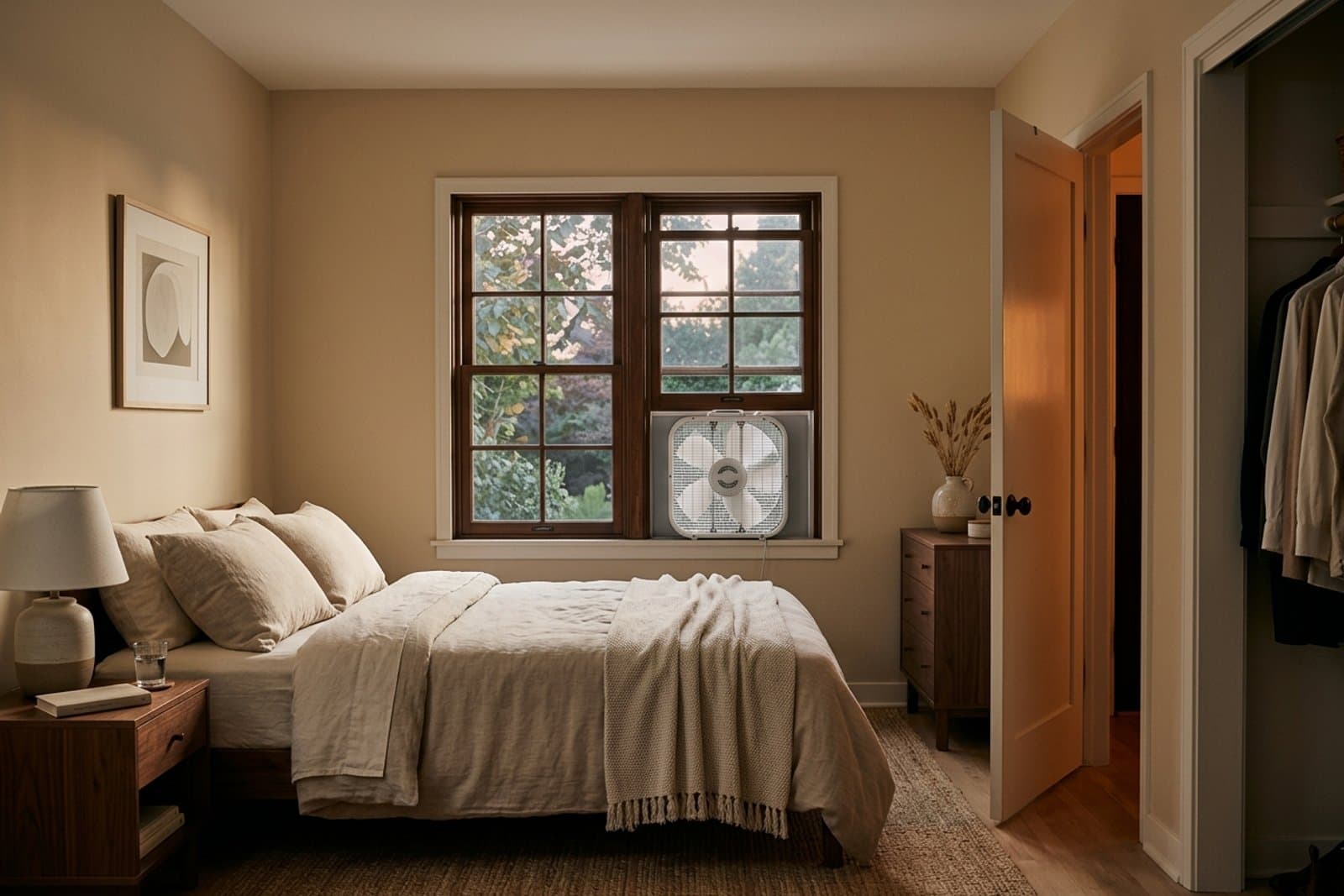
One fan should help air leave, and a second should help your body feel cooler. Do not aim every fan into the center of the room. That creates movement, but it may not remove moisture. After sunset, place a box fan or table fan facing outward in the warmest window. Crack a door or a second window on the cooler side so replacement air can enter.
During the day, use personal airflow instead. Point a fan across your upper body from three to six feet away. The goal is skin cooling, not room temperature. If the room is sealed because outside air is wetter, a fan in the window may pull in humidity. Keep it near the bed, sofa, or desk instead.
A bathroom fan can also matter more than a floor fan. Run it during showers and for 30 minutes after. If your kitchen is close to the living area, use the range hood when boiling water, washing dishes with hot water, or running a kettle.
What removes humidity without air conditioning?
The fastest low effort fix is source control: stop adding moisture to the room. Dry towels outside the bedroom, hang workout clothes in the bathroom with the exhaust fan running, and keep wet shoes, plants, and laundry away from the sleep zone. A single damp bath towel can keep a small room feeling sticky for hours.
Then remove soft surfaces that store moisture. You do not need to strip the room bare. Start with the pieces nearest your body:
- Swap flannel, microfiber, or sateen sheets for percale cotton or linen.
- Roll up thick rugs during July and August if the room stays damp.
- Keep curtains open after sunset when the outdoor air is drier so fabric can release moisture.
- Pull upholstered furniture two or three inches off exterior walls.
- Store extra blankets in a closet outside the room until fall.
If you can buy one device, a small dehumidifier usually beats a third fan in damp climates. Pick one sized for the room, roughly a 20 to 30 pint model for a bedroom, empty it daily, and keep it away from bedding. For many bedrooms, even a compact unit running for two hours before sleep can make the room feel cooler because the fan can finally work on skin.
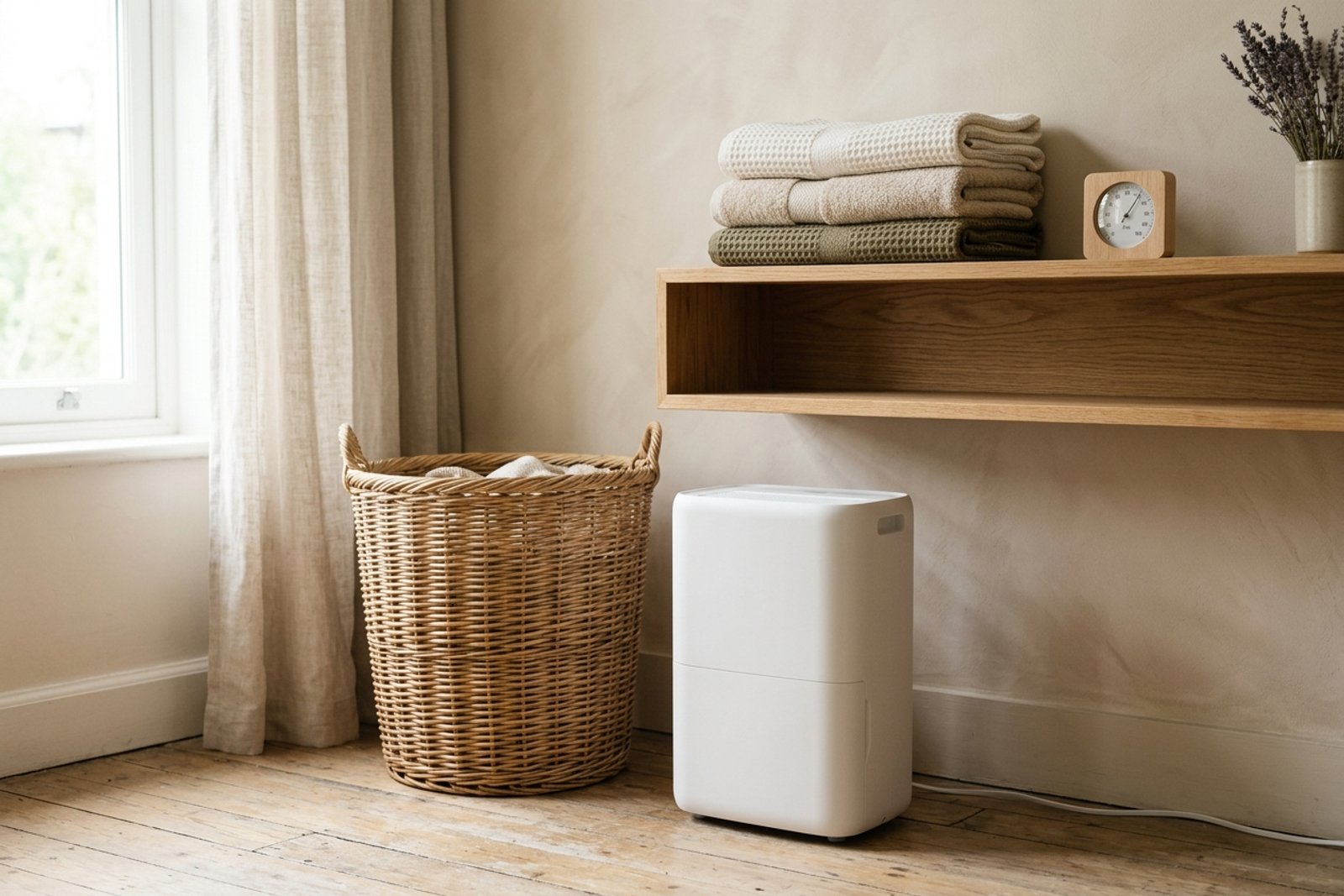
Count the fabric in the room
Working on coastal projects taught me to respect humidity as a materials problem, not just an air problem. Every soft surface in a room is quietly holding water: the rug, the heavy curtains, the pile of cushions, the bed itself. In humid climates we specify hard flooring, tight weave fabrics, and minimal textile layers, not only for the look but because the room dries faster after every damp evening. If your room feels sticky no matter how long the fan runs, count the fabric in it. Rolling up one thick rug for the summer often does more than an extra hour of ventilation.
Does putting a wet towel over a fan make it cooler?
A wet towel or a bowl of ice in front of a fan cools the air by evaporation, so it can feel good for a few minutes in dry heat. In a humid room it usually backfires, because it adds more water to air that already cannot hold much. You feel stickier, not cooler.
This is the classic poor man's air conditioner: a bowl of ice or a damp cloth set in front of a box fan. The trick relies on evaporative cooling, the same effect that makes sweat work, and it performs best in dry desert air where the room has space to absorb the extra moisture. A muggy bedroom is the opposite case. The air is already close to saturated, so water from the towel has nowhere to go and the room feels heavier by the hour.
If you want the evaporation effect without the moisture penalty, run the fan across your own skin instead. Your body supplies the water through sweat, and the fan carries it away, cooling you without soaking the whole room. Save the ice trick for the driest stretch of a heat wave, and reach for the exhaust fan and dehumidifier when the air is thick. In a humid space, drying the room beats dampening the breeze.
How do you cool a humid bedroom at night?
Change the room before you get in bed. Two hours before sleep, stop adding moisture: no hot shower with the door open, no wet towel over a chair, no laundry rack beside the bed. Run the exhaust fan in the bathroom, close the bedroom door if the bathroom is steamy, and pull bedding open so sheets can air out.
Thirty minutes before sleep, choose the airflow mode. If outside air is cooler and less sticky, exhaust through the window for 20 to 40 minutes. If outside air is still heavy, keep the window closed and run a personal fan across the bed. Place it so air crosses the chest and shoulders, not just the feet.
Use bedding that dries quickly. Percale cotton, linen, and a lightweight cotton quilt feel better than microfiber and foam heavy layers. If the mattress is memory foam and runs hot, add a thin cotton or wool topper before replacing the whole bed.
How can renters reduce humidity without permanent changes?
Habits and removable tools do almost all of it. The biggest wins are usually exhaust fan timing, drying wet items outside the main room, and sealing obvious air leaks that let damp hallway or basement air drift in. None of those require drilling.
Start with a seven day reset:
- Track indoor humidity each evening with a small meter.
- Run the bathroom fan during every shower and for 30 minutes after.
- Move towels, wet coats, shoes, and laundry racks out of the bedroom.
- Pull the bed and sofa a few inches off exterior walls.
- Open windows only when outside air feels lighter or the humidity meter confirms it.
- Use one outward facing fan after sunset when conditions are right.
- Wash and dry bedding fully, then switch to lighter sheets for the season.
If your lease allows removable weatherstripping, add it around a drafty door or window where damp air leaks in. If not, a washable draft snake at the door base helps. Keep furniture legs open where possible so air can move under the bed, sofa, and console.
What mistakes make a humid room feel worse?
The most common mistake is ventilating at the wrong time. Opening every window at noon feels logical, but if outdoor humidity is high, the room absorbs that moisture. By bedtime the walls, curtains, bedding, and rug all feel damp. Ventilate in short, timed windows when the air outside is useful.
The second mistake is hiding wet items in the room. A towel behind the door, a laundry rack in the corner, or gym clothes in a hamper can undo a good fan setup. Moisture in fabric becomes moisture in the air.
The third mistake is buying only more airflow. A stronger fan may feel better for ten minutes, but a dry room with a modest fan often feels cooler than a damp room with two loud fans. Spend first on moisture control, then on airflow.

A simple evening routine for a less sticky room
Use this routine on humid summer nights when you do not have AC:
- Check the room at dinner. If towels, bedding, or clothes feel damp, move them out.
- Run bathroom and kitchen exhaust for 20 to 30 minutes after steam.
- Close windows if outdoor air feels heavier than indoor air.
- After sunset, test the air again. If it feels cooler and lighter, exhaust the room with one fan facing out.
- Point a second fan across the body zone: bed, sofa, or desk.
- Leave bedding pulled back until sleep so trapped moisture can escape.
- Shut the room down before outdoor air turns damp again overnight.
This is not as dramatic as installing a window unit, but it solves the right problem. A humid room usually needs fewer wet fabrics, better exhaust, and smarter fan timing before it needs another appliance.
Frequently asked questions
How do you push hot air out of a room?
Push hot air out by making a single exit path. After sunset, set a box fan facing outward in the warmest window, then crack a window or door on the cooler, shaded side so replacement air can flow in. The fan pushes hot, stale air out while cooler air is drawn across the room. One exit and one intake beat several fans stirring the same warm air in circles.
Is it harder to cool a humid room?
Yes. Humidity slows evaporation, which is how your body and a fan cool you, so the same 78°F feels several degrees warmer when the air is damp. A dry room at 80°F can feel more comfortable than a humid room at 76°F. That is why moisture control, not just more airflow, is the first step in any room without AC.
How do you cool a room without AC at night?
Reset the room before bed. Two hours before sleep, stop adding moisture and run the bathroom exhaust fan. Thirty minutes before sleep, exhaust the room through a window if the outside air is cooler and drier, or keep it sealed and run a fan across the bed if the air outside is still heavy. Lighter percale cotton or linen sheets help you stay dry overnight.
Does a dehumidifier cool a room?
A dehumidifier does not lower the thermostat, and its motor adds a little heat. But by pulling water out of the air it lets your sweat evaporate again, so the room feels cooler and less sticky at the same temperature. In a damp bedroom, running a 20 to 30 pint unit for an hour or two before sleep often does more for comfort than another fan.
Final thought
A sticky room is frustrating because it feels like the air itself is working against you. The fix is to give moisture fewer places to hide. Dry the towels somewhere else, let bedding breathe before sleep, exhaust steam before it spreads, and use fans with a purpose. Once humidity drops, the room does not only feel cooler. It feels calmer, easier to sleep in, and less like a temporary summer problem.
Written by the Spatia Editorial Team. Spatia tests small room cooling advice through the lens of renter safe changes, room layout, and decision confidence before readers buy more gear.
The Noticer
For thoughtful people who notice spaces.
What did you notice?
Did something in this story make you see your own space differently?
Plan a cooler room before you buy more gear
Archie helps map your room orientation, airflow path, fabric choices, and cooling routine so you can fix the real cause of sticky heat before spending on another fan.
Plan my room with ArchieAdvertisement. Archie is made by STUDIO DID IT, the studio that publishes Spatia.
Related Articles
How to Ventilate a Room With One Window (No Cross Breeze)
To ventilate a room with one window, face a box fan out, crack the door for intake, and flush 10 to 20 minutes, or about 5 in winter. See the full routine.

How to Cool a Room With One Window Without AC (West or South)
Cool a room with one window without AC: shade the glass before the sun lands, aim a fan at your body, then flush stored heat out after sunset.

7 Best Curtains to Keep Heat Out of an Apartment (No Drilling)
Afternoon sun bakes a no-AC apartment through the window. Here are 7 curtains and blinds that actually keep heat out, all renter safe and no drilling.