7 Best Curtains to Keep Heat Out of an Apartment (No Drilling)
Afternoon sun bakes a no-AC apartment through the window. Here are 7 curtains and blinds that actually keep heat out, all renter safe and no drilling.
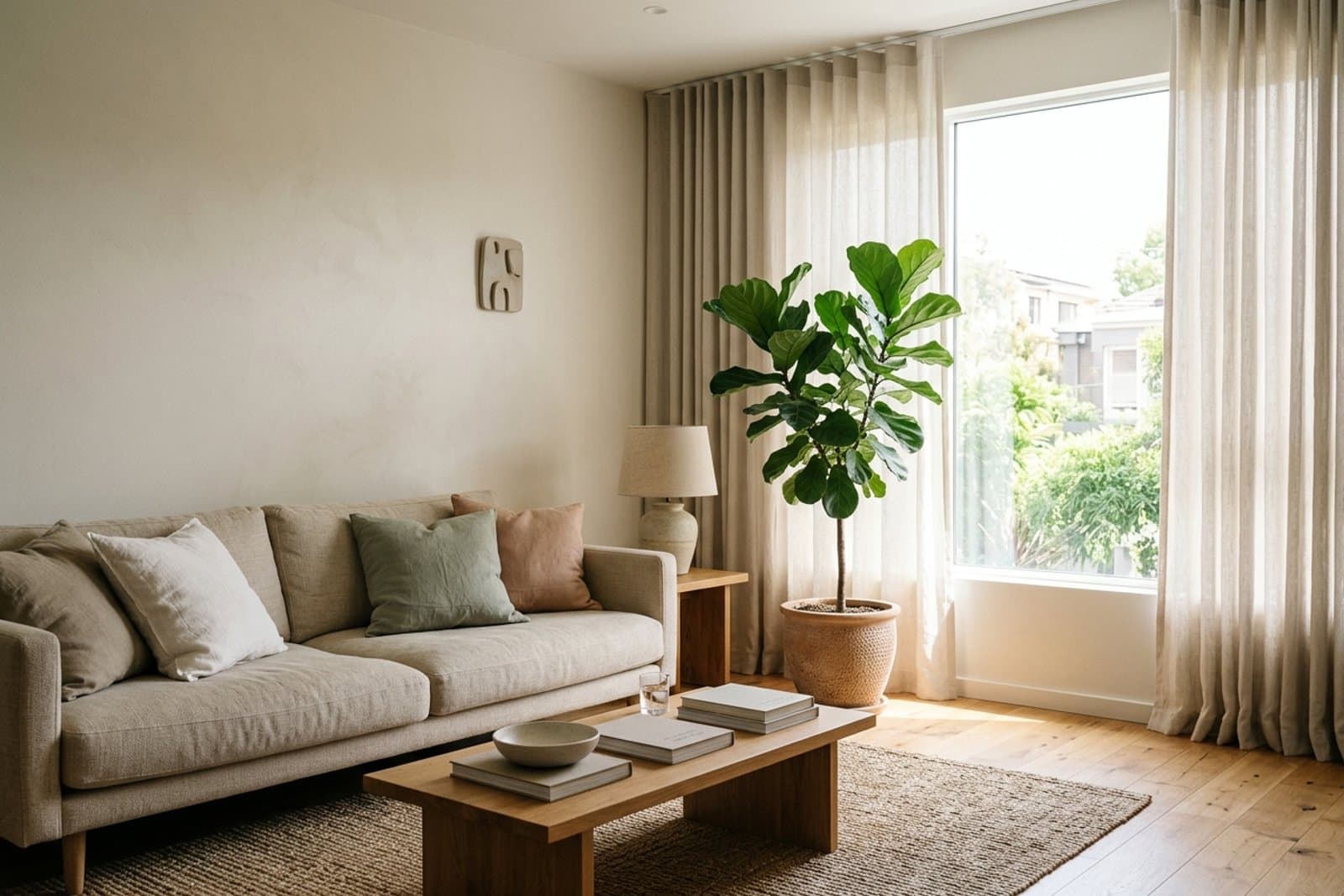
A hot apartment with no AC usually loses the fight at the window, where afternoon sun pours through the glass. The best curtains to keep heat out pair a light or reflective face with a tight seal, no drilling required. The U.S. Department of Energy found medium curtains with a white backing cut heat gain by 33 percent, and no drill cellular shades block up to 60 percent.
This guide is for renters and small space dwellers who want to block heat without permanent installs, and keep their deposit. If your room mainly overheats late in the day from a west window, start with our guide to cooling a room without AC, which covers why an apartment ends up hotter than it is outside and how fans and curtains work together, then come back here for the window treatment details.
What actually blocks heat: the fabric, the color, or the fit?
The biggest factor is not the curtain label, it is what faces the glass and how tightly the panel seals the window. A light panel with a white or reflective backing bounces sunlight back out before the room absorbs it. The U.S. Department of Energy found that medium curtains with a white backing cut heat gain by 33 percent. Cellular, or honeycomb, shades add trapped air pockets that slow heat further, reducing unwanted solar heat gain by up to 60 percent at the window.
Dark, thin, or loosely hung curtains do very little, no matter how heavy the fabric feels. For a rented apartment, the winning formula is simple: choose a light or reflective face, mount the panel close to the glass with small side gaps, and keep it closed through the hottest hours of the afternoon.
Here is how the main options compare at a glance:
| Window treatment | Heat it blocks | Renter friendly | Rough cost |
|---|---|---|---|
| Cellular (honeycomb) shade | Up to 60% alone | Yes, tension fit | Mid |
| Reflective window film | Rejects a large share at the glass | Yes, static cling | $10 to $30 a roll |
| Light thermal blackout curtain | Several degrees cooler | Yes, tension rod | Low to mid |
| Solar shade | Cuts radiant heat, keeps the view | Yes, tension fit | Mid |
| Reflective roller shade | Bounces sun at the glass | Yes, no drill options | Low to mid |
| Light linen or cotton curtain | Modest, best for looks | Yes | Low to mid |
| Layered stack (shade plus drape) | The most, shade plus drape | Yes | Higher |
The 7 best heat blocking window treatments for a no AC apartment
1. Cellular (honeycomb) shades
These are the most effective interior option, and they are the one I recommend first. The honeycomb pockets trap a layer of air that slows heat moving through the glass, cutting summer heat gain by up to 60 percent on their own. Double or triple cell versions block the most. No drill, cordless versions such as Redi Shade cellular shades install inside the window frame with no screws, so they come off clean at move out.
2. Light thermal blackout curtains
Blackout fabric with a thermal lining is the classic heat blocker, and a good panel can make a real temperature difference in a sunny room. The catch is color and fit. Choose a light or white face, or hang a light thermal liner behind a darker decorative curtain so the room still looks warm without absorbing heat.
3. Solar shades
Solar shades use a tight weave that cuts glare and radiant heat while keeping your view. They are ideal for a window you do not want to fully cover, like a living room with a nice outlook. Pick a lower openness percentage for hotter, sunnier windows.
4. Reflective roller shades
A roller shade with a reflective or white backing bounces sunlight straight back outside before the room heats up. They sit slim against the glass, come in no drill versions, and pair well with a soft drape on top so the hard reflective layer stays hidden.
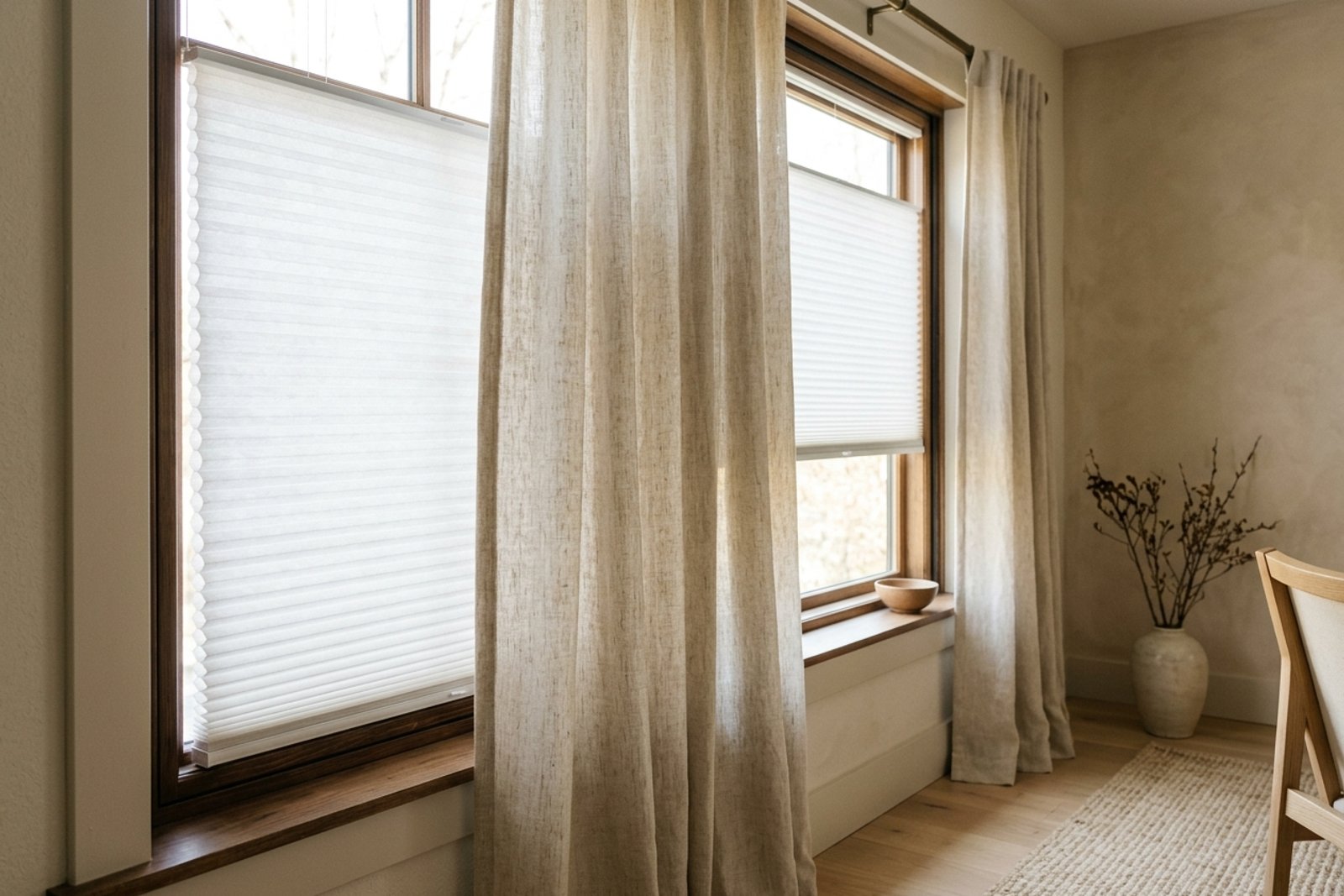
5. Light linen or cotton curtains
If you care most about how the room looks, breathable natural fabric in a pale shade is the move. Linen and cotton let air pass, wick moisture, and reflect more sun than synthetic sateen. They block less heat than a cellular shade alone, so treat them as the pretty top layer, not the whole defense.
6. The layered stack
The strongest setup is two layers: a cellular or solar shade close to the glass, plus a light lined drape over it. The shade does the heat work and seals the sides, the drape trims light leaks and makes the window look finished. This is how you get real cooling and a room that still photographs well.
7. No drill mounts and removable film
The mechanics matter as much as the fabric. Tension rods, adhesive brackets, and magnetic clips let you hang heavy panels without a single hole. Add a removable static cling window film, such as Gila reflective film, usually 10 to 30 dollars a roll, to reject part of the heat at the pane before your curtains even work.
What color curtains keep a room coolest?
Pale ones, and the margin is not close. Light shades reflect sunlight back out, while dark fabric absorbs it and then radiates that stored warmth into the room after the sun moves on. White, oat, sand, pale sage, and soft clay all work well on a sunny window.
There is a nice overlap with current style here. The all gray, cool toned window look is fading, and 2026 is leaning into warmer, softer tones like terracotta, olive, and muted ochre. You can stay on trend and stay cool at the same time, as long as the panel that faces the glass is light or reflective. If you love a deep, moody color, keep it as the front decorative layer and put a light thermal liner behind it.
Do blackout curtains actually keep heat out?
Yes, but only when they fit tightly and face the right way. Blackout fabric blocks light extremely well, and paired with a thermal lining it can drop a sunny room by several degrees. The failure point is almost always the gaps. Sun leaking around the sides and top of a loose panel undoes most of the benefit.
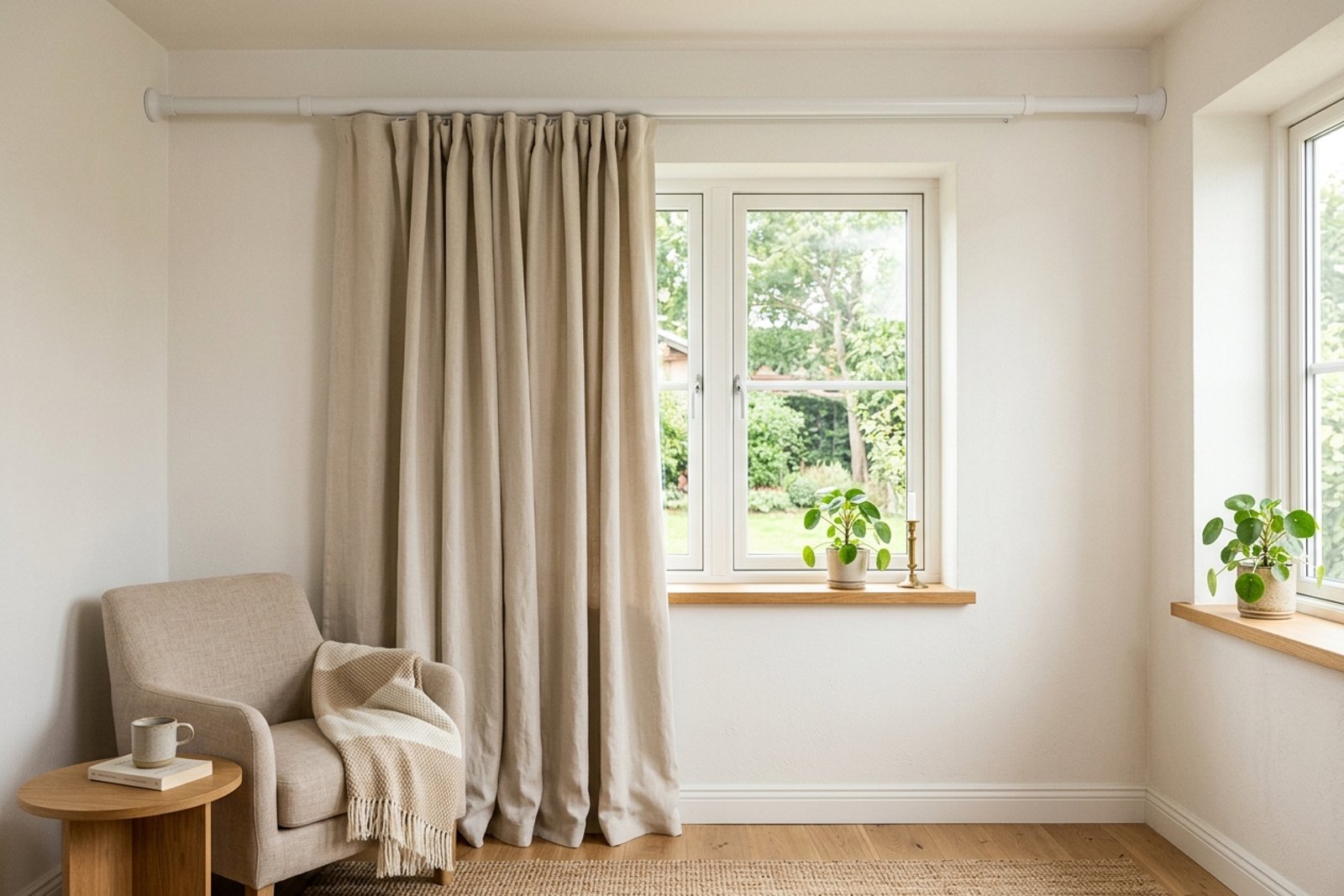
To make blackout curtains earn their keep, mount the rod wider and higher than the window so the panels overlap the frame, let the fabric fall close to the wall, and overlap two panels in the middle. A tightly sealed light blackout curtain beats a heavy dark one that floats an inch off the glass every time.
How do renters hang heat blocking curtains without drilling?
You have more no drill options than most people realize. Tension rods sit inside the window frame with no hardware. Adhesive or magnetic curtain brackets hold a wider rod above the frame and peel off at move out. For blinds and shades, look specifically for tension fit or spring loaded versions that press into the recess.
Removable window film is the other renter friendly layer. Static cling reflective film needs no adhesive, cuts a large share of solar heat at the glass, and comes off with a corner pull when you leave. Apply it in the morning while the glass is cool, and photograph the window before you start so you have a clean record for your deposit. For a whole apartment plan, pair these with the zoning ideas in our south facing room cooling guide.
Why I close the shade two hours earlier than feels necessary
Timing matters more than fabric, a lesson the seaside villas I have worked on made unavoidable. The mistake I see in overheated rooms is closing the shade when the room already feels warm, which is roughly two hours too late: by then the floor and walls have absorbed the sun and will release that heat all evening. Whatever panel you choose from this list, close it before the sun reaches the glass. Check what time direct light first touches the window, then set a phone reminder fifteen minutes earlier for a week until it becomes habit. A modest curtain closed on schedule outperforms an expensive one closed at the moment of discomfort.
A quick summer setup order
- Seal the hottest window first. Add a cellular or reflective shade close to the glass on whichever window gets the harshest sun.
- Layer a light drape on top. Choose a pale linen or thermal panel and mount the rod wider than the frame.
- Close the gaps. Overlap the panels, let them fall to the wall, and clip the outside edges if your lease allows.
- Add film if needed. Use static cling reflective film on the sunniest pane for extra rejection at the glass.
- Run it on a schedule. Keep everything closed from late morning through the hottest part of the afternoon, then open up once the outside air cools.
Frequently asked questions
Do sheer curtains keep heat out?
Not much on their own. Sheer curtains soften glare and diffuse light, but the loose, open weave lets most solar heat straight through. If you like the airy look, hang the sheer as the front layer and put a reflective roller or cellular shade behind it to do the actual heat blocking.
Can curtains block heat and still let in light?
Yes. Solar shades and light filtering cellular shades use a tight weave that cuts radiant heat while keeping a soft daylight glow, and, with solar shades, your view. Pick a lower openness percentage, around 3 to 5 percent, for the hottest and sunniest windows so more heat stays outside.
Are thermal or reflective curtains better for blocking heat?
Reflective panels usually win on a bright window because they bounce sunlight back outside before the room absorbs it. Thermal and blackout curtains work more by insulating and sealing gaps, so they shine on a west window at peak afternoon. The strongest setup layers both, a reflective face near the glass under a thermal drape.
Do heat blocking curtains also keep heat in during winter?
Yes. The same trapped air and tight seal that block summer heat also slow heat escaping in winter. The U.S. Department of Energy notes insulated cellular shades can cut heat loss through windows by around 40 percent, so a no drill honeycomb shade earns its place in both seasons.
Final thought
Blocking heat at the window is the highest impact thing a renter can do without AC, and it does not have to mean living in a dark cave or wrecking your deposit. Start with a light, reflective layer close to the glass, seal the side gaps, and add a soft drape on top for the look. Do that on your worst window and the whole apartment feels different by dinner.
Written by Jihyun Lee, who has cooled more than one top floor rental through a single window blasted by afternoon sun, no AC and no drilling allowed.
The Noticer
For thoughtful people who notice spaces.
What did you notice?
Did something in this story make you see your own space differently?
Plan a cooler apartment without AC
Archie maps your window orientation, curtain stack, and afternoon light so a hot apartment feels calmer without permanent installs or a new lease fight.
Plan my room with ArchieAdvertisement. Archie is made by STUDIO DID IT, the studio that publishes Spatia.
Related Articles
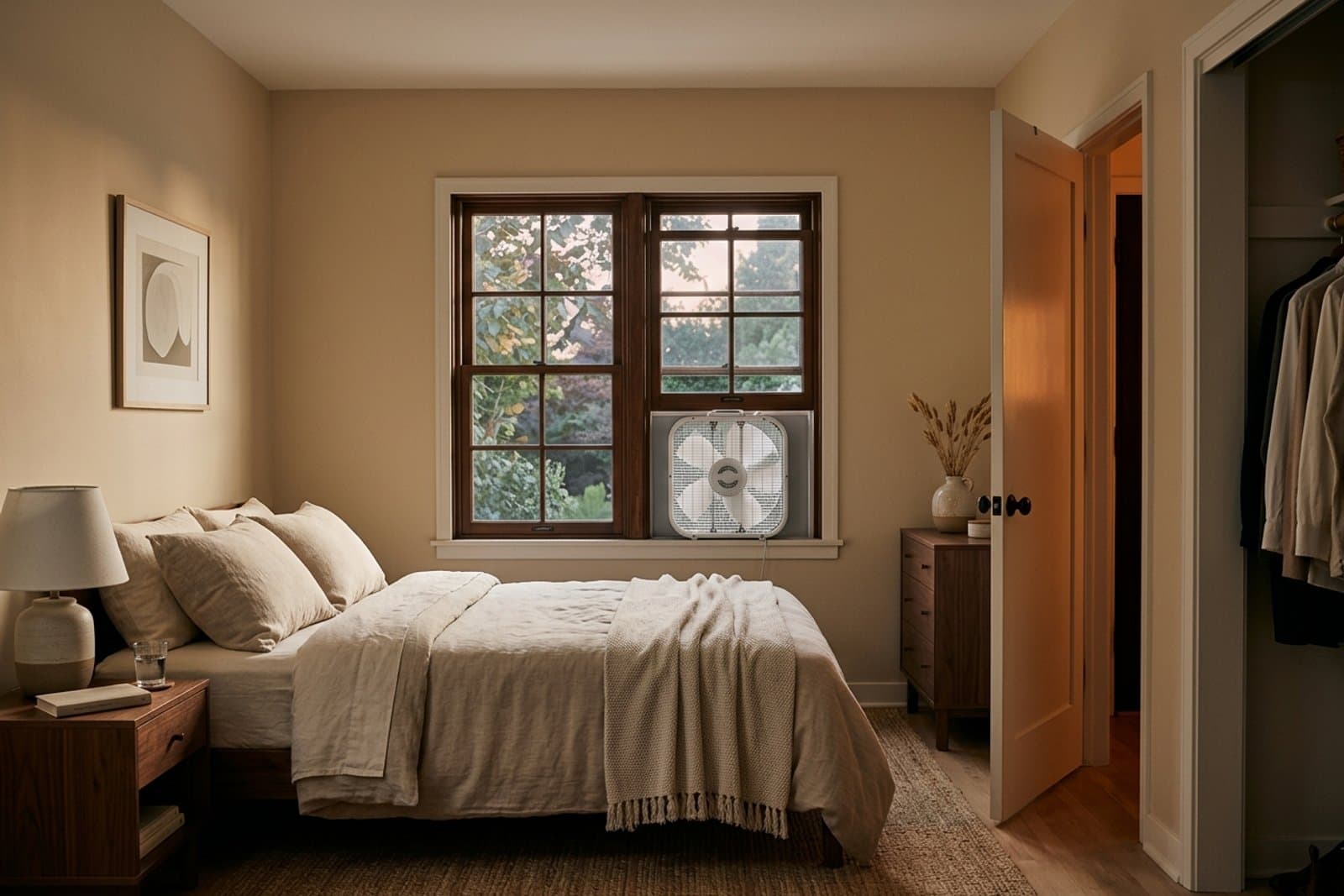
How to Ventilate a Room With One Window (No Cross Breeze)
To ventilate a room with one window, face a box fan out, crack the door for intake, and flush 10 to 20 minutes, or about 5 in winter. See the full routine.
How to Cool a Room With One Window Without AC (West or South)
Cool a room with one window without AC: shade the glass before the sun lands, aim a fan at your body, then flush stored heat out after sunset.
How to Cool a Humid Room Without AC (7 Steps)
Cool a humid room without AC by controlling moisture first, then airflow. A renter safe routine to exhaust damp air, dry textiles, and place fans right.