How to Cool a South Facing Room Without AC: A Renter's Guide for 2026
Your south facing bedroom can stay 10 to 15°F cooler this summer without AC and without permanent installs. The four mechanical fixes that work, plus the design choices (palette, textiles, bedding) that compound them, starting under $200 for the core stack.

A south facing room without AC stays coolest in summer when the sun is blocked before it gets in, hot air is pushed out before it builds up, and a fan moves the remaining cooler air across the body. The Department of Energy reports that closing window coverings during peak sun cuts heat gain by up to 33%, and a box fan facing outward in a window on the warm side of an apartment, paired with an open window on the cool side, can drop indoor temperature by 4 to 7°F overnight. Renters get the most cooling per dollar by combining three things under $200: thermal blackout curtains rated for daytime closure, two box fans positioned for cross ventilation after sunset, and removable reflective window film cut to fit the south facing pane. Design choices (palette, textiles, bedding) compound the mechanical drop by 2 to 3°F of perceived comfort. Skip evaporative coolers in humid climates; they only work below 60% relative humidity.
If you rent a top floor apartment with a south facing bedroom that hits 29°C by the afternoon and your lease will not let you install an AC, this guide is for you. It walks through what actually works under $200, in the order to deploy it: window covering choices, fan placement for cross ventilation, removable window film, an honest read on whether an evaporative cooler will help in your climate, and the design choices (color, materials, bedding) that quietly extend the cooling effect. Each section gives the temperature drop you can realistically expect. If you also live in a small apartment and want broader context on how layout and light interact, Spatia's small apartment psychology guide covers that wider frame.
This guide is written for renters with one or two south facing windows. If you own your home and can modify the building envelope (shade trees, exterior awnings, double pane upgrades), check your local cooling rebate program instead. If your room faces north or east, the window covering rules below still apply, but the timing differs; start with the bedroom lighting guide for light planning by window orientation.
When should I close the curtains to keep a south facing room coolest?
Close south facing curtains before the sun hits the window directly. For most apartments in the U.S. that means before 11 a.m., and keep them closed until the sun has rotated west, usually around 3 p.m. The U.S. Department of Energy reports that window coverings closed during peak sun reduce solar heat gain by up to 33%. The cost of waiting matters: every hour the south window is uncovered between 11 a.m. and 3 p.m. can add 1 to 2°F to room temperature, and rooms hold heat for hours after sundown because walls, floors, and furniture warm up alongside the air. Set a timer or a smart shade if you work from home and tend to forget. Open windows for cross ventilation only after outdoor temperature drops below indoor, usually after 8 p.m. The same hour by hour routine appears in Spatia's solo living interior design guide for homes that double as offices for one person: timing matters more than the gear.
Do dark or light curtains cool a room better?
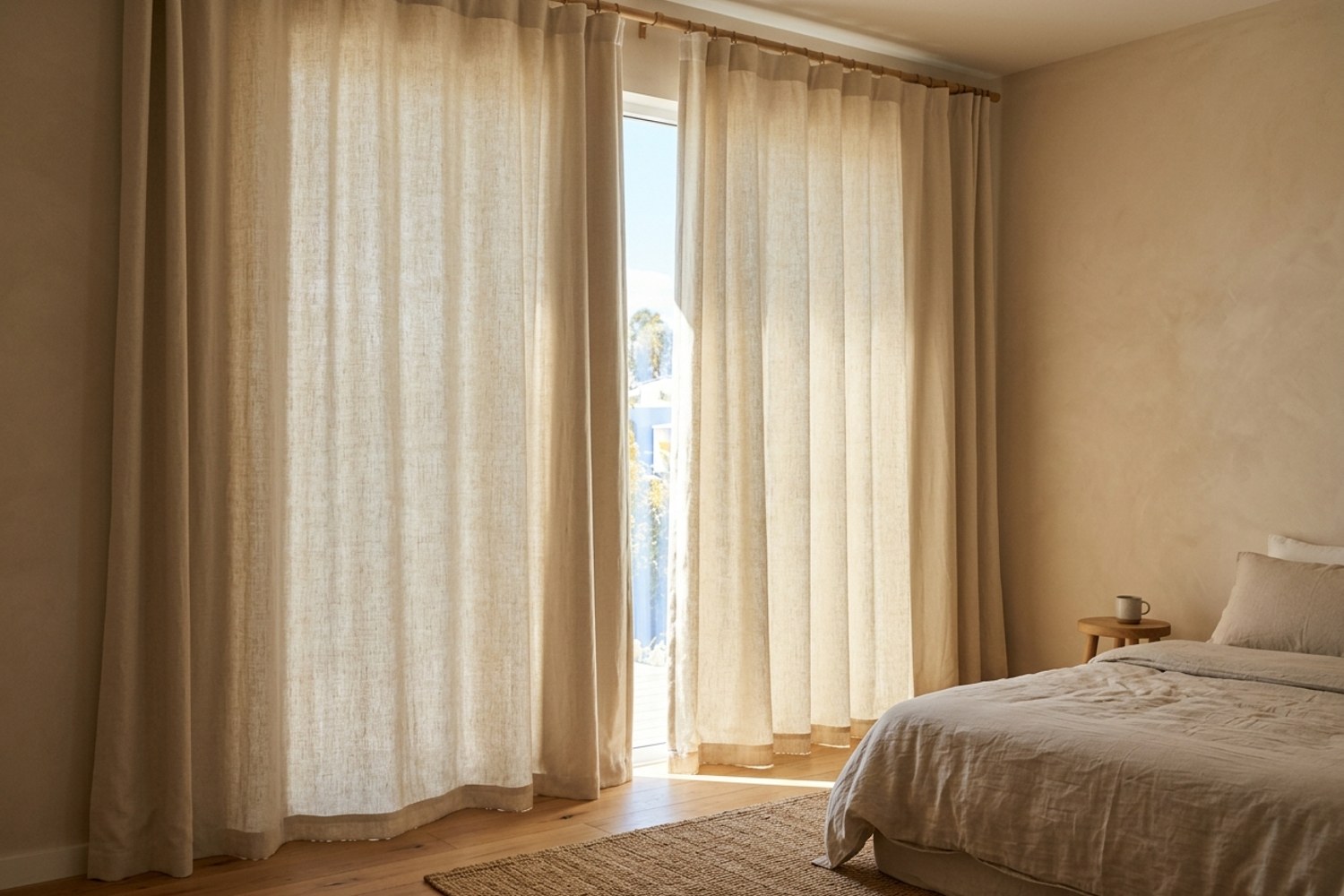
Lighter curtains reflect more solar radiation back through the window and are the better thermal default for a south facing room. A white or cream curtain reflects roughly 80% of incoming sunlight, while a dark curtain absorbs most of it and radiates the heat back into the room. The catch: color matters less than the backing. A blackout curtain with a reflective metallic or white backing outperforms a plain light curtain by a wide margin. Renters often miss this. Look for thermal blackout curtains rated R3 or higher, with a reflective lining sewn into the panel facing the window. Hang them as close to the glass as the rod and ceiling height allow, and let them touch the floor: any air gap above, below, or to the sides leaks heat into the room. For an east facing window the same rule applies in the morning. Spatia's small bedroom storage tips covers tension rod curtain alternatives for renters who cannot drill into the trim.
Where should I put a fan to cool a south facing room?
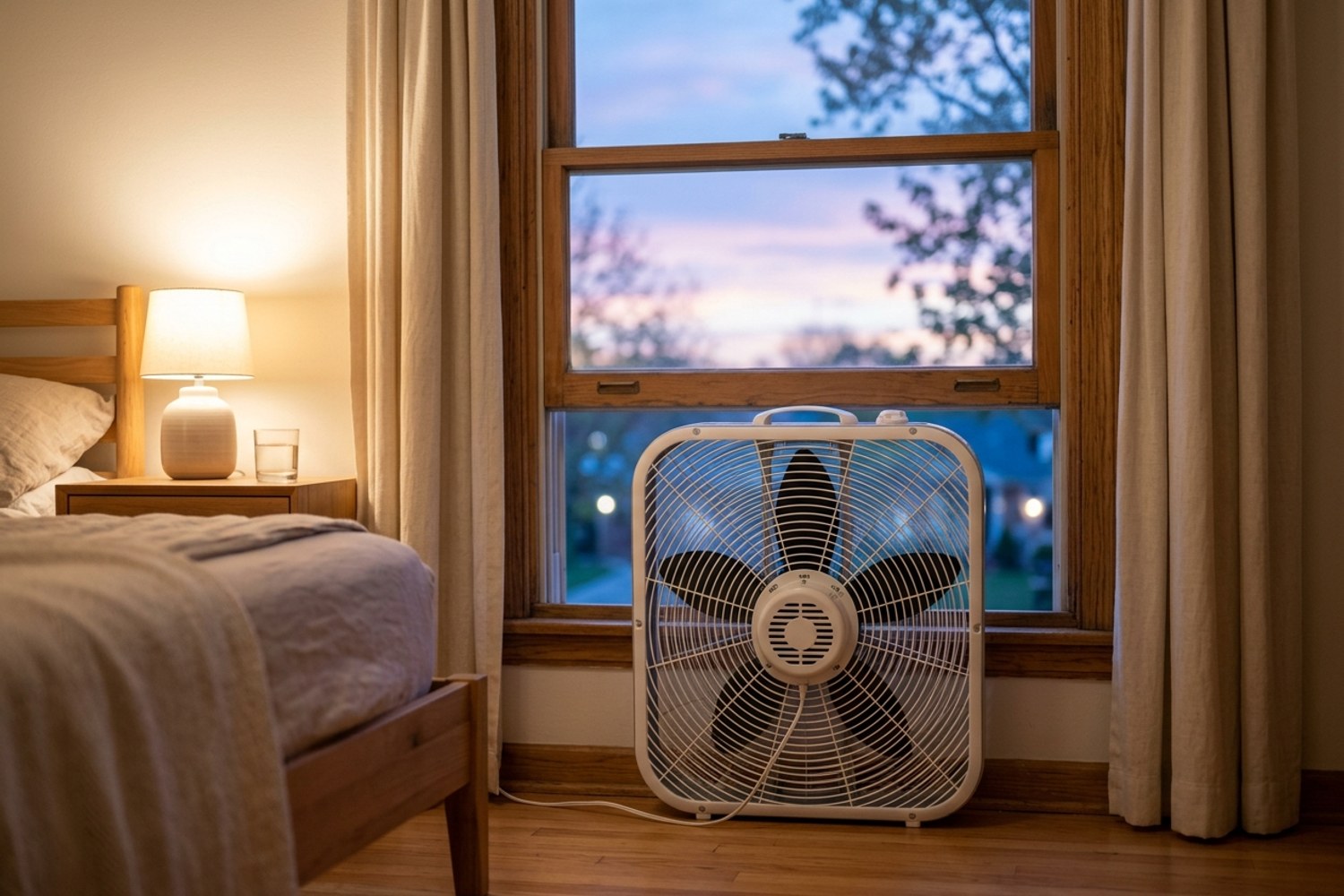
Run a box fan facing outward in the south window after sunset, with another window cracked open on the opposite cool wall. The hot air gets pushed out, and cooler outdoor air pulls in through the second window. The U.S. Energy Information Administration estimates that a properly placed window fan running overnight can drop bedroom temperature by 4 to 7°F before morning. During the day, when outdoor temperature is higher than indoor, do the opposite: keep windows closed, and run a fan pointed at your body, not at the wall. Air on skin evaporates sweat, which is what cools you. A ceiling fan on counterclockwise rotation gives the same effect, but only buy or install one if your lease permits. For a $50 alternative, position a tower fan three feet from the bed pointed at chest height. It is cheaper than central AC and quieter than a window unit, and for renters worried about how a hot bedroom affects sleep and focus, this overlaps with the territory in Spatia's stress free home interior design guide.
What window film actually works for renters?
Removable reflective window film is the best cooling upgrade renters can install for the money. Static cling and adhesive films apply with water and a squeegee, peel off with no residue, and reject 60 to 75% of solar heat depending on the film grade. Gila Heat Control Platinum is one common option, around $30 to $50 per standard roll (about 36 inches wide by 6.5 feet long), enough for one large window. Apply on the inside of the south facing pane during cool morning hours so the film does not curl. Avoid darker tints; they absorb heat at the glass and can stress single pane windows, which some landlords will charge a replacement fee for if they crack. Read the lease before installing any film, even removable. If in doubt, photograph the window's condition before you start so you have a record for the deposit return.
Does an evaporative cooler actually work in a small bedroom?
An evaporative cooler (sometimes called a swamp cooler) only works in dry climates with relative humidity below 60%. In Phoenix, Denver, or Las Vegas in summer, a 30W desk evaporative unit can drop the air around a bed by 8 to 12°F. In Miami, Houston, or Boston, the same unit adds humidity to already humid air and the perceived cooling is roughly zero. Sometimes it is negative, because the higher humidity slows sweat evaporation off the skin. Check your zip code's historical July humidity before buying one. For renters in humid regions, two box fans positioned for cross ventilation and a frozen water bottle on the bedside table outperform a $70 evaporative cooler at lower cost. For renters in dry regions, a portable evaporative cooler from Honeywell or Hessaire ($90 to $150) often beats a window AC unit in monthly running cost: it draws around 30 to 80 watts versus 800 to 1,400 for an AC.
What interior design choices keep a south facing room cooler?
Mechanical fixes do most of the cooling, but the design of the room itself shifts both the perceived and the actual temperature. Light walls (soft white, warm cream, pale sage) bounce more solar energy back than dark ones. Over a full summer, radiant heat in the room drops noticeably. Swap dark velvet or synthetic upholstery on the south wall for linen, cotton, or rattan; natural fibers breathe and do not trap body heat the way polyester does. Move the bed off any wall the south sun hits directly, and consider a low jute or sisal rug instead of a thick wool one in summer; bare floor is even cooler if your lease allows rolling the rug up seasonally. Add one broad leaf plant near the south window (rubber plant, fiddle leaf, peace lily) for transpiration cooling and softer filtered light. Spatia's interior color psychology guide covers how palette choices register thermally on the body, not just visually.
What summer bedding helps you sleep cooler?
Bedding material has a bigger effect on summer sleep temperature than most cooling gear. Swap polyester or sateen sheets for linen or percale cotton; linen is the gold standard for breathability and pulls heat off the body faster than synthetic blends. Drop the comforter for a single woven cotton blanket or a lightweight summer quilt under 200 gsm. Use a buckwheat or gel cooled pillow; standard memory foam absorbs body heat overnight and radiates it back at you. If you can only buy one thing, buy linen sheets in white, sand, or pale clay; the lighter color reflects ambient heat and the fiber wicks moisture during night sweats. For the mattress, a thin cotton or wool topper over existing memory foam can fix the heat issue without buying a new bed. The lighter, natural material palette behind these choices is the same one Spatia's japandi style guide builds around; it doubles as a cooling brief.
How much do these cooling tricks really lower the temperature?
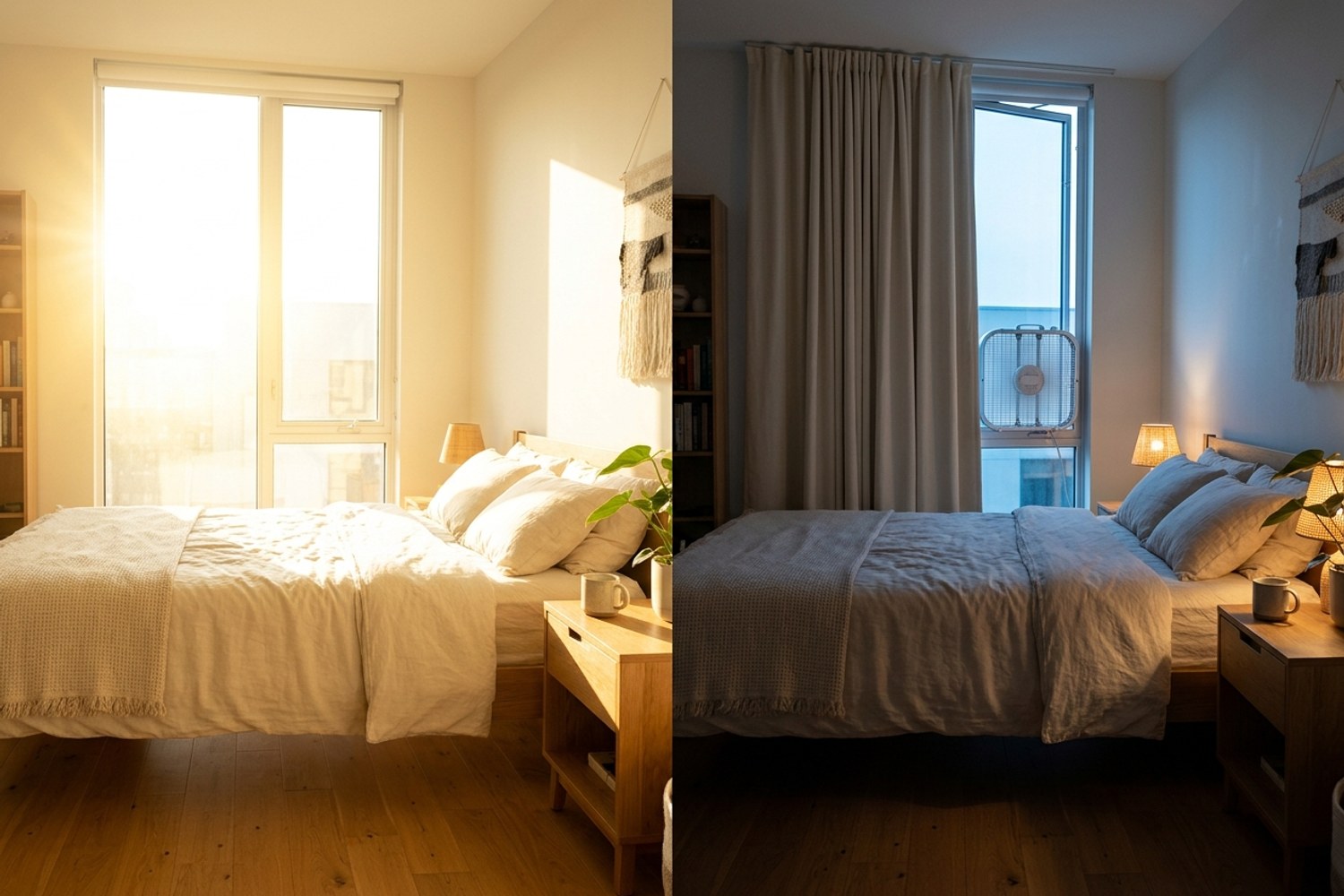
Stacked correctly, the four mechanical interventions in this guide can drop a south facing bedroom by 10 to 15°F versus an untreated room on the same hot day, based on combining published heat gain reductions for each fix. Thermal blackout curtains alone account for the largest single drop, around 4 to 7°F if closed before 11 a.m. and kept closed through peak sun. Reflective window film adds another 2 to 4°F by rejecting solar heat at the glass before it converts to interior heat. Cross ventilation overnight with two box fans can flush 4 to 6°F of stored heat between sunset and sunrise. Personal airflow fans aimed at the body add a perceived 4 to 6°F of comfort, not actual temperature drop. The design layer (lighter palette, natural fiber textiles, breathable bedding) adds another 2 to 3°F of perceived comfort on top of that, especially overnight. None of this matches a 12,000 BTU window AC, which can cool the same room by 20°F. But combined, they get a hot south facing bedroom from unbearable to sleepable, under $200 for the core stack, no permanent install.
Quick checklist: what to install this week
The same fixes, in the order to deploy them:
- Day 1: Buy thermal blackout curtains with reflective lining for the south window. Hang within one inch of the glass and let them touch the floor.
- Day 2: Buy two box fans, or repurpose one fan and a standing fan you already own. Position one outward facing in the south window, one inward facing in a north or east window.
- Day 3: Cut and apply removable reflective window film to the south facing pane. Skip this step if your climate's July average humidity is below 30%; you likely will not need it.
- Day 4: If you live in a dry climate (July humidity below 60%), add a 30W evaporative cooler. If humid, add a clip on personal fan above the bed instead.
- Day 5: Set a 10 p.m. cross ventilation routine: curtains open, both box fans on, both windows cracked. Reverse at sunrise.
- Day 6: Pull dark or synthetic textiles off the south wall. Swap to linen, cotton, or rattan. Roll up heavy wool rugs for the season. Add one broad leaf plant near the south window.
- Day 7: Change the bed. Linen or percale cotton sheets, a lightweight summer quilt under 200 gsm, a buckwheat or gel cooled pillow.
Final thought
A hot south facing room is not a permanent constraint of the apartment. It is a stack of small interventions that compound. The most effective fixes are also the cheapest, and the design choices that cool the room are the same ones that make it look intentional rather than improvised. Cooling, like layout, is about timing and material. The curtains close at 11 a.m. The fans flip direction at sunset. The film goes up before the first heat wave. The linen sheets replace the polyester ones the day humidity tips over 65%. None of it requires the landlord's permission, and all of it comes off the day the lease ends.
Written by the Spatia Editorial Team. Spatia covers small space design from a renter's lens, with most drafts produced in a 580 sq ft Brooklyn one bedroom whose south facing wall hits 30°C every July.
Plan a room that stays cool
Archie maps how natural light, furniture placement, and window covering choices interact in your specific room, so you can stop summer heat before it starts.
Plan my room with ArchieRelated Articles

How to Cool a West Facing Room Without AC: A Renter's Afternoon Heat Guide
West facing rooms feel fine at breakfast and unbearable by dinner. Here is the renter-safe cooling sequence that blocks late-day sun, dumps stored heat after sunset, and makes a small apartment sleepable without installing AC.

Why Is My Apartment Hotter Than Outside?
The thermometer says 82 outside, but your apartment feels like 88 with every window open. Here is why small apartments trap heat, and the renter routine that cools one down tonight without buying AC.

How to Cool a Top Floor Apartment Without AC: 9 Renter Safe Fixes
How to cool a top floor apartment without AC, in nine renter safe fixes. The roof above you can hit 120 degrees on a 90 degree day and radiate that heat down long after sunset, so this guide works the ceiling heat, the trapped air, and a night flush routine to cool the hottest unit in the building.