6 Ways to Design a Home That Lowers Your Stress
Stress doesn't only come from work or money. The shape, light, and clutter of your home keep your nervous system on quiet alert. Six design moves that change it.

The stress you didn't know your home was causing
Most people blame stress on work, money, or the calendar. From a design perspective, there's a quieter source nobody talks about: the room you're sitting in right now.
If your space feels visually loud, too bright, too crowded, or short on softness, your body holds a low background tension you stop noticing. Over months and years, it accumulates.
A home built around calm doesn't just look good. It lowers the volume on your nervous system. Here are six moves that do the work.
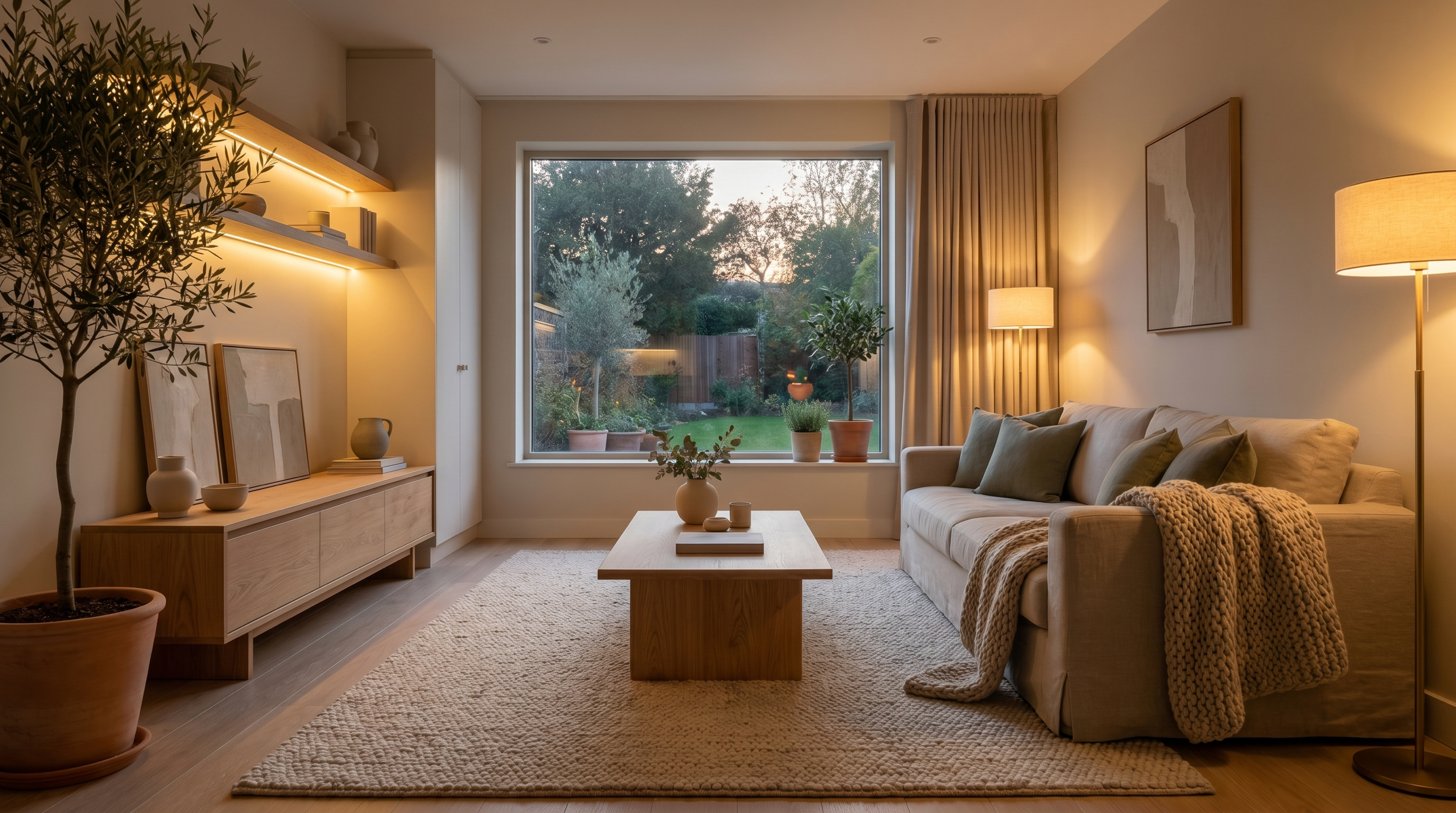
1. Reduce visual noise
Clutter is not only physical. It is psychological. Every object in your line of sight asks for a fraction of attention, and the bill comes due as mental fatigue.
The fix is uncomfortable but effective:
- Keep flat surfaces clear. Counters, coffee tables, side tables.
- Limit decorative items to a few you genuinely love.
- Choose fewer, better pieces instead of more, cheaper ones.
A room with less to look at is a room you stop scanning.
2. Use warm, desaturated colors
Bright, saturated palettes stimulate the brain. They're great for a kitchen you want to feel alive in. They're the wrong choice for a room you want to rest in.
For relaxation, lean into:
- Warm beige and oat
- Soft taupe and mushroom
- Muted greens, sage to olive
These tones read as safety, not stimulation.
3. Replace the overhead light
Harsh ceiling lights create tension. They flatten faces, kill shadow, and make a room feel like a waiting room.
Switch to:
- Floor lamps at the corners
- Indirect lighting tucked behind shelves
- Warm LED bulbs, ideally 2700K or lower
Lighting should wrap the space. It should not attack it.
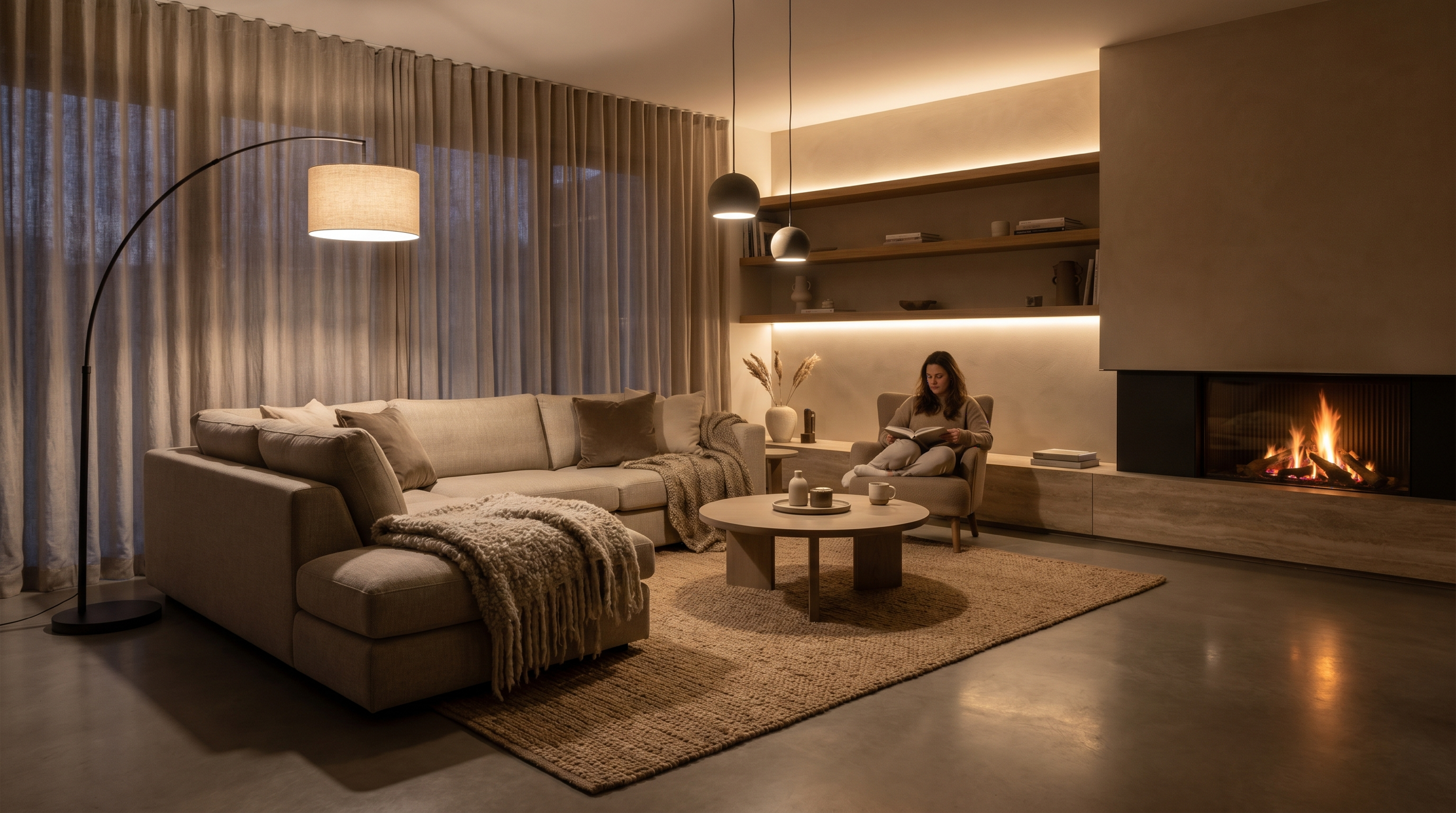
4. Create empty zones
A calm home is not fully filled. There has to be somewhere for the eye to land and stop working.
Empty space gives the eye rest. It reduces subconscious stress in a way no decor object can replicate. This is the most underrated design move of the last decade, and the hardest one to commit to.
Pick one shelf, one wall, one corner. Leave it intentionally bare.
5. Introduce soft materials
Hard surfaces reflect stress visually. A room full of glass, polished stone, and lacquer feels alert even when it's empty.
Soften the room:
- Rugs that absorb sound
- Curtains in linen or wool, not blackout polyester
- Throws, cushions, and upholstery in nubby weaves
Softness changes how a room feels in seconds.
6. Design around how you actually live
The calmest homes are not the most decorated. They are the most aligned with the person living in them.
Ask the two honest questions:
- Where do I really spend time?
- What part of this room feels tiring?
Then design from the answers. Move the reading chair toward the window you keep ignoring. Pull the dining table out of the dark corner. The goal is to reduce friction, not add another beautiful object that asks for attention.
The real point
A stress free home is not a trend. It is a space built to support your nervous system, day in and day out.
Comfort is not accidental. It is designed.
Frequently asked questions
What is the single biggest cause of a stressful feeling room?
Visual clutter, by a wide margin. Even when a room is technically clean, every visible object pulls a small amount of attention. Clear the flat surfaces first and most people feel the difference within a day.
What color palette is most calming for a home?
Warm, desaturated tones. Think beige, oat, taupe, mushroom, and muted greens between sage and olive. Avoid bright whites and bold contrast blocks in rooms meant for rest.
Does lighting really affect stress levels?
Yes. Harsh overhead lighting flattens a space and keeps the body in an alert state. Layered, warm light at multiple heights signals the nervous system to settle. Aim for at least three light sources at different heights, all on the warm side of 3000K.
How much empty space should a calm room have?
Leave 30 to 40 percent of visible surfaces and walls intentionally bare. The eye needs somewhere to rest, and decor objects multiply attention demands faster than people realize.
Want to try this in your own space?
Upload a photo of your room and let Archie, our AI design assistant, show you personalized recommendations.
Try Archie FreeRelated Articles

Why Does My Room Feel Dark?
A dark room is usually losing light, not starved of it. Daylight gets blocked before it enters, surfaces absorb it, nothing bounces it deeper, and lamps only light the center. Fix the four light-loss points, in order, starting with the free one.

Why Does My Room Feel Cluttered When It's Clean?
A room can be spotless and still feel busy, because tidy is about mess and calm is about visual load. Four moves lower the load: give the eye one place to land, cut the visible object count, close the open loops, and tighten the color field.

Why Does My Room Feel Flat?
A room can look styled and still feel flat because every visual element sits below three feet, giving the eye no reason to travel up. Four principles push weight above the band: raise the sight line, float the sofa, kill the overhead after sunset, and build depth the way a landscape painter does.