Why Does My Room Feel Dark? (4 Light Leaks to Fix)
Why does my room feel dark? It is losing light at 4 points. Find your leak with a two photo test, then start with the free fix: the window.
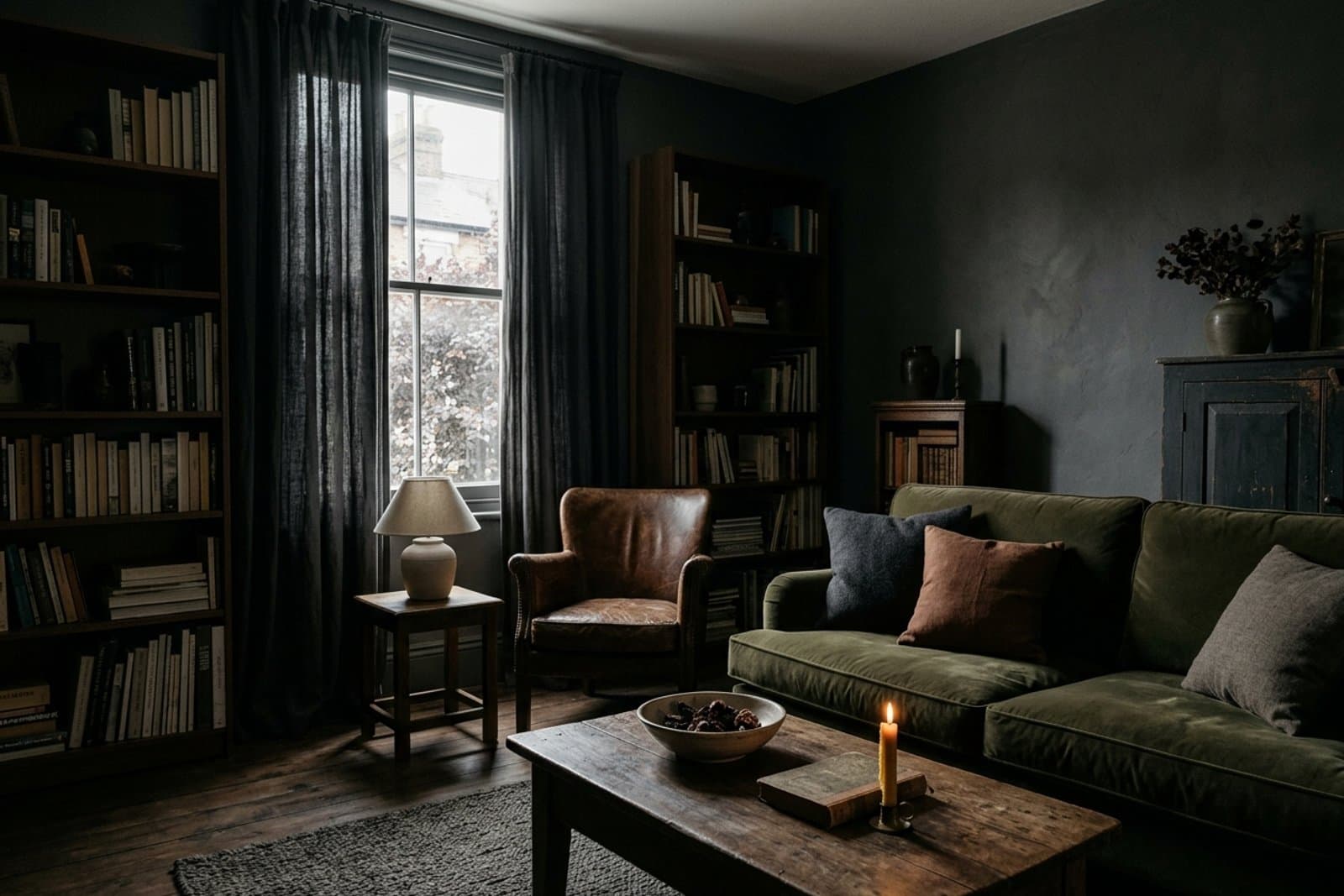
Your room feels dark because it is losing the light it already has, not because it lacks light. It leaks at four points: daylight blocked at the window, dark surfaces that absorb it, nothing to bounce it deeper, and one ceiling fixture that lights only the center. Clear the window first, since it is free, before repainting at LRV 75 to 85.
This is for the room that stays dim even at midday. Most fixes need no paint, so renters can use them. If the room is bright but feels cold, see our guide on rooms that feel unfinished instead.
Why does my room feel so dark even with windows?
Windows only let light in; the room decides how much of it stays. Dirty glass, heavy drapes, and furniture parked in front of the window cut the daylight before it enters. Dark walls and a dark floor absorb what gets through. And with no pale surface or mirror to pass it along, the light fades a few feet from the glass.
After dark the problem changes shape. A single overhead fixture drops a pool of light in the middle of the room and leaves the walls and corners in shadow, so the room can have plenty of bulbs and still read as dim. That is also why this question gets louder in October. Since the September equinox, nights have been longer than days across the Northern Hemisphere, and most of the US sets its clocks back on November 1, so sunset now beats a lot of people home. Your lamps carry more of the day than they did in July.
A north facing room feels all of this first. Sherwin-Williams notes in its room orientation guide that north facing rooms get the least light through the day, and the light they do get reads cool. Our north facing paint guide covers which colors hold up in it.
Why is my room so dark, and which leak is it?
Take two photos from the doorway, one around noon and one after sunset, and compare them. If the noon shot looks heavy, the leak is the window or the dark surfaces. If only the evening shot is gloomy, the lamps are the weak link. If both look dim, start at the window and work inward from there.
| What you see | The leak | Where to start |
|---|---|---|
| Noon looks dim and the window is partly covered | Blocked daylight | Fix 1 below |
| Noon looks dim even with the window clear | Dark surfaces absorbing light | Fixes 2 and 5, or why a room still looks dark after painting |
| Light stops a few feet from the window | Nothing bouncing it deeper | Fix 3, then our mirror placement guide |
| Evening is gloomy and the corners go black | Flat, central lighting | Fix 4, then our lamp layout guide |
Then check one thing in person: the top half of the walls. Stand in the doorway at both times of day and look above the sofa line. If neither daylight nor lamplight ever reaches that band, the room will read dark however bright the floor is, because the eye judges a room mostly by its walls. A room can leak at more than one point, so a fix that helps without finishing the job usually means a second leak is still open.
1. Stop blocking the daylight you already have
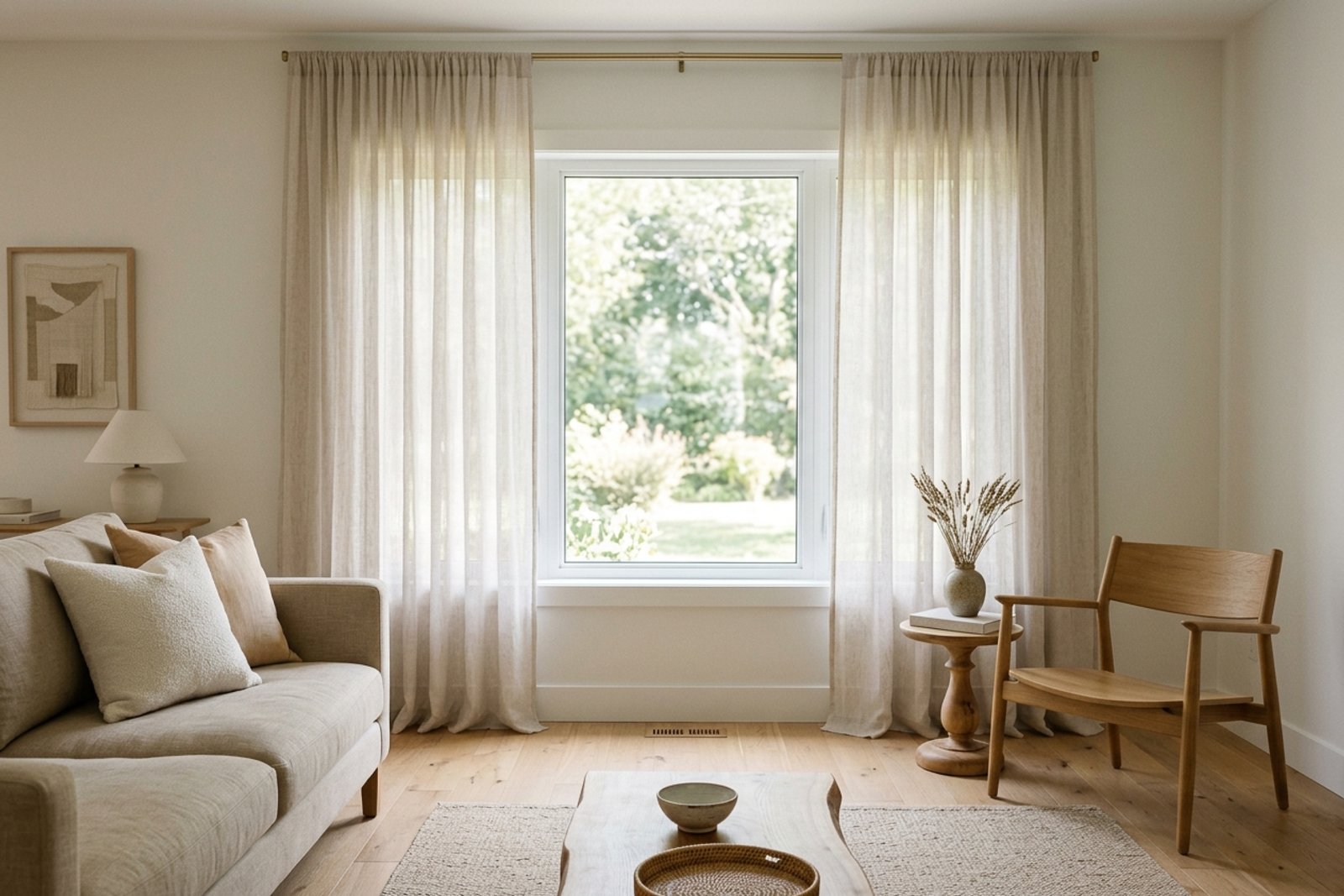
Start with what is free. Dirty glass, heavy drapes, and tall furniture in front of windows can cut incoming daylight before paint or mirrors even matter. Clean the glass, pull furniture back from the window, and trade heavy curtains for sheers that scatter light instead of soaking it up.
Mount the curtain rod 4 to 6 inches above the window and 3 to 6 inches past each side, further if the wall allows, so the open panels rest on the wall and not the glass. That uncovers a surprising amount of window. Then clear the light path so daylight can travel deeper into the room instead of stopping at a bookcase.
Fabric decides the rest. White or ivory sheers, linen blend panels, and pale cellular shades filter daylight and still give you privacy. Heavy velvet and dark blackout panels dim a room even when they are open, because the stacked fabric sits over part of the pane. And pull large furniture clear of the window frame rather than flush against it, which is usually enough to let light past.
2. Paint a high LRV color, in the right finish
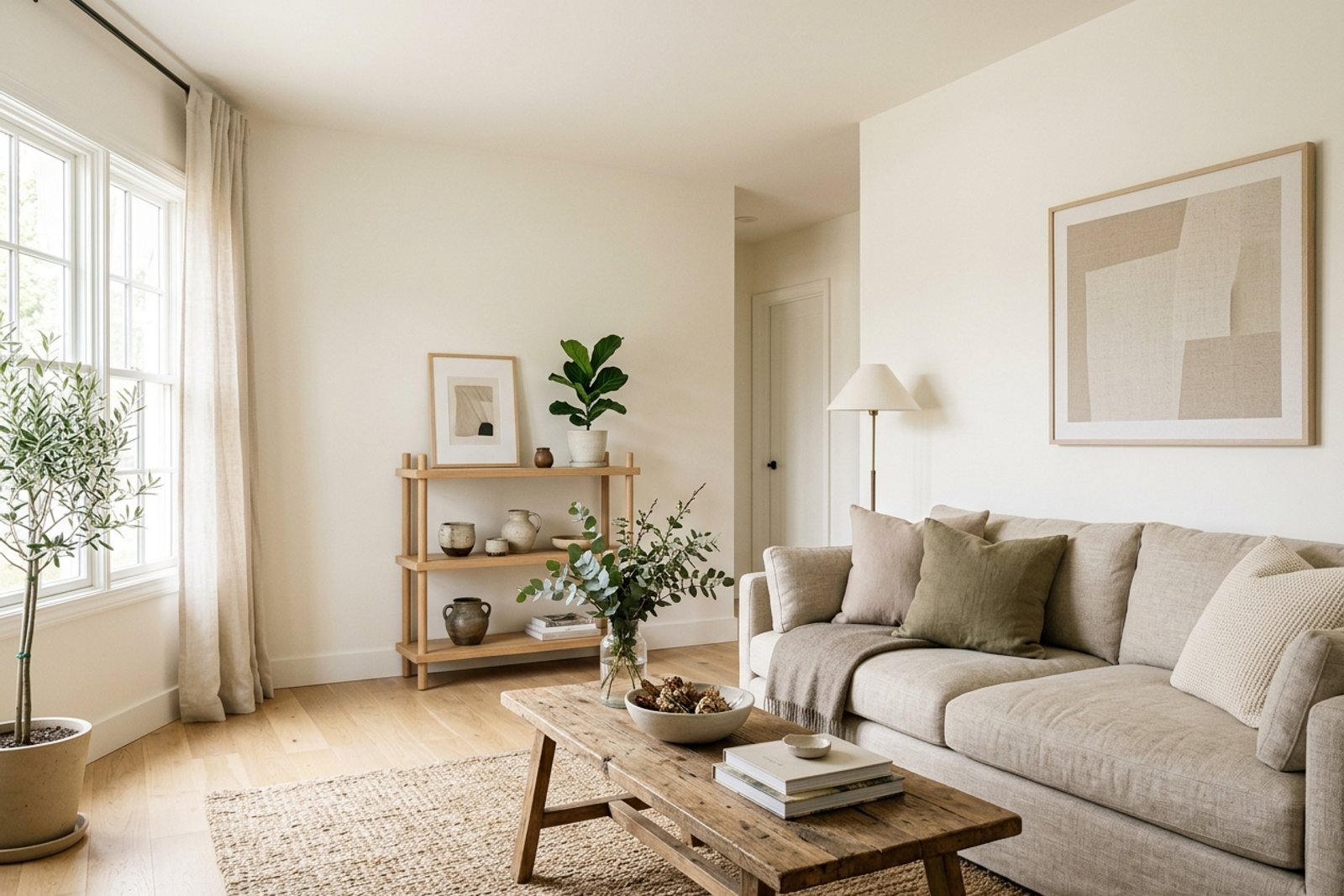
Color is measured for exactly this. LRV (light reflectance value) is the number Sherwin-Williams prints on the back of every color chip, on a scale from 0, which absorbs all light, to 100, which reflects all of it. To brighten a dark room, aim for roughly 75 to 85, and lean toward the top of that range in a north facing room.
Finish matters as much as color. Flat matte absorbs light; eggshell or satin reflects it softly without the glare of gloss. For warm off whites that stay bright without going stark, Benjamin Moore White Dove OC-17 (LRV 83) and Sherwin-Williams Alabaster SW 7008 (LRV 82) are two reliable picks. Warm whites and greiges usually hold up better than cool grays, which can turn dingy in weak light.
If you already painted and the room still looks dark, the paint is rarely the whole story. Undertone and bulb color can both fight a good LRV, and our guide to rooms that still look dark after painting walks through each before you buy a second gallon.
3. Put a mirror opposite the window
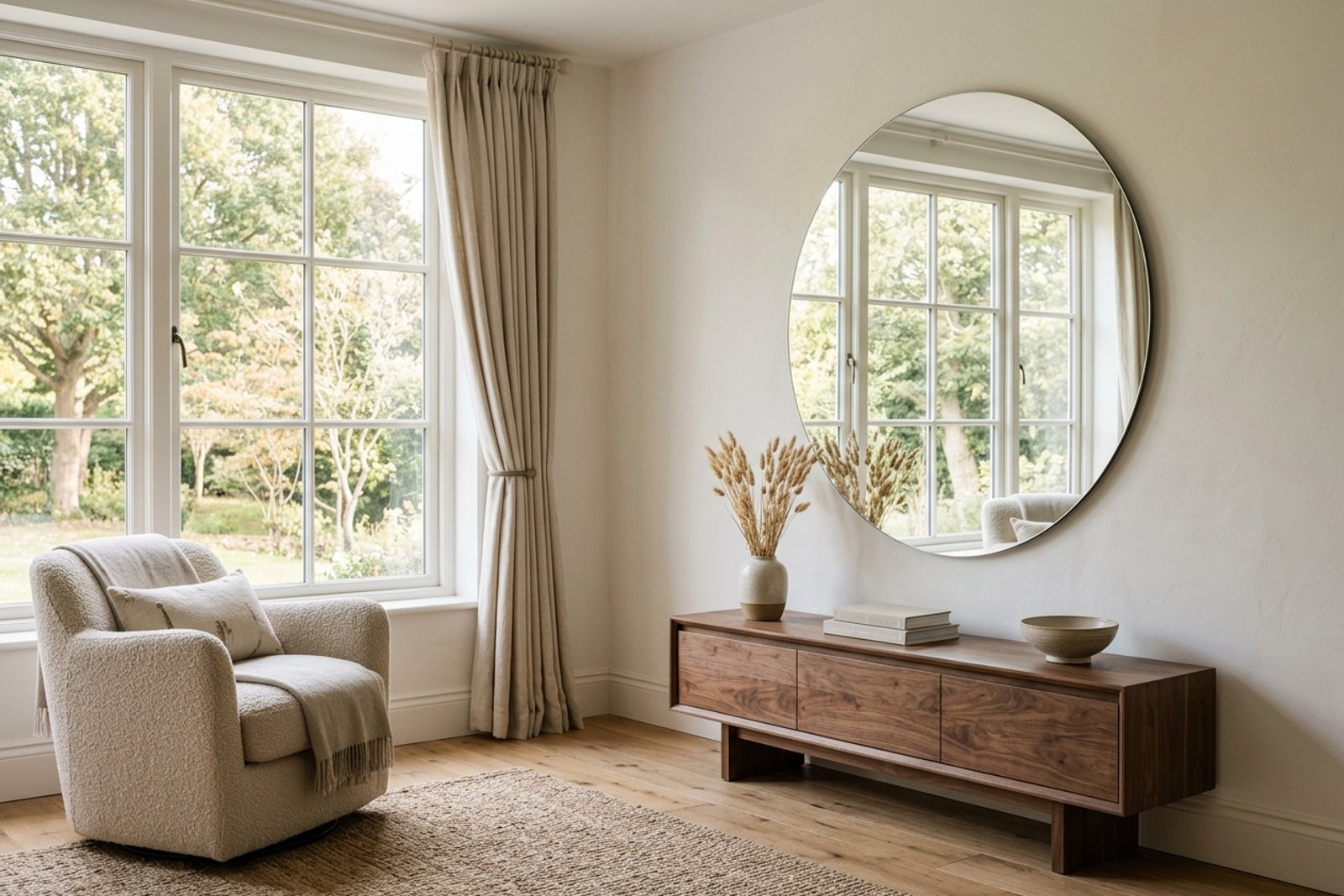
This is the closest thing to adding a second window. A large mirror across from the glass sends daylight back into the half of the room the window cannot reach, and it makes a small dark room read bigger at the same time.
One large mirror beats a cluster of small ones, which just adds the visual noise from our cluttered room guide. Stand where it will hang before you buy it: from that spot you should see the window, the sky, a pale wall, or a lamp. If it would show a black TV or a dark bookcase, it will make the room busier instead of brighter. How big to go and where not to hang it are in our guide to where to put mirrors in a dark room.
4. Layer light so the corners stop going dark
After sunset, one ceiling fixture lights the center of the room and leaves the edges in shadow, which reads as dark and flat. A brighter bulb in that one fixture rarely helps; more sources in more places does.
Add light at three heights: an overhead or a tall floor lamp, a table lamp at sitting height, and one low source in the darkest corner. Warm 2700K bulbs keep it inviting rather than clinical, and a standard E26 base fits most US lamp sockets. If your shades are beige or amber, try one 3000K bulb in the mix so the room stays clear instead of tipping orange. Put at least one lamp on a dimmer so the room can drop for dinner and come up for reading. Exact lamp positions for a dark room are in our lamp layout guide, and the same layered logic gives a room depth in our flat room guide.
| Bulb color temperature | Light feel | Best for |
|---|---|---|
| 2700K | Warm, slightly amber | Living rooms, bedrooms |
| 3000K | Warm white, cleaner | Rooms with beige or amber shades |
| 3500K to 4000K | Neutral to cool | Task corners, closets, kitchens |
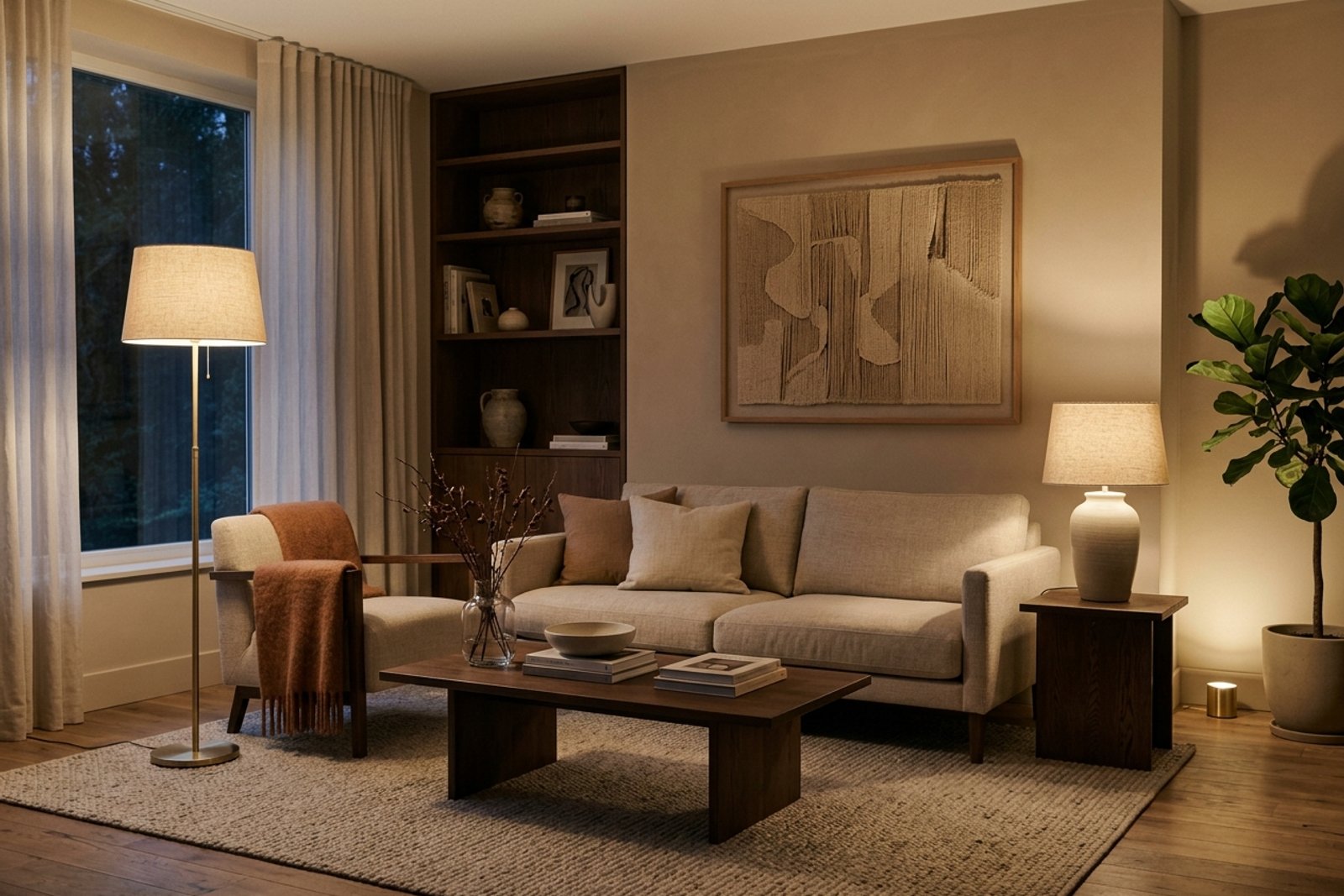
Aim the light at the walls, not the carpet
Brightness lives on the walls, not the floor. The lighting researcher Christopher Cuttle argued in a 2013 paper in the journal Lighting Research and Technology that whether a room looks adequately lit depends on how much light its surfaces reflect back overall, not on how much lands on a desk or the floor. Most homes do the opposite: a ceiling fixture drops a pool of light on the carpet and the walls above it fall into shadow, which is why a room can measure bright and still feel dark. When a room feels gloomy, I look at the top half of the walls first. If your lamps and daylight never touch that zone, start there before repainting anything.
5. Brighten the ceiling, the floor, and the dark blocks between them
The two biggest surfaces in any room are the ones nobody thinks to brighten: the ceiling overhead and the floor underfoot. A dark or colored ceiling and a dark floor quietly absorb light from above and below, and together they are most of what the eye takes in.
Keep the ceiling a clean bright white so it bounces daylight back down instead of capping the room in shadow. If you cannot repaint it, aim one light source at it instead: a torchiere or an uplight floor lamp in the darkest quadrant turns the whole ceiling into a reflector, and the light comes back down spread out rather than in a pool. If the floor is dark wood or tile you cannot change, float a pale rug over it.
Then look at the furniture sitting in the light path, because a charcoal rug, an espresso coffee table, or a navy sofa can absorb more light than a wall color does. On the LRV scale, Alabaster sits at 82 while a charcoal paint like Sherwin-Williams Iron Ore SW 7069 sits near 6, and big dark furniture behaves much more like the second. You do not have to replace anything. Give the light somewhere pale to land in the middle of the room:
- A pale rug over dark flooring.
- A linen throw over the back of a dark sofa.
- A glass, oak, or travertine tray on a dark table.
- Warm white pillows with texture rather than glossy shine.
- A lighter shade on the lamp you already own.
Three pale surfaces placed where the daylight falls beat ten small white accessories scattered around the room.
How do I make my room feel brighter?
Start with the free moves: clean the glass, move the furniture off the window, and hang the curtains high and wide. A lot of rooms brighten noticeably before you spend a dollar. Then work whichever leak the two photo test pointed to, and stop once the room feels open instead of dim.
The fixes stack, and the order matters. High LRV paint does little if the drapes still cover the window. A mirror needs daylight to bounce. Layered lamps cover the hours the sun cannot, which from now until spring is most of the evening. A room that feels bright is rarely getting more light than yours; it is just losing less of it.
When you are done, retake the two doorway photos at the same times as before. If daytime improved but the evening shot is still gloomy, the lamp plan is the weak link. If the evening looks good and noon still reads heavy, the culprit is the dark floor, the dark sofa, or the curtain fabric. If both photos improved, you are done.
Frequently asked questions
How do I brighten a dark room without painting?
Start with the moves that need no paint. Clean the glass, pull furniture back from the window, and swap heavy drapes for sheers hung high and wide. Then hang a large mirror opposite the window, layer a few warm lamps at different heights, and float a pale rug over a dark floor.
What LRV should I use to brighten a dark room?
Aim for a light reflectance value (LRV) of about 75 to 85, toward the top of that range in a north facing room where the light reads cooler. Benjamin Moore White Dove OC-17 sits at LRV 83 and Sherwin-Williams Alabaster SW 7008 at LRV 82. Use an eggshell or satin finish, not flat matte, which absorbs light.
Does a mirror actually brighten a dark room?
Yes, when you hang a large mirror directly opposite your main window. It sends daylight back into the part of the room the window cannot reach, and it makes a small room read bigger at the same time. Aim it to catch the window, not a blank wall.
How do you brighten a dark room with no windows?
With no daylight to move, the job falls entirely to bulbs and reflective surfaces. Layer 2700K to 3000K warm white light at three heights, hang a mirror across from your brightest lamp so it doubles that glow, point one lamp at the ceiling, and keep the walls, rug, and large furniture pale so the light you add keeps bouncing instead of dying in the corners.
How do you brighten a dark room on a budget?
Spend nothing first. Clean the glass, pull large furniture clear of the window, and open the curtains onto the wall so the full pane shows. When you do buy, a pale rug or one large mirror moves more light per dollar than new lamps, and a lighter shade on a lamp you already own costs almost nothing.
The Noticer
For thoughtful people who notice spaces.
What did you notice?
Did something in this story make you see your own space differently?
Ask Archie where your room is losing light
Send Archie a photo of the room that feels dark. Archie names which of the four light-loss points is costing you the most, the blocked daylight, the absorbing surfaces, the missing bounce, or the flat lighting, and gives you the one change that brightens it most.
Brighten my room with ArchieAdvertisement. Archie is made by STUDIO DID IT, the studio that publishes Spatia.
Related Articles
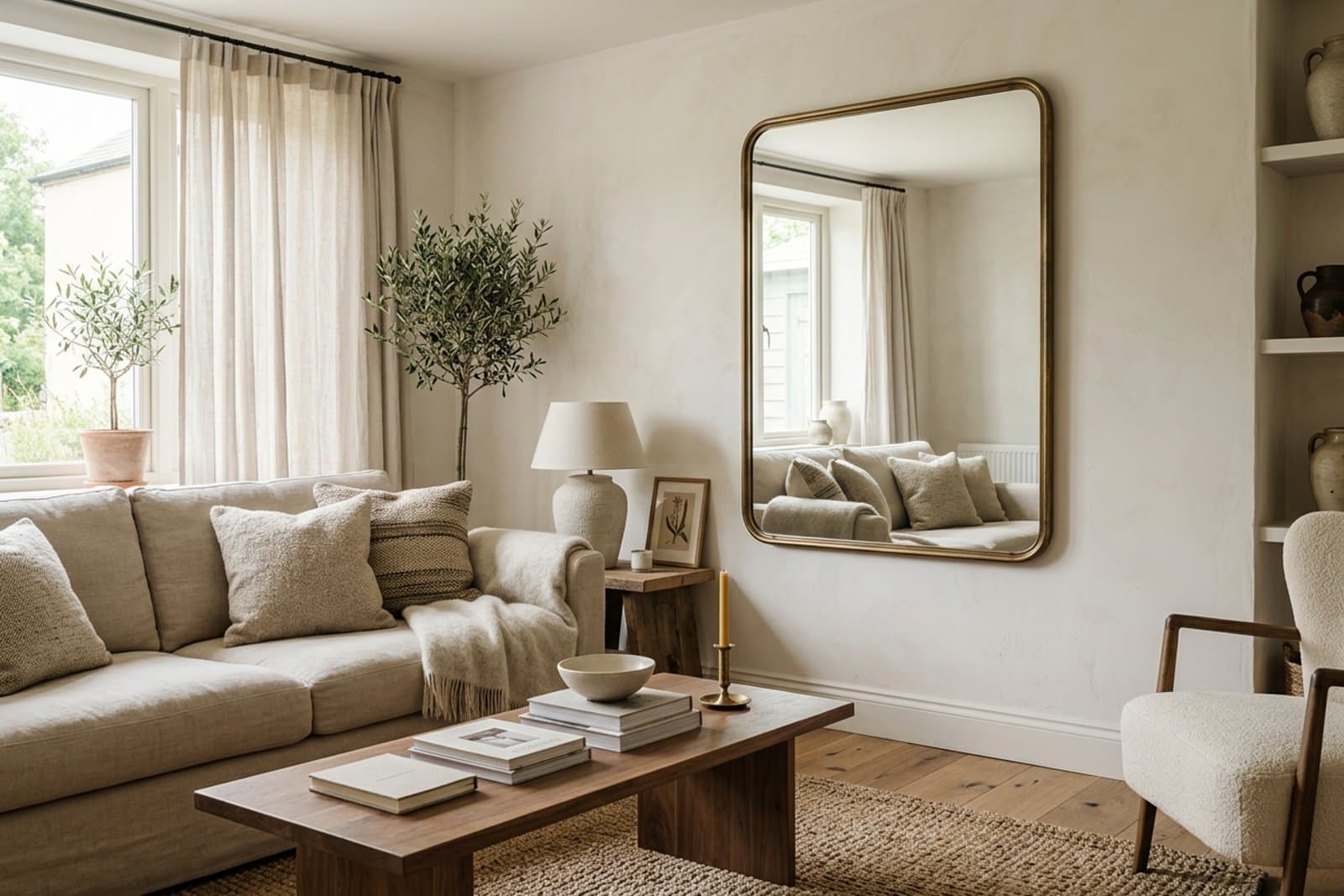
Where To Put Mirrors In A Dark Room
Where to put mirrors in a dark room: aim them at a window, pale wall, or lamp to bounce light. See the safest spot before you buy another fixture.
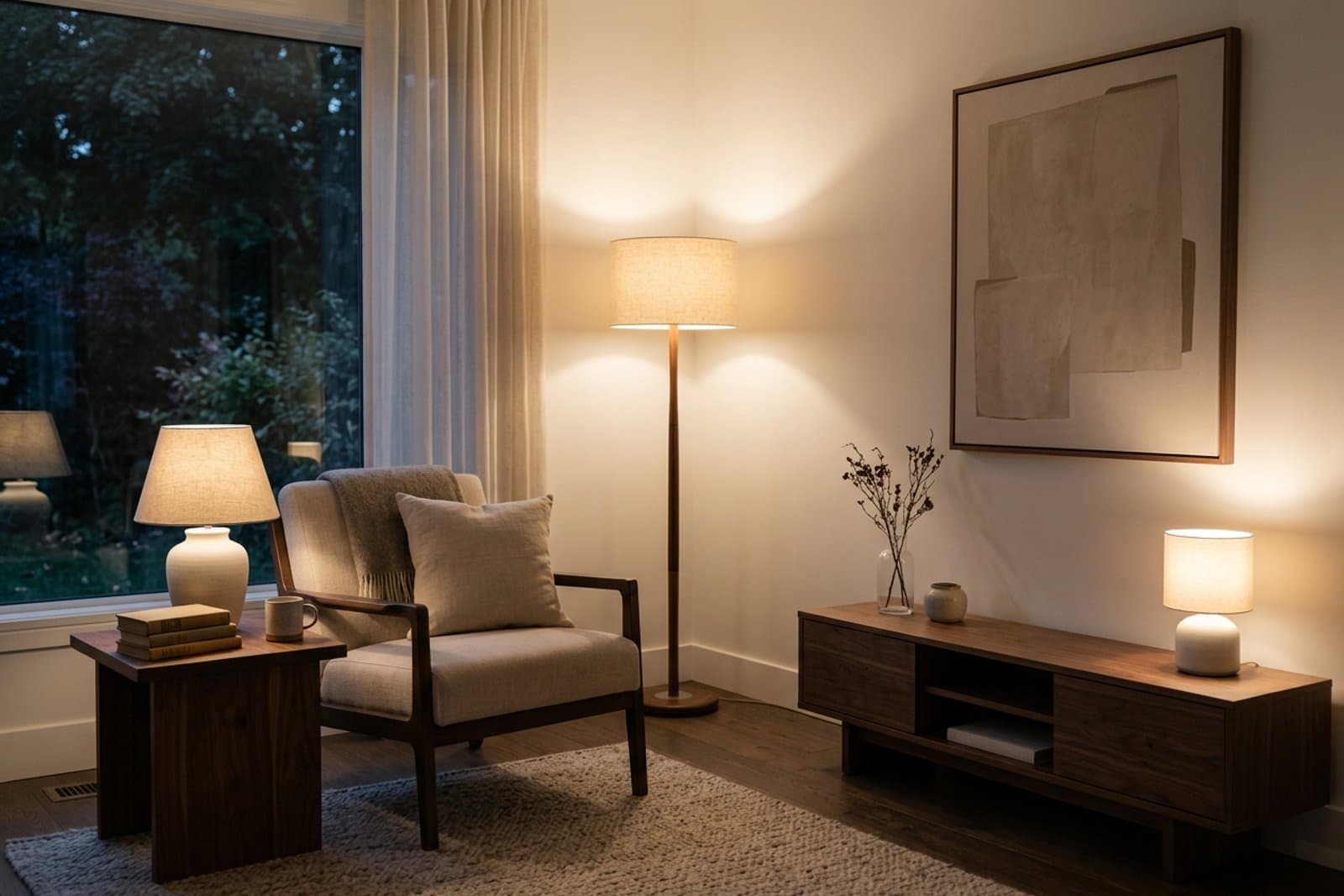
Where to Put Lamps in a Dark Room (3 Lamp Layout)
Where to put lamps in a dark room: one tall lamp in the darkest corner, one by the main seat, one low lamp on a shadow wall. See the three lamp layout.
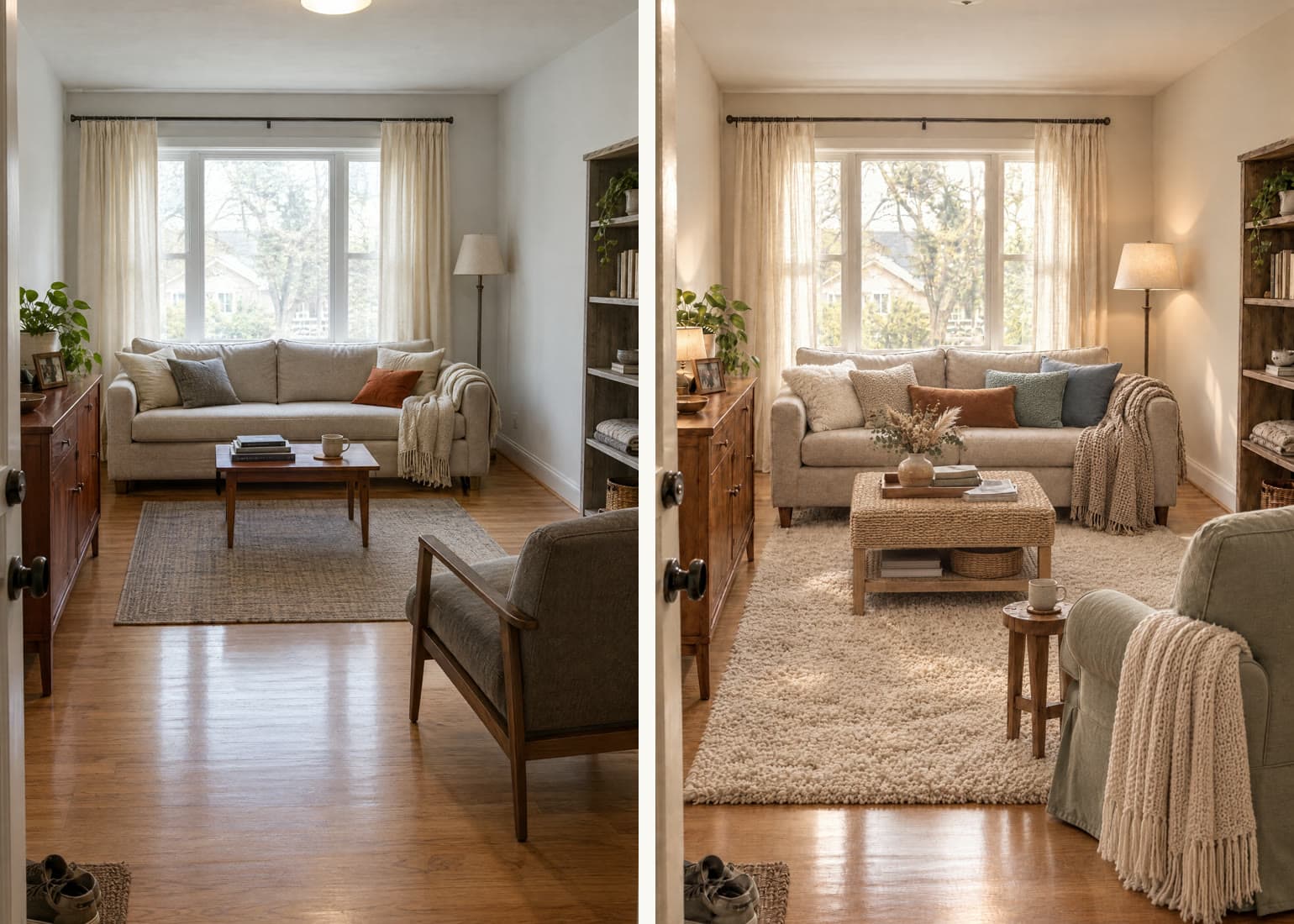
Why Does My Room Feel Off? A Designer's 3-Question Context Check
A room usually feels off when a choice doesn't fit its context. Use three designer questions about the people, the space, and the whole to find what's wrong.