Why Does My Apartment Feel Unfinished? (5 Fixes)
Your apartment feels unfinished because a few foundational pieces were chosen wrong, not because something is missing. Fix these 5 and the room settles.
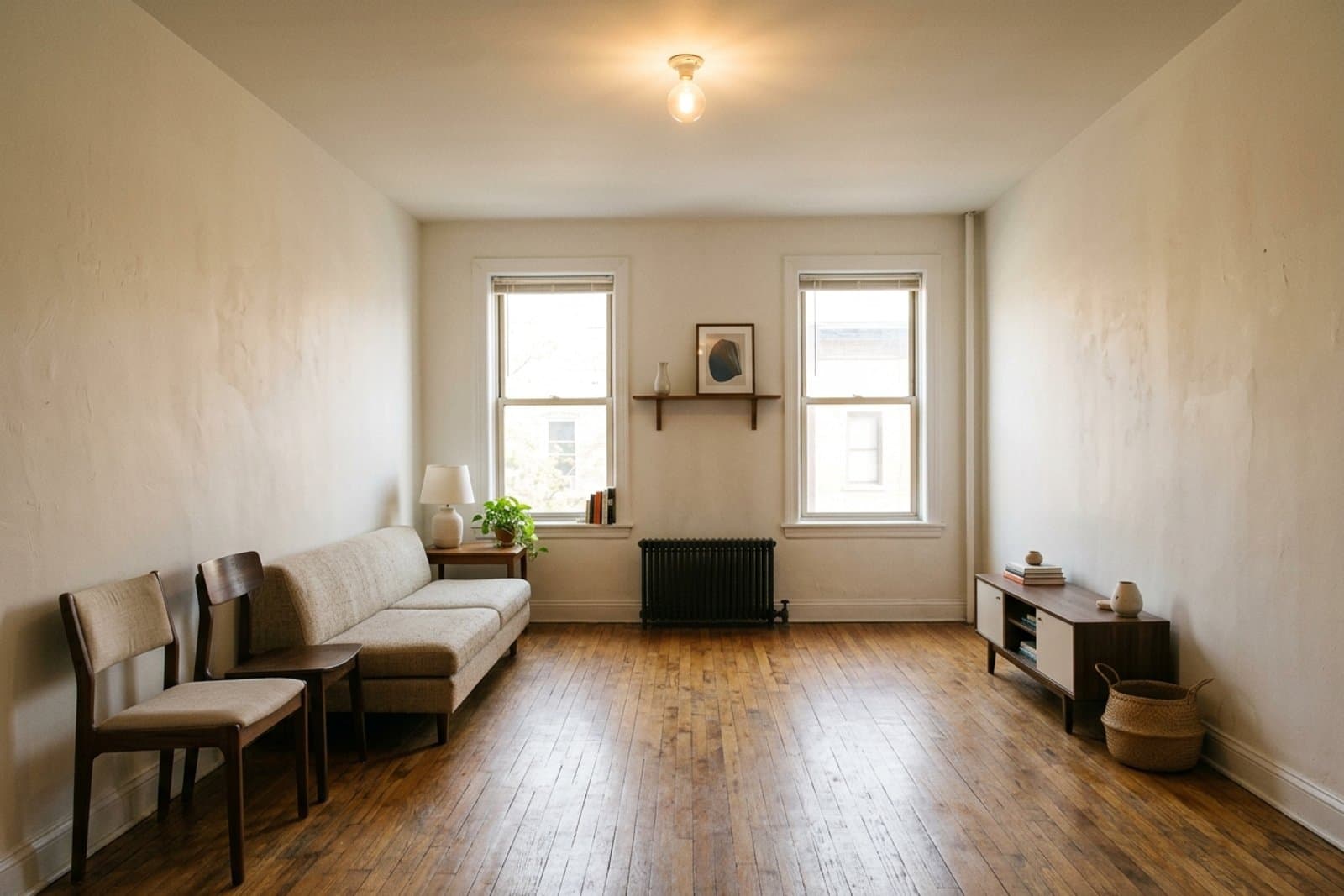
Your apartment can be fully furnished and still feel unfinished the moment you walk in. Usually a few foundational pieces were chosen in a rush, and everything bought since has been compensating for them.
This is for the room where nothing is obviously broken and it still feels off. If your room is furnished and just feels busy or crowded, that is a different fix, see why your room feels cluttered.
Why does my apartment feel unfinished even though it is furnished?
Because "unfinished" rarely means empty. It usually traces to a few foundational pieces chosen in a rush. Five decisions carry a home: the sofa, the lighting, the entryway, the bed, and the rug. These five are structural choices, not decorative ones, and getting one wrong costs you months of compensating around it. When one is off, nothing looks obviously broken, so you keep buying pillows and art and lamps hoping the room will finally click. It will not, because the problem is underneath. Fix the five below, in order, and the room stops needing more.
| Decision | What it controls | Common mistake |
|---|---|---|
| Sofa | The whole living room layout | Buying a "temporary" placeholder |
| Lighting | Whether the room has depth after dark | Relying on one overhead light |
| Entryway | Whether clutter starts at the door | No home for shoes, keys, and bags |
| Bed | How well the room reads as rest | A mattress left on the floor |
| Rug | Whether furniture reads as one group | Buying one too small |
1. The sofa sets the entire room
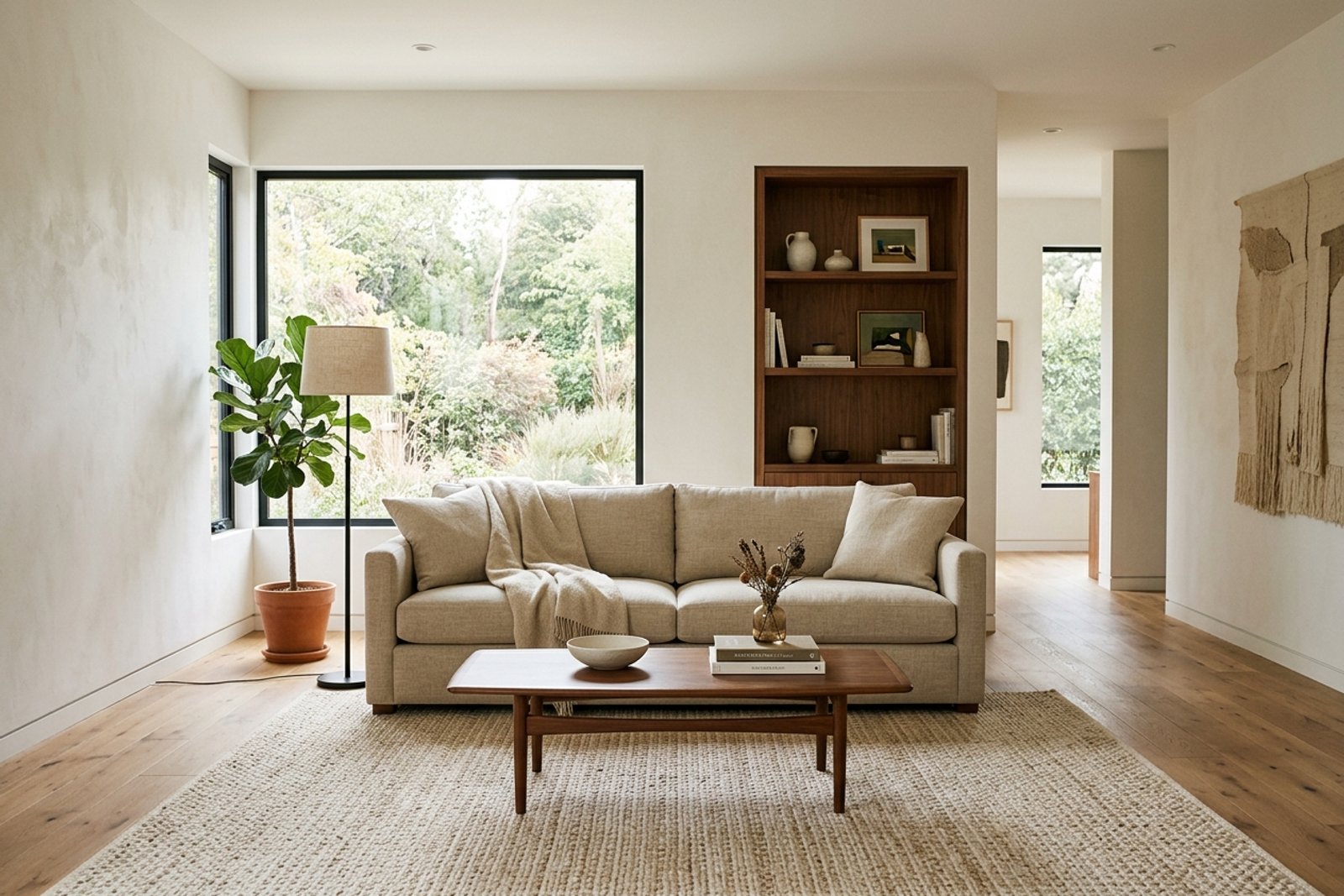
The sofa is the one piece the whole living room is built around, so a rushed sofa quietly breaks everything else. Its size sets your floor space, its depth sets how you actually sit, and its shape sets where every other piece can go. Buy it as a "temporary" placeholder and you end up designing around its flaws for years.
A sofa works when it does three things: it is wide enough to anchor the room but not so large it eats the floor, it is genuinely comfortable to sink into (if you are reaching for throw pillows to fix the back or the depth, it is not), and it leaves room for a properly sized rug and a coffee table with a clear path around it. Before buying, sit the way you sit at home, feet up, for real. Skip oddly curved or very low profile shapes in a first place; a simple rectangle keeps you free to rearrange later, the kind of deliberate small space layout our reading nook guide leans on.
2. The lighting decides the room after dark
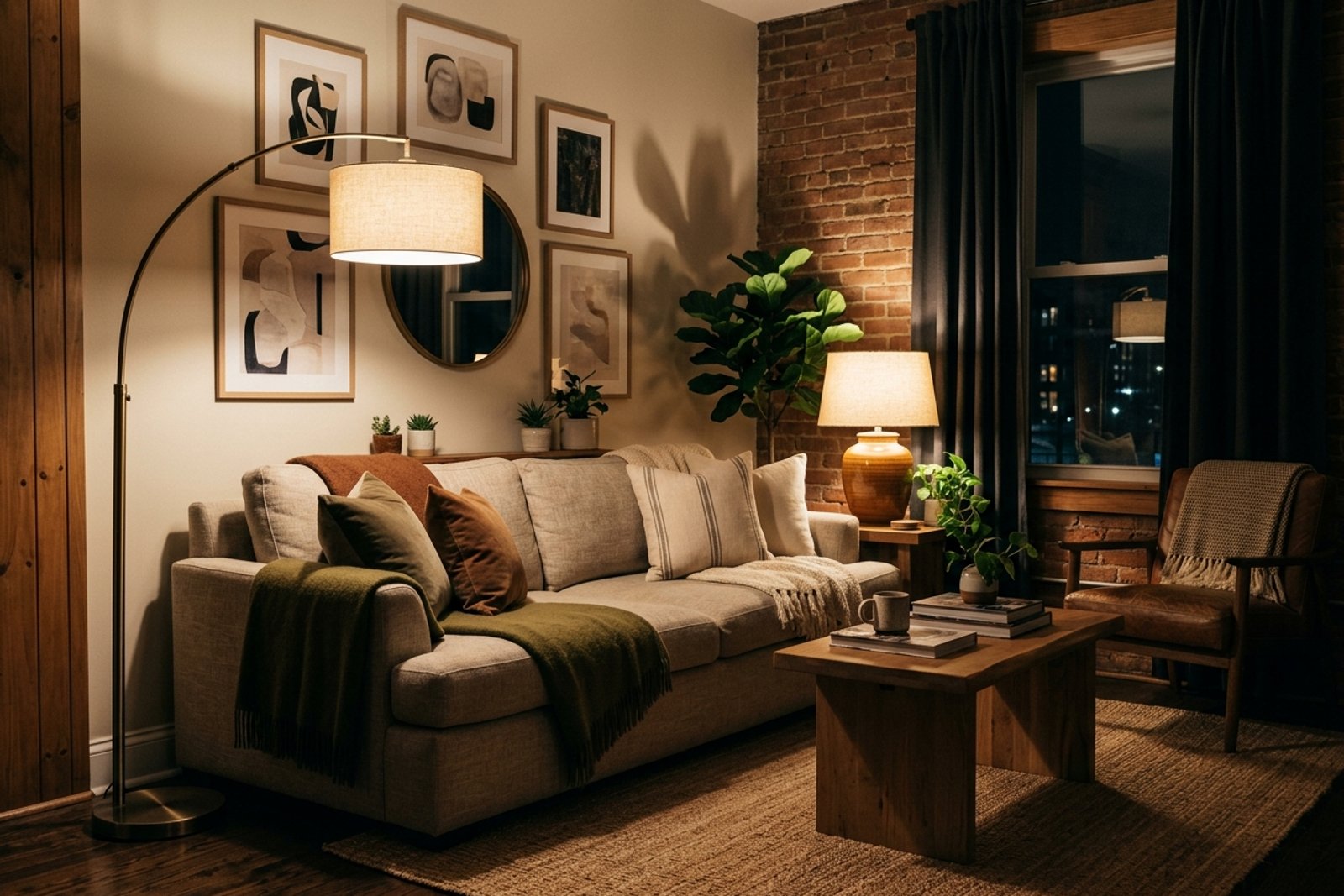
Most apartments run on a single ceiling light. It makes the room visible, but overhead light flattens everything: it erases shadow, so even nice furniture looks temporary, and nothing feels grounded. That is why a room can look fine by day and feel cold and unsettled at night.
The fix is light from lower down. The American Lighting Association recommends building a room from three layers, ambient, task, and accent, rather than leaning on one overhead fixture. Add two or three sources at or below eye level: a floor lamp by the sofa, a table lamp where you sit in the evening, a low warm glow in a corner. Use warm 2700K E26 LED bulbs. Shadows come back, corners soften, and the room finally reads as layered instead of lit. Our flat-room guide covers this same lighting move for depth; here it is what separates a room with a mood from a bright box.
3. The entryway decides whether clutter starts at the door
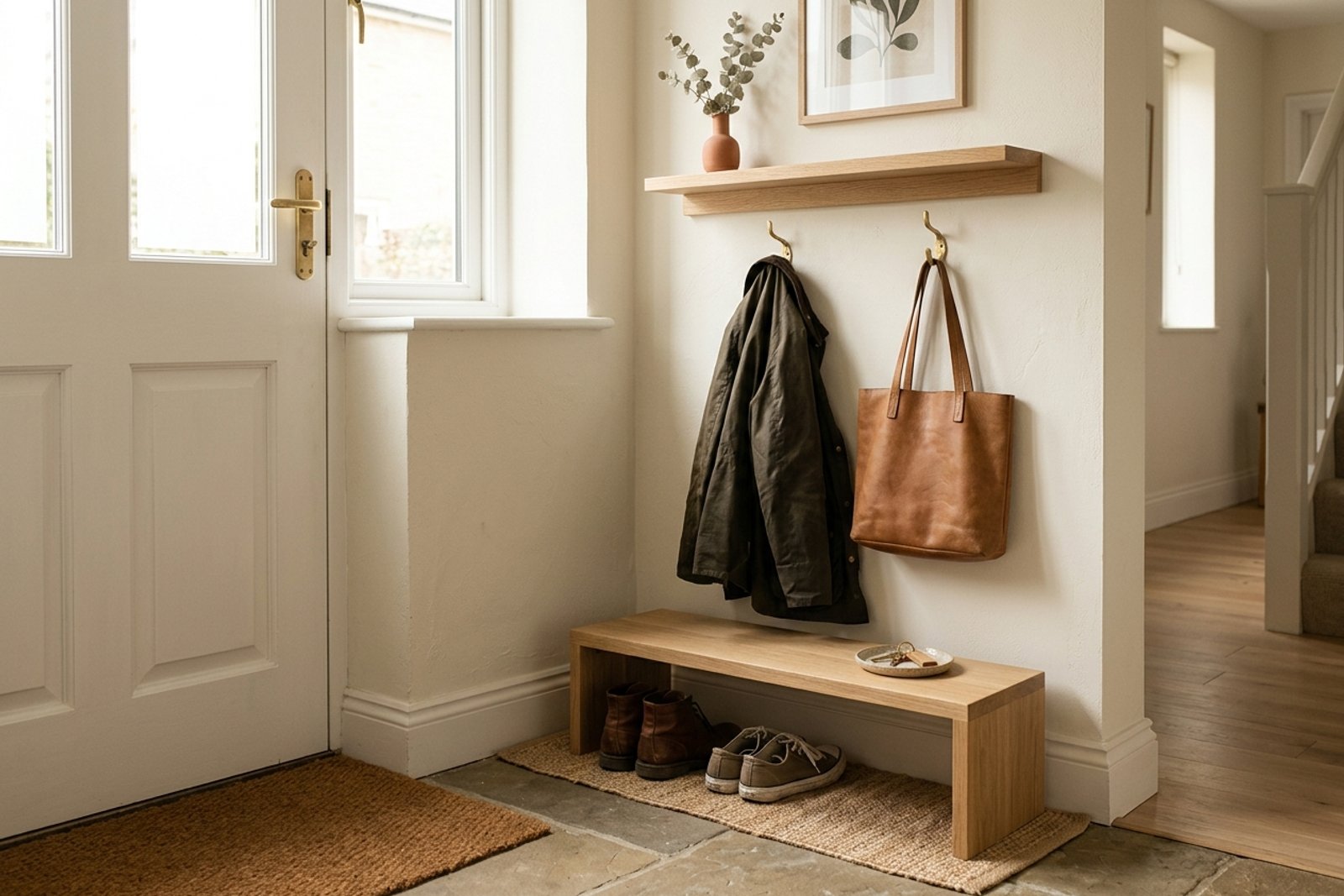
Clutter is not a discipline problem, it is a friction problem, and it starts at the entryway. When there is no obvious home for shoes, keys, and bags, your brain defaults to "drop it here, deal with it later," every single day. The disorder you carry in from outside then spreads inward.
A good entry does not need to be big, it needs to make the tidy choice the easy one. Give the shoes you actually wear a defined spot and store the rest elsewhere, a bin under the bed works. Put one or two hooks within reach for bags and coats. Add a small tray by the door for keys, wallet, and sunglasses. Good design covers for the days you are not disciplined, which is the whole point. When the first 30 seconds inside have a place for everything, clutter never gets a foothold, the same friction logic behind a room that reads cluttered even when it is clean.
4. The bed decides how well the room rests
The bed gets treated as an afterthought, often a mattress on the floor "for now." But a bed on the floor signals temporary, and a room that reads unfinished quietly lowers how well you rest in it. You sleep, but you do not fully reset, and low energy makes everything else feel harder than it is.
A good bed setup has to feel intentional, and that costs less than most people expect. Getting the mattress up onto a frame alone changes the room: elevation gives the bed presence and tells the space it is meant for real rest, not a crash pad. Then upgrade the parts that touch you. New pillows and bedding you actually like usually run 50 to 100 dollars, and you notice the difference the first night. Aim for a bedroom that supports the rest of your life. Impressing a visitor is a lower bar and a worse one.
5. The rug decides whether the room reads as one
A rug looks optional, so it is the first thing people skip. But a rug does structural work: it defines territory, tells the room where one zone ends and the next begins, and gives the furniture a shared foundation so it stops looking like unrelated pieces scattered around.
The common mistake is buying one too small. A rug that only sits under the coffee table anchors nothing and makes the seating area look smaller, like furniture gathered around a towel. Size up so the main pieces sit on the rug, or at least their front legs do. In most living rooms that means an 8 by 10 foot rug or larger, big enough that the sofa and chairs share it. That pulls everything together and gives the room weight. In an open studio this is what creates zones at all, the same job the boxes do in our studio zoning guide.
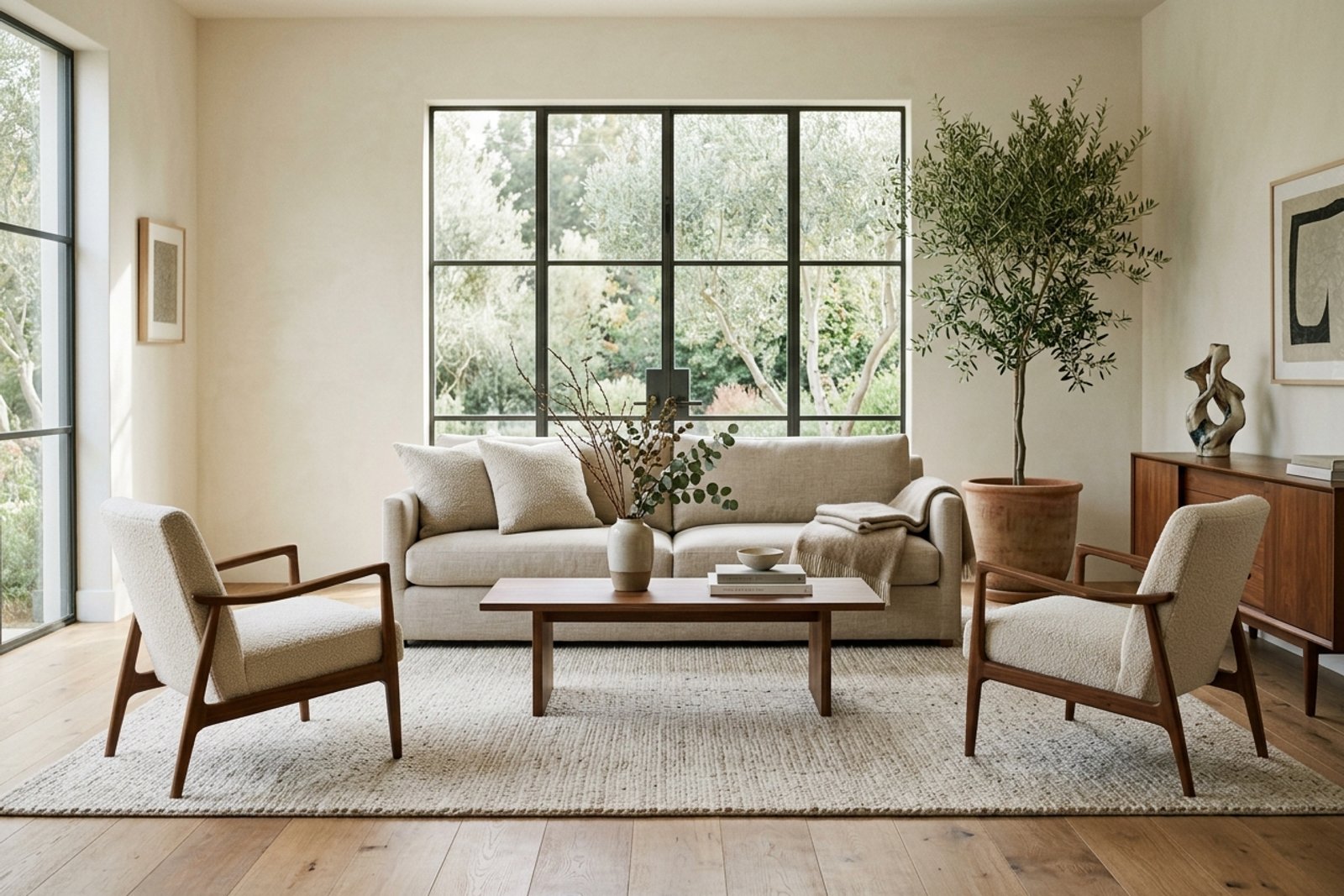
Which decision should you fix first?
Start with whichever is most wrong, but the sofa and the rug usually move the most, because they set the layout everything else lives inside. Lighting is the fastest and cheapest change, and it pays off the same night.
All five shape how the apartment works before they shape how it looks, which is why one wrong choice makes the whole place feel off in a way more stuff never fixes. Get them right and every later choice, the art, the cushions, the color, gets easier, because it finally has a structure to sit on. Your apartment does not need more. It needs these few, made well.
The last five percent: make every material show up twice
Repetition is what reads as finished. When I walk through a room that settles, some material or color always appears at least twice: the oak of the table returning in a picture frame, the black of a lamp base returning in a curtain rod, the rug tone returning in a cushion. A room where every element appears once reads as a collection still being assembled, however good each piece is. So after the five foundations here are in place, run a simple audit: name the three materials you like most in the room, then check whether each shows up somewhere else. Adding an echo is usually cheaper than adding anything new, and it is often the last five percent a room is missing.
Frequently asked questions
How do I make my apartment feel like home?
Start with the five foundational pieces, the sofa, lighting, entryway, bed, and rug, before you add decoration. A home feels settled when those structural choices are right, so warm 2700K lighting, a rug the furniture sits on, and a real entryway do more than any amount of art or cushions.
How long until a new apartment feels like home?
Usually a few weeks, but it is less about time than about which pieces you place first. Get the sofa, rug, and lighting settled in the first week and the space reads as yours almost immediately. Leave those foundational decisions unmade and it can feel temporary for months.
How can I make my apartment feel finished on a budget?
Fix lighting first, it is the cheapest of the five and pays off the same night. Swap in warm 2700K E26 LED bulbs and add two or three lamps at or below eye level. Then add a rug large enough that the main furniture sits on it. Those two moves settle a room for well under a couple hundred dollars.
The Noticer
For thoughtful people who notice spaces.
What did you notice?
Did something in this story make you see your own space differently?
Ask Archie which decision your space is missing
Send Archie a photo of the room that feels unfinished. Archie names which of the five foundational decisions is off, the sofa, the lighting, the entryway, the bed, or the rug, and gives you the one change that settles the whole room.
Finish my room with ArchieAdvertisement. Archie is made by STUDIO DID IT, the studio that publishes Spatia.
Related Articles
Why Does My Apartment Still Feel Like a Rental?
Your apartment still feels like a rental because furniture never signals ownership. Five lease safe marks make a decorated space finally read as yours.
Cold Floors in an Apartment: What a Rug Actually Fixes
Cold floors in an apartment are a surface problem, not a thermostat problem. See the tested R values, and why the pad under the rug does most of the work.
Why Does My Room Feel Stuffy? (5 Real Causes)
Stuffy air comes down to stale air, trapped moisture, and no exchange path, and temperature barely enters into it. See the 5 causes and the 5 minute winter fix.