9 Reading Nook Ideas for a Small Apartment in 2026
A reading nook in a small apartment is one chair, one 2700K lamp, and a 30 inch corner. See 9 renter safe moves, from the closet nook to a no drill window seat.
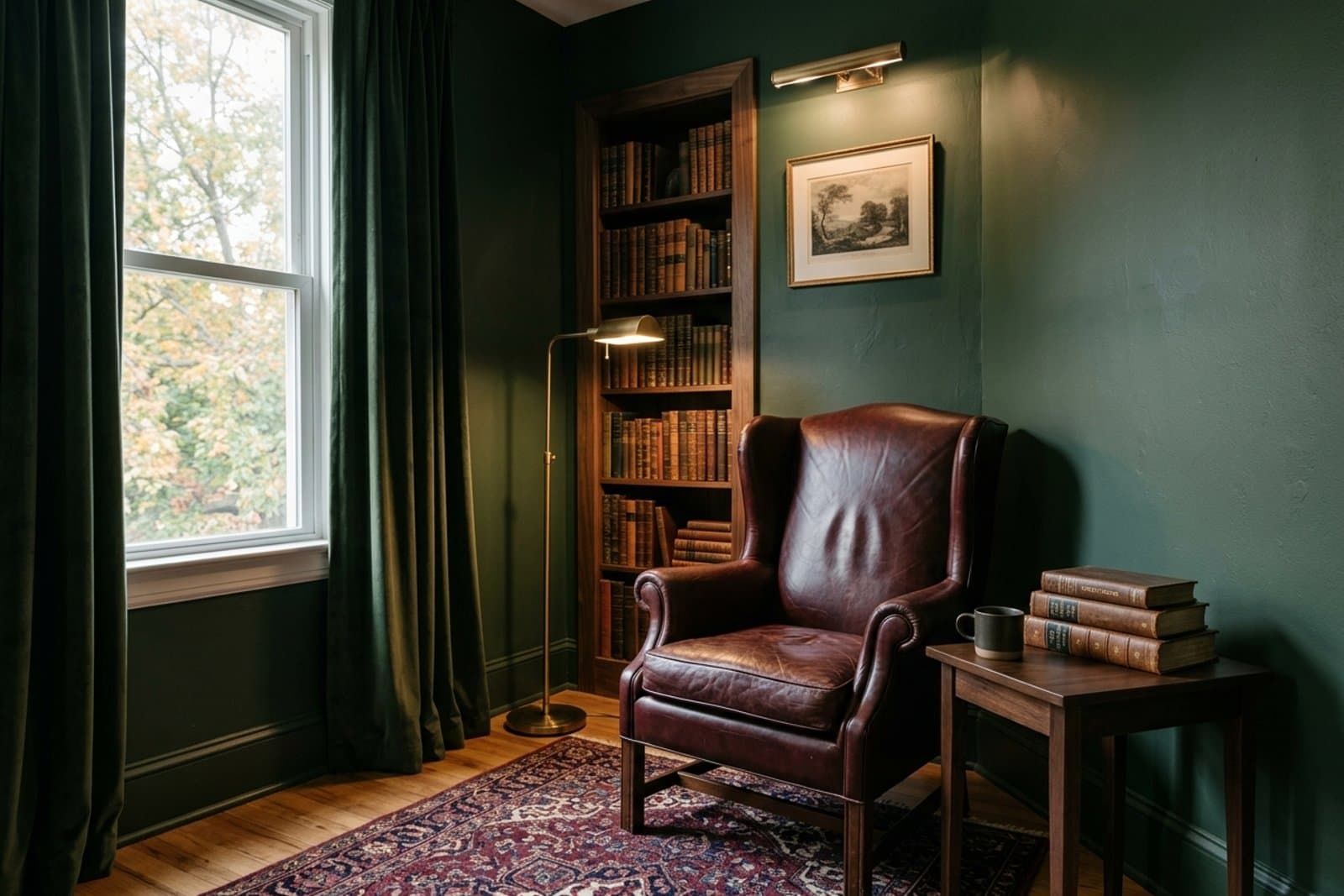
A reading nook in a small apartment is one armchair under 30 inches wide, one warm 2700K lamp, and a 30 by 30 inch corner you commit to. Mark the zone with a 2 by 3 foot rug, stack books vertically, and skip the built in entirely. Nothing gets drilled. The demand is real: Pinterest's Spring Trend Report 2026, published in March 2026, listed searches for "comfy reading chair small spaces" up 455 percent.
This is for renters and refresh owners in studios or one bedrooms under 600 sq ft who keep saving Pinterest reading nooks and finding only cottage built ins. Nine moves below cover the renter safe corner, the closet version, and the storage bench window seat. If the corner you want is for morning coffee rather than books, the home cafe corner guide applies the same corner logic to a different ritual.
What makes a reading nook work in a small apartment?
Four things have to hold at once: a footprint under 30 inches wide, a warm light at 2700K, a clear visual boundary (a rug, a lamp, or a wall color shift) that marks the corner as its own zone, and book storage that climbs vertically instead of spreading on the floor. The constraint of a studio under 600 sq ft forces the editing the nook needs anyway. One armchair, not a chaise. One warm bulb, not the overhead. The corner reads as a chosen room within the room when the boundary holds, and reads as overflow furniture when it does not. The broader frame for designing a one person apartment lives in Spatia's solo living interior design guide.
How do you build a reading nook without built ins?
Four pieces do the whole job: a single armchair small enough to fit a 30 by 30 inch footprint, a slim floor lamp with a warm 2700K bulb, a small rug roughly 2 by 3 feet that sits under the chair and signals the zone, and a stack of three to five books on a low stool or side table beside the chair. Nothing gets drilled, nothing gets painted. The boundary is the rug and the lamp, not a partition wall. The chair is the one piece worth measuring twice, because many popular reading chairs run wider than they look in photos (move 2 has real widths). The closet version skips the rug and adds a curtain across the closet opening instead, covered in move 3 below.

9 moves that work in a small apartment
The list runs in suggested order, footprint first, then the chair, then the boundary. Moves 1 through 4 fit in a weekend; the rest can layer in over a month. Move 7 (the storage bench window seat) has its own setup considerations in our guide to dividing a studio into zones if the apartment is closer to 400 sq ft than 600.
1. Pick a footprint under 30 inches wide
A small apartment reading nook fits in a 30 by 30 inch corner. That holds a single armchair, a small side table or low stool, and a floor lamp angled over the seat. Much narrower than 24 inches and few armchairs stay comfortable; past 36 inches the nook starts eating the living room. Measure the corner before buying anything. Tape the planned footprint on the floor and you learn whether the spot works before a chair shows up. The corner that holds best is usually opposite a window or in the far corner of the room, where the rest of the floor plan does not have to flow around it.
When I place a single chair, I look at what sits behind it before what sits beside it. People relax with a wall at their back and the door somewhere in view; it is an old instinct, and it decides whether a corner gets used far more than the chair's brand does. A nook with its back to a doorway will stay styled and empty. So drag a dining chair into the taped square and sit there for three evenings first. If you keep glancing over your shoulder, rotate the setup, not the budget. My residential clients are often surprised that the best reading corner is rarely the prettiest one; it is the most protected one.
2. Buy one comfy chair under 30 inches wide
The chair carries the nook, so check the overall width on the maker's spec sheet, not the seat width. IKEA's POÄNG armchair is 26 3/4 inches wide overall with a 22 inch seat, which leaves room for a lamp inside a 30 inch corner; it was listed at $149 on IKEA's US site when we checked on October 13, 2026. IKEA's STRANDMON wing chair, the one that shows up on most reading nook boards, is 32 1/4 inches wide overall, so it needs a corner closer to 36 inches. Skip the chaise. Skip the oversized accent chair that takes 36 inches of wall. A small footprint chair is the single hardest piece to source for a small apartment reading nook, and the single piece that decides whether the corner gets used.
3. Try the closet (reading nook for adults)
The closet reading nook is the move most renters miss. A typical reach in apartment closet (often 30 to 48 inches wide and about 24 inches deep) holds a small armchair, a wall shelf at eye height when seated, and a clip on reading light at the shelf. Remove the door, replace it with a curtain on a tension rod, and the closet reads as a small alcove built into the wall. Pinterest's same spring 2026 report listed "closet reading nook for adults" up 55 percent, and the appeal is clear: the move skips the open floor problem entirely. The closet has its own walls, its own ceiling, and its own boundary. The tradeoff is one closet, which is the question to answer before starting. The no drill closet conversions covered in Spatia's small bedroom storage hacks work the same way for a closet nook.

4. Stack books vertically, not horizontally
Horizontal stacks of books on the floor eat the only thing a small reading nook has: floor area. Vertical book storage solves the same problem in a smaller footprint. Options that fit a small apartment corner: a tall narrow bookshelf such as IKEA BILLY in its 15 3/4 inch wide, 79 1/2 inch tall size, a slim ladder shelf that leans on the wall and needs only one anchor point, or a stack of three to five wood crates against the wall behind the chair. The eye reads vertical book storage as a deliberate feature, not as storage spillover. A floor stack of books past 12 inches starts reading as clutter. A 6 foot vertical stack on a narrow shelf reads as a library wall.
5. Mark the zone with a small rug
A 2 by 3 foot rug under the chair is the simplest move that makes the nook read as its own zone. Without the rug, the corner blurs into the surrounding floor and the chair reads as an extra piece. With the rug, the eye registers a defined space the size of the rug. The rug does not need to be expensive; a small flatweave or a vintage remnant from a local marketplace both work. The constraint is texture, not price: a flat low pile reads more deliberate than a thick shag in a small corner, because the shag eats the visual edge and the flat weave holds it. Place the rug so the front legs of the chair sit on it and the back legs sit just off it.
6. Use one warm lamp at 2700K, not the overhead
The overhead light is the second biggest reason small reading nooks read as desks. Turn it off after the sun drops and use one warm lamp instead. The bulb temperature matters: 2700K (warm white) holds the slow reading mood; 4000K (cool white) reads as office. A slim floor lamp with an adjustable head, angled over the chair's left shoulder, is what most setups land on. If floor space is the problem, a plug in wall sconce (Schoolhouse sells several, such as the Swell and Dolores plug in sconces) mounts above the chair and runs off a regular outlet instead of hardwiring; check your lease before putting screws in the wall, or use the removable mounting options your building allows. Add a second small lamp on the side table only if the side table is wider than 12 inches; otherwise the second lamp crowds the surface.
7. Put a storage bench under the window (rental window seat)
The window seat is the reading nook setup most renters want, and the one most often blocked by "we don't have a built in". The renter version skips the built in entirely. A padded storage bench 30 to 48 inches wide and 16 to 20 inches deep, pushed under the window, becomes the seat. IKEA's VALTORP bench with storage fits that range at 40 1/2 inches wide and 18 1/8 inches deep, with a padded seat over a lift up lid. Stack one large floor cushion or two firm throw pillows against the wall as the back rest. The window light does the heavy work the lamp would do at night. The bench holds throws and books inside, which keeps the visible surface clean. The whole window nook reads as the most styled corner in the apartment without a single piece getting drilled into a wall.

8. Edit the side surface to three objects
Whatever sits beside the chair (low stool, small side table, the lower shelf of the bookshelf) holds three objects, not eight. A reading light, a mug or candle, and a single book is the working set. Everything else lives one move away: in a drawer, on the bookshelf, or behind the curtain. The nook reads as a held space when the side surface stays sparse. It reads as a junk drawer when the surface accumulates. The edit is the move most apartments skip because nothing on the surface looks unreasonable in isolation. The pile is what becomes unreasonable. The rule that keeps the corner working: pick up everything currently on the side surface once a week. Put back only the three things used yesterday.
9. Add one soft texture (sheepskin or boucle throw)
One soft texture finishes the nook. A small sheepskin draped over the chair's back, a boucle throw folded over the arm, or a chunky knit blanket inside the storage bench. The texture does what color does in a larger room: it pulls the eye and signals the function. The nook is for sitting still with a book; the soft texture confirms it before anything is read. The brief: cream or natural color, and read the fiber content on the label, because many throws sold as "wool" are blends with acrylic or polyester. One texture only. Two competing soft textures in a small nook starts reading as a pile.
Final thought
The corner that works is the one that gets used after work, on Sunday afternoons, in the half hour before sleep, and that has almost nothing to do with how it photographs. Keep the footprint under 30 inches because that is what the apartment can give. Let the rug, the lamp, and one soft texture do the bounding. Send the books up the wall instead of across the floor. Nine square feet handled that way reads as chosen rather than leftover, which is more than most of a small apartment manages.
Frequently asked questions
How do you create a reading nook in a small space?
Pick a corner about 30 by 30 inches, ideally with a wall behind the seat and the door in view. Put one armchair under 30 inches wide in it, add a floor lamp or plug in sconce with a 2700K bulb, and lay a 2 by 3 foot rug under the front legs of the chair to mark the zone. Keep books on a narrow vertical shelf instead of floor stacks. Sit there for a few evenings before buying anything else.
Can you make a reading nook in a living room?
Yes, and in a small apartment the living room is usually where it ends up. Choose the corner farthest from the main walkway so nobody crosses in front of the chair, then separate it with a rug and its own warm lamp rather than a divider. Turning off the overhead light in the evening is what makes the corner read as a separate zone from the sofa area.
How do you make a window reading nook without a built in?
Push a padded storage bench 16 to 20 inches deep under the window and lean one large floor cushion or two firm pillows against the wall as a back rest. IKEA's VALTORP storage bench, 40 1/2 inches wide and 18 1/8 inches deep, is one example that fits under a standard window. The bench stores throws and books inside, and nothing gets attached to the wall.
Can you put a reading nook in a bedroom corner?
Yes, as long as the chair does not block the path to the bed or the closet. A bedroom corner nook works best with the lamp on a separate switch or plug from the bedside lights, so one person can read while the other sleeps. If the bedroom closet is a reach in about 24 inches deep, the closet version in move 3 keeps the nook off the bedroom floor entirely.
Jihyun Lee is the founder of STUDIO DID IT and has spent more than 25 years designing residential and public interiors, from private homes to the National Library of Korea in Sejong.
The Noticer
For thoughtful people who notice spaces.
What did you notice?
Did something in this story make you see your own space differently?
Plan a reading nook that fits your room
Send Archie a photo of your studio or one bedroom. Archie returns the corner pick, a chair and lamp under the 30 inch footprint, and a renter safe layout you can build in a weekend.
Plan my nook with ArchieAdvertisement. Archie is made by STUDIO DID IT, the studio that publishes Spatia.
Related Articles
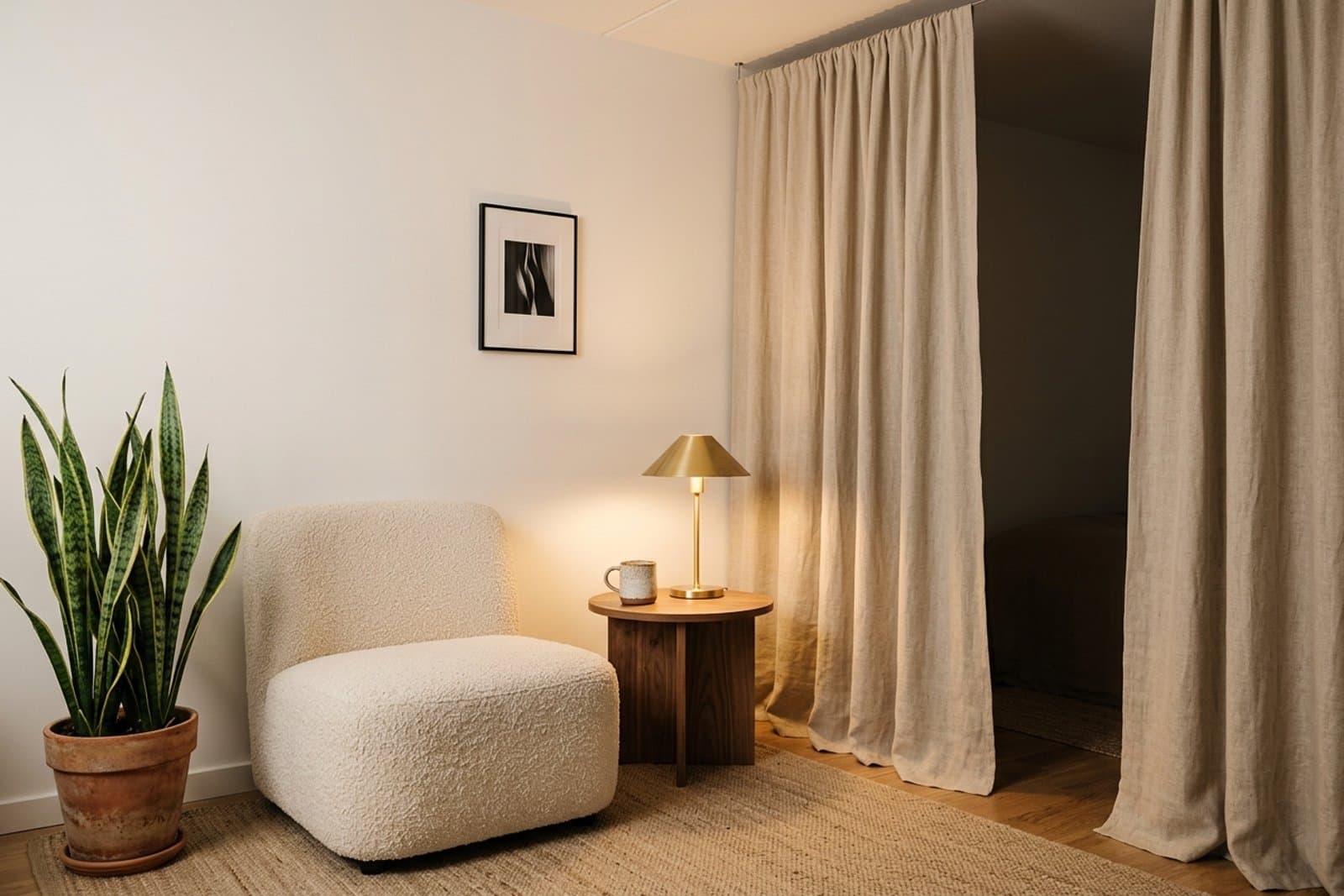
How to Divide a Studio Apartment Into Zones (No Walls)
Divide a studio apartment into zones with no walls: place the bed first, hang a ceiling curtain on Command hooks, lay one rug per zone. See the 350 sq ft plan.
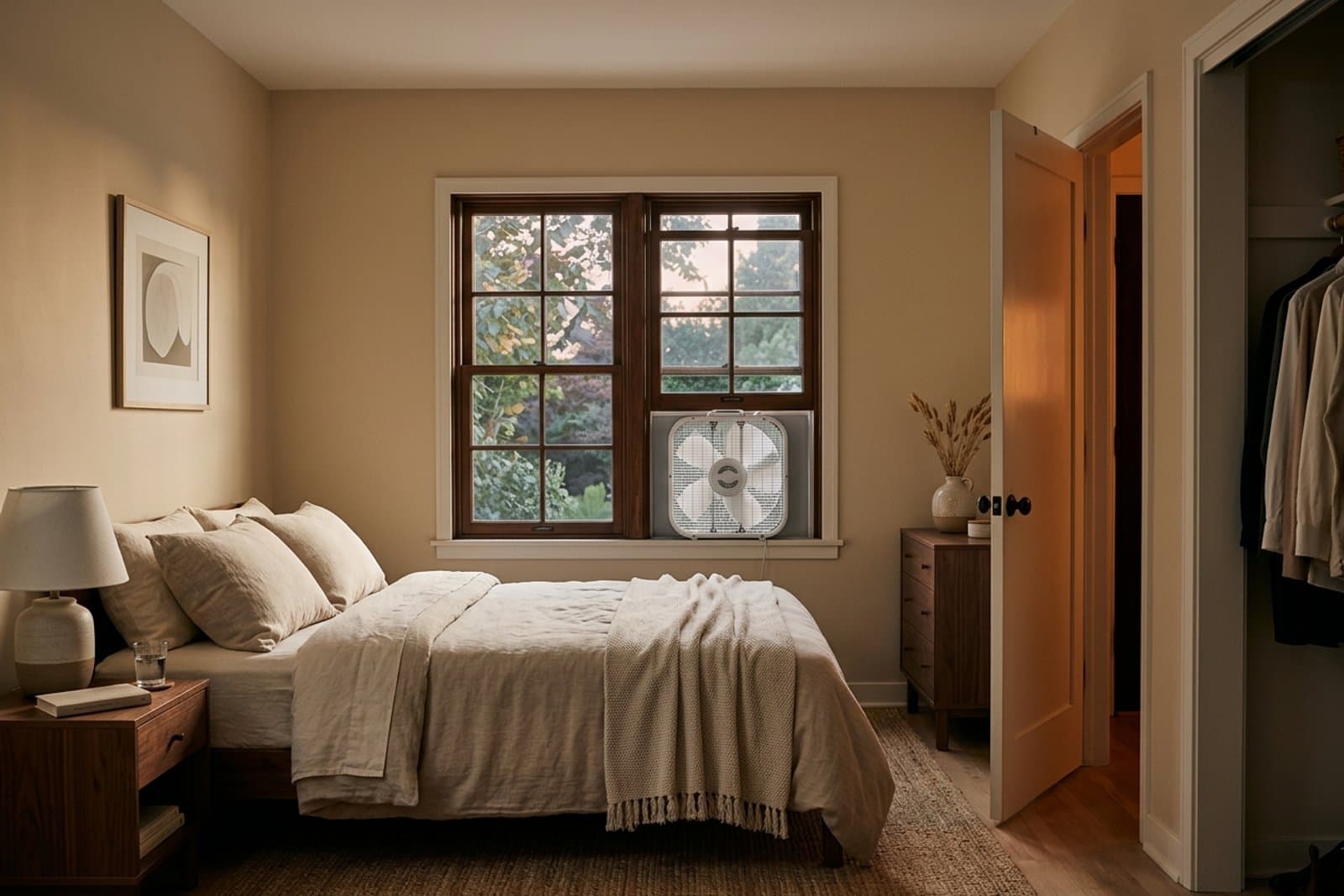
How to Ventilate a Room With One Window (No Cross Breeze)
To ventilate a room with one window, face a box fan out, crack the door for intake, and flush 10 to 20 minutes, or about 5 in winter. See the full routine.
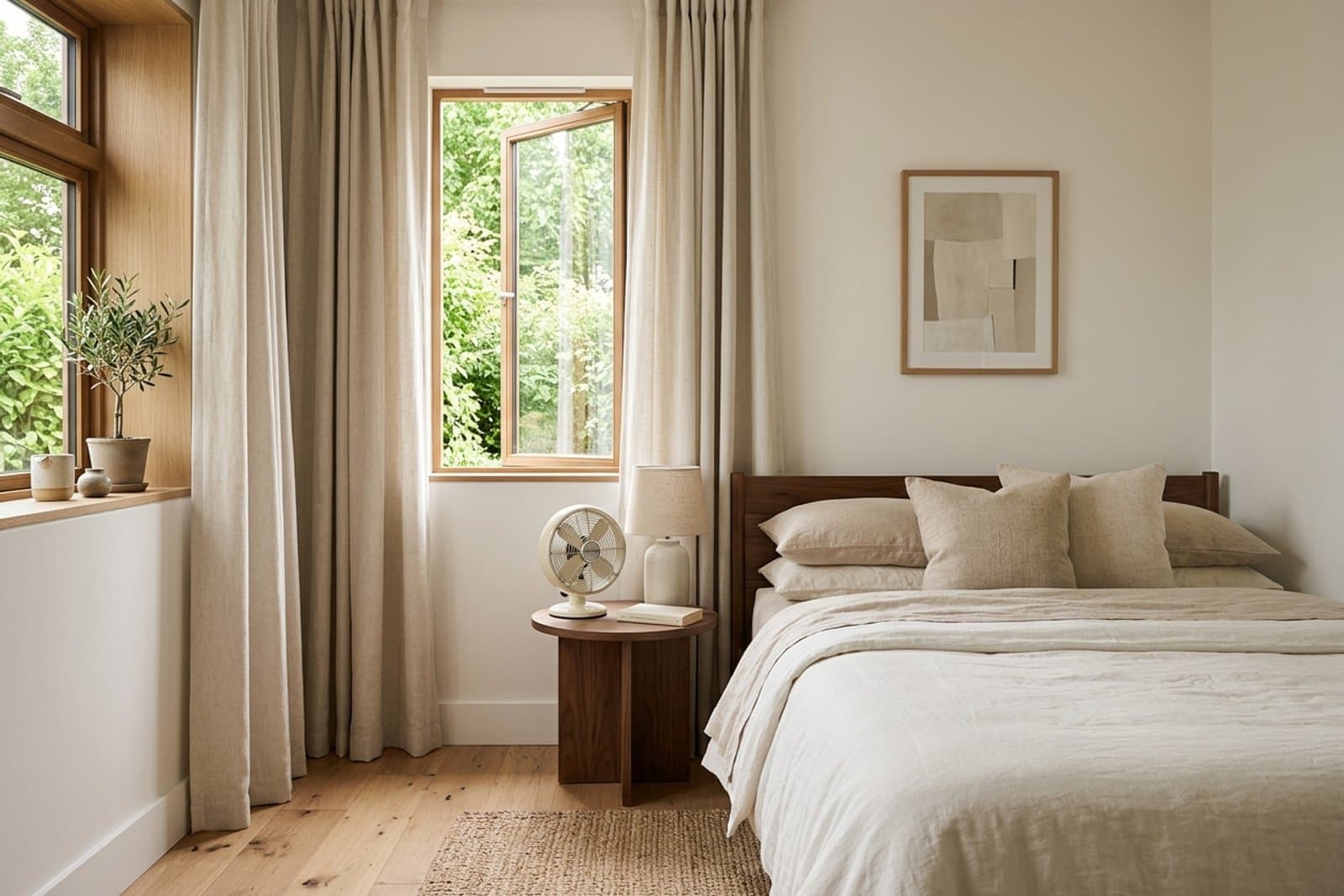
How to Cool a Room With One Window Without AC (West or South)
Cool a room with one window without AC: shade the glass before the sun lands, aim a fan at your body, then flush stored heat out after sunset.