How to Cool a Room With One Window Without AC
Cool a room with one window and no AC by shading the glass by day, running a timed window exhaust after sunset, and aiming a fan across your body.

A room with one window cools best when you stop treating the window as fresh air all day. During hot hours, close the window, block direct sun, and use a fan on your body. After sunset, turn that same window into an exhaust point for 30 to 90 minutes, with the door cracked so cooler replacement air can enter from the hall or another room.
The fastest setup is simple: shade first, fan second, exhaust later. If the window faces west, protect the glass before afternoon sun hits it. If the room is a bedroom, cool the bed and textiles before bedtime. Track the room for one evening before buying anything because timing often beats another gadget. One window is a real limit, but it is not a dead end for a small room.
This guide is for renters and homeowners with a small bedroom, office, or studio corner that has only one operable window. If your room faces west, read the west facing room cooling guide too. If the whole apartment traps heat, start with why your apartment feels hotter than outside. For related layouts, see cooling a bedroom for sleep and using fans and curtains without AC.
Can one window actually cool a room without AC?
Yes, but usually not by pulling fresh air in during the day. A one window room cools when you reduce the heat it stores, then use the window at the right time to push warm air out. If outdoor air is hotter than indoor air, an open window can make the room worse.
Think of the window as a timed tool. In the afternoon, it is a heat leak to control. At night, it becomes an exhaust route. That timing matters more than owning a larger fan.
Where should the fan go in a one window room?
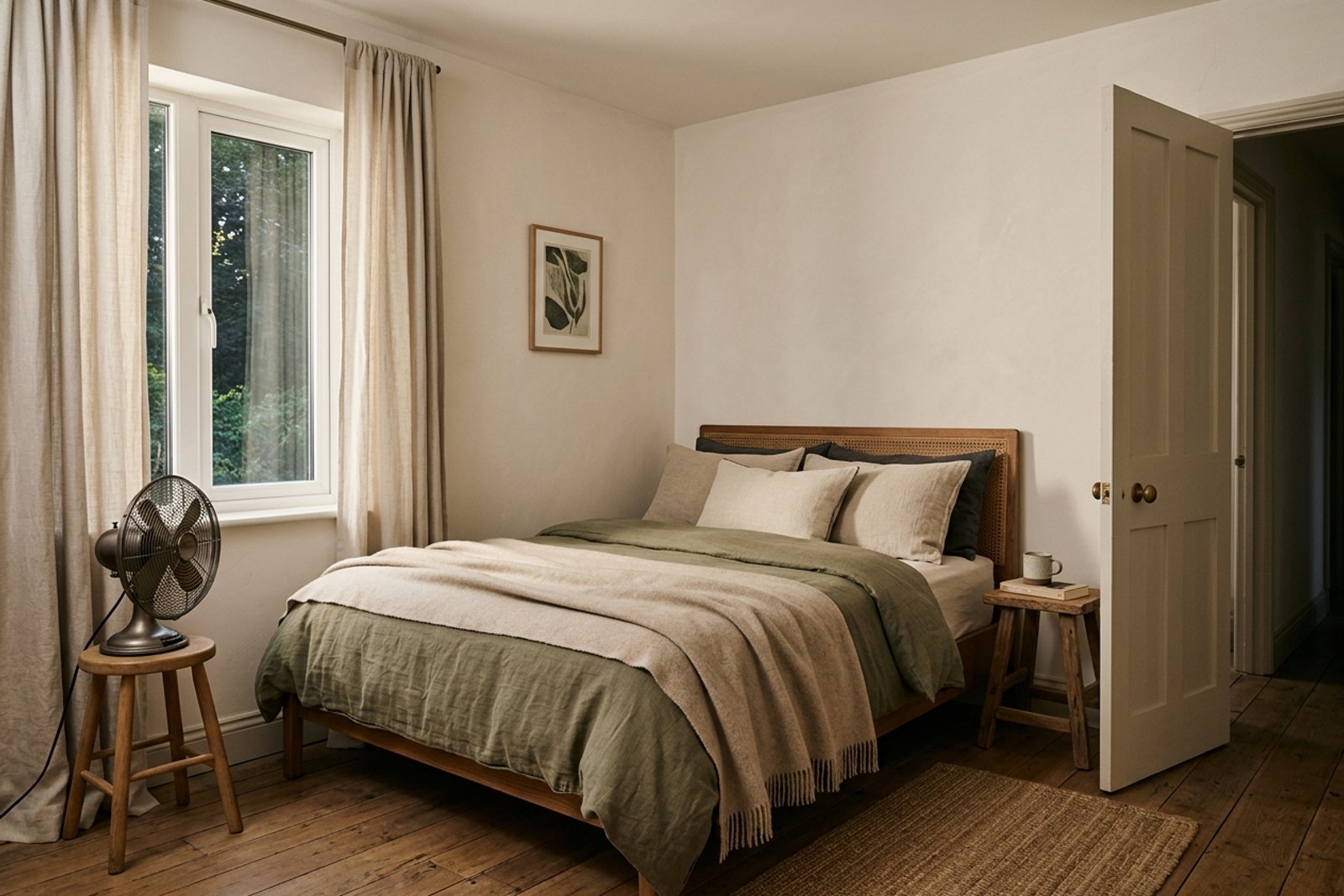
Put the fan where it solves the hour you are in. During the day, place it near your body, aimed across the bed, desk, or sofa. Do not waste the fan by pointing it at a hot window or a sun warmed wall. The U.S. Department of Energy notes that fans cool people, not rooms, by creating a wind chill effect on the skin, so moving air across your body helps you feel cooler even when the room temperature barely changes.
After sunset, change the fan's job. Put a 20 inch box fan or a strong circulator in the window facing outward, not inward. Crack the door so replacement air can come from a cooler hallway or another room. If safety or building rules mean the door must stay closed, open the door for a supervised flush first, then close it when you sleep.
Use this sequence:
- Afternoon: window closed, shade closed, fan on body.
- Early evening: wait until outside air is cooler.
- Night flush: fan outward in the window for 30 to 90 minutes.
- Sleep: fan back on the body, window adjusted for security and noise.
Should the window stay open all day?
No. In summer, a one window room usually heats up faster when the window stays open through the hottest part of the day. The open window lets in hot outdoor air, traffic dust, humidity, and direct sun if the shade is not set. The room then stores that heat in bedding, rugs, upholstery, and walls.
Close the window before the room starts losing the temperature battle. In many North American apartments, that means late morning or early afternoon. Use your hand as a quick test: if the glass or sill feels warm, the room is already absorbing heat. Close it, shade it, and save ventilation for later.
What should you use on the window to block heat?
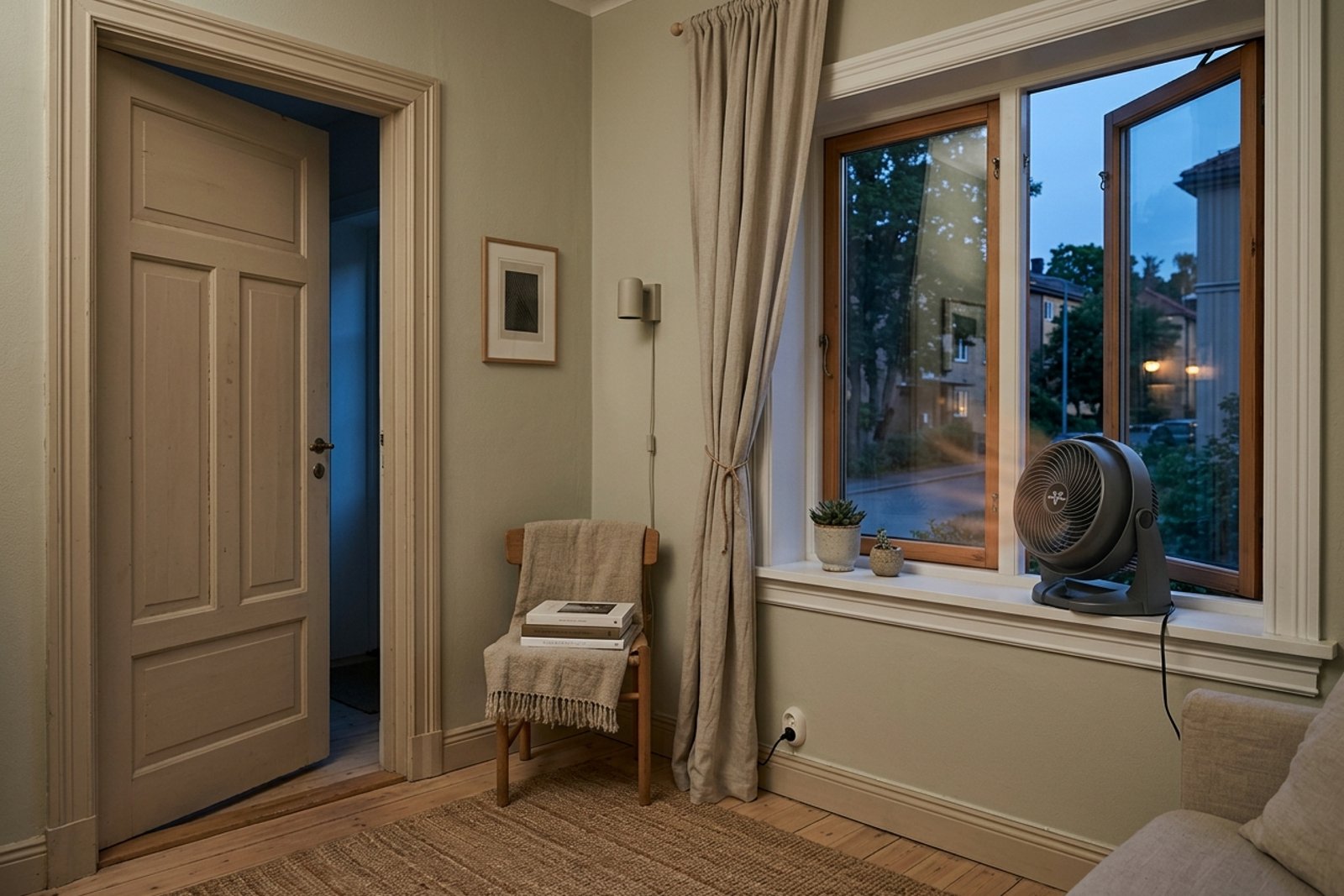
Use the lightest effective window layer your lease allows. A pale thermal curtain, cellular shade, or removable reflective film can cut heat before it settles into the room. The best choice depends on whether the sun hits the glass directly and how strict your building is about window changes.
Start with the least permanent stack:
- Light thermal curtain with a white backing.
- Tension mounted cellular shade if you cannot drill.
- Static cling heat control film if your lease allows it.
- Side clips or magnetic tape to close curtain gaps.
Side gaps matter in one window rooms because that window is the main heat path. A narrow blade of afternoon sun across the bed can warm the mattress for hours.
How do you cool the bed, desk, or sofa in a one window room?
Cool the object you use most, not the whole room at once. If the room is a bedroom, keep direct sun off the mattress, switch to percale cotton or linen sheets, and use a lighter quilt instead of a dense comforter. If the room is an office, pull the desk and laptop out of the sun path so electronics do not add heat.
For a living room, move dark textiles away from the window for summer. Dark rugs, velvet chairs, black metal shelves, and heavy throws store warmth longer than pale cotton, linen, wood, or woven textures. You do not need a new room. You need fewer heat batteries near the glass.
What if the room feels stale even after the night flush?
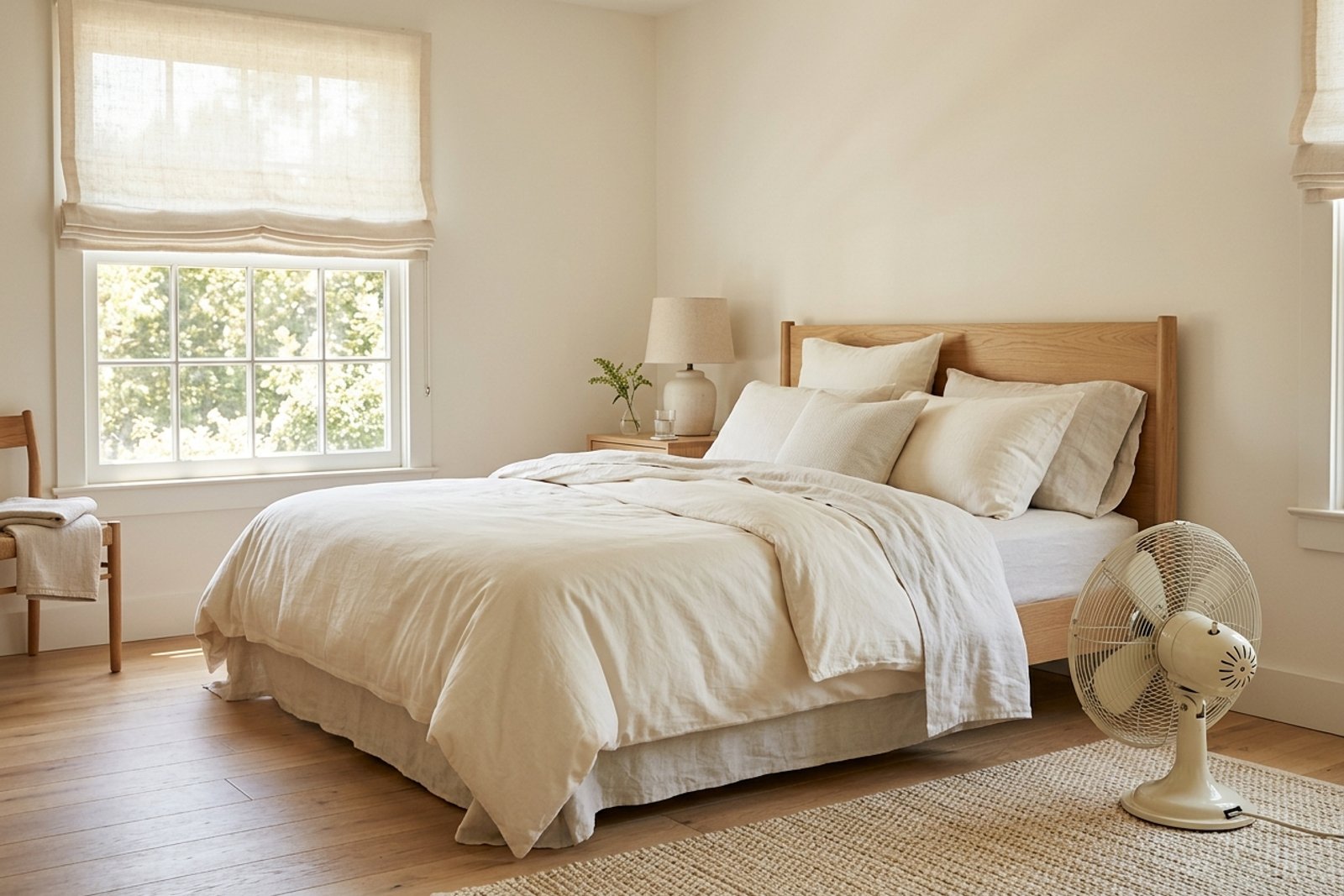
A stale one window room usually has an exit problem or a source problem. Exit problem means warm air has no easy path out because the door stays sealed, furniture blocks the window, or the fan is too weak for exhaust. Source problem means the room keeps producing heat from electronics, chargers, lamps, cooking, or direct sun.
Work through the room in this order:
- Clear 24 to 30 inches around the window and fan.
- Open the door during the exhaust period.
- Turn off chargers, monitors, and bright lamps before bedtime.
- Pull heavy furniture a few inches off the hottest wall.
- Run a bathroom or kitchen exhaust fan if it safely helps pull air through the apartment.
If the room still feels stale, the layout may be trapping air. A tall bookcase beside the window or a bed blocking the door can stop movement more than people expect.
What is the simplest one night test?
Do a one night airflow test before buying anything. At sunset, note whether outside air feels cooler than the room. Put the fan in the window facing outward, crack the door, and run it for 45 minutes. Then move the fan beside the bed or sofa and aim it across your body for the rest of the evening.
In the morning, note what changed: temperature, smell, sleep quality, noise, and whether the room felt calmer. If the flush helped but did not last, improve the shade layer. If the fan barely moved air, clear the window area or use a stronger exhaust fan. If the room cooled but felt messy, hide cords and make the cooling setup look intentional.
A one window room asks for timing, not guesswork. Archie can help because it reads the room as a system: where heat enters, where air can leave, which objects store warmth, and where a fan will actually help. That is the difference between buying another gadget and making the room work.
A Note from Jihyun Lee
Large buildings have flushed their heat at night for decades; the practice is called a night purge, and a one window room can run a small version of it. What I want you to borrow from that world is the discipline, not the equipment. The building does not open its vents when people feel hot. It opens them when the outside air is finally cooler than the inside air, and it seals everything again before the sun returns. I treat the window as a valve rather than a vent: shut tight through the afternoon, opened deliberately at night with the fan facing out. The rooms that stay hot are almost always the ones where the window simply stands open all day.
Frequently Asked Questions
How do you make a poor man's air conditioner?
Set a shallow pan or bowl of ice in front of a fan so the moving air passes over the ice before it reaches you. It cools only the small stream of air aimed at your body, not the whole room, and it lasts an hour or two until the ice melts. Point it at your skin, not the wall.
How do you push hot air out of a room with one window?
Face a box fan outward in the window so it blows warm indoor air outside, then crack the door so cooler make up air can flow in from the hall or another room. With one window, air needs both an exit and an entry, so a sealed door stalls the flush. Run it once outdoor air drops below the room.
How do you keep a room cool without opening the window?
When outdoor air is hotter, smoky, or humid, keep the window shut and work the inside of the room instead. Close a pale thermal curtain or cellular shade against the sun, switch off lamps and electronics that add heat, and run a fan across your body. You cannot flush heat out, so the goal is to make less of it.
Cooling and ventilating are not the same job. For the airflow half, see how to ventilate a room with one window.
Spatia Editorial Team writes about small homes from the room outward: light, airflow, walking paths, storage, and the small decisions that make a space easier to live in before it photographs well.
Ask Archie where the fan should go
Send Archie a photo of the room that only has one window. Archie reads the window, door, bed, sofa, heat sources, and walking path, then gives you a cooling layout that fits your real room before you buy another fan.
Plan my cooler room with ArchieRelated Articles

How to Ventilate a Room With One Window
Ventilate a room with one window by making a temporary exhaust path, opening an intake route, and timing the flush for cooler outdoor air.

How to Cool a Humid Room Without AC (7 Steps)
Cool a humid room without AC by controlling moisture first, then airflow. A renter safe routine to exhaust damp air, dry textiles, and place fans right.

How to Cool a Room With Fans and Curtains (No AC)
Cool a room with fans and curtains as one timed system: block heat before it enters, then move air at the right hour so a hot room feels calmer without AC.