How to Cool a West Facing Room Without AC: A Renter's Afternoon Heat Guide
West facing rooms feel fine at breakfast and unbearable by dinner. Here is the renter-safe cooling sequence that blocks late-day sun, dumps stored heat after sunset, and makes a small apartment sleepable without installing AC.

A west facing room without AC has a different problem than a south facing one: it saves most of its heat for the end of the day. The room can feel manageable through lunch, then turn hot just when you want to cook, work, or sleep. For renters, the fix is not one dramatic product. It is a late-day routine: block the low western sun before it hits the glass, keep heat from soaking into the bed and sofa, then flush the room after sunset when outdoor air is finally cooler than indoor air.
This guide was shaped by Spatia's latest GA4 snapshot: the most-read post in the last 28 days was our renter guide to cooling a south facing room without AC, with traffic coming mostly from social referrals and a small but useful lift from YouTube Shorts and Pinterest. A west facing room is the natural next question because it behaves differently. South-facing rooms build heat across the middle of the day. West-facing rooms hold the harshest, lowest-angle sun from midafternoon into early evening, which means the design plan has to protect dinner hours and sleep.
If you rent a small apartment, studio, or bedroom with one large west window, start here. The steps below are reversible, inexpensive compared with portable AC, and designed for leases that limit drilling, exterior shades, and permanent window changes. If your space is a single open room, pair this with our small studio apartment ideas so the cooling plan works with your layout instead of fighting it.
Why west facing rooms get so hot in the afternoon
West-facing windows receive their hardest sun later in the day, when outdoor temperatures are already high and the sun angle is low enough to push deep into the room. That combination warms more than the air. It heats the floor, bed frame, sofa arms, dark curtains, bookshelves, and electronics. Those surfaces then radiate heat back into the room after sunset, which is why a west-facing bedroom can still feel stale at 10 p.m.
The goal is to reduce stored heat, not just move hot air around. A fan blowing across a sun-baked room at 5 p.m. can make your skin feel a little better, but it does not stop the room from absorbing heat. The strongest sequence is: close the window layer before direct sun arrives, keep the room sealed while outside air is hotter than inside, then switch to ventilation once the outdoor temperature drops. The timing matters more than the brand of curtain or fan.
What time should you close curtains in a west facing room?
Close west-facing curtains before the sun hits the glass directly. In many apartments, that means early to midafternoon, often around 1 or 2 p.m. in summer, but the real cue is visual: if a bright rectangle of sun has reached the floor, you are already storing heat. Set the room for evening by closing thermal curtains, lowering shades, and shutting the window while the outside air is still hotter than the indoor air.
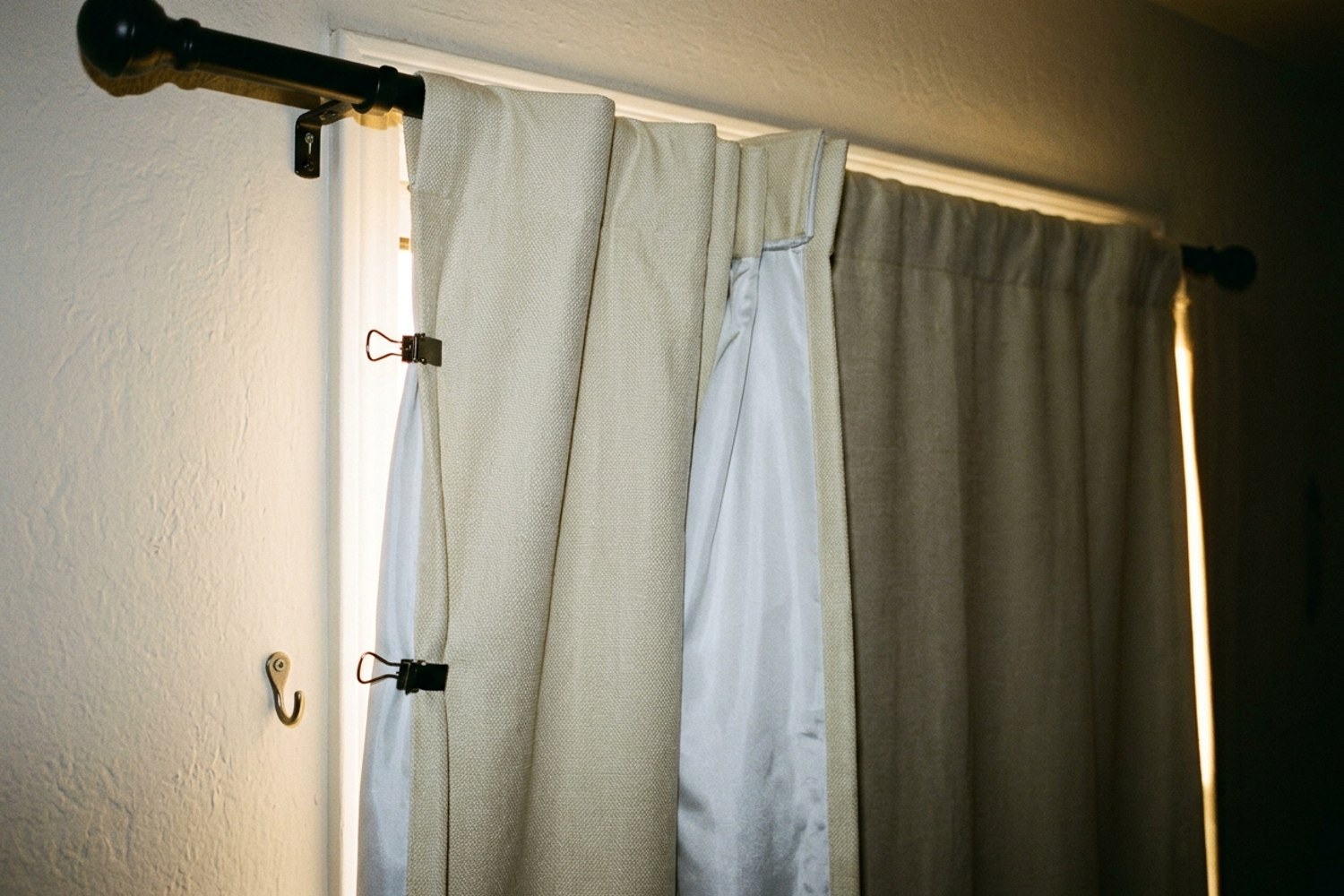
For west windows, side gaps matter because late sun comes in at an angle. A curtain that looks wide enough at noon can leak a blade of direct sun at 5 p.m. Use a rod that extends past the trim, overlap two curtain panels in the middle, and clip the outside edges to the wall or trim with renter-safe hooks if your lease allows. If you cannot drill, a tension rod inside the frame is better than nothing, but it will leak more light and heat than a wider rod mounted above the window.
The best curtain stack is a light-colored thermal blackout panel with a white or reflective backing facing the glass. Dark curtains can look cozy, but on a west wall they often absorb heat and hold it near the room. If you want a darker interior look, use a light thermal liner behind the decorative curtain.
Should renters use window film on west facing windows?
Removable heat-control window film is one of the most useful renter upgrades for a hot west-facing room, as long as your lease permits it. Look for static-cling or removable film labeled for heat rejection rather than privacy alone. Apply it in the morning when the glass is cool, use plenty of water, and keep the cut slightly inside the gasket so it does not curl at the edges.
Film is especially helpful on west windows because the sun angle is low and direct. Curtains block heat after it has already passed through the glass. Reflective film reduces part of that load at the pane, before the room absorbs it. It is not a substitute for curtains, but it makes the curtain layer work less hard.
A few cautions: avoid very dark tint on old single-pane glass, do not install adhesive products if your lease bans them, and photograph the window before and after application so you have a record for move-out. If your landlord is strict, start with a removable fabric shade or tension-mounted cellular shade instead.
Move the bed, sofa, and dark textiles off the west wall
A west-facing room cools faster when fewer heavy, dark, or heat-sensitive objects sit in the direct sun path. If the bed is pushed against the west wall, the mattress and headboard can hold warmth deep into the night. Pull the bed a few inches away from that wall, or rotate the layout so the bed sits on a north, east, or interior wall instead. In a studio, use a low credenza, plants, or a rug to keep the sleeping zone visually grounded after the move.
Dark rugs, velvet chairs, black metal shelves, and polyester throws all hold more heat than they need to. You do not have to replace the room. Just strip the west sun path for summer: roll up the heavy rug, move the dark chair to a shaded corner, swap synthetic throws for cotton or linen, and keep laptops, speakers, and chargers out of the sun. This overlaps with the palette advice in our interior color psychology guide: color changes how a room feels physically, not only visually.
The most cooling-friendly west wall palette is pale and matte: warm white, oat, sand, pale sage, light clay, or soft gray-beige. Glossy surfaces can glare in late sun. Deep saturated paint can look beautiful but may make the wall feel warmer in a small room during summer.
Where should fans go in a west facing room?
Use fans in two different ways depending on the hour. During the hot part of the afternoon, keep the west window closed and aim a fan at your body, not at the window. Moving air across skin improves comfort even when the actual room temperature does not drop. A tower fan near the sofa or a small circulator aimed across the bed is more useful than a fan pointed at a hot wall.
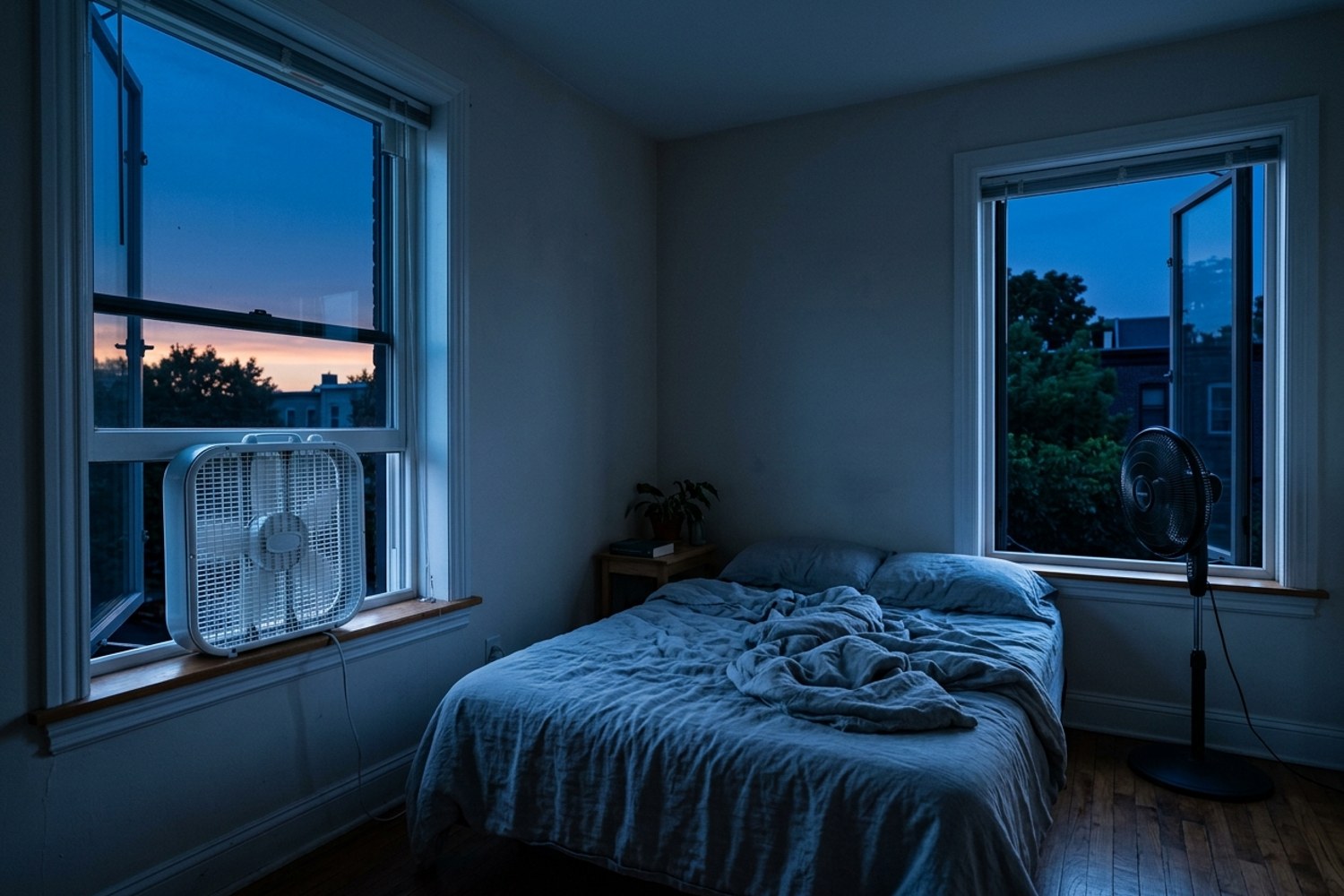
After sunset, change the setup. When outdoor air is cooler than indoor air, place one box fan facing outward in the west window to exhaust the hot air. Open a cooler window, hallway door, or shaded side of the apartment so replacement air can enter. If you have two windows, the second fan should pull air in from the cooler side. If you have only one window, crack the apartment door for a short supervised flush if building rules and safety allow, or run the bathroom/kitchen exhaust fan while the west window is open.
The key is not to ventilate too early. Opening the west window at 4 p.m. usually invites hot outdoor air into a room that could have stayed sealed. Wait until the air outside is clearly cooler than the air inside, then ventilate aggressively for 30 to 90 minutes.
How do you sleep cooler in a west facing bedroom?
A west-facing bedroom needs a night plan because the room's worst heat often arrives close to bedtime. Start by cooling the surfaces closest to your body: sheets, pillow, mattress topper, and the air path around the bed. Linen and percale cotton breathe better than polyester microfiber or sateen. A lightweight cotton quilt usually sleeps cooler than a comforter, even a thin one. If your mattress is memory foam and runs hot, add a thin cotton or wool topper rather than buying a new mattress.
Keep the bed out of the late sun if possible. If not, close the curtain early enough that the mattress never receives direct light. At night, place a fan so air crosses the upper body, not the feet. A small fan on a stool near the bed often works better than a large fan across the room because the airflow reaches skin before it diffuses.
The room should also look calmer after the heat routine is set. Hot rooms feel more stressful when every solution looks temporary: foil in the window, cords everywhere, fans blocking the path. Hide cords along the baseboard, choose one matching curtain color, and keep the cooling kit visually quiet. For more on reducing the mental load of a room, see our stress-free home interior design guide.
What if the west facing room is also a small studio?
Studios make west-facing heat harder because the window may serve the living room, bedroom, and office at once. The best strategy is zoning by heat exposure. Put the activity that happens latest in the day away from the west glass. If you sleep at the far end of the studio, keep the bed in the cooler zone and let the sofa or dining table sit closer to the window. If you work from home, avoid placing the desk where your laptop and monitor bake in low afternoon sun.
Use furniture height to preserve airflow. Tall bookcases beside the west window trap warm air in the corner. Low credenzas, open-leg tables, and plants are better summer dividers because air can move over and around them. The same low-divider logic appears in our small studio apartment guide: zoning works best when light and air still pass through the room.
Lighting matters too. A west room may have harsh sun at 6 p.m. and then feel cave-like once the curtains stay closed. Add warm lamps in the shaded zones so the room feels intentional, not shut down. Our bedroom lighting guide is useful here because a cooler room still needs layered light after dark.
A seven-day renter plan for a cooler west facing room
- Day 1: Track the sun. Note when direct sun first touches the west window and when it leaves. That is your curtain schedule.
- Day 2: Close the gaps. Extend or adjust curtains so the panels overlap and cover the sides of the window during low-angle sun.
- Day 3: Add a removable glass layer. Install static-cling heat-control film or a tension-mounted cellular shade if film is not allowed.
- Day 4: Clear the heat path. Move dark textiles, electronics, and the bed or sofa out of direct afternoon sun where possible.
- Day 5: Set the fan routine. Personal airflow during the afternoon; exhaust fan in the west window after sunset.
- Day 6: Change the sleep layer. Use percale or linen sheets, a lightweight quilt, and a fan aimed at the upper body.
- Day 7: Make it look permanent. Tidy cords, choose one curtain color, and keep the cooling tools visually aligned with the room.
Final thought
A west-facing room is not hot all day, which is exactly why it catches renters off guard. The room waits, stores heat late, then releases it when the rest of the apartment should be winding down. Treat it like an evening problem. Block the low sun before it enters, remove the objects that hold heat, and ventilate only when outdoor air is finally on your side. The result is a room that still gets golden-hour light, but does not punish you for it at bedtime.
Written by the Spatia Editorial Team. Spatia covers small-space design from a renter's lens, with a focus on practical rooms that work before they photograph well.
Plan a cooler west-facing room
Archie helps map your window orientation, furniture placement, curtain stack, and evening airflow so a hot room feels calmer without permanent installs.
Plan my room with ArchieRelated Articles

How to Cool a Humid Room Without AC
A humid room needs moisture control before more airflow. Use this renter safe sequence to exhaust damp air, dry textiles, place fans correctly, and make a bedroom or living room feel cooler without installing AC.

How to Cool a South Facing Room Without AC: A Renter's Guide for 2026
Your south facing bedroom can stay 10 to 15°F cooler this summer without AC and without permanent installs. The four mechanical fixes that work, plus the design choices (palette, textiles, bedding) that compound them, starting under $200 for the core stack.

How to Cool a Room With One Window Without AC
A one window room can still cool down if you use the window for timed exhaust, keep heat out before it enters, and move air across your body instead of just stirring the room.