Small Apartment Design: Why Smaller Homes Should Feel More Beautiful
A small home is not a limitation. It is a magnifier. The smaller the space, the more every detail, every decision, and every mistake shows.

Small Apartments Are Not Something to Work Around
As homes get smaller, expectations get bigger.
People often treat a small apartment as a problem to manage. Something to "work around." A starter home until the real one arrives.
That framing is wrong, and it sets the room up to fail before anyone has moved in.
From a design perspective, the opposite is true. The smaller the space, the more intentional the design has to be. A small home does not need lower standards. It needs higher ones.
The Smaller the Space, the More Every Detail Shows
A large home can hide a lot. A wall painted the wrong color sits at the end of a long hallway. A cluttered shelf disappears behind a couch. An awkward layout gets absorbed by the square footage around it.
A small apartment has nowhere to hide.
In a compact home:
- Every detail is visible.
- Every decision matters.
- Every mistake is amplified.
The exact same lamp, paint color, or piece of furniture reads completely differently in 400 square feet than it does in 2,000. In a small space, that one off piece is not a small fraction of the room. It is the room.
This is the part most people miss. They shop for a small apartment with the same casual eye they would bring to a larger home. Then they wonder why the finished space feels off, even though nothing about it is obviously wrong.
The answer is usually that there is no slack. In a small space, "close enough" is not close enough.
Why Poorly Designed Small Homes Feel Worse Than Large Ones
A poorly designed large home feels disappointing. A poorly designed small home feels claustrophobic.
The difference is compression. The same flaws that look minor in a 2,000 square foot house can take over a 500 square foot apartment.
A few examples that show up almost every time.
Clutter feels overwhelming. A pile of mail and three pairs of shoes near the door in a large home is a small mess in a corner. In a studio, those same items sit in your direct field of view from the bed, the couch, and the kitchen at the same time. The eye has nowhere else to go.
Poor lighting feels harsh. A single overhead fixture in a large living room is mediocre. The same fixture in a small one is punishing. Hard light bouncing off close walls makes the space feel both smaller and more tired.
Bad layouts feel restrictive. A couch placed slightly wrong in a large room is annoying. In a small room, it changes how you walk, sit, eat, and rest. A few inches becomes the difference between a room that breathes and a room you squeeze through.
This is why small homes need more design attention, not less. The cost of getting it wrong is higher.
The Psychology of a Well Designed Small Space
A small home, designed with care, can feel calmer than a large one. More focused. More personal.
There is less to take in, so the eye relaxes faster. There are fewer rooms to maintain, so the mind does too. The home stops being a list of things to fix and starts being a place to rest.
Three feelings come up most often in small spaces that work.
Calm. Less surface area means less visual noise. A short list of intentional objects is easier on the nervous system than a long list of half thought through ones.
Focus. A small home can hold only what matters. That edit has a quiet effect on how you spend time. The home tells you what is important by what it has room for.
A sense of self. Because every object is visible, every object is yours. There is no filler. A well edited small home reads as a portrait of the person living in it, more than a large one ever can.
This is what makes the psychology of small spaces so different. The constraints become a form of clarity.
A Small Home Is a Magnifier
The simplest way to think about it. A small apartment magnifies whatever you put into it.
A poor finish looks poorer. An honest material looks more honest. Clutter feels louder. A clean surface feels quieter. A good piece of furniture takes up a larger share of the room and gets to do more work.
This is the reframe that changes everything. A small home is not a worse version of a large home. It is a more concentrated one.
A few practical instincts follow from that.
Buy fewer things of higher quality. In a large home you can spread a budget across many pieces. In a small one, the budget should consolidate. One real wood table is worth more than three pieces of disposable furniture in a 400 square foot apartment.
Edit harder than you think you need to. Most small apartments are still holding two thirds of the items that lived in the previous larger home. Removing the bottom third changes how the space feels overnight.
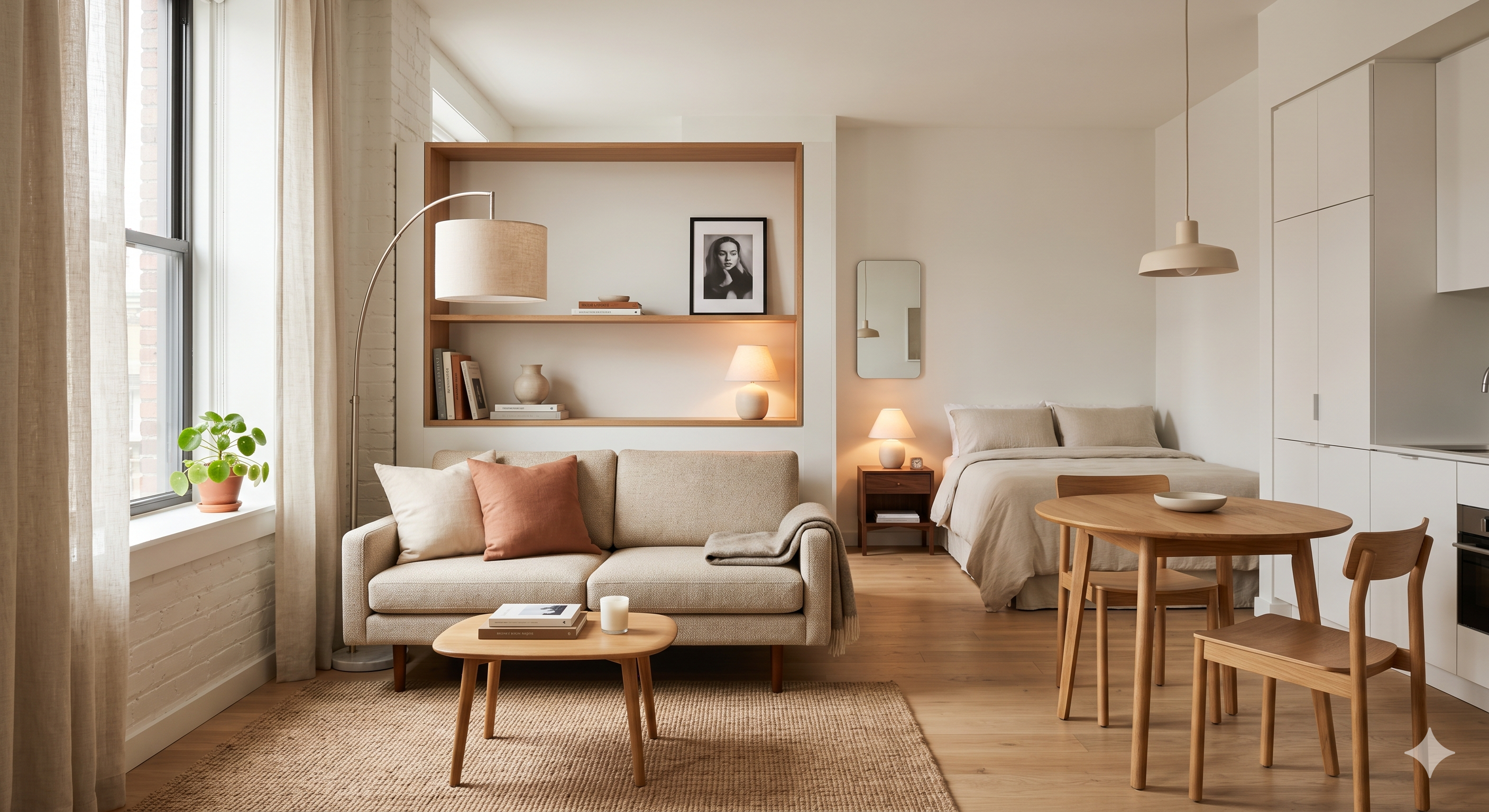
And treat lighting as furniture. A small home with three soft lamps at different heights feels twice as large as the same home with a single ceiling fixture. Light is the most affordable expansion you can buy.
How to Treat a Small Apartment Like a Real Home
A few practical principles that apply across small homes, regardless of layout.
- Choose one anchor piece per room. A sofa, a bed, a table. Build the rest of the room around it.
- Keep flat surfaces mostly empty. A coffee table with one book and one candle reads calmer than the same table with eight objects on it.
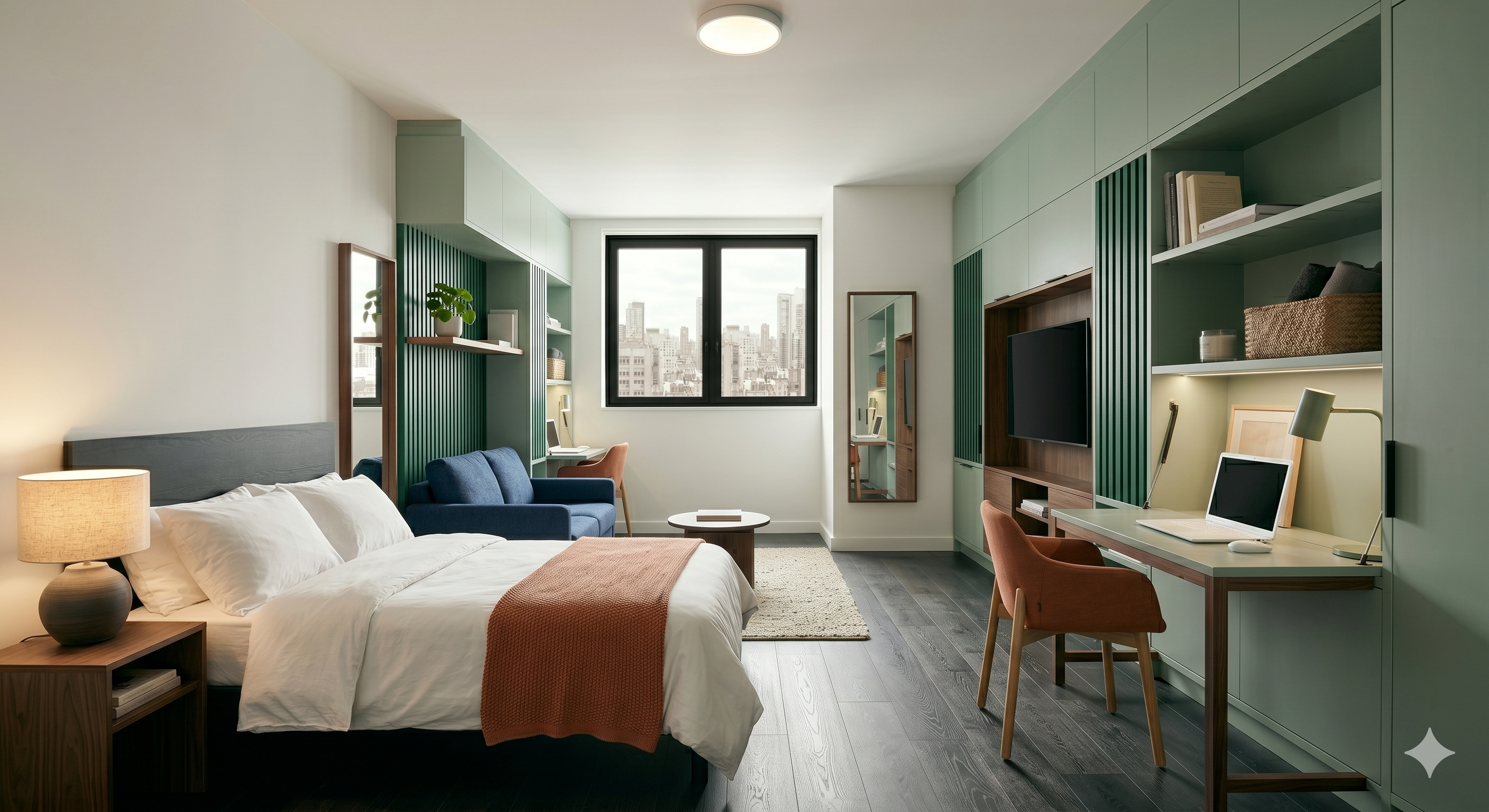
- Use the walls and ceiling line. Floor space is the most expensive real estate in a small home. Move storage and decoration upward.
- Layer the lighting. One overhead bulb is not enough. Add a table lamp, a floor lamp, and a warm bedside light, on separate switches if possible.
- Pick a tight palette. Two or three core colors carry a small room better than five. The eye reads the space as one continuous environment rather than several competing ones.
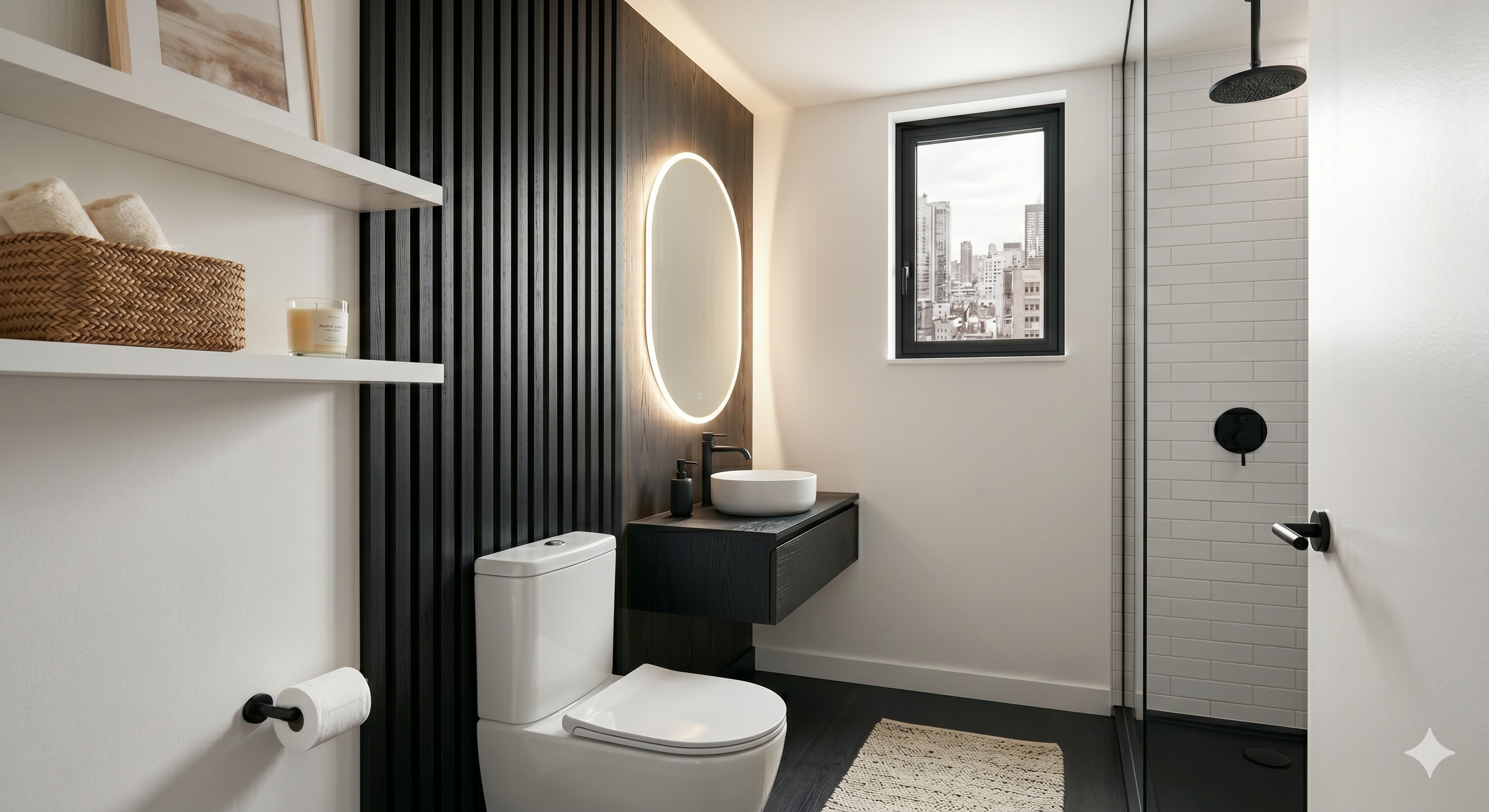
- Invest where the body touches. Bedding, seating, rugs, towels. In a small home, you are closer to these surfaces, every day, than in a large one.
None of this requires a renovation. Most of it is the work of choosing well, and letting the rest go.
Final Thought
A small home is not a limitation. It is a magnifier.
Designed with care, a small apartment can feel more beautiful, more personal, and more restful than a large home that was put together with less thought. The square footage does not decide the experience. The decisions do.
The smaller the space, the truer that becomes.
Frequently Asked Questions
Why does my small apartment feel cramped even when it is clean?
Cramped feeling usually comes from too many objects competing for attention, not from the square footage itself. Edit the room hard, clear flat surfaces, and add a second lamp at a different height. Most small apartments feel larger after you remove about a third of the items in them, without any change to the floor plan.
Is it worth investing in good furniture for a small apartment?
Yes, often more than in a large home. In a small space, each piece takes up a larger share of the room and carries more visual weight. One well made sofa or table will work harder, last longer, and feel better than several disposable pieces. Treat fewer purchases as larger investments.
What is the biggest mistake people make when designing a small home?
Underestimating how much every choice shows. The same imperfect rug, harsh light, or cluttered shelf that goes unnoticed in a large home becomes the focal point of a small one. Small spaces reward careful decisions and punish casual ones.
How can a small apartment feel calm rather than cluttered?
Use a tight palette, keep most surfaces clear, and choose furniture for daily use rather than for show. Move storage up the walls so the floor stays open. Light the room with two or three soft sources at different heights instead of one harsh overhead fixture.
Can a small home actually feel more beautiful than a large one?
Yes. Because everything in a small home is visible, a well edited small apartment reads as a single, intentional environment. A large home with the same level of care across every room is rare. A small one is achievable in a weekend of considered editing.
Want to try this in your own space?
Upload a photo of your room and let Archie, our AI design assistant, show you personalized recommendations.
Try Archie FreeRelated Articles

Why Is My Apartment Hotter Than Outside?
The thermometer says 82 outside, but your apartment feels like 88 with every window open. Here is why small apartments trap heat, and the renter routine that cools one down tonight without buying AC.

How to Divide a Studio Apartment Into Zones
A 350 sq ft studio holds four real zones when you stack the right boundaries. Below is the renter sequence: place the bed first, hang a ceiling curtain on Command hooks, lay one rug per zone, and let lamp color temperature do the work a wall would.

How to Cool a West Facing Room Without AC: A Renter's Afternoon Heat Guide
West facing rooms feel fine at breakfast and unbearable by dinner. Here is the renter-safe cooling sequence that blocks late-day sun, dumps stored heat after sunset, and makes a small apartment sleepable without installing AC.