Why Is My Apartment Hotter Than Outside?
The thermometer says 82 outside, but your apartment feels like 88 with every window open. Here is why small apartments trap heat, and the renter routine that cools one down tonight without buying AC.

Your thermometer says 82 outside, but the apartment feels closer to 88, even with every window open. You are not imagining it, and the fix is not a new air conditioner.
This guide is for renters in small apartments who cannot install central AC and want to understand why the heat builds up, then cool a room down the same night. If your space bakes from one direction, our west facing and south facing cooling guides go deeper on those cases, and our cool bedroom guide covers the sleep setup in detail.
Why is my apartment hotter than outside?
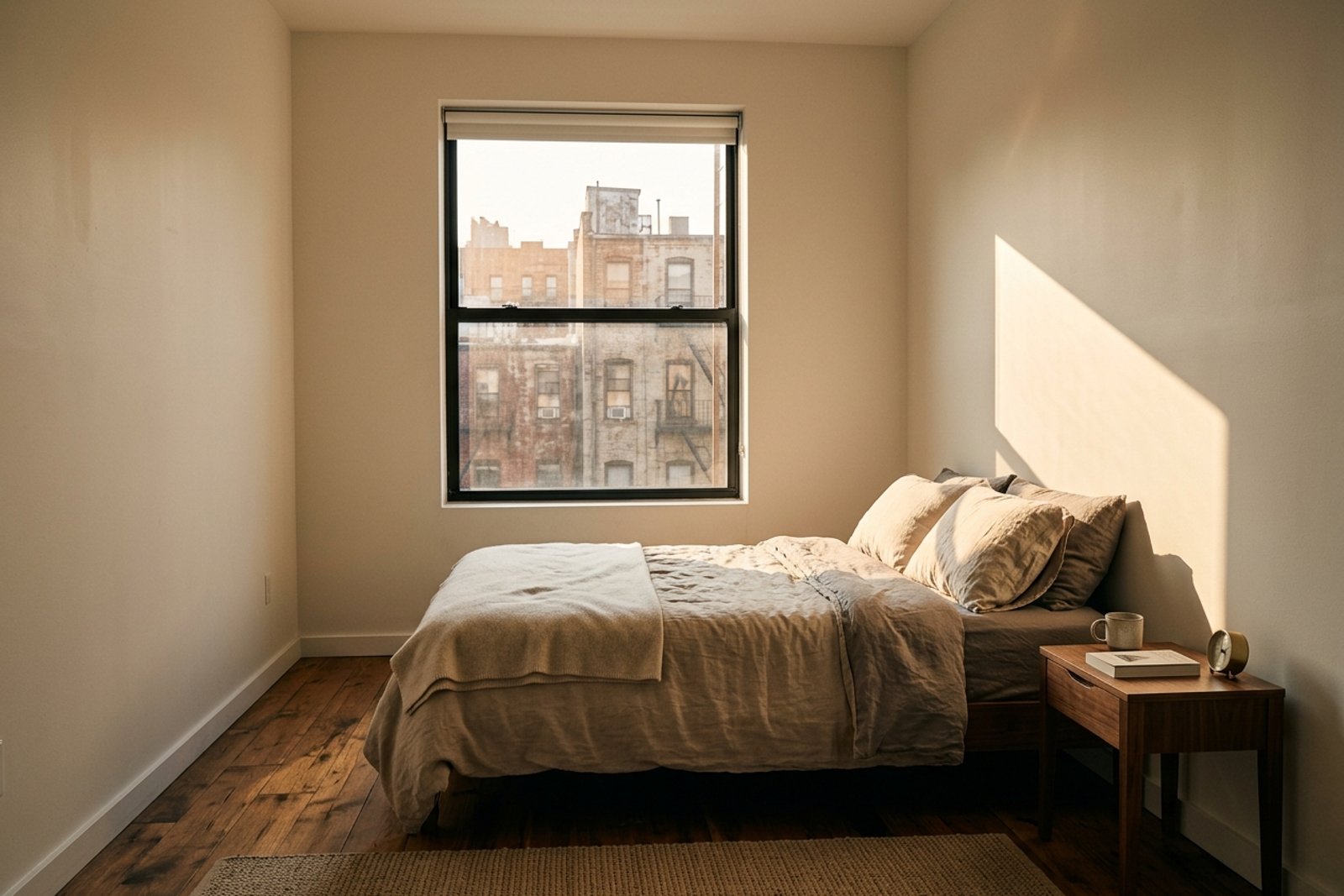
Your apartment is hotter than outside because it stores heat faster than it releases it. All day, sun pours through the glass and warms the floor, walls, furniture, and mattress. Those solid surfaces hold that warmth, a property called thermal mass, and keep radiating it back into the room long after the sun moves off. By evening the outdoor temperature drops, but your walls are still giving off the heat they soaked up at 3 p.m. The number on your thermostat is real. The building is holding this afternoon's sun.
Why do small apartments feel it worse?
Small apartments overheat harder than houses for simple reasons. There is less air volume, so the same amount of stored heat raises the temperature more. There are usually fewer windows, which limits cross breeze. And every laptop, warm bulb, and running appliance adds heat to a tight space.
Older rentals stack the problem higher. Single pane windows and thin insulation let daytime heat in easily and trap it once it arrives. The room turns into a box that fills with heat by afternoon and struggles to empty at night.
Why doesn't opening the windows cool it down?
Opening the windows only helps when two things are true: the outdoor air is actually cooler than the air inside, and there is a path for that air to move through the room. Most renters open up in the late afternoon, when outdoor air is still warm, so they just let more heat drift in and sit.
Stagnant warm air also feels hotter than moving warm air, which is why a still room can feel worse than the street. If every window faces the same direction, there is no opposite opening to pull air across, so a breeze at the glass never reaches the back wall. You need an inlet and an outlet, not just an open window.
Which apartments trap the most heat?
Some layouts are simply built to overheat, and knowing which one you have tells you where to aim your effort. West and south facing rooms take the most direct sun: west rooms hold the harshest low light from midafternoon into the evening, while south rooms build heat across the whole middle of the day.
After orientation, look at glass and airflow. A wall of windows brings a lot of solar heat. A layout with windows on one side cannot cross ventilate. Dark floors, heavy rugs, and deep paint colors all store more heat than pale, matte surfaces.
Does a top floor apartment really get hotter?
Yes, the top floor is usually the hottest unit in the building. It sits directly under a roof that can reach 120 degrees in the attic while it is 90 outside, and that heat presses down through the ceiling all evening.
If you rent the top floor, expect the widest gap between the indoor and outdoor reading, and lean hardest on the evening routine below. Blocking the ceiling heat is not really possible from inside a rental, so your leverage is timing and airflow instead.
When should I close the curtains and windows?
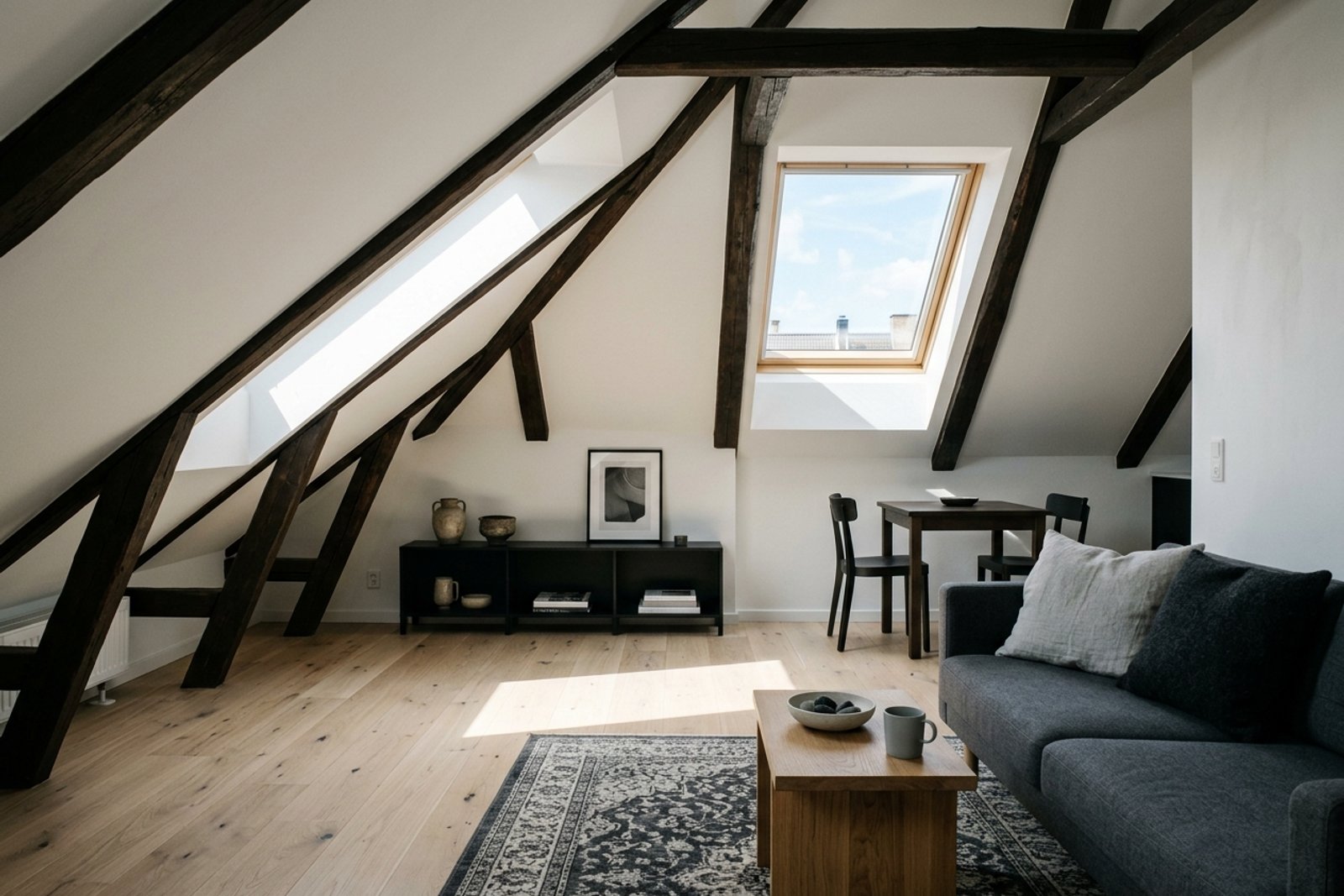
Close the sunny side by early afternoon, and sooner if a bright rectangle of light has already reached the floor, because at that point the room is already storing heat. Keep the windows shut while it is hotter outside than in, so you stop adding sun and warm air to a room that has too much of both.
Curtain color matters more than people expect. A pale thermal or blackout panel reflects heat away, while a dark panel absorbs it and holds it near the room. If you want a darker look, hang a light thermal liner behind the decorative curtain.
How do I flush the heat out after sunset?
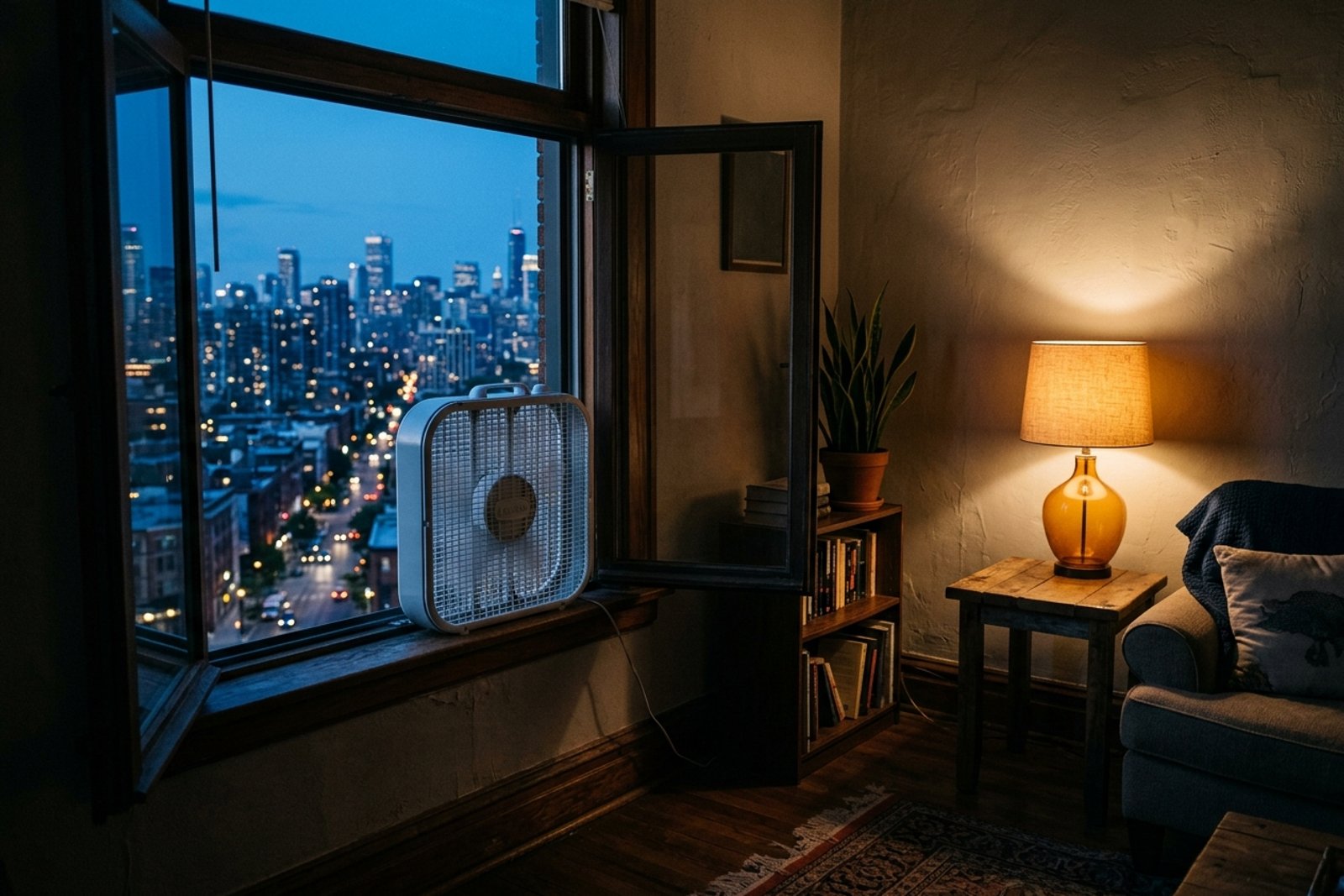
Once the sun is down and the outside air is clearly cooler, flush the heat out. Put one fan in a window facing outward to push hot air into the street, then open a window or door on the opposite side so cooler air gets pulled through. Run this hard for 30 to 90 minutes.
If you only have windows on one side, crack the front door for a supervised flush where building rules allow, or run the bathroom and kitchen exhaust fans while that single window is open. The goal is a clear path for air to leave, not just a fan spinning in place.
How do I stop making heat indoors?
In a small apartment you feel every heat source, so cut the ones you can. Skip the oven and cook with the stovetop or air fryer, or eat cold on the hottest nights. Air dry laundry instead of running the dryer, which dumps heat and humidity into the room.
Switch warm bulbs to LEDs, which run far cooler, and turn off electronics you are not using. A game console, a desktop, and a few chargers left on can quietly warm a tight room by a noticeable amount.
How do I sleep when the room won't cool down?
Cool your body and your bed instead of the whole box. Aim a fan so air crosses your upper body, not your feet, and it will reach skin before it diffuses across the room. Switch to linen or percale cotton sheets, which breathe better than polyester, and use a lightweight quilt rather than a comforter.
Keep the bed out of the sun path during the day so the mattress never bakes, and pull it a few inches off a hot exterior wall. If you rent a studio, sleep in the coolest corner and let the sofa or desk sit nearer the window. Our small studio guide shows how to zone the space so air still moves through it.
The short version
A small apartment runs hotter than the street because it absorbs heat all day and releases it slowly, and because tight spaces with few windows cannot flush that heat easily. You cannot change the building, but you can change the timing. Seal it while the outside is hot, open it wide once the evening cools, block the sun before it enters, and cool your body and bed directly. Do that for a few evenings and the gap between your thermostat and the forecast starts to close, no AC required.
Written by the Spatia Editorial Team. Spatia covers small space design from a renter's lens, with a focus on rooms that work before they photograph well.
Plan a cooler apartment tonight
Archie maps your window orientation, furniture placement, and evening airflow so a hot apartment feels calmer without permanent installs.
Plan my room with ArchieRelated Articles

How to Cool a West Facing Room Without AC: A Renter's Afternoon Heat Guide
West facing rooms feel fine at breakfast and unbearable by dinner. Here is the renter-safe cooling sequence that blocks late-day sun, dumps stored heat after sunset, and makes a small apartment sleepable without installing AC.

How to Cool a South Facing Room Without AC: A Renter's Guide for 2026
Your south facing bedroom can stay 10 to 15°F cooler this summer without AC and without permanent installs. The four mechanical fixes that work, plus the design choices (palette, textiles, bedding) that compound them, starting under $200 for the core stack.

How to Divide a Studio Apartment Into Zones
A 350 sq ft studio holds four real zones when you stack the right boundaries. Below is the renter sequence: place the bed first, hang a ceiling curtain on Command hooks, lay one rug per zone, and let lamp color temperature do the work a wall would.