Why Does My Room Feel Stuffy? (5 Real Causes)
Stuffy air comes down to stale air, trapped moisture, and no exchange path, and temperature barely enters into it. See the 5 causes and the 5 minute winter fix.

A room feels stuffy when the air in it stops being exchanged. As you breathe, you release carbon dioxide and bioeffluents, the compounds behind body odor, and both build up in a closed room. Add moisture from showers, cooking, and drying laundry, and the air starts to read as heavy and used.
Temperature is rarely the cause. The fix is a short, complete air exchange rather than a cracked window left open for hours: open wide for 5 to 10 minutes, twice a day.
This is for a room that feels heavy even when it is not hot. If the room is hot rather than close, start with cooling a humid room. If it has no operable window, read how to ventilate a room without windows, or the one window version if you have exactly one.
Why do I feel stuffy in my room? (the 5 causes)
Because five things accumulate and nothing carries them out. Each one leaves a different tell, so work down the list in order; the first two explain most rooms.
- No exchange path. One opening cannot both release and admit air, so the room swaps a little air near the glass and leaves the rest alone.
- Moisture with nowhere to go. Showers, cooking, and laundry drying indoors load the air with water that settles into fabrics and walls.
- Bioeffluents from people. Your own breath and skin release the compounds we read as "used" air, and they concentrate fastest in small closed rooms.
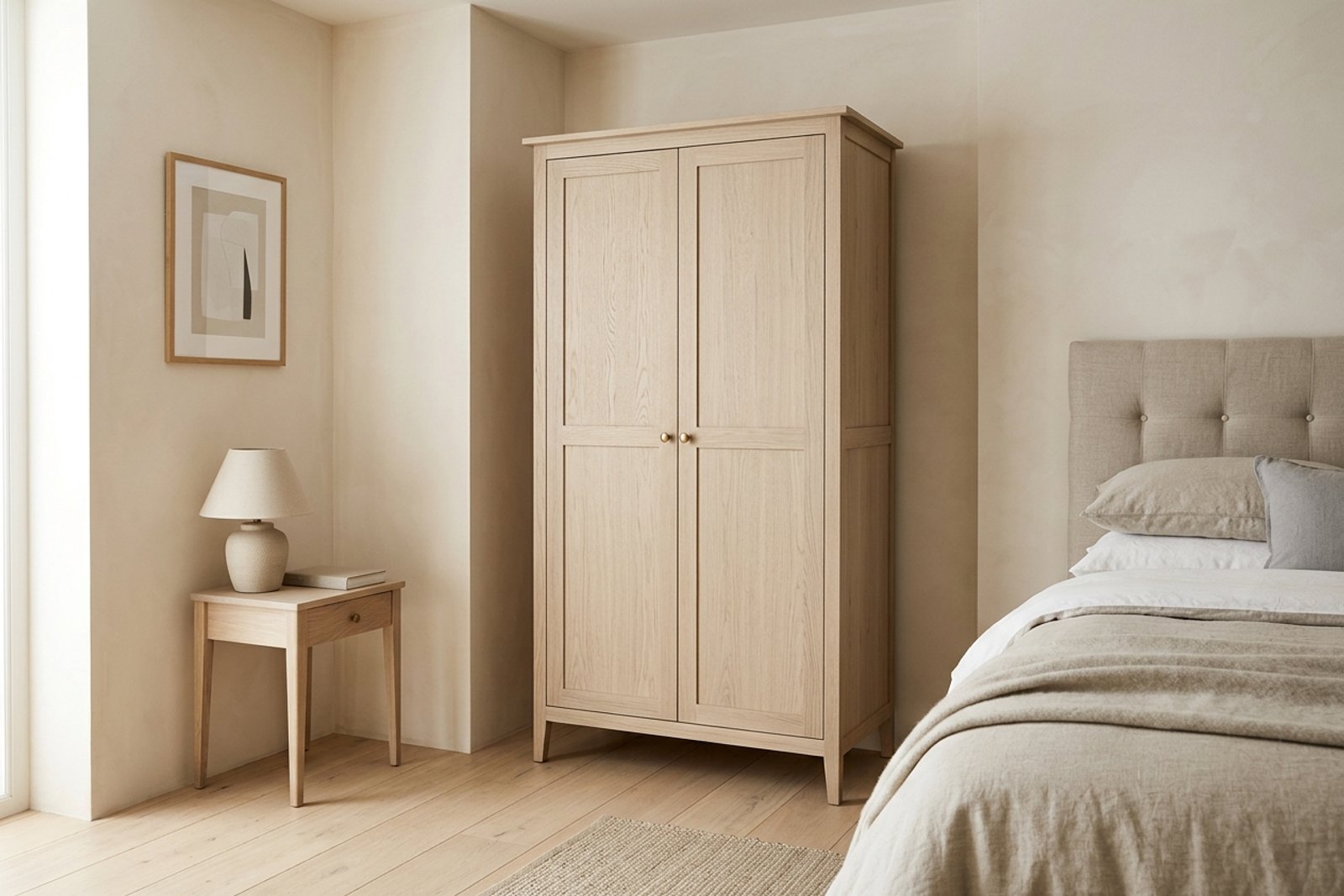
- Blocked airflow inside the room. A tall wardrobe, a bed pushed against the only vent, or heavy curtains stop air before it crosses the room.
- A heating system that only recirculates. Most radiators and many heat pumps warm the air already in the room rather than bringing any in.
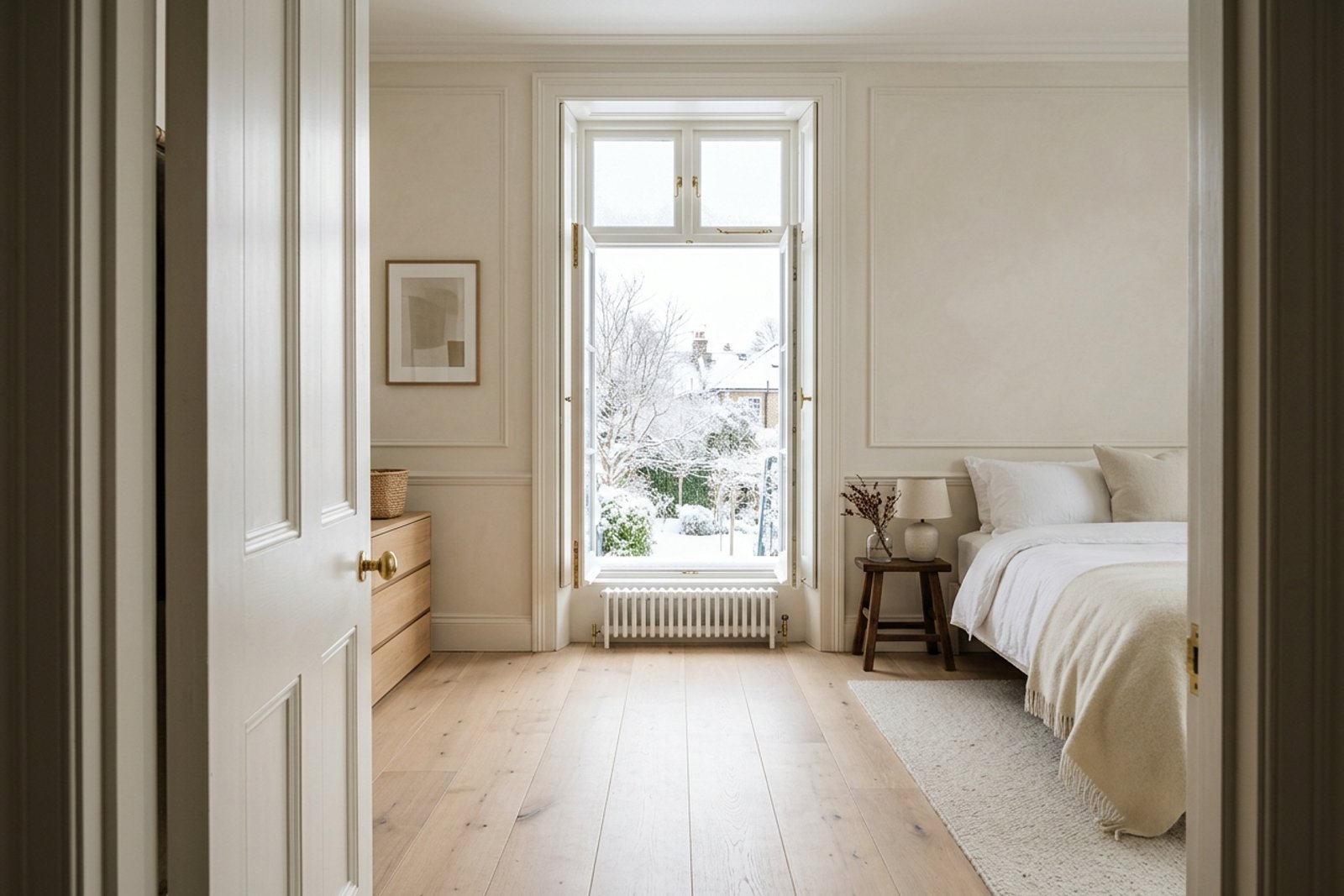
The tell for each cause is different, which is what makes this diagnosable rather than guesswork:
| What you notice | Most likely cause | What to check | First fix |
|---|---|---|---|
| Heavy the moment you walk in | No exchange path | Is there a second opening? | Open two points, not one |
| Cold damp smell, window beads up | Trapped moisture | Humidity above 60% | Exhaust at the source |
| Fine after 10 minutes outside, bad again on return | Bioeffluent buildup | Room size vs. people and hours | Short flush twice a day |
| One corner is worse | Blocked airflow | Furniture against vents or the path | Pull furniture 3 inches off |
| Worse only when the heat runs | Recirculating heat | Does anything bring outside air in? | Flush before heating, not during |
The sixth cause: a room that was sealed on purpose
The rooms that fight this hardest are the ones people have sealed deliberately. I have walked into apartments where every draft was taped, the trickle vents were painted shut, and a dehumidifier was running full time, and the air still read as heavy the second you stepped in. Tightening a room and ventilating a room are separate jobs, and doing the first without the second is what produces that specific closed feeling. If your home has been weatherized recently and started to feel stuffy afterward, that sequence is the explanation, not a coincidence.
Why does my room feel stuffy and hot?
Because warm air holds more moisture, so heat and stuffiness usually arrive together even though heat is not the cause. As the room warms, the same amount of water in the air feels heavier, and the sensation reads as thick rather than simply warm.
Two things separate the pair. First, check whether the feeling changes when the heating cycles off. If the room settles within a few minutes of the radiator going quiet, you have a recirculation problem rather than a moisture problem. Second, measure instead of guessing. The EPA recommends keeping indoor relative humidity below 60 percent and ideally between 30 and 50 percent, and notes that a humidity meter costs roughly $10 to $50 at a hardware store.
If the room reads inside that range and still feels close, the problem is exchange, not water. If it reads above 60 percent, treat the moisture first, the same order our guide to rooms that feel damp in summer uses.
Why does my room feel stuffy when I wake up?
Because you spent eight hours adding carbon dioxide and bioeffluents to a closed room with the door shut. A bedroom is the smallest sealed volume most people occupy for the longest continuous stretch, so it concentrates faster than any other room in the home.
The number people quote here is usually wrong, and the real history is more useful. The 1,000 ppm carbon dioxide figure you see repeated came from the 1989 edition of ASHRAE Standard 62, and ASHRAE removed it from later editions "due to its common misinterpretation." It was never a toxicity limit. As ASHRAE's position document on indoor carbon dioxide explains, the value was "a marker of body odor perception, since humans emit both CO2 and bioeffluents at rates related to their metabolism." In other words, that number was always measuring the thing you notice when you walk back into your bedroom in the morning.
For scale: NOAA put the 2024 global outdoor average at 422.8 ppm. And Max von Pettenkofer, the Bavarian chemist and hygienist who proposed that original 1,000 ppm marker and was the first to set ventilation standards at all, put the figure for bedrooms lower, at 700 ppm. He was pointing at the same room you are.
The morning fix costs nothing, and it happens to be the official German recommendation: Germany's Federal Environment Agency tells people to air the bedroom for five to ten minutes with the window wide open, right after getting up. Leave the bedroom door open during the day as well, so the room is not sealed for 24 hours instead of 8. If the room also fights you at night, our guide to bedrooms that feel hard to sleep in covers the rest.
How do I stop my room from being stuffy?
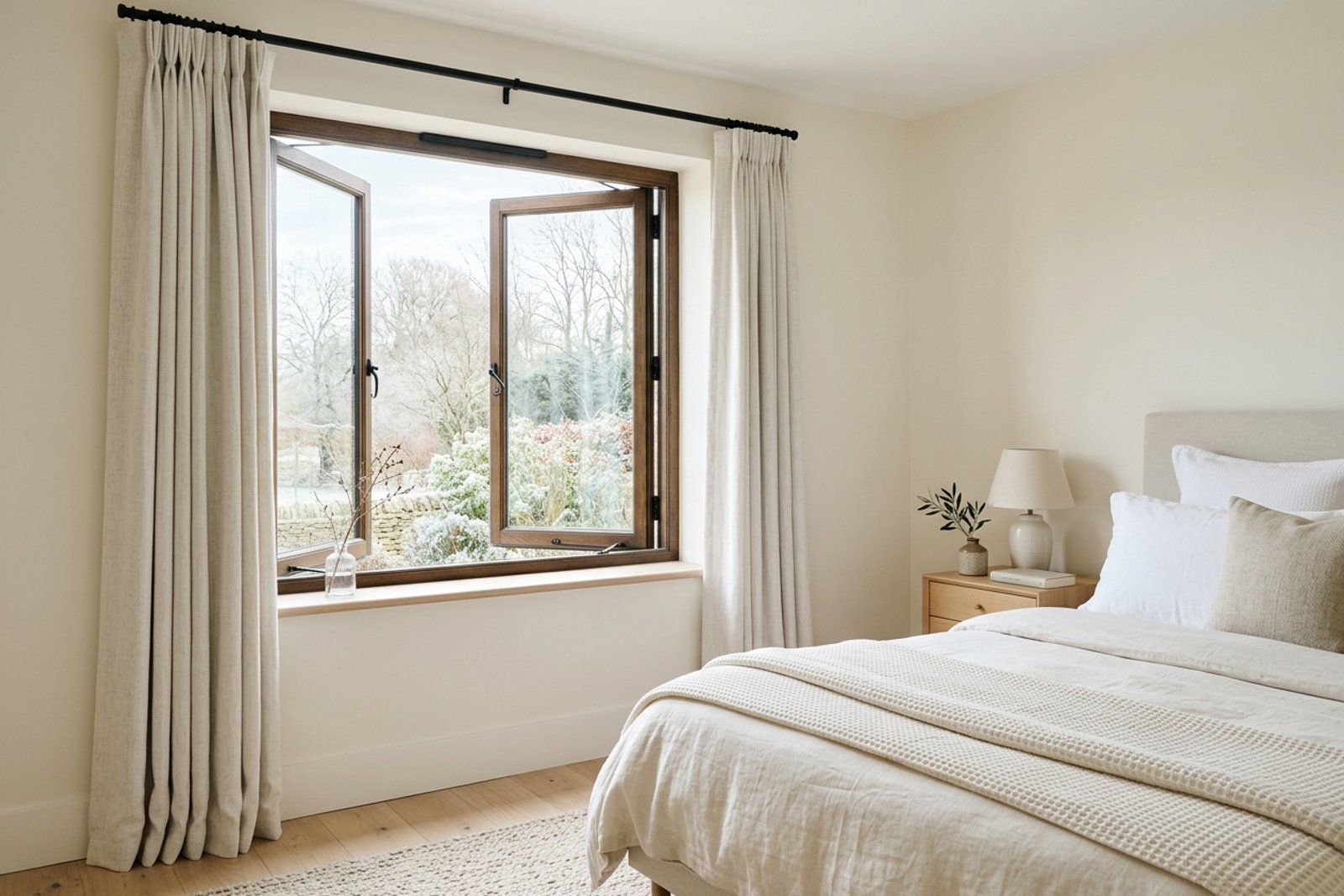
Do a short, complete air exchange instead of leaving a window cracked. A fully open window for five minutes moves far more air than a tilted window open for an hour, and it does it before the walls and furniture have time to cool down. That last part is why this works in winter without wrecking your heating.
Germany has done this on a national scale long enough to have official guidance for it. The German environment ministry recommends Stoßlüften, opening windows wide several times a day, and gives the duration by season: five to ten minutes in winter and 20 to 30 minutes in summer. It also says to turn the heating off while you do it, to open windows on opposite sides so air crosses the room, and to keep living spaces at a minimum of 17°C (63°F) and hallways around 15°C (59°F). Germany's Federal Environment Agency adds the frequency: two to three times a day per room in the cold months.
The full routine, in order:
- Close the doors to rooms you are not flushing. This keeps warm, humid air from traveling to a cold room and condensing there.
- Turn the heat down in that room. Otherwise the radiator spends five minutes heating the street.
- Open wide, not a crack. A tilted window is the single most common mistake, and it cools the wall around the frame while barely exchanging air.
- Open a second point across the room. A window or door on the opposite side turns a stalled swap into a crossing.
- Close up after 5 to 10 minutes and restore the heat. Repeat two to three times a day.
| Season | How long to open wide | Why it changes |
|---|---|---|
| Cold months | 5 to 10 minutes, 2 to 3 times a day | Cold, dry outside air exchanges fast |
| Warm months | 10 to 20 minutes per airing | Smaller indoor and outdoor difference |
| Summer | 20 to 30 minutes | Warm, humid air moves and dries slowly |
If you own rather than rent and want this to happen without opening anything, a heat recovery ventilator warms incoming outside air using the air it is expelling, so you get continuous exchange without the temperature swing. It is an installation rather than an afternoon, which is why the window routine above is the realistic answer for most rooms.
Why does my nose feel stuffy in my room?
Usually because of what is in the air rather than the air being stale, and the two feel identical. Nasal congestion that starts indoors and clears outdoors points to humidity at one extreme or the other, dust, or something growing on a damp surface.
Check humidity first, because it explains both directions. Below about 30 percent, heated winter air dries out nasal passages and they swell in response. Above 60 percent, you are in the range the EPA flags for mold growth, and the reaction is allergic rather than mechanical. The same meter answers both questions.
Then look for the damp surface. Window reveals, the wall behind a wardrobe on an exterior wall, and the corner behind a bed are the three places condensation collects in a room that is warm inside and cold outside. Pulling furniture 3 inches off exterior walls lets air reach those surfaces so they can dry.
Do air purifiers help a stuffy room?
They help with particles, not with stuffiness. A purifier filters dust, pollen, and smoke out of the air already in the room, which is genuinely useful if your problem is allergies. It does not remove carbon dioxide, it does not remove the bioeffluents that make air smell used, and it does not reduce humidity.
So a purifier running in a sealed room gives you cleaner stale air. If the room feels heavy and close, the purifier will not change that, and buying one to solve it is the most common wasted purchase on this problem.
Use them together rather than as alternatives. Flush the room to handle exchange, and run the purifier between flushes to handle particles. If humidity is the issue instead, a dehumidifier is the matching appliance, not a purifier.
Can a stuffy room make you sick?
It can affect how you feel and how you perform, and the research on this is more specific than most advice suggests. ASHRAE's position document notes that indoor concentrations above 1,000 ppm "have been associated with increases in self-reported, nonspecific symptoms commonly referred to as sick building syndrome (SBS) symptoms, as well as decreased performance on office work and schoolwork."
The Harvard study most often cited here is Allen et al. 2016, published in Environmental Health Perspectives, which ran 24 professionals through six days in a controlled office. Cognitive scores were 61 percent higher on the better ventilated day and 101 percent higher on the best ventilated days than in conventional conditions. The dose response line is the one worth remembering: a 400 ppm increase in carbon dioxide was associated with a 21 percent decrease in cognitive scores across all nine domains tested.
Two honest caveats. Those were office conditions, not bedrooms, and the researchers were careful to note that occupants are never exposed to carbon dioxide alone but to a mixture that includes bioeffluents and other contaminants. So the practical read is not that carbon dioxide is poisoning you. It is that the headache and dullness you associate with a closed room are measurable rather than imagined. Five minutes of exchange is a very small thing to trade for that.
Frequently Asked Questions
How long should I open a window in winter?
Five to ten minutes with the window fully open. The German environment ministry's guidance for Stoßlüften is five to ten minutes in winter and 20 to 30 minutes in summer, and Germany's Federal Environment Agency puts the cold weather frequency at two to three times a day per room. Open wide rather than tilting the window, and turn the heat down in that room while you do it.
Does opening a window for five minutes waste heat?
Very little, because you are replacing the air rather than cooling the room. Air holds far less heat than the walls, floor, and furniture around it, so a short full exchange swaps the air out before those surfaces lose temperature. A window left tilted for an hour is the expensive version, since it slowly chills the wall around the frame while exchanging comparatively little air.
Is a stuffy room the same as a humid room?
No, though they often occur together. Stuffiness is a lack of air exchange, and you can have it in air that is perfectly dry. Humidity is water content, measurable with a $10 to $50 meter, and the EPA recommends keeping it below 60 percent and ideally between 30 and 50 percent. If the room reads inside that range and still feels close, the problem is exchange.
Why is my bedroom stuffier than the rest of the house?
Because it is the smallest sealed space you occupy for the longest continuous period. Eight hours with the door shut concentrates carbon dioxide and bioeffluents faster than any other room. Pettenkofer, who proposed the original 1,000 ppm ventilation marker, set a stricter 700 ppm specifically for bedrooms for this reason.
Will an air purifier fix a stuffy room?
No. Purifiers filter particles such as dust, pollen, and smoke out of the air already in the room. They do not remove carbon dioxide, they do not remove the bioeffluents behind the used smell, and they do not lower humidity. Use a purifier for allergies and a short window flush for stuffiness, since they solve different problems.
Can I ventilate if my room has only one window?
Yes, but you need to give the air a second opening somewhere. Crack the interior door or open a window in an adjacent room so air can cross rather than stall at the glass. Our one window guide covers the fan placement that makes a single opening work.
The Noticer
For thoughtful people who notice spaces.
What did you notice?
Did something in this story make you see your own space differently?
Ask Archie to find your room's air path
Send Archie a photo of the room that feels close. Archie reads the window, the door swing, the furniture blocking the path, and the moisture sources, then tells you which one to move first.
Find my air path with ArchieAdvertisement. Archie is made by STUDIO DID IT, the studio that publishes Spatia.
Related Articles
How to Ventilate a Room Without Windows (7 Ways)
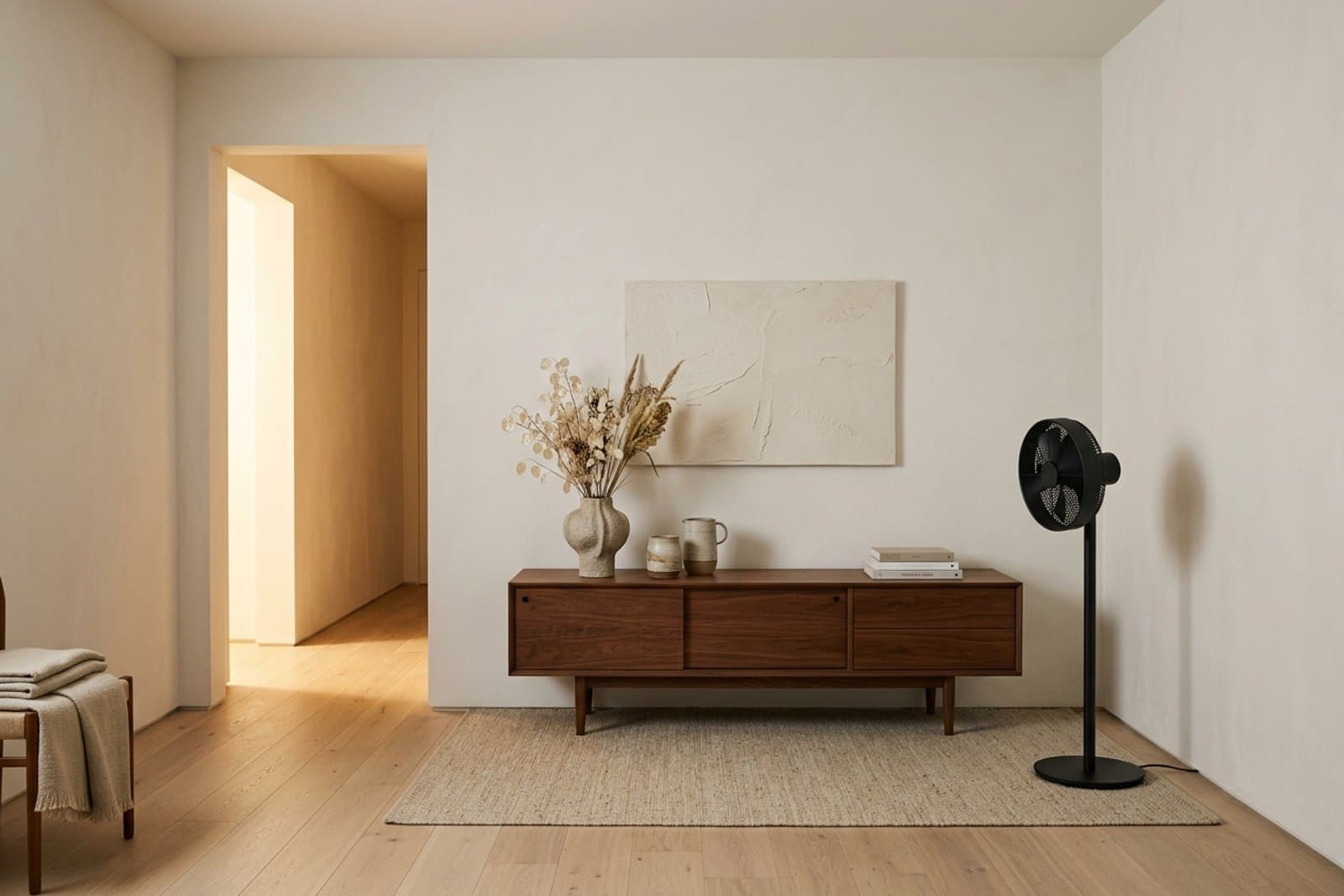
No operable window at all? Give the air an exhaust route plus a separate intake, then size the fan to the ASHRAE 62.2 minimum of 50 CFM. 7 ways, door to duct.
How to Ventilate a Room With One Window (No Cross Breeze)
To ventilate a room with one window, face a box fan out, crack the door for intake, and flush 10 to 20 minutes, or about 5 in winter. See the full routine.

How to Cool a Room With One Window Without AC (West or South)
Cool a room with one window without AC: shade the glass before the sun lands, aim a fan at your body, then flush stored heat out after sunset.