Why Is One Room in My House So Cold? (6 Causes You Can See)
Why is one room in my house so cold? Usually a surface problem, not a furnace problem. See the 6 causes you can spot by eye and the free fix to try first.
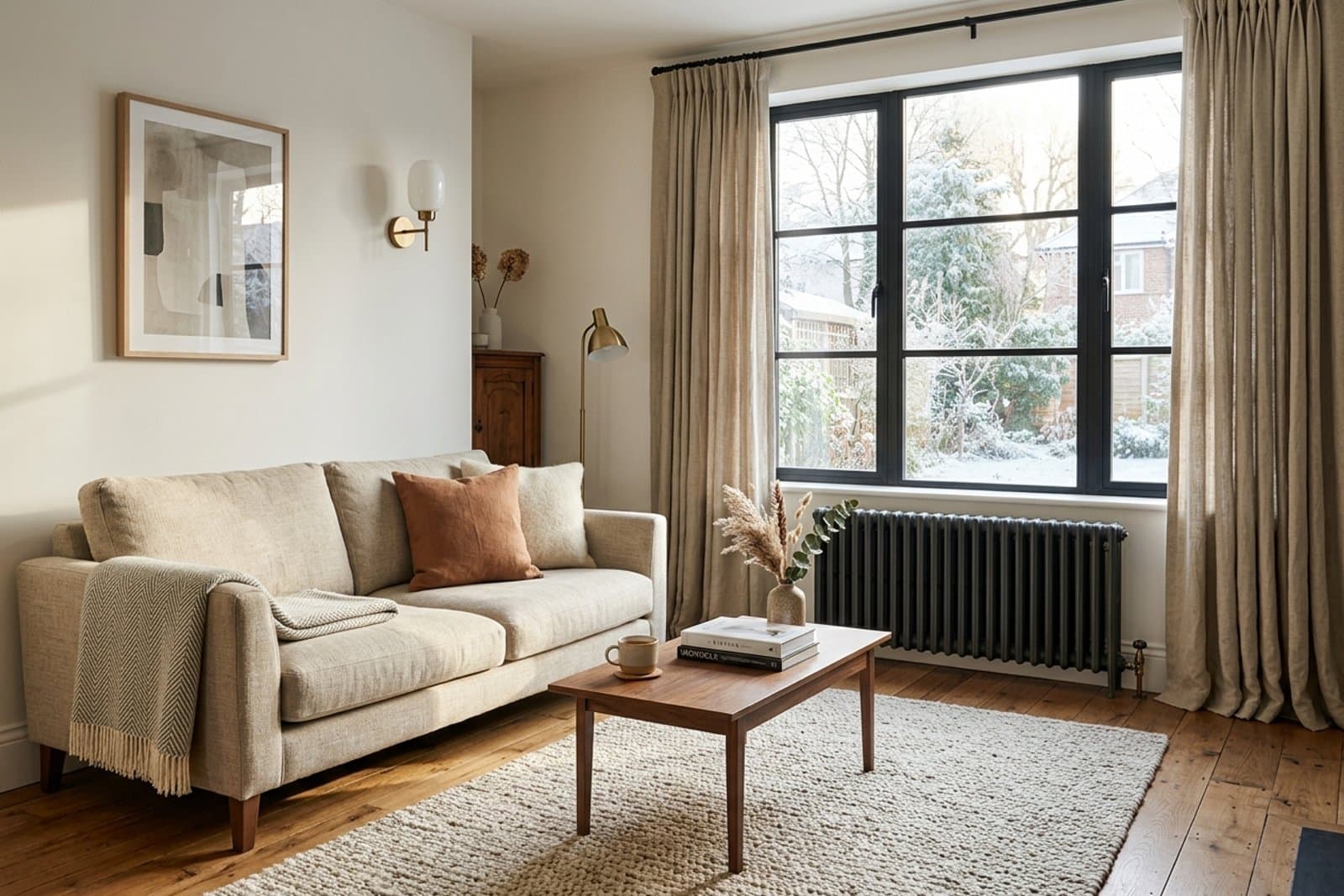
One room in a house is usually cold because it loses heat faster than the others and gets less heat delivered. The culprits are visible: two or three outside walls, old glass, a sofa or bed parked on the heat register, a door that stays shut, or an unheated garage below. A hallway thermostat cannot see any of that.
Start with the free fixes. Clear 6 to 12 inches around every register and radiator, leave the door open, close the curtains at dusk, and put a rug and pad on a bare floor.
This guide is for the room that is colder than the rest of the home while the heat works everywhere else. Give the free fixes a day before you buy a heater. If the whole floor is cold underfoot, start with cold floors in an apartment. A room that feels stale rather than cold is an air problem, covered in why a room feels stuffy, and a window that drips every morning is a humidity problem, covered in why bedroom windows are wet in the morning.
Why is one room in my house so cold? (the 6 causes)
Because that room either leaks more heat or receives less of it, and most of the reasons are visible from the doorway. The 6 causes below cover nearly every cold room I have walked into in 25 years of planning interiors. The first three are free to fix.
- More outside wall and glass than any other room. A corner room has two cold walls, and a bay or picture window adds a third cold surface. Your body loses heat toward those surfaces whatever the air temperature reads.
- Cold glass. A single pane or an old double pane runs far colder than the wall around it, and the air sliding down it spills across the floor as a draft.
- Something sitting on the heat. A sofa over the floor register, a dresser against the radiator, or floor length curtains draped over a baseboard heater.
- A door that stays shut. In a forced air home a closed door blocks the return path, so the room pressurizes and the supply slows to a trickle.
- Unheated space below or above. Rooms over a garage, crawl space, or unheated lobby, and rooms directly under the roof, lose heat through the floor or ceiling.
- The thermostat lives somewhere else. It sits in a warm hallway, is satisfied early, and shuts the system off before the farthest room has caught up.
| What you notice | Most likely cause | How to check | First fix |
|---|---|---|---|
| Cold even with the air warm | Outside walls or glass | Hold a hand 6 inches from the wall and the window | Move seating and the bed off that wall |
| A cool draft across your ankles | Cold glass | Candle flame or tissue near the glass flickers | Close the glass at dusk, add a shade |
| Register barely blows | Furniture on the heat | Is anything within 12 inches of the register? | Pull it clear |
| Warm with the door open, cold shut | Return path blocked | Leave the door open overnight and compare | Door open, or an undercut |
| Floor is the coldest surface | Unheated space below | Infrared thermometer on the floor vs. the wall | Rug and pad now, insulation later |
| Hall is warm, this room never catches up | Thermostat placement | Thermometer in the room vs. the hallway | Rebalance dampers, close the hall register |
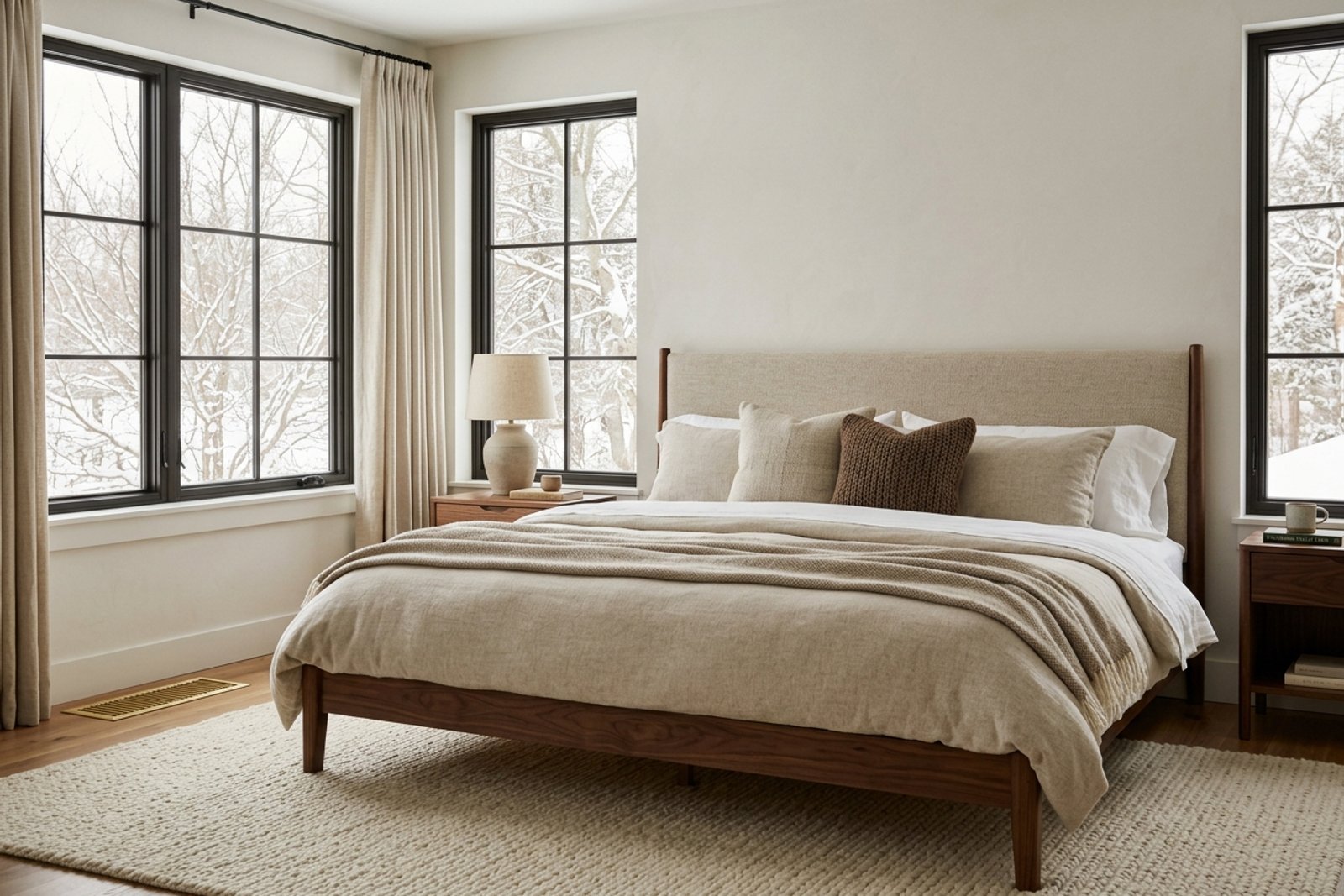
The reason a thermostat misses all of this is that it measures air, and you do not feel air alone. ANSI/ASHRAE Standard 55 treats drafts, cold floors, and radiant asymmetry as separate discomfort causes. The standard caps the radiant difference from a cold wall or window at 10°C (18°F), and limits the air temperature difference between your ankles and your head to 3°C (5.4°F) seated or 4°C (7.2°F) standing. A room can pass on the thermostat and fail on all three.
Why is one bedroom in my house so cold?
Because bedrooms collect four of the six causes at once: they sit in corners, they are often above the garage in a two story plan, the door is shut all night, and the bed is pushed against the coldest wall under the window. Fix the placement before you touch the heating.
Start with where the bed is. A mattress against an exterior wall puts your head 6 inches from the coldest surface in the house, inside the radiant asymmetry ASHRAE flags. The downdraft off the glass then falls straight onto the bed. Moving the bed to an interior wall, or at least a foot off the exterior one, changes how the room feels more than any thermostat setting.
Then the door. Shut all night in a forced air home, the room gets neither fresh supply nor a way for air to return. Leave it open a hand width, or have a one inch undercut planed on the door bottom.
Three checks that take ten minutes tonight:
- Press a hand against the exterior wall behind the headboard, then the interior wall. If the exterior wall feels clearly colder, the bed is on the wrong wall.
- Hold a lit candle or a strip of tissue near the bottom of the window. Movement means cold glass is driving a draft.
- Compare a thermometer on the nightstand with one in the hallway after an hour with the door shut. A gap of 4°F or more means the room is starved of supply, not just leaking.
If the floor is the coldest surface, the room is probably over a garage or crawl space, and the rug guidance in cold floors in an apartment applies here too.
Why is my apartment room so cold?
Because apartments concentrate the exposure causes into one or two rooms. A corner unit has a room with two outside walls, an end of hall unit sits over an unheated lobby or garage, and older buildings still carry single pane glass. You cannot change any of that, but you can change what the room does with the heat it gets.
Apartments also heat differently. A radiator or baseboard heats mostly by convection along the wall, so anything in front of it, a sofa back, a floor length drape, a bookcase, cuts the room off from its own heat. Clear it. Pull seating 6 to 12 inches off the heater and hem or lift curtains so they stop above a baseboard, not over it.
Renter side fixes, in the order I would do them:
- Clear the heater and the register. Free, and often the whole problem.
- Close the glass at dusk. Heavy drapes with a close fit to the frame, or a cellular shade.
- Shrink film the worst window. A 3M Indoor Window Insulator Kit (the five window 2141W-6 covers five 3 by 5 foot windows) adds a sealed air layer for one season and peels off clean.
- Rug and pad on the standing zones. The pad does most of the work.
- Move the desk or bed off the exterior wall.
For the hot version of this room, the top floor unit that will not cool down, see cooling a top floor apartment without AC. And if the room is cold and stale together, the short winter flush in how to ventilate a room with one window handles both.
How do you fix a room that is too cold?
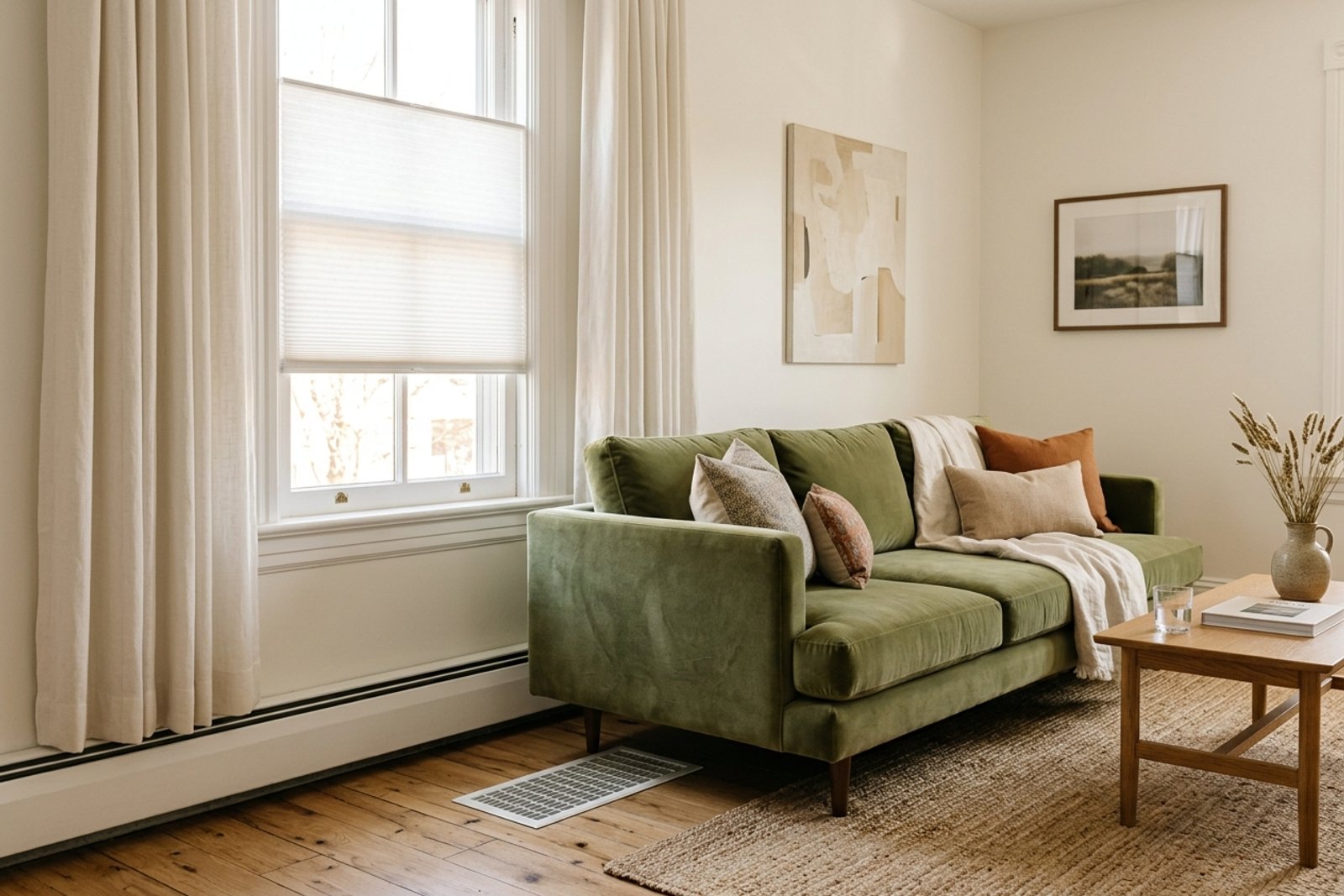
Fix the surfaces and the heat path before you add heat. Clear everything 6 to 12 inches from registers and radiators, leave the door open, close the glass at dusk, cover the floor, and move the bed or seat off the exterior wall. Only then decide whether the room still needs more heat delivered.
The order matters because each step changes a different thing. The US Department of Energy puts heat gain and loss through windows at 25 to 30 percent of residential heating and cooling energy use, and its window attachment research found that tightly installed cellular shades cut heat loss through the glass by 40 percent or more in winter. Nothing you plug in changes a number that size.
| Fix | What it changes | Cost | Who can do it |
|---|---|---|---|
| Clear registers and radiators (6 to 12 inches) | Heat delivery | Free | Anyone |
| Door open or 1 inch undercut | Return air path | Free | Anyone |
| Curtains closed at dusk, open to sun by day | Glass heat loss, nightly | Free | Anyone |
| Cellular shade, tight fit | Glass heat loss, 40 percent or more | Moderate | Renter or owner |
| Window shrink film for one season | Draft and glass temperature | Low | Renter or owner |
| Rug plus thick pad | Floor surface temperature | Low to moderate | Anyone |
| Reverse ceiling fan, clockwise, low | Warm air pulled down from the ceiling | Free | Anyone with a fan |
| Rebalance dampers, close the hall register partly | Delivery to the far room | Free | Owner, or ask the landlord |
| Insulate the garage ceiling or floor | Heat loss through the floor | High | Owner |
The Department of Energy's winter guidance adds two settings worth copying: keep the thermostat no higher than 68°F while you are awake, and set a ceiling fan to run clockwise on low in winter so it pushes warm air down from the ceiling. It also notes you can save as much as 10 percent a year on heating and cooling by turning the thermostat down 7 to 10°F for 8 hours a day, which is easier to live with once the cold room stops being cold.
A space heater is the last step, not the first, and it comes with rules. The Consumer Product Safety Commission counts an average of 1,600 fires, 70 deaths, and 150 injuries a year involving portable heaters from 2020 to 2022. Keep it 3 feet from bedding, curtains, and furniture, plug it straight into the wall, never into a power strip, and never run it while you sleep.
How cold is too cold for a room?
Below 18°C (64.4°F) air temperature for a room people live in, and below about 66°F at the floor or 52°F at the glass for a room that feels comfortable. The first number is a health threshold. The other two explain why a room at 68°F can still feel cold.
The World Health Organization's 2018 Housing and Health Guidelines set 18°C as the minimum safe indoor temperature in cold seasons for general populations, with higher temperatures advised for people who are older or in poorer health. The US Department of Energy's 68°F waking setpoint sits just above that line.
Comfort has its own thresholds, and they are about surfaces rather than air:
| Surface or measure | Threshold | Source |
|---|---|---|
| Room air, minimum for health | 18°C (64.4°F) | WHO Housing and Health Guidelines, 2018 |
| Thermostat while awake | 68°F | US Department of Energy, Energy Saver |
| Floor surface, feet on the floor | 66.2°F to 84.2°F | ANSI/ASHRAE Standard 55 |
| Ankle to head air difference | 5.4°F seated, 7.2°F standing | ANSI/ASHRAE Standard 55 |
| Cold wall or window vs. the room | 18°F maximum difference | ANSI/ASHRAE Standard 55 |
| Inside glass surface | Below 52°F reads as discomfort | Efficient Windows Collaborative |
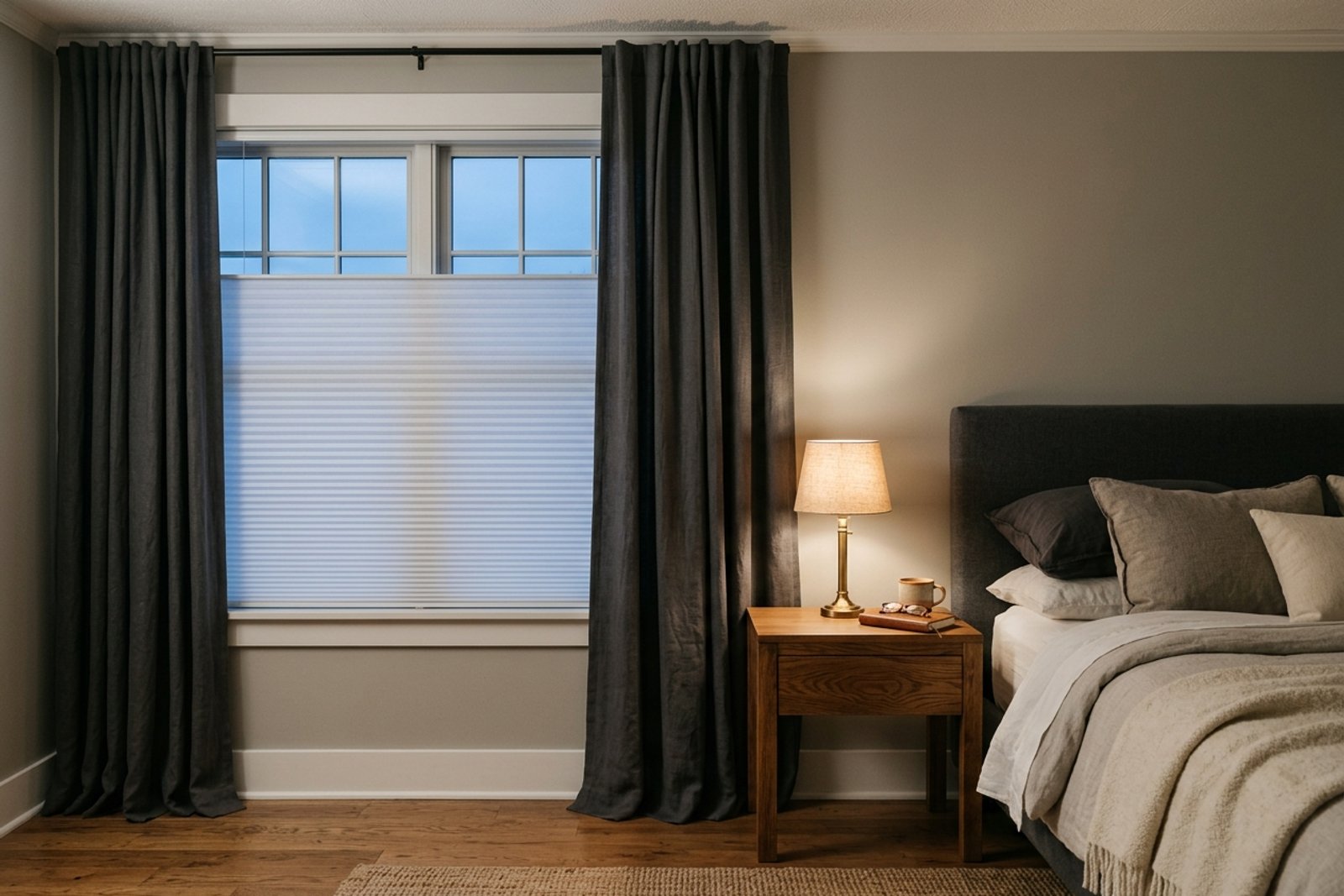
The glass line is the one most cold rooms fail. Cardinal Glass publishes inside surface temperatures at 0°F outside and 70°F inside: a plain clear double pane sits at 37°F, and it takes a soft coat low emissivity unit with argon fill to reach 52°F. A single pane on the same night is colder still. That is why a shade or a drape pulled across at dusk changes how the room feels so quickly: it puts a warmer surface between you and the glass.
Frequently Asked Questions
How do I warm up a cold apartment without touching the thermostat?
Clear the radiators and registers, close the curtains at dusk, put a rug and pad on the floor you stand on, and move the bed or sofa off the exterior wall. Those four moves change the surfaces your body loses heat to, which is what a thermostat cannot measure. Shrink film on the coldest window adds a sealed air layer for one winter and peels off at move out.
Why is one room cold when the thermostat reads 70°F?
Because the thermostat measures air at one point in the hallway, and you lose heat to every surface around you. ANSI/ASHRAE Standard 55 caps the radiant difference from a cold wall or window at 10°C (18°F) and the ankle to head air difference at 3°C (5.4°F) seated. A room can pass on air temperature and fail on both.
Should I close the vents in warm rooms to push more heat into the cold one?
Partly closing the register in the warm hallway where the thermostat sits can help, because the system runs longer before it is satisfied. Do not close several vents fully. A blocked supply raises static pressure in the ducts, makes the furnace blower work harder, and can push air out through duct leaks instead of into the room you want.
Does a space heater fix a cold room?
It adds heat without fixing why the room loses it, so the room goes cold again the moment it is off. Use one only after the free fixes, and follow the Consumer Product Safety Commission rules: 3 feet of clearance from bedding, curtains, and furniture, plugged directly into a wall outlet, and never running while you sleep. The commission counts an average of 1,600 fires a year involving portable heaters.
Why is one room in my apartment hotter than the rest?
The same exposure that makes a room cold in winter makes it hot in summer: top floor position, west or south glass, and two outside walls. The fixes are mirror images, shade the glass by day instead of at night and move the heat out instead of keeping it in. Our guide to cooling a top floor apartment without AC covers that room.
Will a rug make a cold room warmer?
It makes the floor warmer to touch, which is a large share of how cold a room feels, without changing the air temperature much. ANSI/ASHRAE Standard 55 sets 66.2°F to 84.2°F as the comfortable floor surface range, and a thick pad under the rug does most of the insulating. The full R value guidance is in cold floors in an apartment.
Jihyun Lee has spent twenty five years planning residential and public interiors, and still walks a cold room with an infrared thermometer before she moves a single piece of furniture.
The Noticer
For thoughtful people who notice spaces.
What did you notice?
Did something in this story make you see your own space differently?
Ask Archie which wall is stealing the heat
Send Archie a photo of the cold room. Archie reads the exterior walls, the glass, the register and radiator positions, and where the bed or sofa sits in relation to them, then tells you the one move to make before you buy a heater.
Diagnose my cold room with ArchieAdvertisement. Archie is made by STUDIO DID IT, the studio that publishes Spatia.
Related Articles
Why Are My Bedroom Windows Wet in the Morning? (6 Fixes)
Bedroom windows wet every morning? It is your room's humidity meeting cold glass. See the humidity numbers to aim for and 6 fixes a renter can make tonight.
Why Does My Bedroom Feel Hard to Sleep In? (5 Room Fixes)
A bedroom feels hard to sleep in when layout, light, heat, and visual noise keep you alert. Run this room check before you buy a new mattress.
How to Cool a Bedroom Without AC for Sleep: 12 Moves for Summer 2026
Cool a bedroom without AC for sleep: 12 layered moves that stack curtains, airflow, and bedding so the room stays cooler all night, from under $250.