Where to Put Lamps in a Dark Room (3 Lamp Layout)
Where to put lamps in a dark room: one tall lamp in the darkest corner, one by the main seat, one low lamp on a shadow wall. See the three lamp layout.
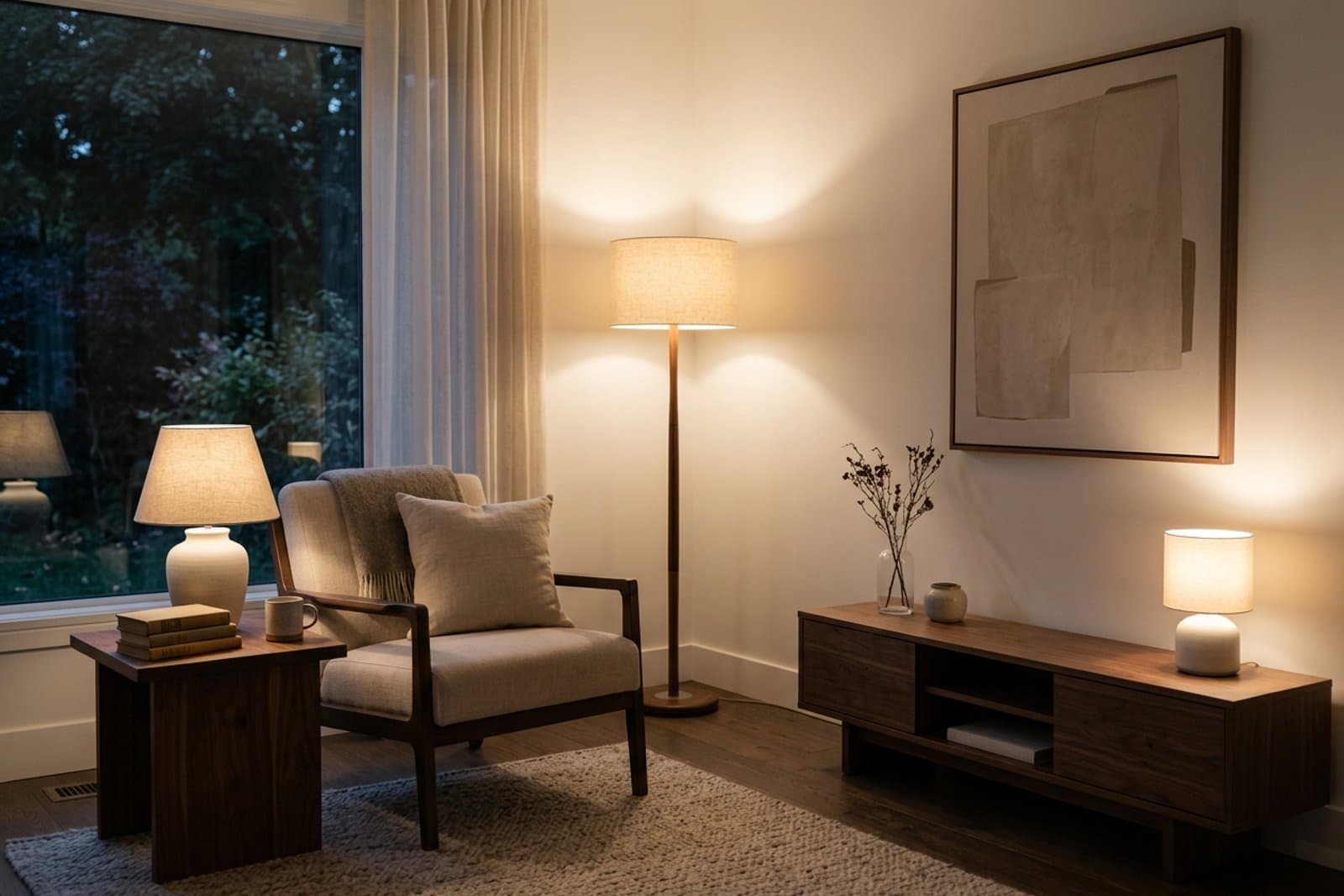
Put lamps in a dark room where light currently stops: one tall lamp in the deepest corner, one table lamp beside the main seat, and one low lamp on a shelf, console, or cabinet that washes a shadowed wall. That three point layout works better than one brighter ceiling bulb because it fills the edges, not just the center.
Start with 2700K warm white bulbs in living rooms and bedrooms, then test 3000K only if beige shades make the room too amber. Keep each lamp 24 to 36 inches from a wall or vertical surface so the light has something to bounce from. If the room still reads dim after three sources, check the shade color, wall color, rug, and curtain fabric before buying a fourth lamp. Dark materials can swallow good light fast.
This guide is for the room that feels fine by day but collapses into shadow after sunset. If daylight is the bigger problem, start with why your room feels dark, bedroom lighting basics, and why a room feels flat before buying more bulbs.
What is the best first lamp for a dark room?
The best first lamp is usually a floor lamp in the darkest back corner, not a brighter bulb in the ceiling. Corners create the shadow outline your eye reads as "dark room." When you light one corner from above shoulder height, the room feels wider and less cave like even if the total wattage barely changes.
Place the floor lamp 12 to 24 inches from the corner and close enough to a pale wall, curtain, or bookcase side that the light can bounce. If the shade points only down at the floor, choose a drum shade or uplight style instead.

Where should table lamps go in a dark living room?
Put a table lamp beside the seat where someone reads, talks, or rests. A lamp floating on a far console may look balanced in a photo, but it will not help the person sitting in the room. The shade should sit near seated eye level, usually with the bottom of the shade around 40 to 44 inches from the floor.
Use the main sofa or armchair as the anchor. If the seat is against a dark wall, the lamp does double work: it lights the activity and paints the wall behind it so the room stops feeling like a black box.
Should lamps go near windows, corners, or the center?
Use all three zones, but not equally. Corners and walls need light first because they define the edge of the room. Seats need light second because they make the room usable. The center needs the least help, especially if you already have an overhead fixture.
A simple placement order:
- Back corner: one floor lamp or tall shaded lamp.
- Main seat: one table lamp or wall sconce.
- Shadow wall: one low lamp on a shelf, cabinet, or console.
- Window side: a lamp only if the room feels dead after sunset.
The mistake is lining lamps around the perimeter without a job. Every lamp should either fill an edge, support a task, or bounce off a wall.

How many lamps does a dark room need?
Most dark rooms need three visible light sources before they feel finished at night. One source makes a bright spot and heavy shadows. Two sources improve the room, but often leave one side feeling accidental. Three sources let you control height, task light, and wall glow separately.
The American Lighting Association frames good lighting as three layers, ambient to fill the space, task for reading, and accent to wash a wall, which maps cleanly onto a three lamp plan. For a small living room, that may mean one floor lamp, one table lamp, and one low lamp on a media console. For a bedroom, it may mean two bedside lamps plus one dresser lamp or shaded floor lamp, and where that light sits also affects sleep, covered in why a bedroom feels hard to sleep in. If the room still feels dim after three, the issue may be dark surfaces, not lamp count.
Honestly, though, I do not count lamps when I evaluate a room. I count shadows. Stand in the doorway at night with everything switched on and note which corners have simply disappeared. Those dark pockets are what make a room feel dim no matter how bright its center is, and one lamp aimed into a dead corner does more for the feeling of the room than a stronger bulb overhead ever will. It is also why I put light at three heights in every project, low, mid, and eye level: a room lit at one height reads flat even when it is technically bright. Chase the shadows and the lamp count takes care of itself.
What bulb brightness and color temperature work best?
Use a 2700K warm white LED with a standard E26 base for the main lamps in living rooms and bedrooms. It reads calm, works well with wood and fabric, and avoids the blue cast that can make a dark room feel colder. If the room has beige shades, tan walls, or very warm wood, test one 3000K bulb in the darkest corner for a cleaner read.
| Color temp | Light look | Best use in a dark room |
|---|---|---|
| 2700K | Warm, amber | Main lamps in living rooms and bedrooms |
| 3000K | Warm white, cleaner | One corner lamp when walls or shades are very warm |
| 4000K | Neutral white | A single task or reading lamp, never the whole room |
For brightness, think in lumens, not watts:
- Floor lamp in a corner: 800 to 1,100 lumens.
- Table lamp by a seat: 450 to 800 lumens.
- Low shelf or console lamp: 250 to 450 lumens.
- Reading lamp: 800 lumens if it is the main task source.
Dimmers matter more than maximum output. A dark room needs layers you can tune, not one setting that is either gloomy or harsh.

What if the room still feels dark after adding lamps?
If three lamps do not fix it, look at what the light hits. Lamps cannot brighten a room if every surface near them is dark, matte, or cluttered. A black shade, charcoal sofa, dark rug, or full bookcase can swallow the new light before it spreads.
Make one bounce surface near each lamp:
- Put a pale tray or book stack under a table lamp.
- Swap a dark shade for linen, paper, or warm white fabric.
- Move the floor lamp closer to a pale wall.
- Add a mirror only where it reflects a lamp, window, or light wall.
That is the point where lighting crosses into room diagnosis. If one wall, rug, or curtain keeps absorbing everything, buying a fourth lamp will not solve the real problem.
The simple dark room lamp plan
Start tonight with the back corner. Add a tall lamp there, turn off the overhead, and take one photo from the doorway. If the room immediately feels wider, you found the main shadow edge. Then add the seat lamp and the low wall lamp in that order.
Do not buy all three at once if you can avoid it. Move one lamp you already own, test it for two evenings, and let the shadow pattern tell you what is missing. Archie can do the same diagnostic from a room photo, then turn it into a lamp placement plan before you spend money on the wrong fixture.
Frequently asked questions
How do you simulate daylight in a dark room?
You cannot fully copy the sun, but a 4000K to 5000K LED in one lamp gets closest to a neutral daylight read. Keep it as a single task or work lamp and leave the rest of the room at 2700K, or the space starts to feel like an office instead of a living room.
Where should you place a floor lamp in a living room?
Put the floor lamp in the darkest corner, 12 to 24 inches out from the walls, and within reach of a pale surface it can bounce off. A corner near the sofa or behind a reading chair does the most work, since it fills the shadow edge and lights the seat at the same time.
Can lamps brighten a dark room on a budget?
Yes. Move one lamp you already own into the darkest corner, swap in an 800 to 1,100 lumen 2700K bulb, and add a pale tray or a mirror near it to bounce the light. One well placed lamp plus a bounce surface usually beats three more lamps with dark shades.
The Noticer
For thoughtful people who notice spaces.
What did you notice?
Did something in this story make you see your own space differently?
Let Archie map your dark corners
Upload one room photo and Archie will read the window, furniture, wall color, and shadow pattern before you buy another lamp. You get a room specific lighting plan instead of guessing at the store.
Plan my lighting with ArchieAdvertisement. Archie is made by STUDIO DID IT, the studio that publishes Spatia.
Related Articles
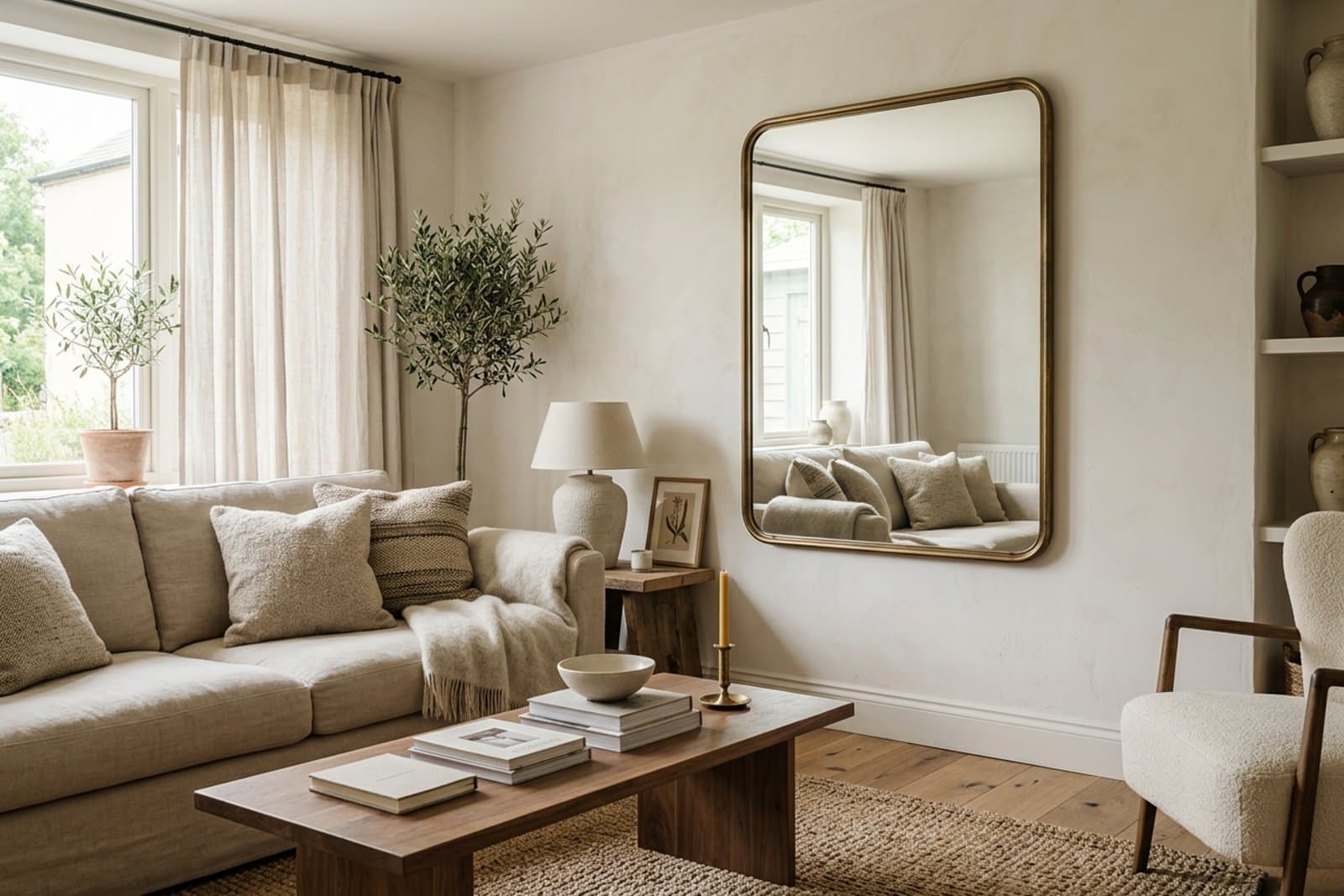
Where To Put Mirrors In A Dark Room
Where to put mirrors in a dark room: aim them at a window, pale wall, or lamp to bounce light. See the safest spot before you buy another fixture.
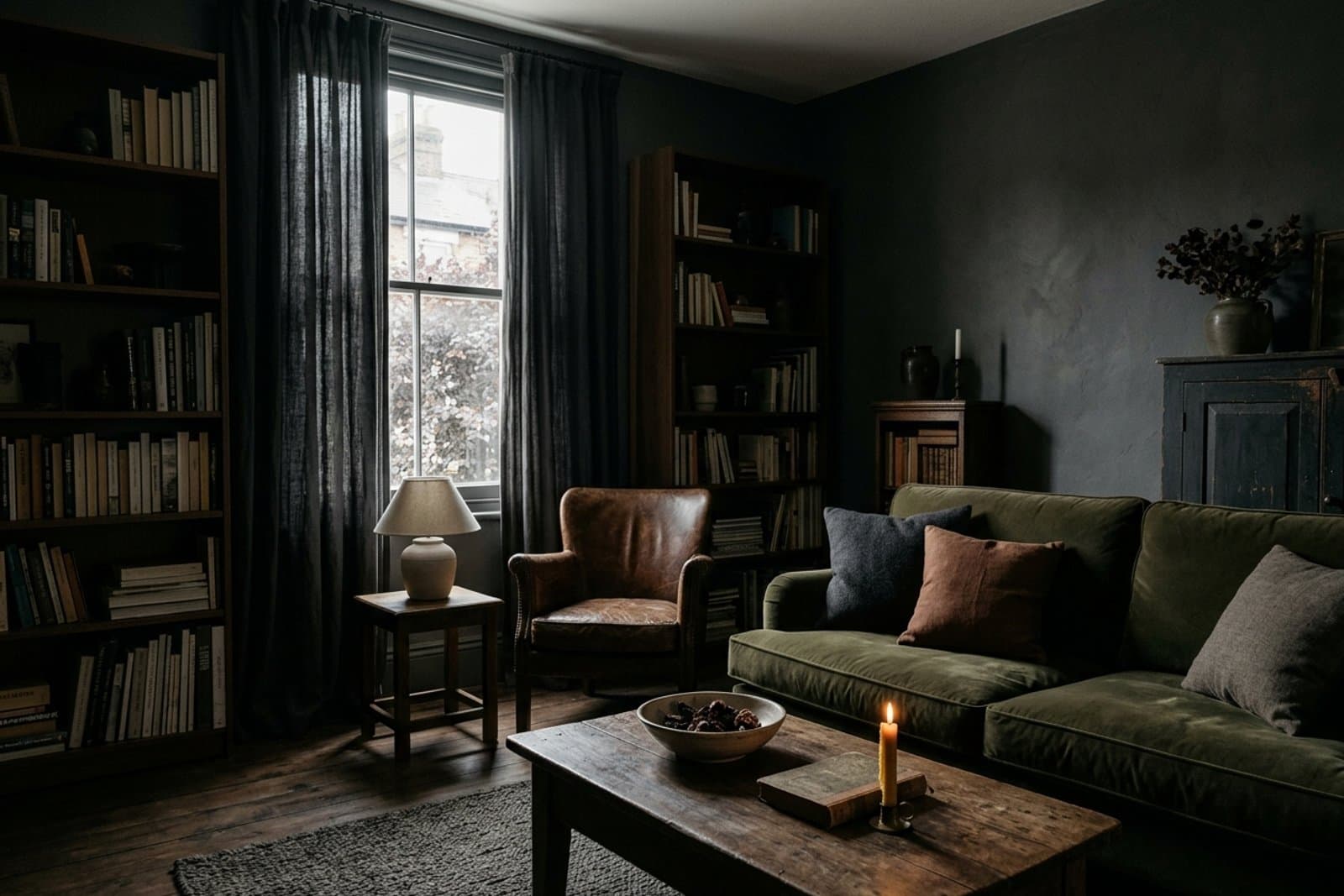
Why Does My Room Feel Dark? (4 Light Leaks to Fix)
Why does my room feel dark? It is losing light at 4 points. Find your leak with a two photo test, then start with the free fix: the window.
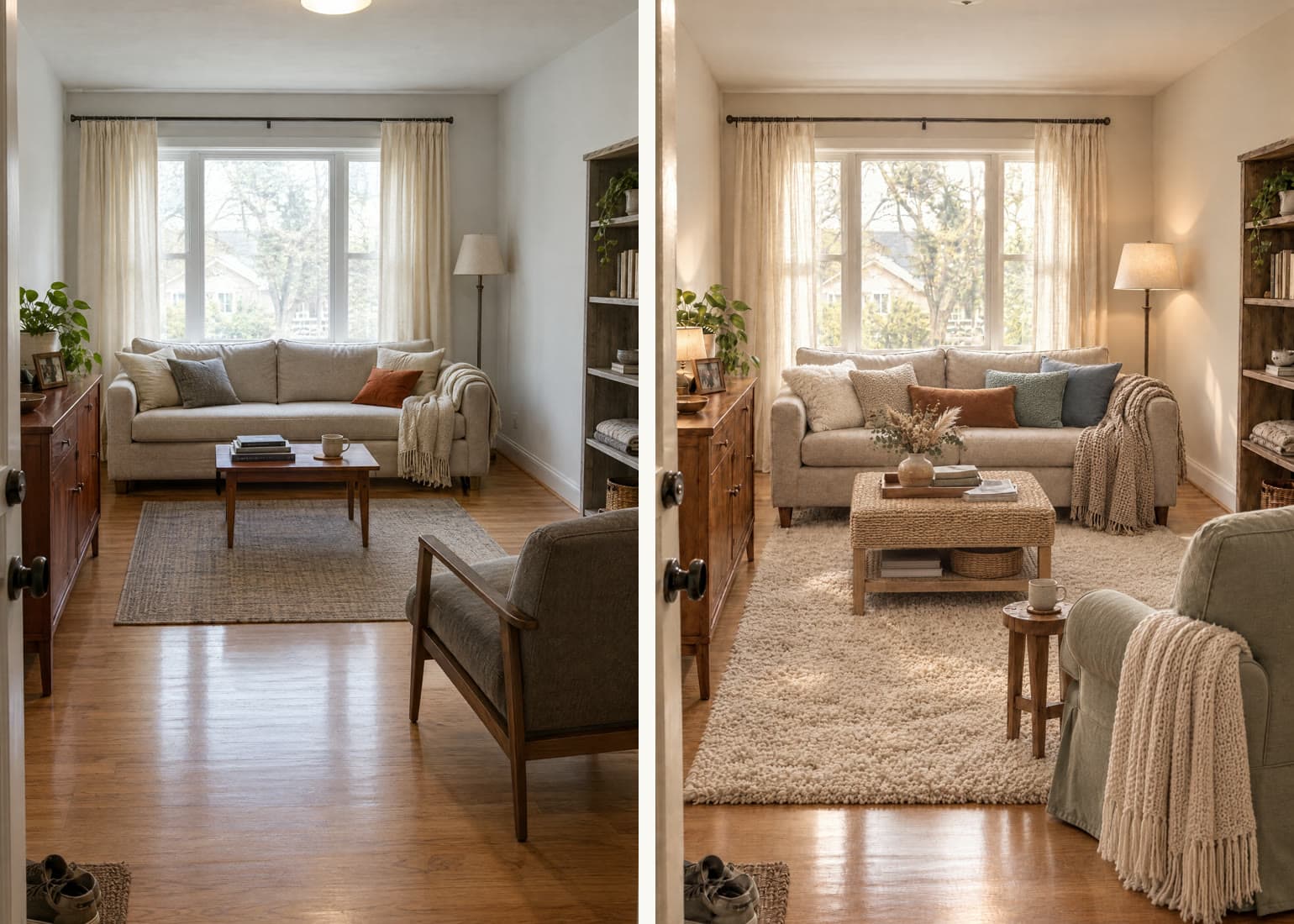
Why Does My Room Feel Off? A Designer's 3-Question Context Check
A room usually feels off when a choice doesn't fit its context. Use three designer questions about the people, the space, and the whole to find what's wrong.