Reading Nook Ideas for a Small Apartment: 7 Checks Before You Decorate
A reading nook only works if you sit there. Check the seat depth, the reach to your cup, and the light on the page before adding another pillow.
Short answer
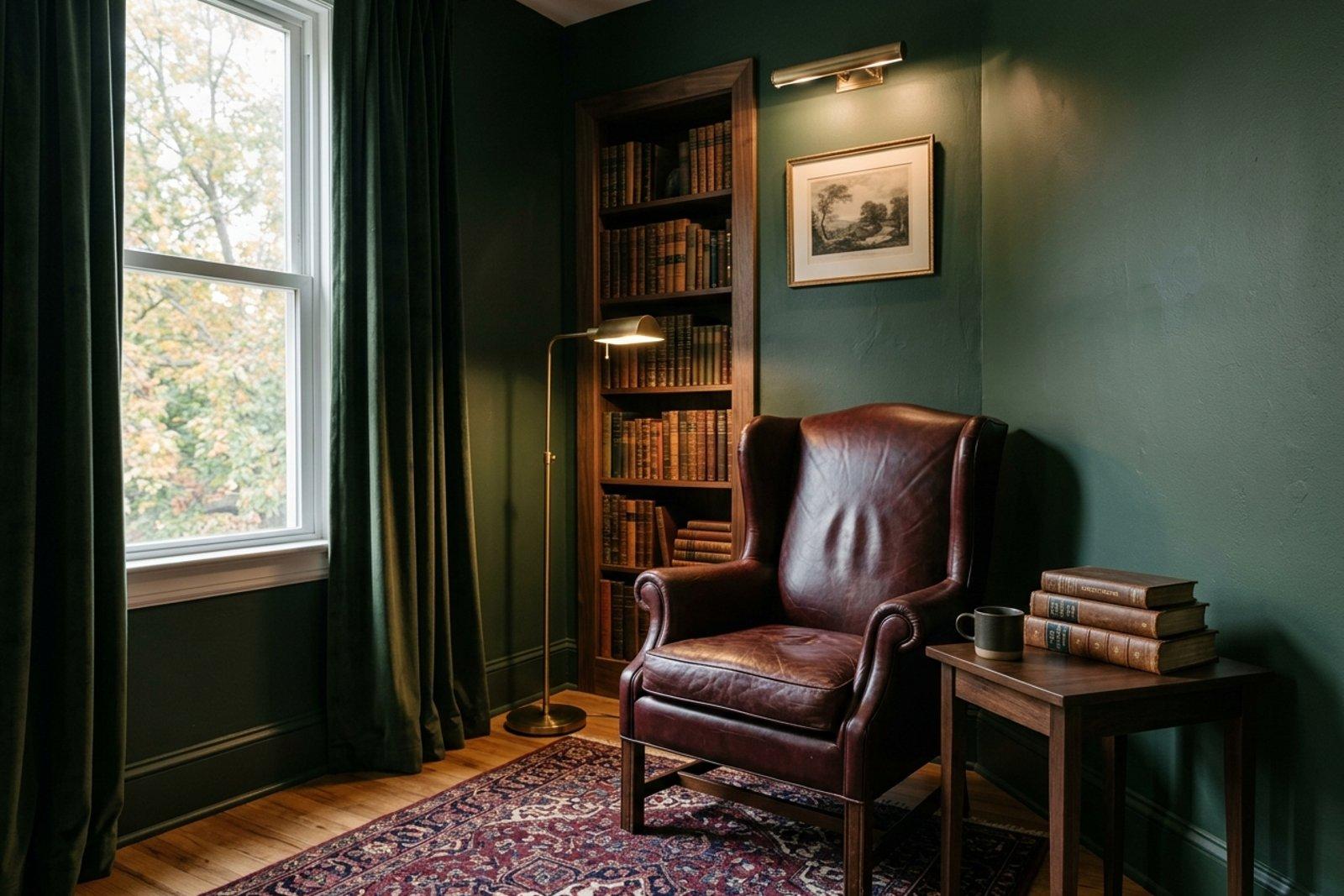
A useful reading corner lets you settle in without rearranging everything. Your chair supports the way you sit, your book is easy to see, and your everyday essentials are within reach. Start with those details before adding decoration.
What changed on November 25, 2026: the checks now carry measurements in inches and centimeters with their sources, and the page has a short FAQ. The off-topic longevity statistic at the end was removed.
You bring over a book and a cup of tea. Then you move the decorative pillow, look for somewhere to put your glasses, and pull the lamp closer.
A few pages later, you move to the sofa.
The corner looked finished. Sitting there revealed what was missing.
A reading space can have a beautiful chair and still be inconvenient to use. The seat may be too deep for you, the side table may sit behind your elbow, or the ottoman may block the route through the room.
At Studio Did It (SDI), we look at how these choices work together around a person and an activity. For a reading corner, that means following the small sequence of sitting down, opening a book, reaching for a drink, and getting up again.
Choose the location for the time you actually read
A sunny window may look like the obvious choice. But if you usually read after dinner, daylight will not tell you whether that location works.
Spend time there during your usual reading hours.
Does the television compete for your attention? Does someone walk between the chair and the lamp? Does the window feel drafty once the sun goes down?
The quieter end of a living room may work better than an attractive spot beside the kitchen. A bedroom chair may be useful if you prefer to read away from the evening television.
If the corner is near a fireplace or heater, keep the throw and cushions well away from it.
Try this: Move an existing chair to the proposed location and read there on two different evenings. Notice what interrupts you before buying anything for the corner.
Test the chair with a book, not just a quick sit
A chair can feel comfortable for a minute and become awkward once you start reading.
Bring a book when you try one. Sit the way you normally would at home.
- Can you rest against the back without sliding forward?
- Can your feet rest comfortably on the floor or a suitable footrest?
- Do the arms let you relax your shoulders while holding the book?
- Can you change position and stand up comfortably?
A deep lounge chair may suit someone who likes to curl up. Someone who reads upright may prefer a shallower seat and more supportive arms.
There is no single seat depth that works for everyone, but you can measure your own fit. Sit all the way back with your feet flat on the floor. Ergonomic chair guidance, such as the University of Western Ontario’s 2 to 3 fingers and Chapman University’s 2 in (5 cm), puts the gap between the front of the seat and the back of your knee at about 2 in. If your knee touches the seat edge, the seat is too deep for you without a back cushion. If the gap is much larger than your hand is wide, the chair is shallow for you.
If you already own the chair, try a supportive cushion behind your back. It may reduce the usable seat depth enough to help. If it leaves you perched on the front edge, the chair may simply be the wrong fit.
SDI detail: Keep the cushion that improves the way you sit. Remove the one you have to put on the floor every time.
Put the side table where your hand naturally reaches
A table can be close to the chair and still be difficult to use.
If it sits behind the arm, you may have to twist to reach your cup. If the top is much lower than your seated hand, every sip becomes a bend.
Start with a tabletop near the height of the chair arm, then adjust for your own reach and the chair’s shape. A furniture specialist quoted by Ideal Home suggests keeping it within about 2 in (5 cm) of the arm height. Measure from the floor to the top of your chair arm, then look for a table between that number minus 2 in and plus 2 in. The table also belongs beside the arm, not behind it, so the cup is a short reach from your hand.
Sit back and place an empty cup on the table. Pick it up again without leaning far forward or turning your body. Repeat with your glasses and your book.
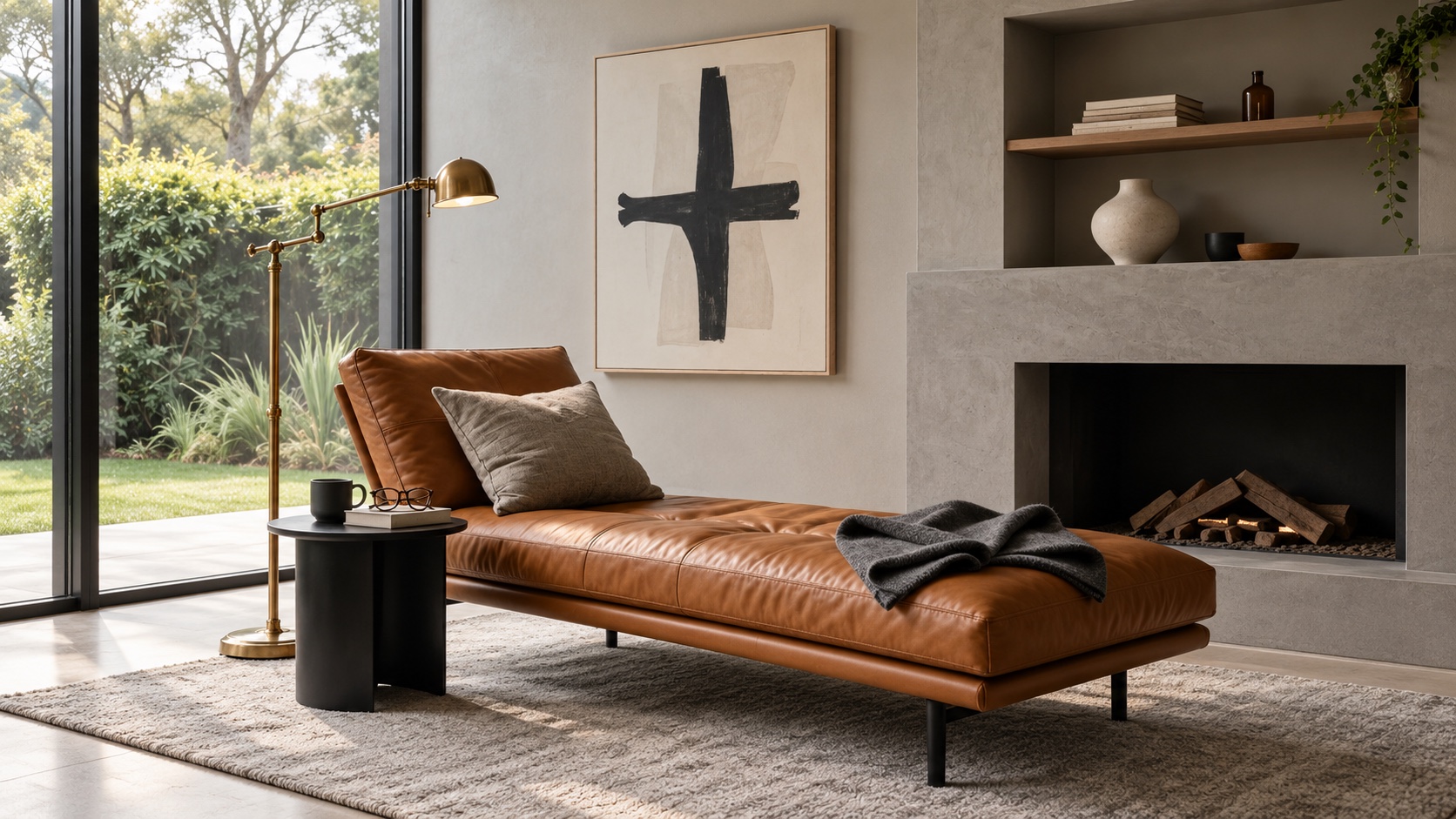 Cup, glasses, and book share one small table at the head of the daybed, so nothing has to go on the floor.
The tabletop also needs enough usable space. A large vase can leave a perfectly good side table with nowhere to put a drink.
For a compact corner, prioritize:
- A stable place for a cup.
- A spot for glasses.
- Room to set down an open or closed book.
If a table lamp takes up most of that surface, a floor lamp may free it for the things you actually use.
Check the light with the book open
The practical question is whether you can comfortably see the page from your usual position.
Place the lamp beside or slightly behind your shoulder and adjust it from the chair. Lighting retailer Lumens advises setting the bottom of the shade at roughly 40 to 49 in (102 to 124 cm) above the floor for seated reading and the lamp base about 18 to 24 in (46 to 61 cm) from where you sit. That is retailer guidance, not a standard, so confirm it with the glare check below. For brightness, a Penn State lighting course lists 20 to 50 footcandles (about 215 to 540 lux) for a reading area. Moving the lamp closer raises the light on the page, so adjust the position before buying a brighter bulb. Check that your head or hand does not cast a troublesome shadow and that the exposed bulb does not shine into your eyes.
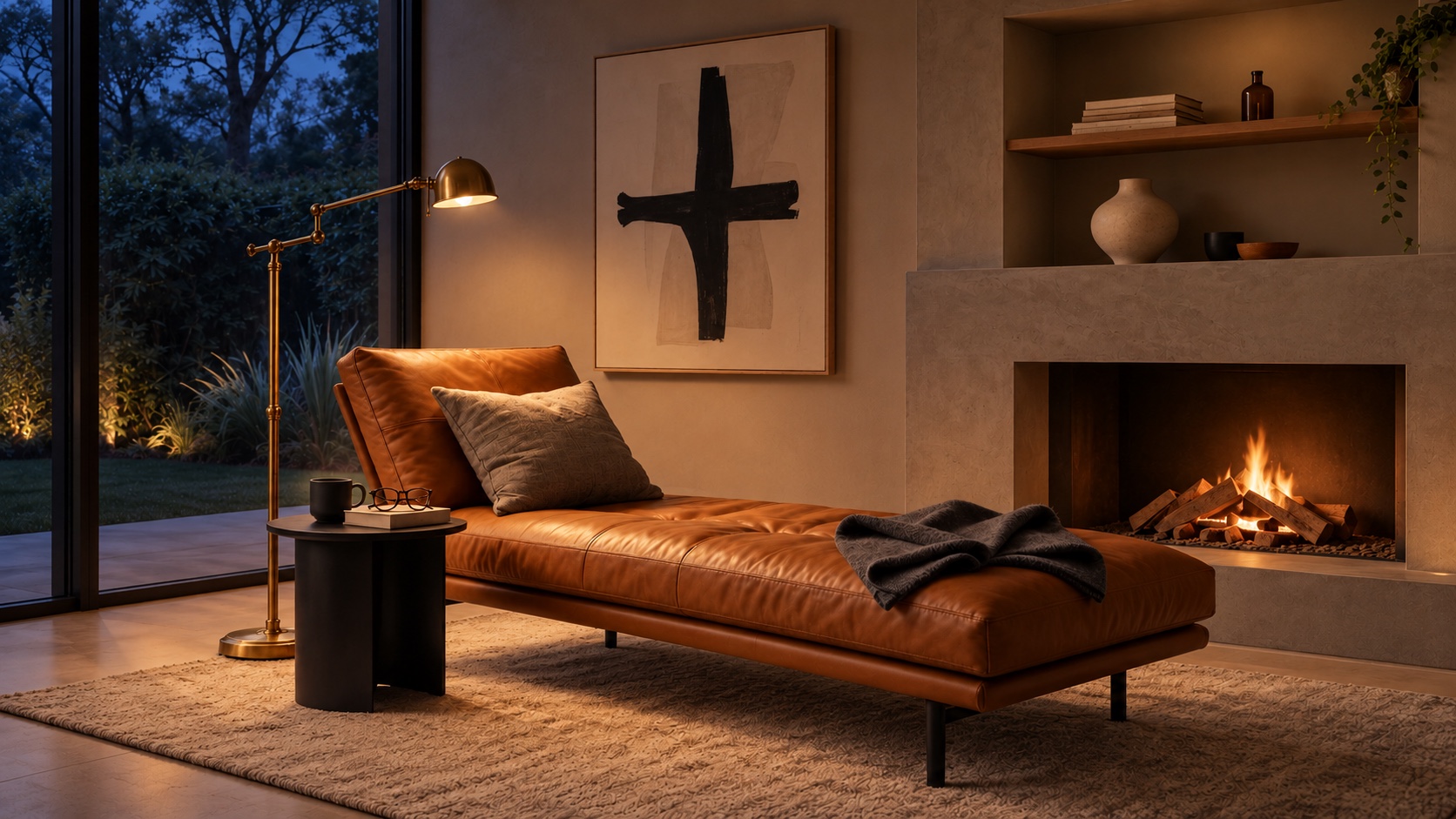 After dark, the lamp beside the headrest puts light where the book will be.
Glossy magazines can reflect light differently from a paperback. Test the material you normally read.
IKEA’s reading nook guide also includes lighting as part of the setup, rather than treating the chair as the whole solution.
Keep the switch within easy reach and the cord outside the walking route. If you share the room, check whether the lamp creates glare for someone sitting nearby.
Try this after dark: Read a few pages with the room arranged as you normally use it. Adjust the lamp before deciding you need a brighter bulb or a new fixture.
Give the ottoman a place that leaves a way through
An ottoman adds another footprint to the room. It needs to work when someone is using it, not only when it is tucked neatly against the chair.
Pull it into the position you would use while reading. Then walk past the corner carrying a laundry basket.
Can you pass without turning sideways? Keep the route past the corner at 36 in (91 cm) wide, the clear width the 2010 ADA Standards (§403.5.1) set for a walking route. Leave the ottoman about 14 to 18 in (36 to 46 cm) from the chair so your legs reach it without stretching; that gap is a common designer rule of thumb, not a published standard. Can you approach the chair and sit down without stepping over the ottoman? In a small apartment, this check decides more than the chair does.
If the answer is no, try a smaller footrest or a different chair angle. A reclining chair also needs room in its extended position; check the manufacturer’s clearance requirements before placing it.
A reading corner should remain easy to enter and leave.
Store the things that otherwise make you get up
You do not need a bookcase beside every reading chair.
You need a home for the few things that regularly interrupt you when they are missing.
That might mean your current book, reading glasses, a bookmark, and a light throw. A side-table drawer, a nearby shelf, or one small basket may be enough.
Keep the surface usable. If books form an unstable stack beneath your cup, move the books to a shelf or lower compartment.
Then add one personal detail where space allows: a ceramic bowl, a small framed photograph, or a textile you enjoy touching.
The corner can express your taste while still leaving room for your evening.
Try the whole setup before calling it finished
Suppose your chair has a deep seat, a large pillow, and a side table behind its arm.
The chair may need a firmer back cushion. The table may need to move forward. The lamp may need a different angle. A smaller footrest may keep the walkway clear.
These changes can make a greater difference to daily use than adding another decorative layer.
Give the revised arrangement a few ordinary evenings. Notice whether you settle in more easily and reach for what you need without interrupting your reading.
That is the SDI approach: connect the furniture, the space, and the way you actually live.
Frequently Asked Questions
How high should a side table be next to a reading chair?
Within about 2 in (5 cm) of the chair arm height, and beside the arm rather than behind it. Measure from the floor to the top of the arm, then shop within that range.
How do I know if a chair seat is too deep for me?
Sit all the way back with your feet flat. Ergonomic guidance puts the gap between the seat edge and the back of your knee at about 2 in. If your knee touches the edge, add a back cushion or choose a shallower chair.
Where should the reading lamp go?
Beside or slightly behind your shoulder, with the bottom of the shade at roughly 40 to 49 in (102 to 124 cm) and the base 18 to 24 in (46 to 61 cm) from you, per lighting retailer Lumens. Check that your head and hand do not shadow the page.
How much light do I need for reading?
A Penn State lighting course lists 20 to 50 footcandles (about 215 to 540 lux) for a reading area. Move the lamp closer before buying a brighter bulb.
How much room does an ottoman need?
Keep the route past the corner at 36 in (91 cm) wide and the ottoman about 14 to 18 in (36 to 46 cm) from the chair. The route width comes from the 2010 ADA Standards; the ottoman gap is a designer rule of thumb.
Explore your space with Studio Did It
A corner that welcomes you back each evening makes reading part of daily life, and research on habits suggests that routines tied to a stable setting are easier to keep.
Jihyun Lee is the founder of STUDIO DID IT and has spent more than 25 years designing residential and public interiors, from private homes to the National Library of Korea in Sejong.
The Noticer
For thoughtful people who notice spaces.
What did you notice?
Did something in this story make you see your own space differently?
Plan a reading nook that fits your room
Send Archie a photo of your studio or one bedroom. Archie returns the corner pick, a chair and lamp under the 30 inch footprint, and a renter safe layout you can build in a weekend.
Plan my nook with ArchieAdvertisement. Archie is made by STUDIO DID IT, the studio that publishes Spatia.
Related Articles
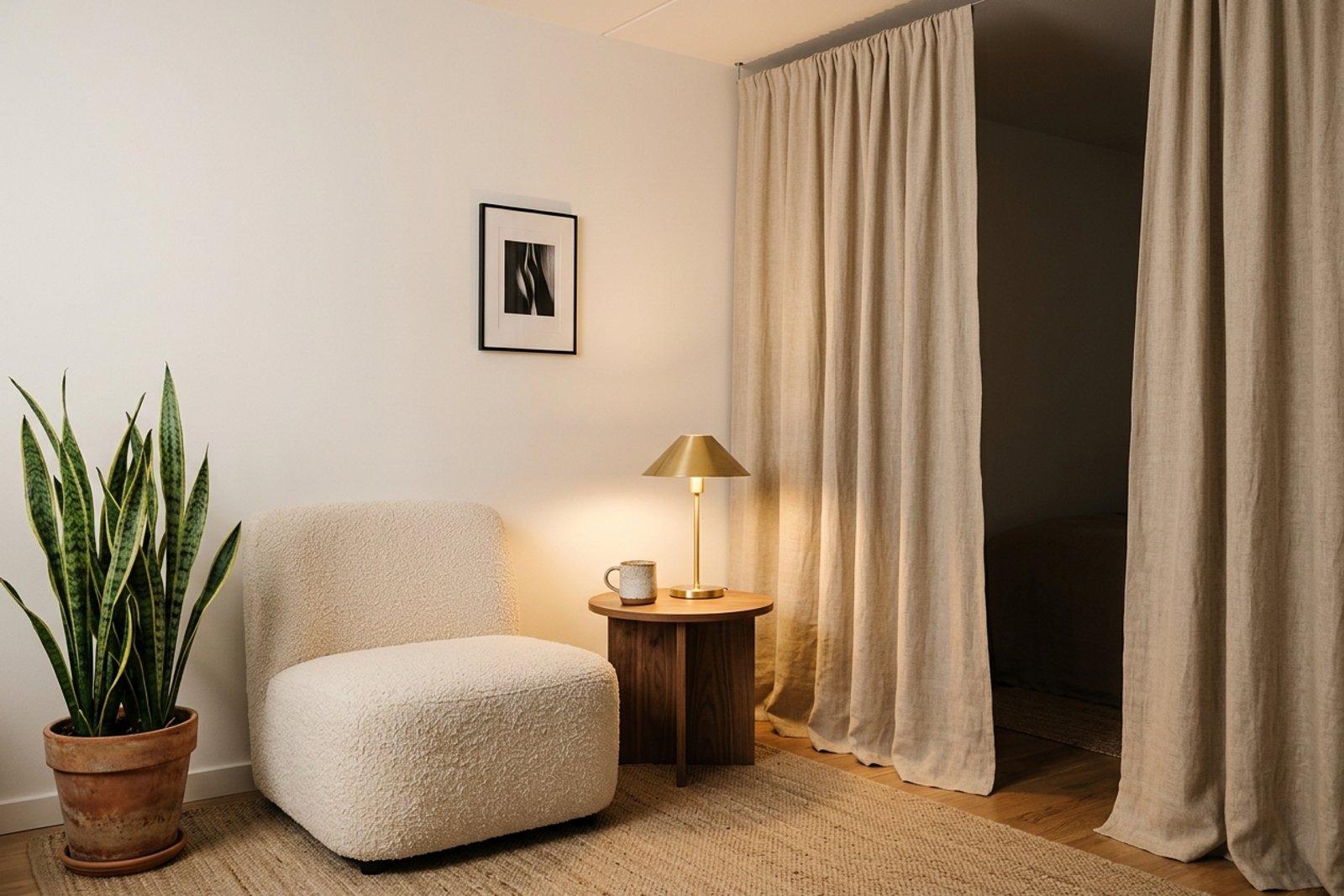
How to Divide a Studio Apartment Into Zones
Measured clearances for a one-room home: a 36 in (91 cm) main route, 36 to 44 in behind dining chairs, and where a curtain, screen or low cabinet fits.
How to Ventilate a Room With One Window (No Cross Breeze)
Only one window? Learn 3 practical ways to ventilate your room, where to point a fan, how long to air it out, and when to keep windows closed.
One Window, No AC: Is Your Fan Facing the Wrong Way?
How to cool a room with one window and no AC: when to shade the glass, which way to point the fan, and how to make your bed cooler on warm nights.
Recently updated
- How to Divide a Studio Apartment Into ZonesNov 25, 2026
- How to Arrange Furniture: What Comes First MattersOct 31, 2026
- Why Does My Room Feel Off? 3 Questions to Find the Real ProblemOct 31, 2026
- Paint Colors That Go With Honey Oak Cabinets: Make the Wood Part of the DesignOct 31, 2026
- 9 Paint Colors That Work With White Oak Floors, and How to Choose the Right OneOct 31, 2026
- Best Paint Colors for West-Facing Rooms: Keep the Mood You Meant to CreateOct 31, 2026