How to Cool a Small Kitchen Without AC (Renter Friendly)
Cool a small kitchen without AC by blocking sun, cooking with low heat appliances, and venting hot air after dinner. A renter safe plan, no install.
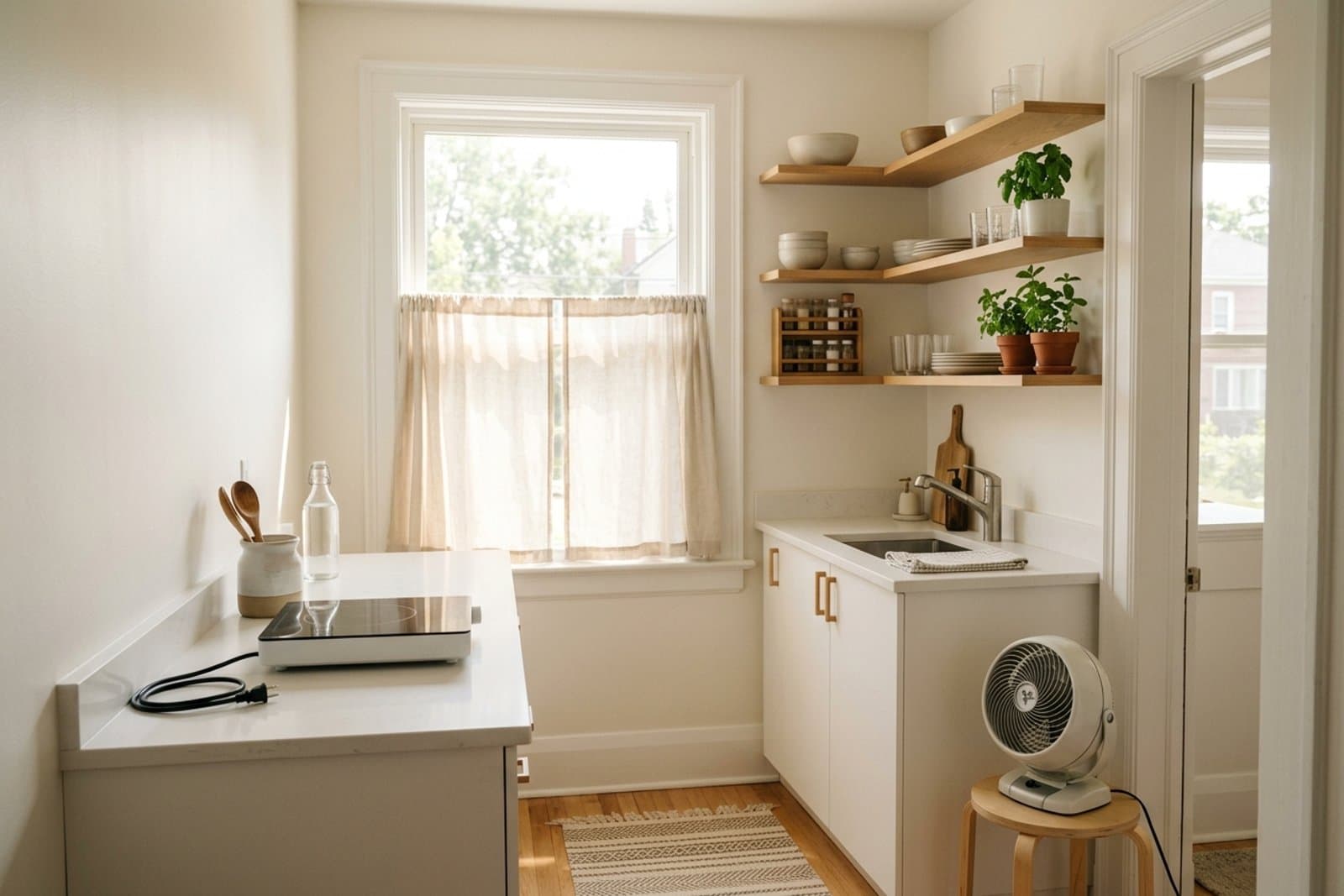
To cool a small kitchen without AC, stop heat before it enters, cook with appliances that add little heat, and vent the room after the hottest task. Block direct sun with a pale shade before the glass warms, favor a microwave, air fryer, or induction burner over the oven, and run the range hood until 10 minutes after cooking.
At night, set one fan to push hot air toward a window or doorway and pull cooler air in from the rest of the apartment. The goal is not a cold kitchen, just one room that stops warming the whole home.
Fine at breakfast but punishing by dinner? The cause is layered heat: sun on glass, oven heat, appliance heat, and poor airflow in one small box. This guide is for renters and condo owners with compact kitchens, few windows, and no central AC. If the heat is mostly in a bedroom, start with our cool bedroom for sleep guide. If the whole place runs hot, pair this with why a room holds heat after the sun moves off it.
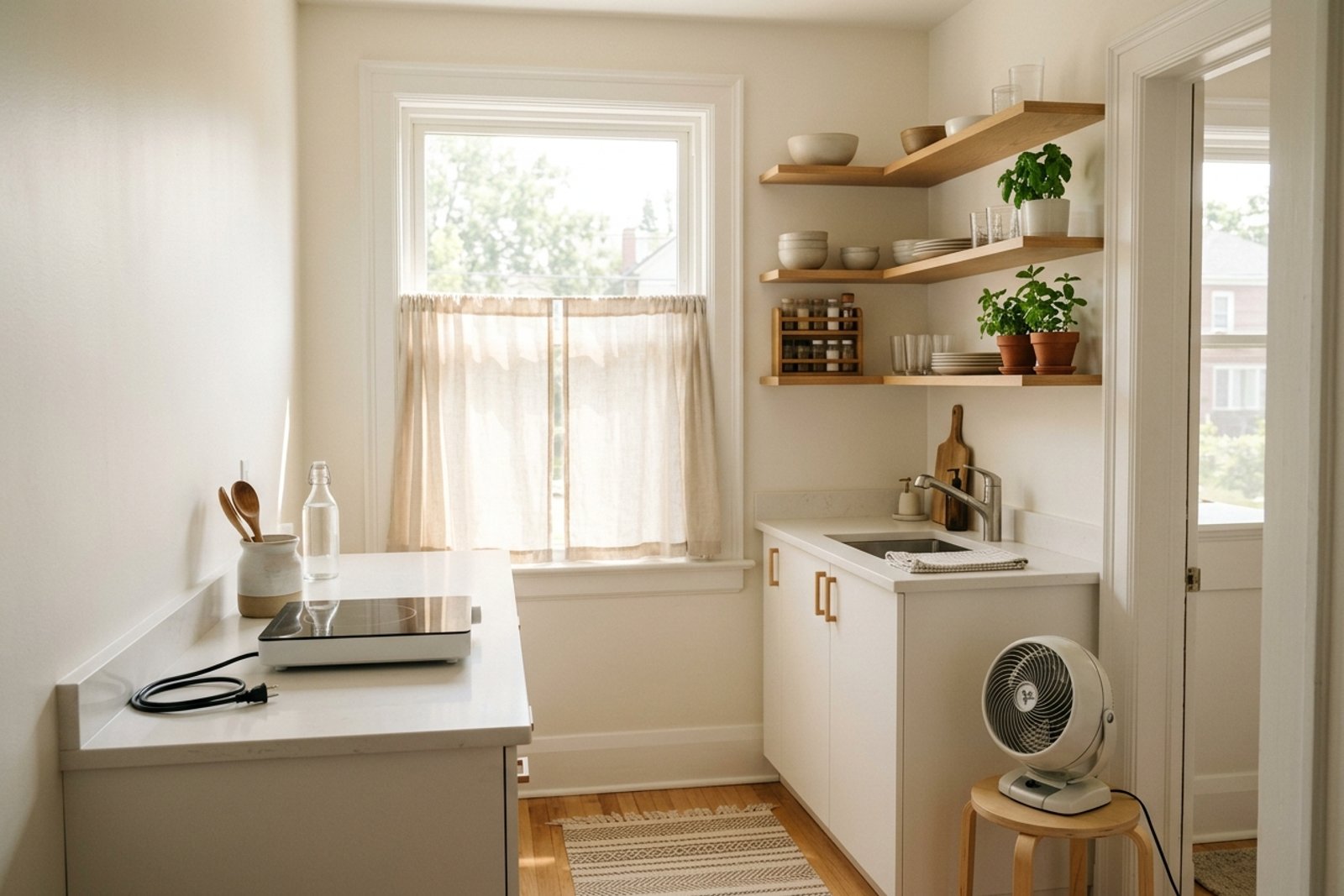
Why does a small kitchen get hot so fast?
It holds less air, carries more hard surfaces, and packs several heat sources into a short run of cabinets. The oven warms the room for hours, the fridge grille throws heat, the dishwasher releases steam, and sun on tile, stone, dark counters, or stainless adds radiant heat those surfaces keep giving back. In an open studio, one dinner can raise the temperature across the whole apartment.
The fix is a sequence: stop heat at the window and surface, cook in ways that finish fast and vent steam, then exhaust hot air once the outside or hallway is cooler. That timing mirrors our west facing room cooling guide, with one extra layer: appliances make heat even after the sun is gone.
What should you do before cooking in a hot kitchen?
Set the room up so it stores less heat while you work. Close the shade before direct sun reaches the glass, not after the counter is warm. Clear the counter nearest the window of black appliances, metal trays, and dark cutting boards. Swap any sink rug for a pale washable cotton runner, or remove it until September. Keep the fridge grille clear by at least 2 inches so the motor vents easily.
Then plan the order. Prep everything before a burner turns on, cook the longest item first, and lid your pots to trap steam. If you have a range hood, run it from the first simmer until 10 minutes after cooking. A recirculating hood still catches some steam, but plan on a fan afterward.
Which cooking methods keep a small kitchen coolest?
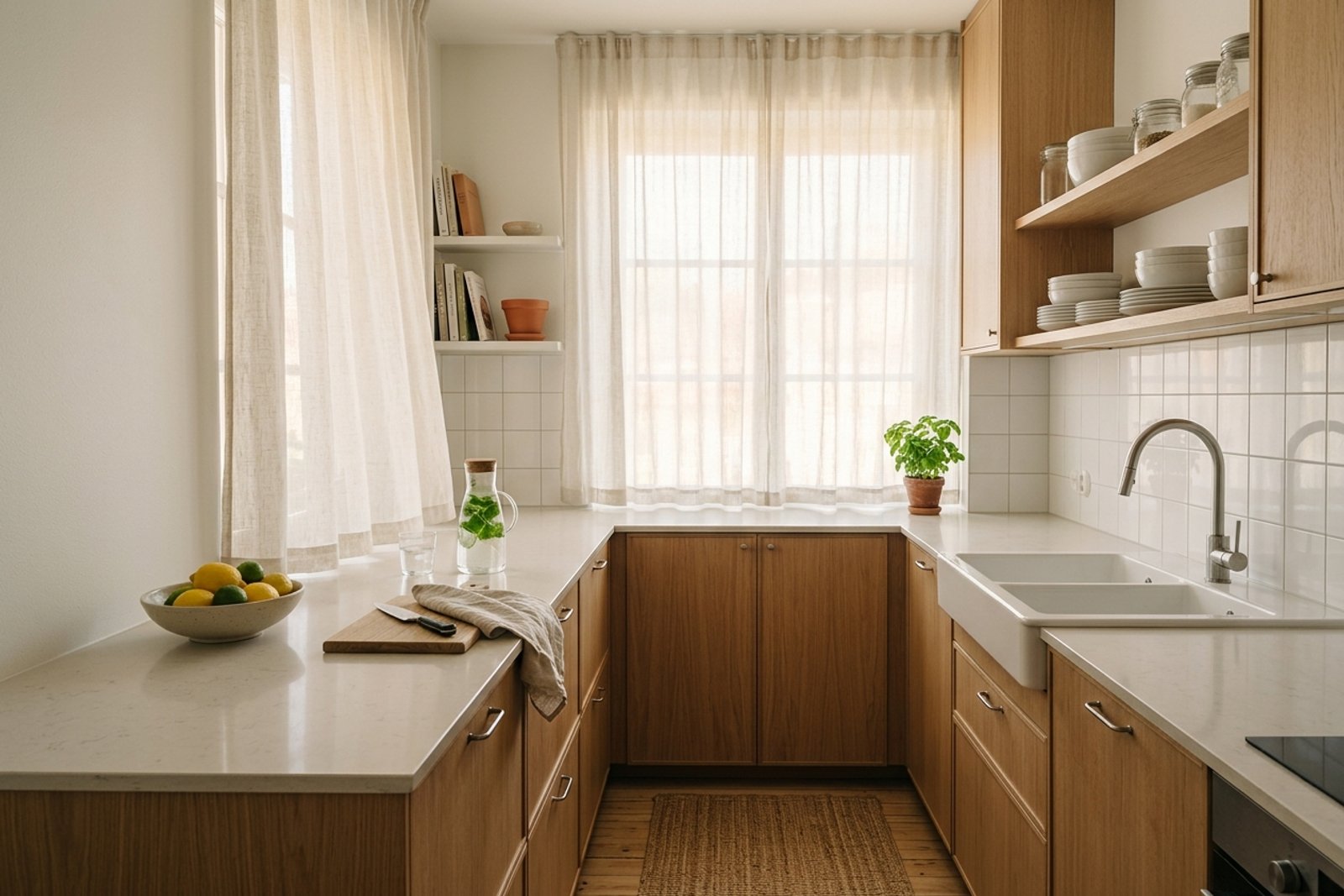
The coolest methods finish quickly, heat a small surface, or keep moisture out of the room. A microwave, electric kettle, rice cooker, pressure cooker, air fryer, induction burner, or toaster oven adds less room heat than a full oven. Induction helps most because the pan heats while the surrounding air stays cooler: the U.S. Department of Energy reports induction sends about 85 percent of its energy into the pan, versus roughly a third for gas, so far less heat spills into a small room. If you must use the oven, batch cook, keep the door closed, and turn it off a few minutes early.
| Method | Heat added to the room | Best for |
|---|---|---|
| No cook (salads, boards) | None | Peak heat hours |
| Microwave, electric kettle | Very low | Reheating, one bowl |
| Air fryer, toaster oven | Low | Small portions |
| Induction burner | Low, stays near the pan | Stovetop meals |
| Full oven | High, lingers for hours | Batch cooking in cooler hours |
No cook meals are a comfort decision. Salads with rotisserie chicken, cold noodles, grain bowls, sandwiches, and tinned fish boards keep the kitchen usable without a heat event. Want a warm meal? Cook it early and reheat small portions at night, so the apartment does not inherit the kitchen's peak heat at bedtime.
Where should fans go in a small kitchen without AC?
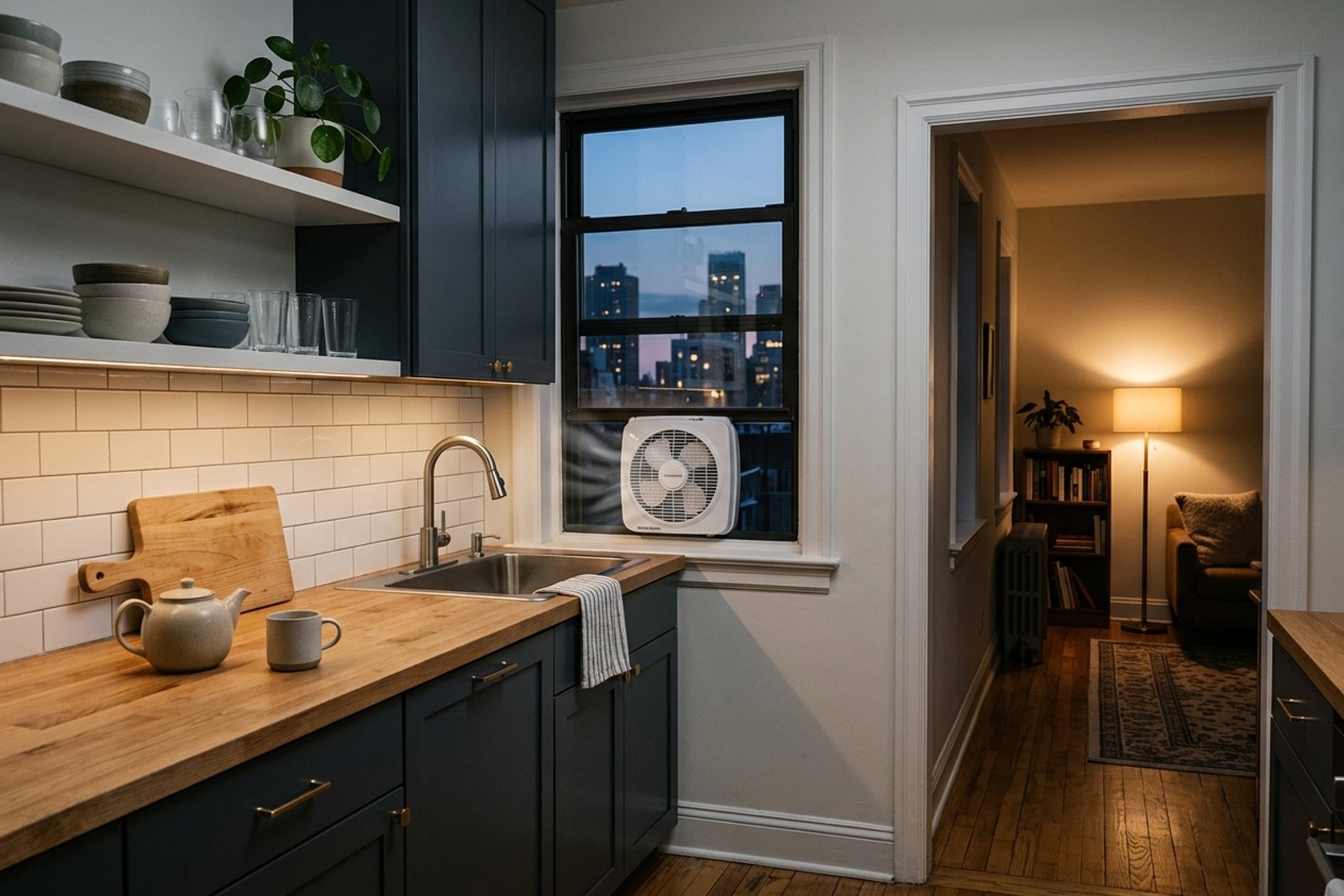
Fans work best moving hot air out, not stirring it around the stove. While cooking, keep a small fan clear of the grease zone and aim it toward a doorway or window, never at a gas flame. After cooking, if the air outside is cooler, put one fan in the window facing out to exhaust warm air, and open a cooler window elsewhere so replacement air can enter.
No window? Use the doorway as the exhaust path: set a fan just outside the kitchen aimed away, and open the coolest window in the apartment. You want one direction, cooler air in from the living area, across the kitchen, and out the fan. Cords and clutter along that path also make the room feel chaotic, see why a room feels cluttered when it is clean.
How do you keep kitchen heat from spreading into the apartment?
Close the loop around the hottest task. While cooking, contain steam with lids, run the range hood, and keep bedroom and closet doors shut so warm moist air stays out of soft textiles. After cooking, open only the path you want the air to take, kitchen window out and living room window in, or kitchen doorway out to a hallway fan. Opening every window at once can strand hot air in the kitchen.
Soft surfaces hold heat and smell longer than hard ones, so keep throws, upholstered stools, and laundry off the cooking path in summer. In a studio, even a low bookcase or table can redirect air if it blocks the straight run from stove to window. If the apartment feels temporary because every fix is a portable gadget, the next layer is layout, see dividing a studio into zones.
What surfaces and colors make a hot kitchen feel cooler?
Surfaces do not move the thermostat, but they change how much heat a small kitchen stores and how stressful it feels. Pale, matte, cleanable finishes are easiest in summer: warm white walls, oat cafe curtains, pale wood, light stone, sparing stainless, and washable cotton. Dark counters, black mats, heavy cutting boards left in the sun, and glossy dark tile all read warmer.
Start with reversible swaps. Trade a dark runner for a pale washable one, move once a week appliances into a cabinet, and corral oils and salt on one light tray. Add a warm task light, like a 2700K E26 LED in a small counter lamp, so you skip the hot, glaring overhead at night. The kitchen looks lighter because it is working lighter.
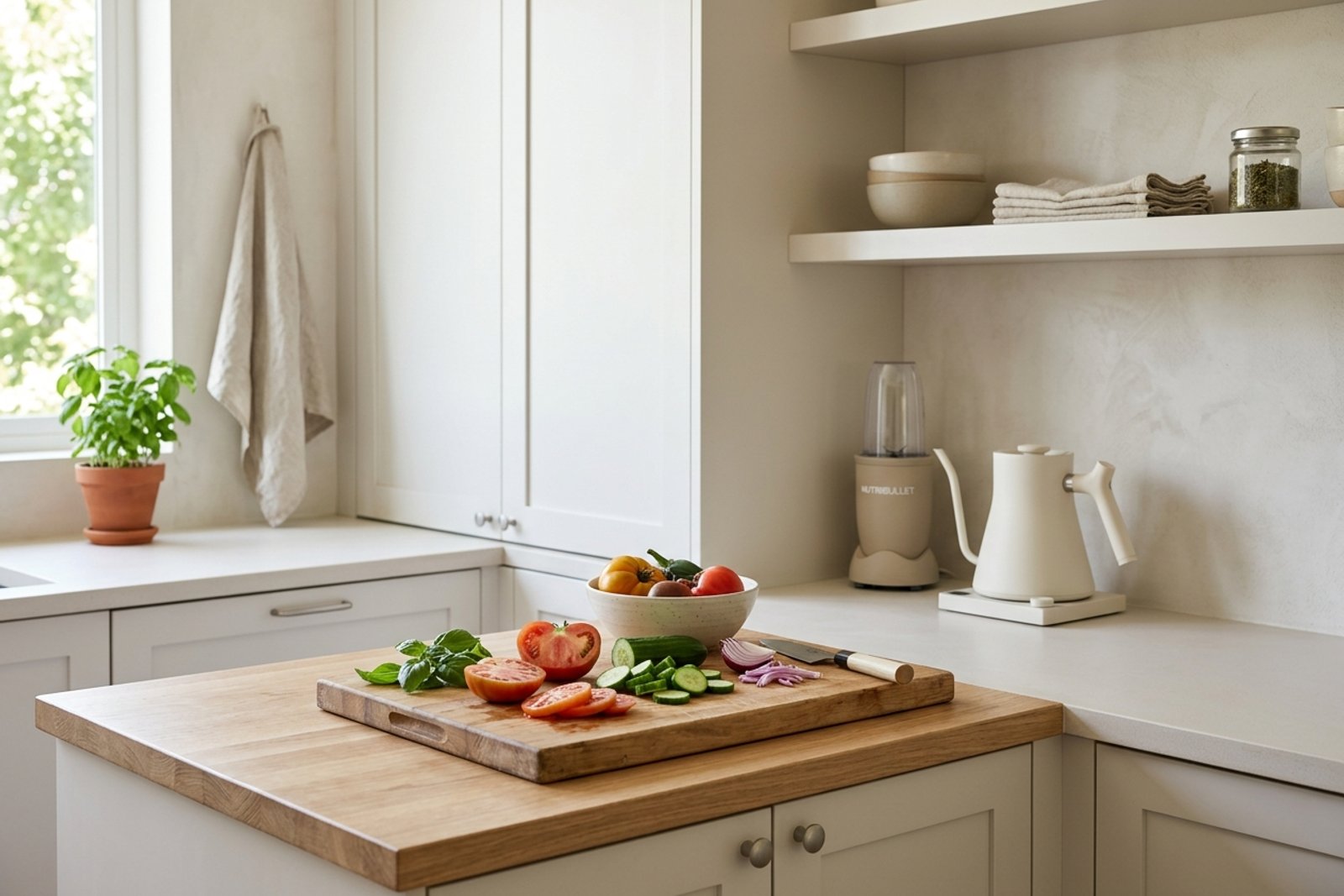
What is the best seven day plan for a cooler small kitchen?
Run a seven day test before buying another appliance:
- Day 1: Note the hour sun first reaches the counter.
- Day 2: Close or add a pale shade before that hour.
- Day 3: Clear the warmest counter zone and move dark appliances out of the light.
- Day 4: Cook one dinner without the oven, then check the room 30 minutes later.
- Day 5: Test the fan path for 20 minutes after dinner.
- Day 6: Clean the fridge grille, range hood filter, and window track.
- Day 7: Keep the changes that made the kitchen easier to enter at dinner.
Small kitchens do not need a complex system, just timing, less stored heat, and a clear exit for warm air. Block sun before it enters, pick the appliance that adds the least heat, and vent right after cooking. Once the room stops overheating, the design choices that matter get easier: better light, quieter surfaces, and a kitchen that does not punish you for cooking.
Small kitchen cooling FAQ
Does putting ice in front of a fan work?
It helps a little, and only briefly. A bowl of ice in front of a fan cools the air passing over it for a few minutes, but the effect fades as the ice melts and adds humidity to a tight room. In a small kitchen, venting hot air out a window beats chilling air you cannot replace.
How can I keep my kitchen cool while cooking?
Cook with the lowest heat appliance that does the job, lid your pots to trap steam, and run the range hood from the first simmer until about 10 minutes after you finish. Prep everything before a burner turns on, and cook the longest item first so heat does not build in stages.
How do you cool a small kitchen without AC fast?
For quick relief, close the shade on any sunlit window, stop using the oven, and set one fan in the window facing out to push hot air outside while a cooler window elsewhere feeds air in. You will not reach AC cold, but the room drops from stifling to workable within the hour.
Written by the Spatia Editorial Team, which covers compact kitchens under rental constraints: one window if you are lucky, a recirculating hood, and no floor space for another appliance.
The Noticer
For thoughtful people who notice spaces.
What did you notice?
Did something in this story make you see your own space differently?
Plan a cooler kitchen before you buy more gear
Archie can look at your kitchen layout, window direction, appliance placement, and airflow path, then suggest the one cooling change most likely to make the room easier to use.
Plan my kitchen with ArchieAdvertisement. Archie is made by STUDIO DID IT, the studio that publishes Spatia.
Related Articles
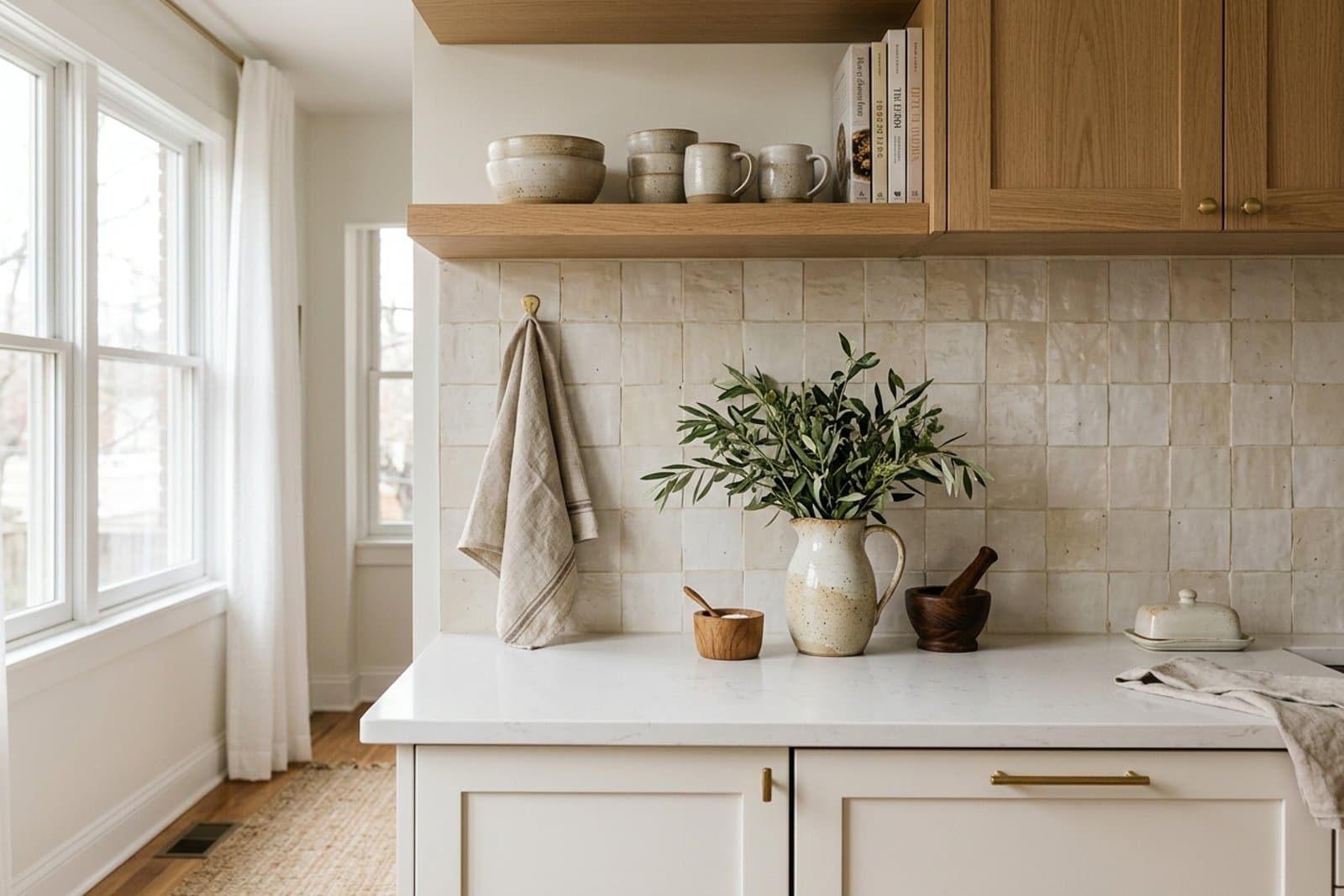
Renter Friendly Kitchen Backsplash Ideas (5 Options)
Renter friendly kitchen backsplash ideas that cover a greasy wall without tile or drilling. See 5 options, the stove safety gap, and how to remove them clean.
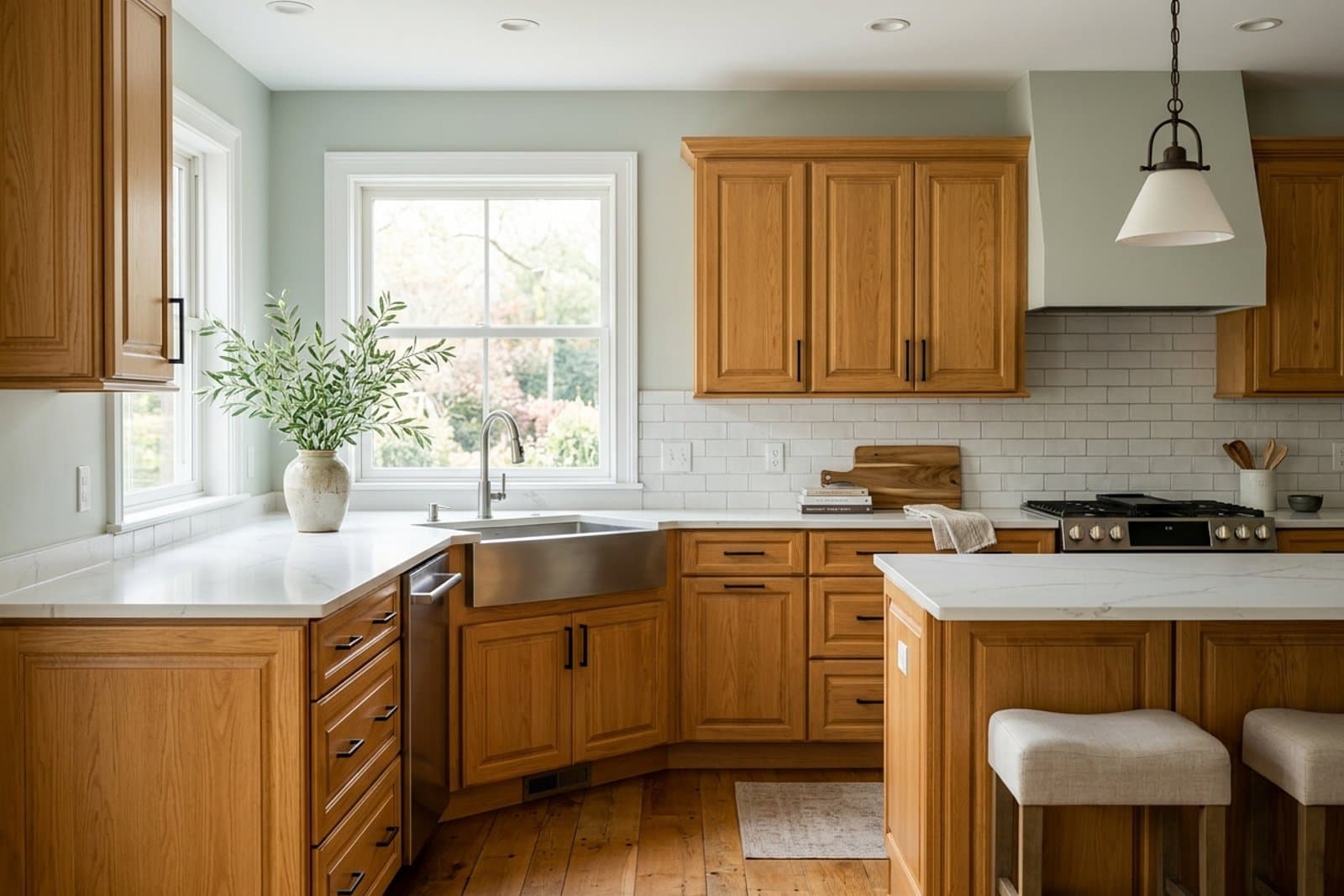
Paint Colors That Go With Honey Oak Cabinets (12 LRVs)
Honey oak cabinets look best with walls that cool the orange: soft whites, gray greens, muted blues. See 12 Sherwin-Williams and Benjamin Moore picks by LRV.
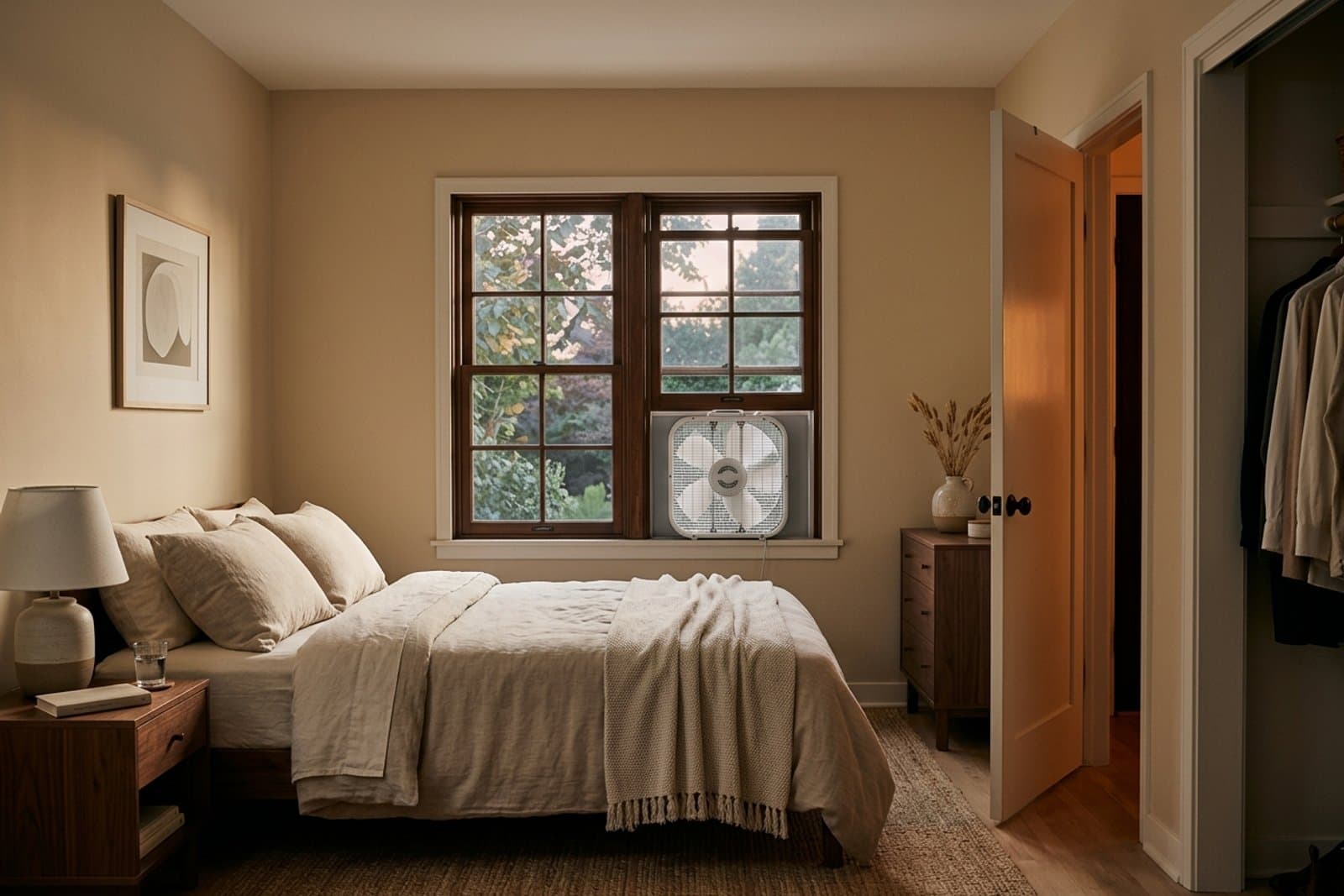
How to Ventilate a Room With One Window (No Cross Breeze)
To ventilate a room with one window, face a box fan out, crack the door for intake, and flush 10 to 20 minutes, or about 5 in winter. See the full routine.