How to Cool a Living Room Without AC
A living room cools down faster when you block sun early, move air by time of day, and remove heat holding decor. Use this practical summer plan before buying another fan.

A living room without AC cools best when you treat sun, air, and materials as one system.
- Block direct sun before it touches the floor or sofa, using light colored thermal curtains, cellular shades, or a reflective liner close to the glass.
- Keep windows closed while outdoor air is hotter than indoor air, and use a fan for personal airflow across the main seat.
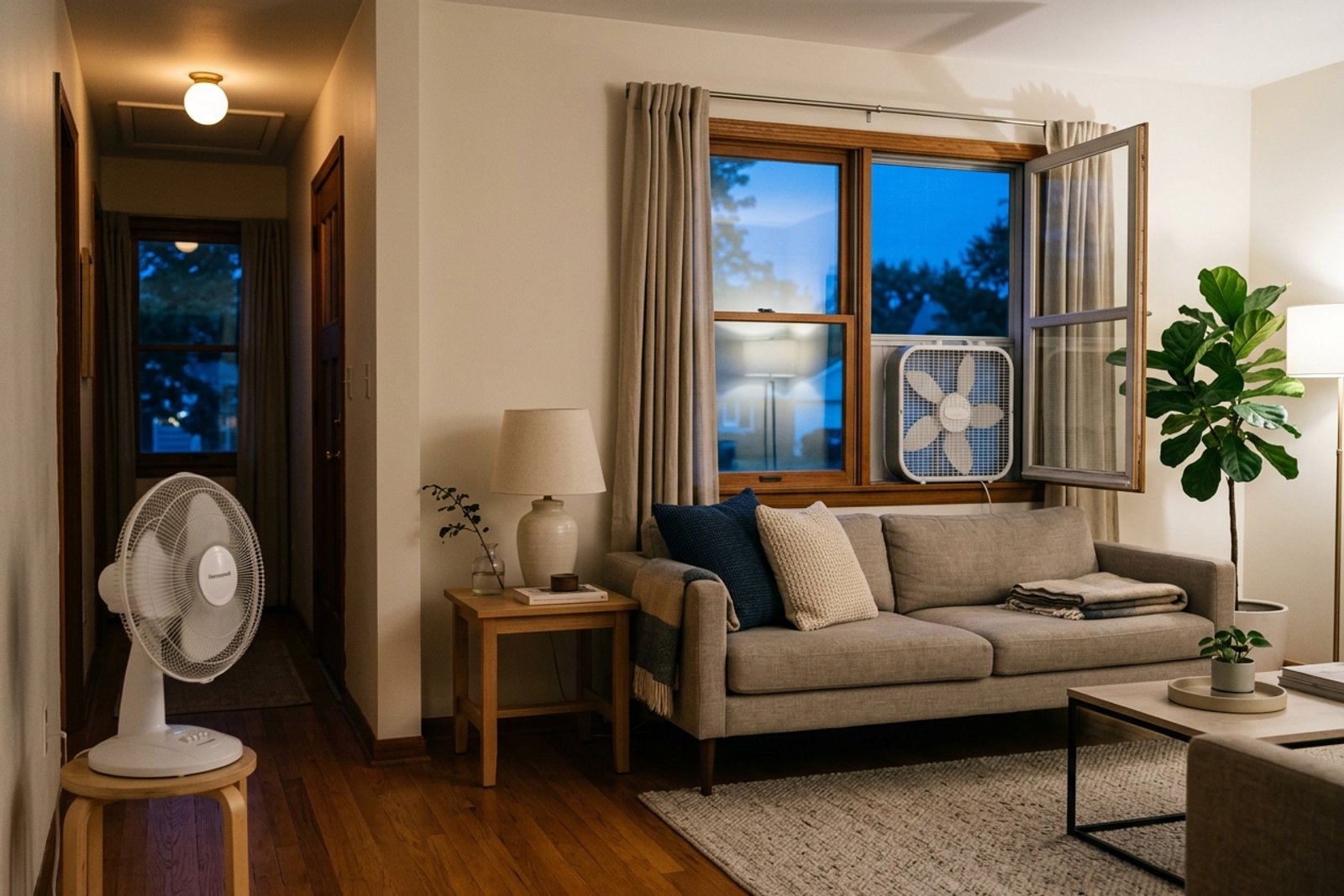
- Switch to exhaust mode after sunset: one fan faces outward at the window, while a hallway, opposite window, or cracked interior door creates an intake path.
- Reduce what stores heat. Dark rugs, thick polyester throws, leather cushions, electronics, and furniture against a sunny exterior wall can keep radiating warmth for hours.
This routine will not replace AC during dangerous heat, but it can make a living room feel several degrees calmer within one evening.
If your living room becomes the hottest room by dinner, the problem is usually not the fan you bought. It is timing, sun exposure, and furniture holding heat. This guide is for renters and homeowners who want a reversible cooling plan before adding a portable AC. For related cases, see our guides to cooling a room with fans and curtains, why an apartment gets hotter than outside, cooling a west facing room, and choosing curtains that keep heat out.
This is for living rooms where you can adjust curtains, fans, seating, rugs, and doors. If the room stays above the mid 80s after sunset for several nights, treat that as a comfort and health issue, not a styling problem.
Why does a living room stay hot after the sun moves?
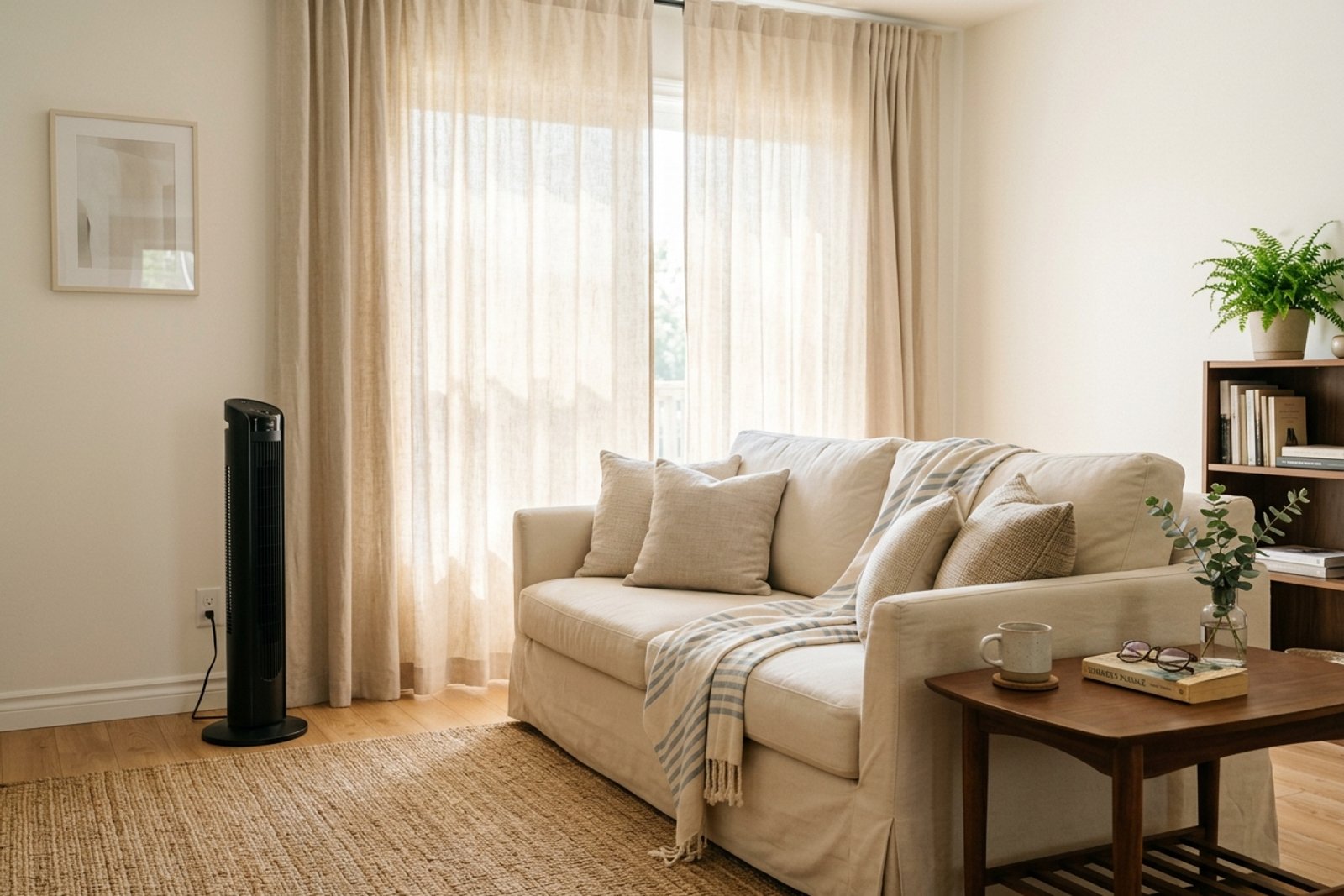
A living room stays hot after the sun moves because solid surfaces have stored the heat. Sunlight passes through glass, then the floor, sofa, rug, and walls absorb it and release warmth slowly, so the room can feel hotter at 8 p.m. than at 3 p.m. The biggest heat holders are dark rugs, leather seating, dense cushions, and electronics near the TV. A fan cools your skin, but it cannot unload a sofa that sat in direct sun all afternoon. The fix starts earlier: block light before it lands, then flush the room once outside air is cooler than inside.
Quick test: touch the sofa arm and floor after sunset. If they feel warm, the room is still unloading afternoon heat.
What is the fastest way to cool a living room without AC?
The fastest safe way is to stop new heat first, then move stored heat out when outside air helps. During the hottest hours, keep the sunny window covered and aim the fan at people, not the window. Once outdoor air feels cooler than indoor air, usually after sunset, flip the setup: put a box fan facing outward in the main window and open one intake path across the room, like a hallway door or second window. Run that for 30 to 90 minutes. Air needs a route through the space, not a fan spinning in a corner.
Which curtains keep a living room cooler?
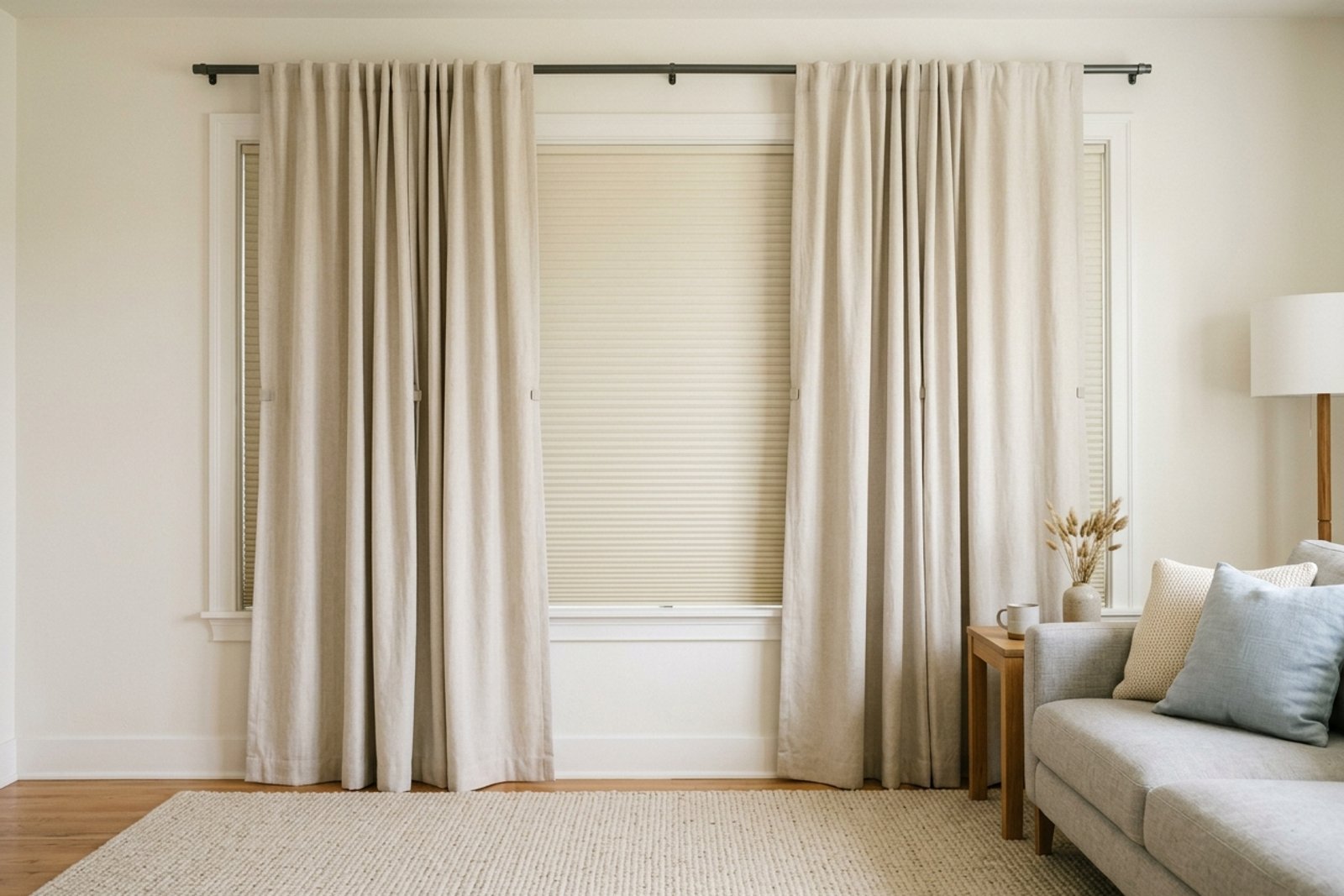
The coolest curtains are light colored, lined, and wide enough to cover side gaps. A pale thermal blackout curtain, cellular shade, or reflective liner beats a dark decorative panel, which absorbs heat when sun hits the glass. Fit matters as much as fabric: overlap panels at the center and cover the side edges so sunlight does not leak onto the rug. Close the layer before direct sun arrives. Curtains are prevention, not rescue; closing them after the sofa is warm only traps heat that is already inside.
Where should you place the fan in a living room?
Place the fan based on the hour. In hot daylight, aim it across the sofa or reading chair from a few feet away, and keep it off hot windows unless outside air is cooler. After sunset, the fan becomes a ventilation tool: face it outward in or near the window and open a second path for replacement air. Keep that path clear of ottomans, baskets, and low tables.
If you cannot walk a straight line from the intake to the exhaust, air probably cannot move cleanly either.
What decor makes a living room hotter?
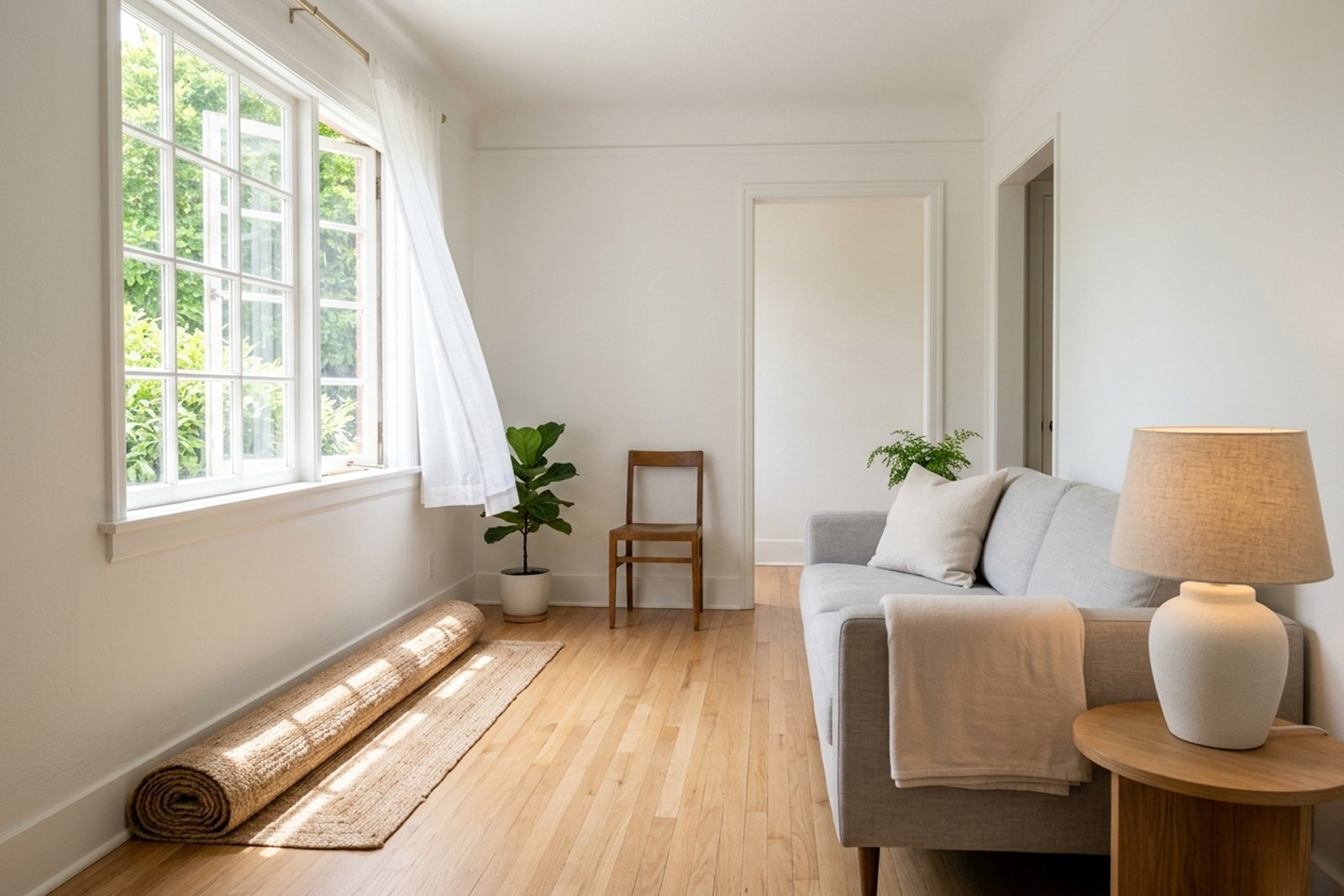
Decor makes a living room hotter when it absorbs sun, blocks airflow, or adds indoor heat. Dark rugs, thick throws, velvet pillows, and leather seating all hold warmth in a sunny room. You do not need a redesign: roll up the dark rug for July and August, swap heavy throws for cotton or linen, and pull the sofa a few inches off the exterior wall. Keep the media console ventilated too, since a game console, router, and TV running together add real warmth in a compact room.
This is also where layout helps. Our small studio apartment ideas cover zones that keep furniture useful without sealing off airflow.
How do you cool a living room with one window?
A one window living room needs stricter timing because it cannot rely on true cross breeze. During the day, keep the window closed and shaded, and use the fan for the person in the room. After sunset, face one fan outward in the window and create any safe intake path you can: a hallway door, a bedroom window elsewhere, or a kitchen exhaust fan. The airflow will be slower, so give the flush the full 90 minutes, then close the curtains before the next sun period.
What should you do at each time of day?
The routine works best on a daily rhythm: open briefly in the morning if outside is cooler, close shades before direct sun hits, seal up and use personal airflow through the hottest hours, then flush with an exhaust fan after sunset once outside air is cooler than inside.
| Time | Window and curtain move | Fan move |
|---|---|---|
| Morning | Open briefly if outside is cooler | Pull cool air in for 15 to 30 minutes |
| Before direct sun | Close shades and pale curtains | Keep fan on the seating area |
| Hottest hours | Keep hot windows sealed | Use personal airflow only |
| After sunset | Open when outside is cooler | Exhaust warm air out the window |
| Before bed | Reset privacy and morning shade | Leave gentle airflow if needed |
When should you stop trying and use AC instead?
Stop relying on fans and curtains alone when the room stays above the mid 80s at night after several evenings of good timing, when someone in the home is medically vulnerable, or when outdoor smoke makes window flushing unsafe. Use AC, a cooled public space, or local heat guidance instead; design tricks cannot beat unsafe weather. If you buy a portable unit, size it for the room, seal the exhaust hose, and keep the curtain plan, since blocking sun still means the unit runs less.
Final thought
A living room cools down when each object gets the right job: curtains stop heat before it lands, fans cool people by day and flush heat at night, and lighter textiles reduce what the room has to release. If you want confidence before spending on another fan or a portable AC, Archie can map your actual living room and show which move changes the temperature feel first.
Written by the Spatia Editorial Team. Spatia covers practical room planning for North American homes, with a focus on decisions that work before they photograph well.
Plan a cooler living room before you buy more gear
Archie checks window direction, seating placement, fan paths, curtain fit, and heat holding materials so your living room cooling plan matches the actual room.
Plan my room with ArchieRelated Articles

How to Cool a Room With Fans and Curtains
Fans and curtains work best as a timed system, not separate fixes. Use this renter safe cooling routine to block heat before it enters, move air at the right hour, and make a hot room feel calmer without AC.

9 Scandinavian Living Room Ideas That Feel Warm, Not Cold
Scandinavian living rooms read warm when you swap stark white for cream, the overhead for two lamps, and the matched set for layered pieces gathered slowly. Nine moves under $1,800.

7 Living Room Layout Mistakes Almost Everyone Makes
Your furniture arrangement might be the reason your living room doesn't feel right. Here are the most common layout mistakes and how to fix them.