Why Does My Living Room Feel Hard to Relax In?
A living room can look finished and still make you feel tense. Check the room for five common stress signals: unclear seating, glare, visual noise, hard edges, and no obvious landing place.

A living room feels hard to relax in when the room keeps asking your body to stay alert. The problem is usually not taste. It is a mix of unclear seating, glare at eye level, too many visible objects, hard surfaces, and no obvious place to settle.
Read the room from the sofa. Can you sit without twisting toward the television? Is the light warm and low after dinner? Does your eye land on one calm anchor? Clear the route to the seat, lower the lighting, reduce the object count, add one soft texture, and quiet the main view before buying more decor.
This guide is for a living room that looks acceptable in photos but does not feel easy to sit in at the end of the day. If the main issue is visual clutter, start with the clean but cluttered room guide. If the room feels dim, read the dark room guide. If it feels empty or lifeless, the flat room guide is closer. For apartments that still feel temporary, use the rental feeling guide first.
Why does my living room feel tense even when it looks nice?
A living room can look nice and still feel tense because a camera rewards composition while your body rewards ease. A photo hides the glare from a bare bulb, the tight path between sofa and coffee table, and the stack of things your eye keeps checking. Relaxation depends on small signals that say the room is safe to stop in.
Three signals do most of the damage. Orientation: if every seat faces a different purpose, the room asks you to choose. Sensory load: bright overhead light, hard floors, and open storage keep the room active. Friction: if you cannot set down a glass or reach a lamp without getting up, the room keeps making tiny demands. Nice is visual. Relaxing is operational.
How should a relaxing living room be arranged?
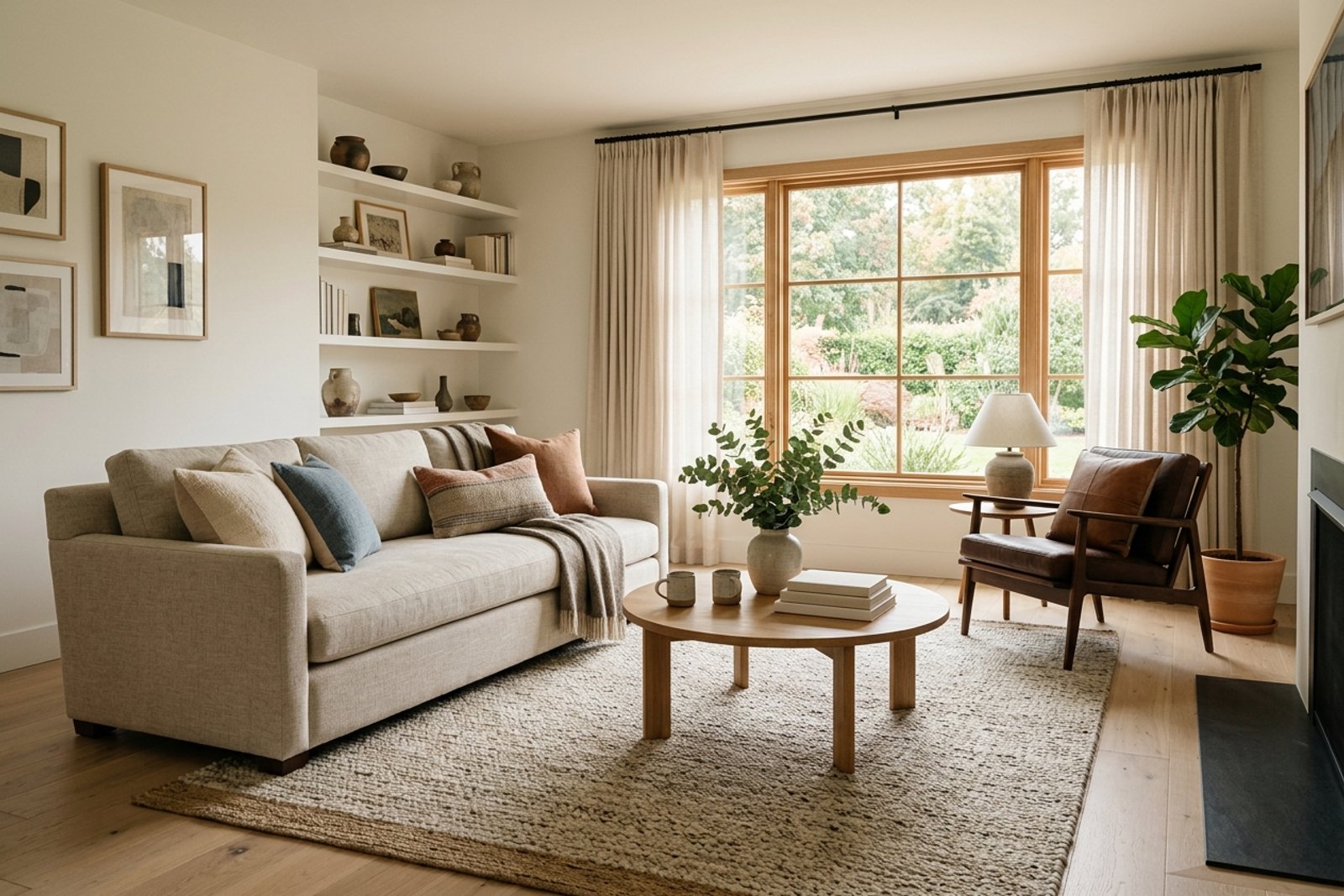
A relaxing living room should make the best seat obvious. Pick one primary sitting position, usually the sofa, and give that seat a clear view, a reachable surface, a soft landing underfoot, and no traffic cutting through it. The body relaxes faster when the room gives simple instructions.
Start with the sofa. It should face the room's main purpose, not sit halfway between three purposes. If the television is the honest evening activity, center the seating around it without apology. If conversation matters more, let the seats face each other. Keep 16 to 18 inches between sofa and coffee table, and leave at least 30 inches for a walkway beside the seating zone. A living room that makes people dodge furniture will not feel restful, even with beautiful furniture.
What lighting makes a living room easier to relax in?
Relaxing living room lighting is warm, low, and placed at sitting height. Use 2700K bulbs or warmer instead of relying on one ceiling fixture. Overhead light is efficient for cleaning, but after dinner it keeps every corner visually awake.
A better evening setup uses two or three smaller sources: a table lamp near the sofa, a shaded floor lamp across the room, and a low light in the darkest corner. Put the most used lamp on a switch you can reach from the seat. If the television creates glare, move the lamp beside or behind the viewer, not opposite the screen. The goal is not a dark room. It is a room where your eyes stop bracing.
Why does my living room make me feel overstimulated?
A living room feels overstimulating when too many small things compete at the same volume. Open shelves, visible cords, remote controls, picture frames, and charging stations are each harmless on their own. Together, they keep the eye moving. That movement is why a clean room can still feel loud.
Lower the count before adding anything. Clear the coffee table to one tray, one book stack, and one useful object. Put remotes in a drawer and hide cords so no wire crosses open floor. Close one open storage area with doors, lids, or a fabric panel. Then give the eye one larger anchor, such as a single piece of art over the sofa. A room does not need to be minimal to feel calm. It needs fewer loose ends in the main view from the seat.
Can furniture shape make a room feel less relaxing?
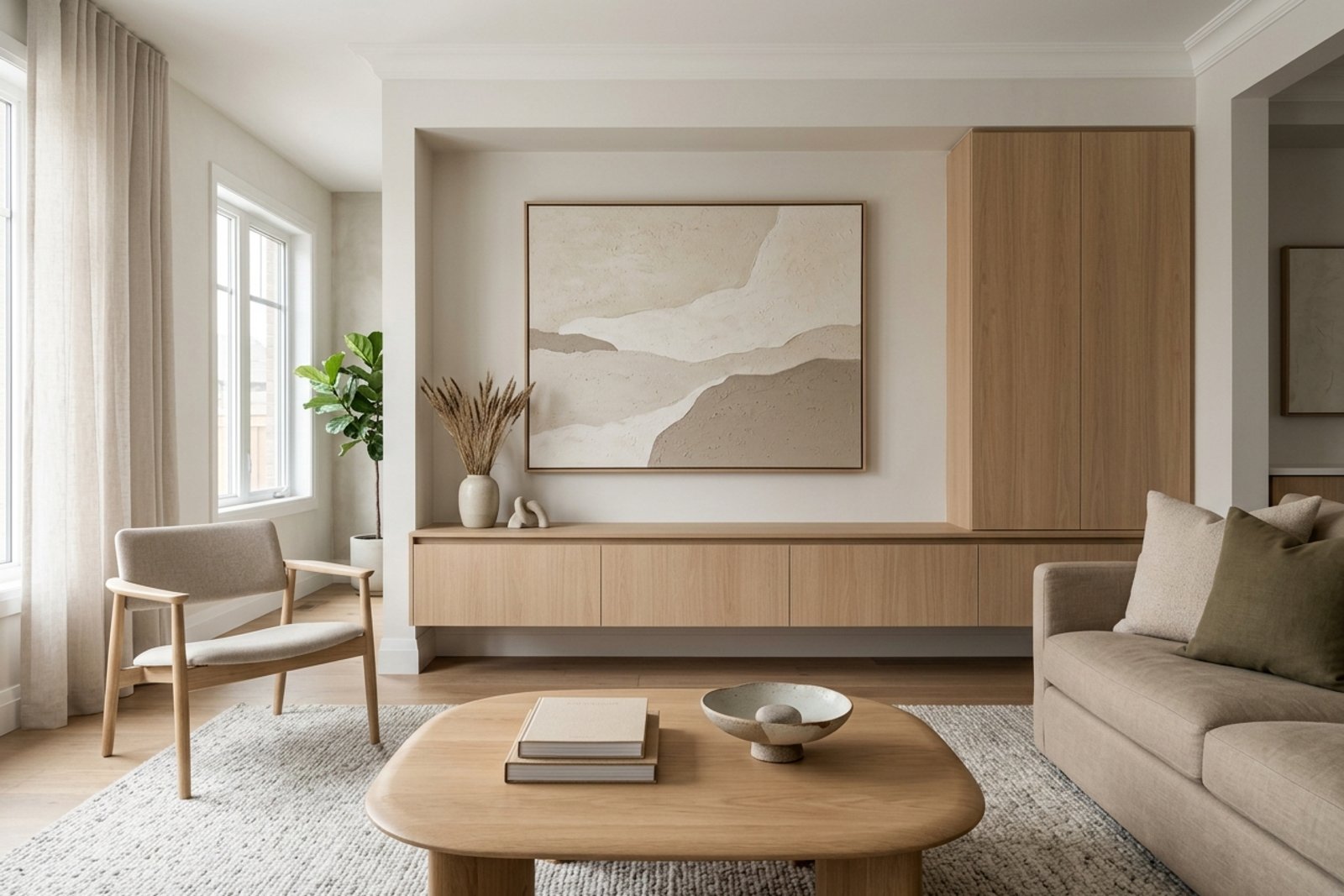
Yes. Furniture shape changes how a living room feels before anyone sits down. Thin metal legs, sharp corners, and hard seating read alert and brittle. One rounded edge, one cushioned surface, and a few tactile materials give the body more permission to settle.
You do not need to replace every piece. Start where the body touches the room. Add a rug large enough for the front legs of the sofa and chairs. Choose one round table if every existing piece is rectangular. Add a cushion that supports the lower back, and bring in one warm material such as wood, linen, or wool. The room needs contrast: enough structure to feel ordered, enough give to feel lived in.
What should you see from the sofa?
From the sofa, you should see the room's calmest story, not its task list. Sit where you normally sit and look straight ahead. If the first view is a laundry basket, tangled cable, or crowded shelf, the room is asking you to process work instead of rest. That view matters more than a styled corner nobody sees from the seat.
Edit the view in layers. First remove anything that belongs to a different room job: bills, work bags, exercise gear, half finished projects. Then simplify the biggest wall in view. One large artwork or a clean media console usually relaxes the room more than a gallery of small pieces. Last, check contrast. If every object in view is black on white, your eye keeps jumping. Lowering contrast is often quieter than removing color.
What is the fastest living room relaxation check tonight?
Do the ten minute version before you shop:
- Sit in your normal seat and name the first three things your eye lands on.
- Remove one task object from that view.
- Clear the coffee table down to three useful or beautiful things.
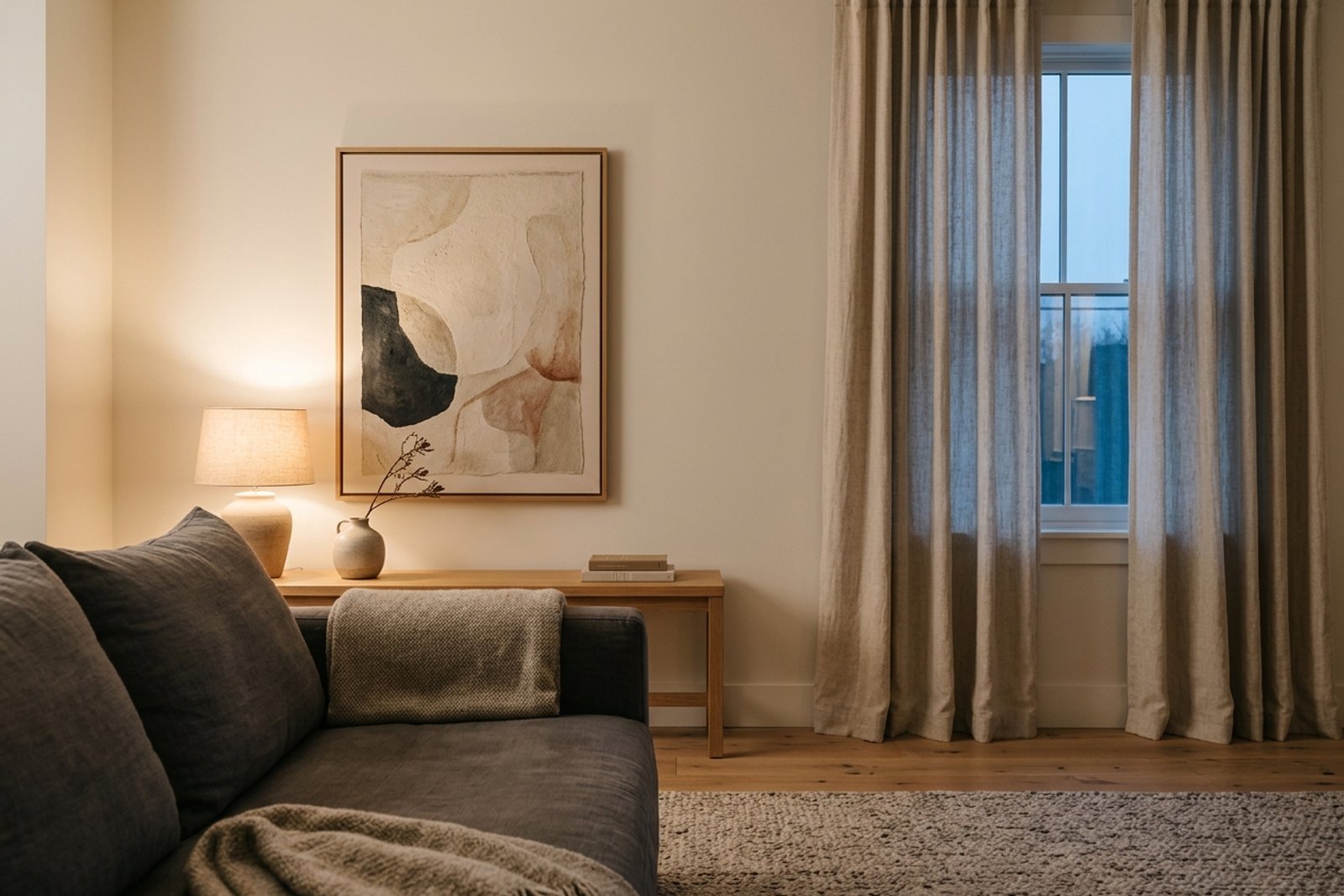
- Turn off the overhead light and use one warm lamp near the seat.
- Move the side table, tray, or ottoman so you can set down a drink without leaning.
- Pull one soft texture into contact with your body, such as a rug underfoot or a cushion behind your back.
- Walk the path from the doorway to the seat. If you turn sideways, move one piece.
The quick check works because relaxation is usually blocked by friction, not by missing style. If the room becomes easier to enter, see, touch, and use, your body notices before your design vocabulary catches up.
A relaxing living room is rarely the most dramatic room. It is the one that stops making small demands. That can be hard to diagnose when you live there, because the friction becomes familiar. Archie looks at a photo as a fresh room and names which signal is loudest: layout, light, visual load, texture, or the view from the sofa.
Matt Jang has walked through living rooms that looked finished in listing photos and still made people perch instead of settle. The fix was usually one boring adjustment: move the seat, lower the lamp, quiet the view, or put the drink within reach.
Ask Archie why your living room feels tense
Send Archie a photo of the room you want to relax in. Archie reads the layout, lighting, sight lines, surfaces, and visual noise, then names the smallest change that will make the room feel easier to use.
Diagnose my living room with ArchieRelated Articles

How to Cool a Living Room Without AC
A living room cools down faster when you block sun early, move air by time of day, and remove heat holding decor. Use this practical summer plan before buying another fan.

Why Does My Room Feel Dark?
A dark room is usually losing light, not starved of it. Daylight gets blocked before it enters, surfaces absorb it, nothing bounces it deeper, and lamps only light the center. Fix the four light-loss points, in order, starting with the free one.

Why Does My Room Feel Cluttered When It's Clean?
A room can be spotless and still feel busy, because tidy is about mess and calm is about visual load. Four moves lower the load: give the eye one place to land, cut the visible object count, close the open loops, and tighten the color field.