Why Does My Apartment Still Feel Like a Rental?
Your apartment still feels like a rental because furniture never signals ownership. Five lease safe marks make a decorated space finally read as yours.
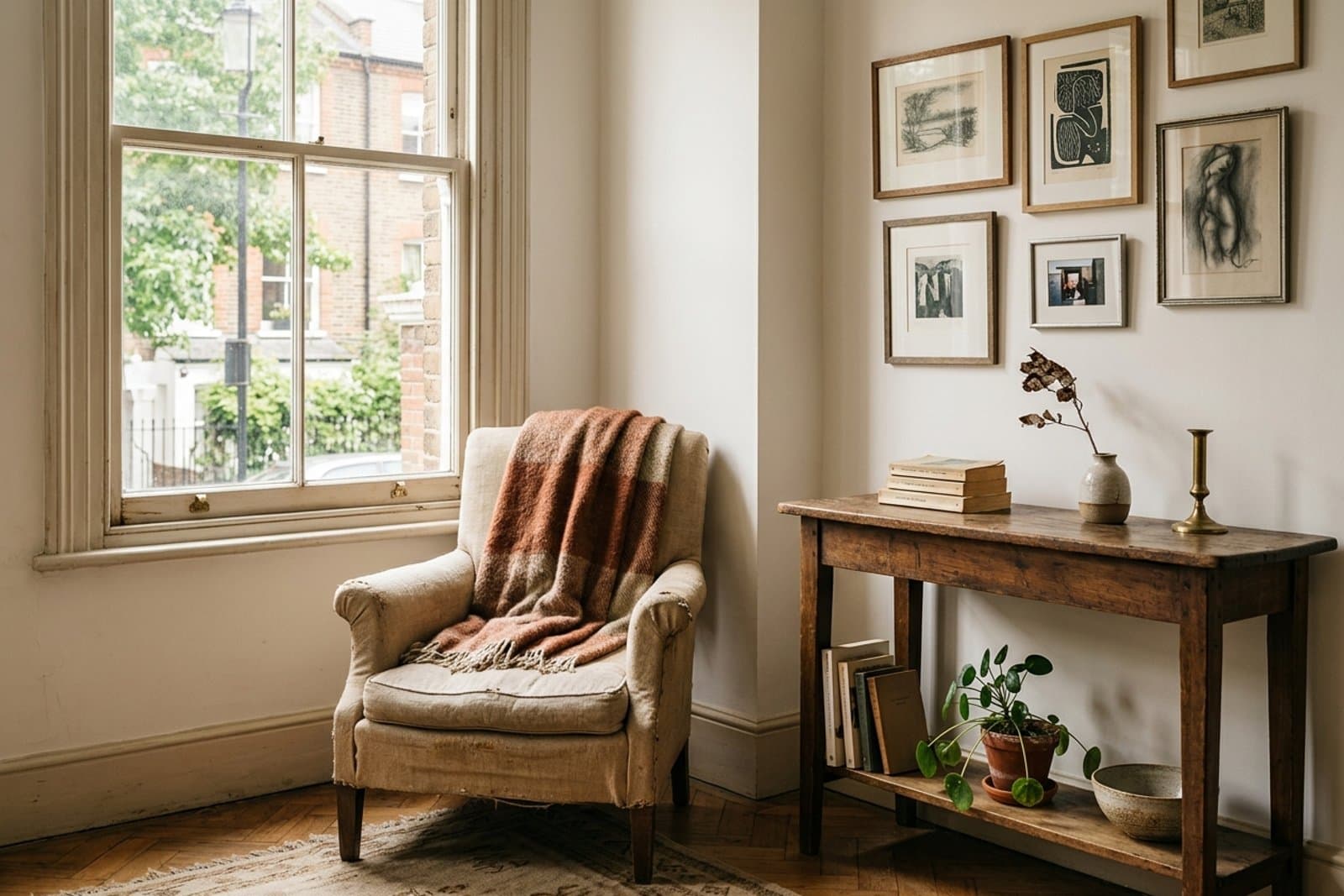
Your apartment can be fully furnished, decorated, hung with art, and still feel like you are staying somewhere temporary. That gap has nothing to do with what you bought. It comes from a set of specific marks a resident adds without thinking, marks a landlord unit is built to withhold, and furniture alone never supplies them on its own.
This is for the renter who has already decorated and still feels like a guest in their own place. If your rooms still have open floor space or furniture that never quite settled, the fix is structural, not personal, see why an apartment feels unfinished instead. If everything is put away and the room still feels busy, that is a different problem: why a clean room can still feel cluttered.
Why does my apartment still feel like a rental even though I've decorated it?
Because furniture alone never signals ownership, a decorated apartment reads as a rental until it gains the marks only a resident leaves: something chosen on the wall, one aged material, objects on display, and a scent layer. A 2025 Talker Research survey of 2,000 renters for Lemonade found 38 percent would modify a unit even where the lease forbids it.
Builder grade units are designed to read as nobody's in particular: matched finishes, blank walls, closed storage, so the unit shows well to the next tenant too. Decorating adds objects into that shell without changing the shell underneath, which is why a fully furnished place can still feel staged. What reads as lived in are the marks a builder finish is built to withhold: a wall you chose instead of bare space, one material with texture or age instead of everything uniformly new, personal objects left out instead of stored away, and a scent or sound layer a hotel room never gets. None of them are furniture, and no amount of it stands in for them. Add the missing marks and the same pieces you already own stop looking temporary.
1. Bare walls are the clearest "not mine" signal
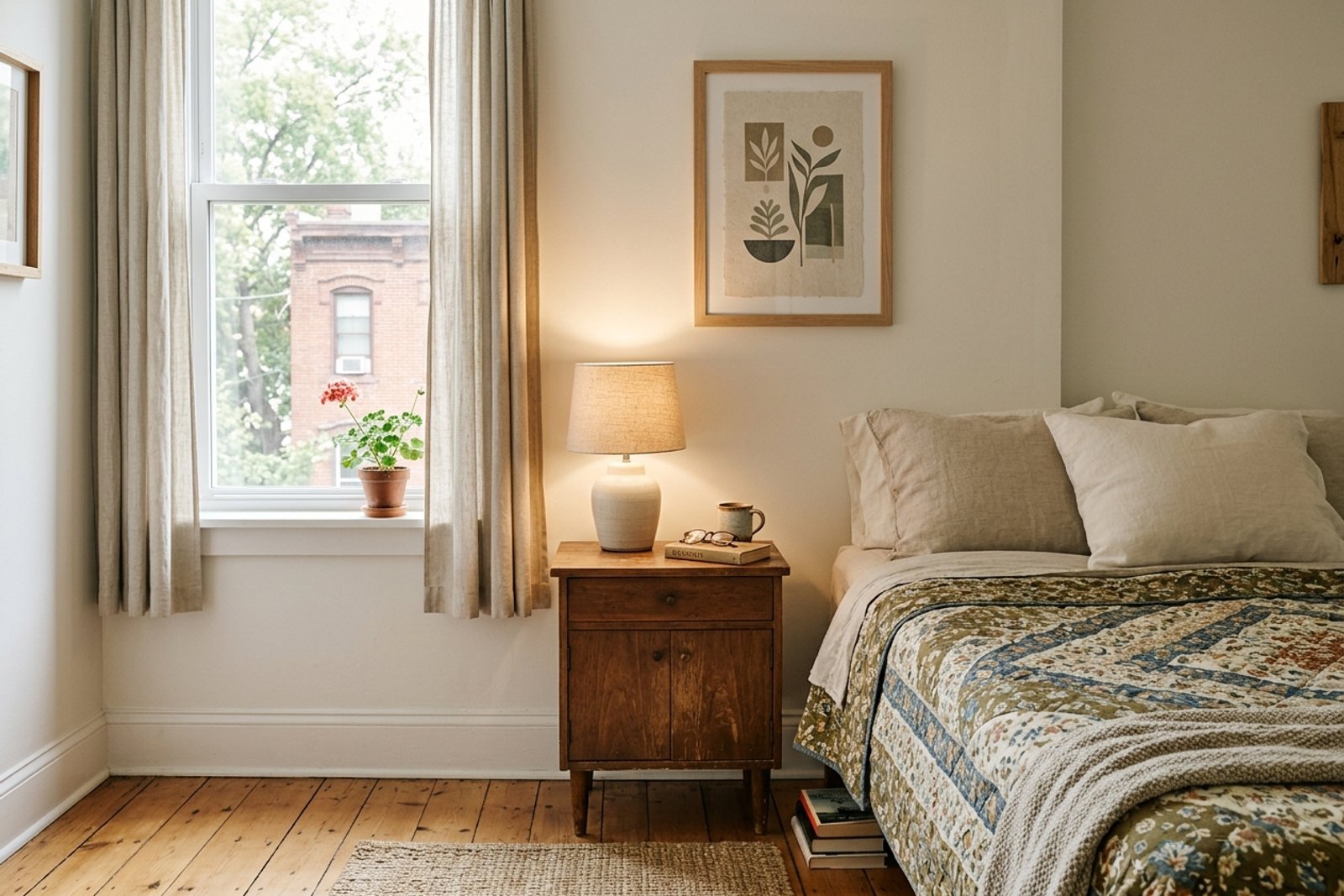
A landlord leaves walls blank on purpose, because blank shows well to anyone who tours the unit next. The moment you walk into a place and cannot find a single mark that was chosen on purpose, your brain reads "this could be anyone's," and that reading holds even after the furniture goes in around it.
The fix does not need a drilled hole. Rated strips like 3M Command hold framed art up to 16 pounds without a mark, a tension rod hangs a curtain or a small floating shelf with no hardware at all, and removable wallpaper covers a full accent wall without touching the lease. Treat this as an investment in the room rather than an afterthought: three or four pieces you chose on purpose, hung at eye level near where you sit, do more for the "mine" feeling than anything else on this list. The studio apartment guide covers the same lease safe hanging options in more depth if you are working with a single open room.
2. Matching, unworn finishes read as staged
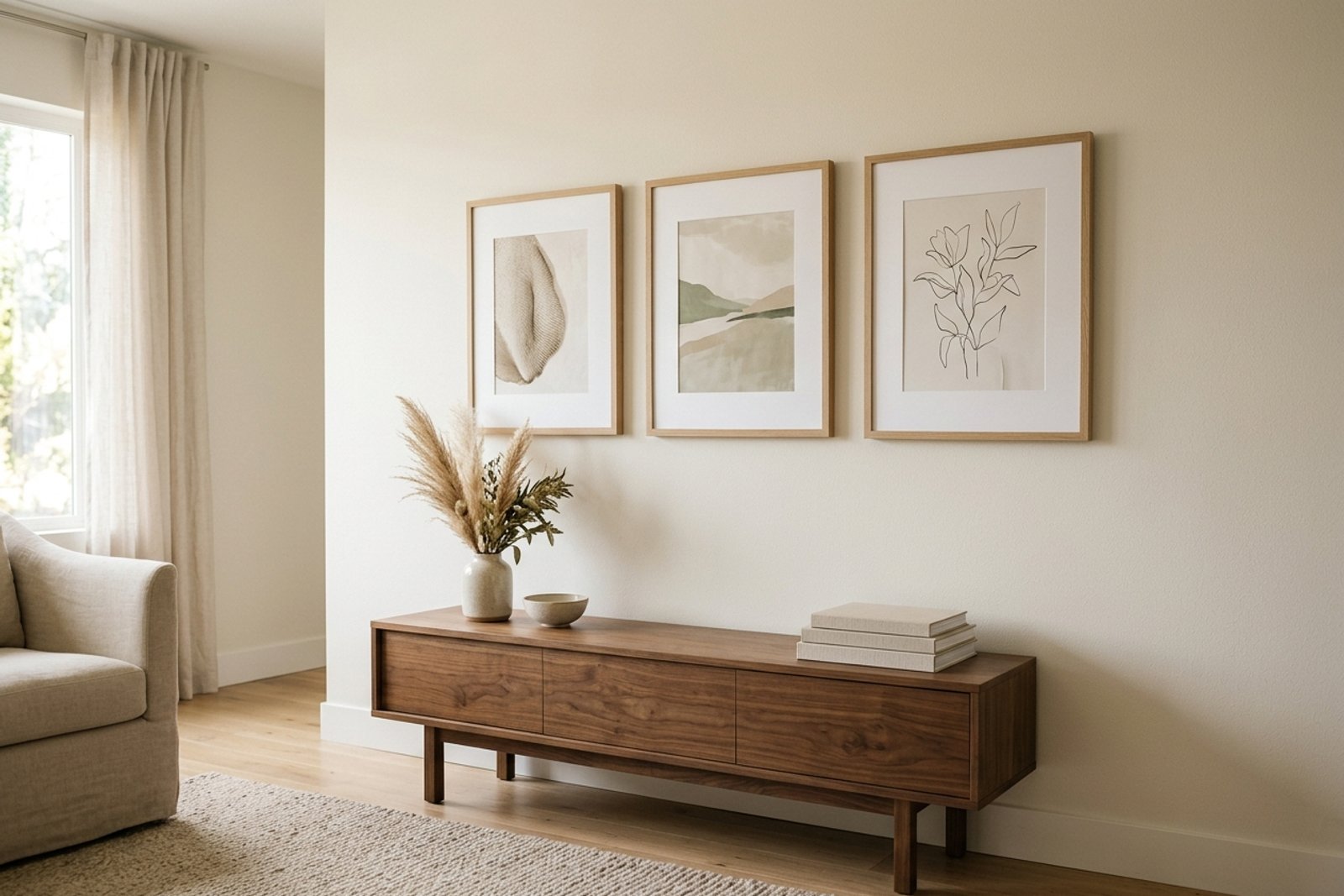
A furniture set bought all at once, in one finish, at one moment, tends to look like a showroom, because that is exactly how showrooms get built: matched pieces, nothing carrying any history. It photographs fine and still reads as temporary, since nothing in the room shows it has lived through anything at all.
The fix is one deliberate piece with real age, not a full redo. Bring in a flea market side table, a rug with a worn or vintage feel, a lamp with a patina finish instead of polished chrome. It does not need to dominate the room, it needs to break the uniformity, the same layering move behind a room that reads deep rather than flat. One aged piece against several new ones reads as considered. Zero aged pieces reads as unpacked, not decorated.
3. Nothing on display means no story
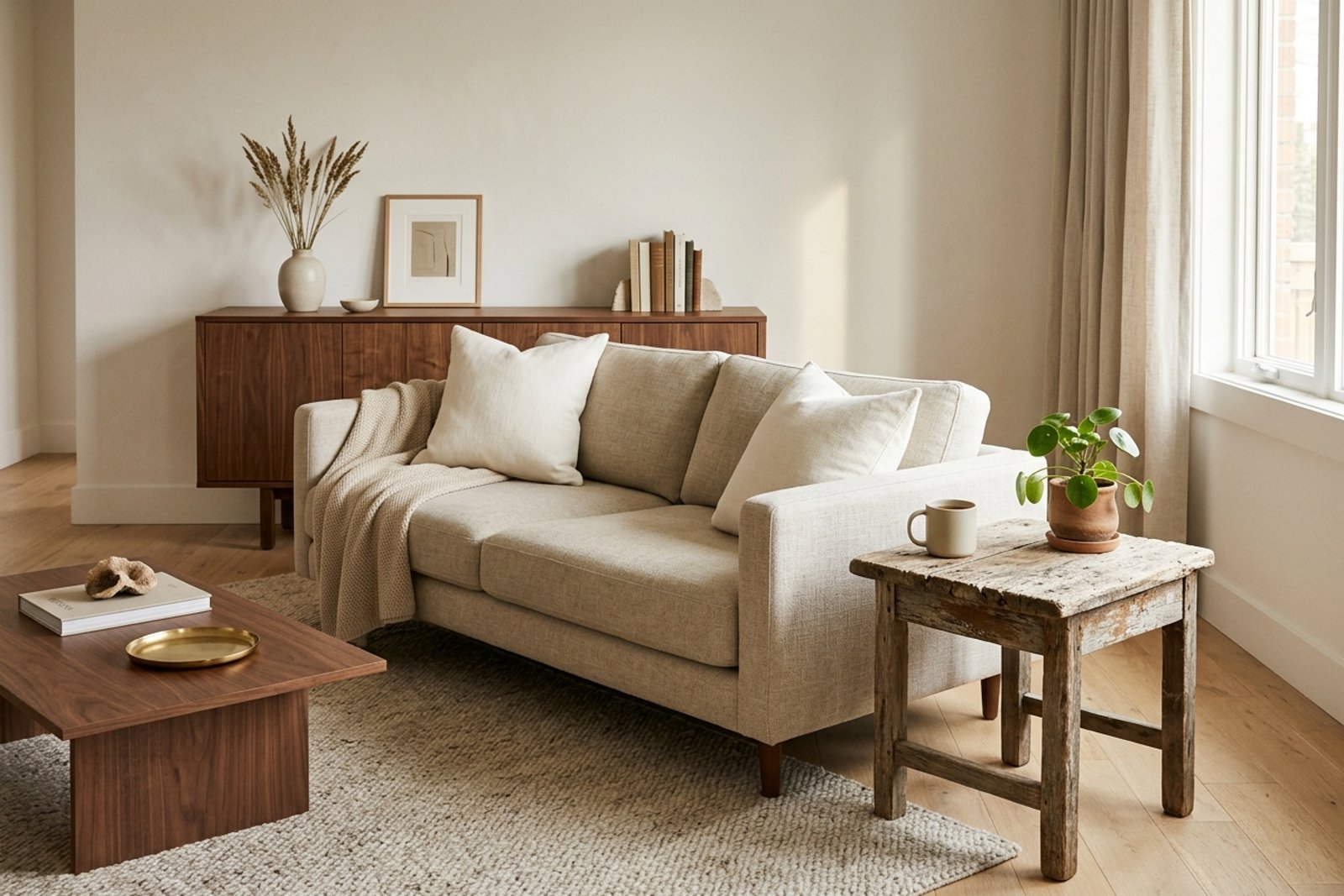
Closed storage is efficient, and it is also invisible. A shelf of books turned spine out, a stack of records, a row of the ceramics you collected: those are the objects that tell a visitor, or your own brain, that a specific person with specific taste lives here. Put everything away and the room stays anonymous no matter how full the closets are behind it.
You do not need many objects, five to seven with an actual reason you own them beats twenty picked only for color. Give them one shelf or one console top rather than scattering them across every surface, spacing is what makes a small group read as chosen instead of just present. This is the fastest fix on the list to start tonight, since you likely already own the objects, they are just packed away in a box.
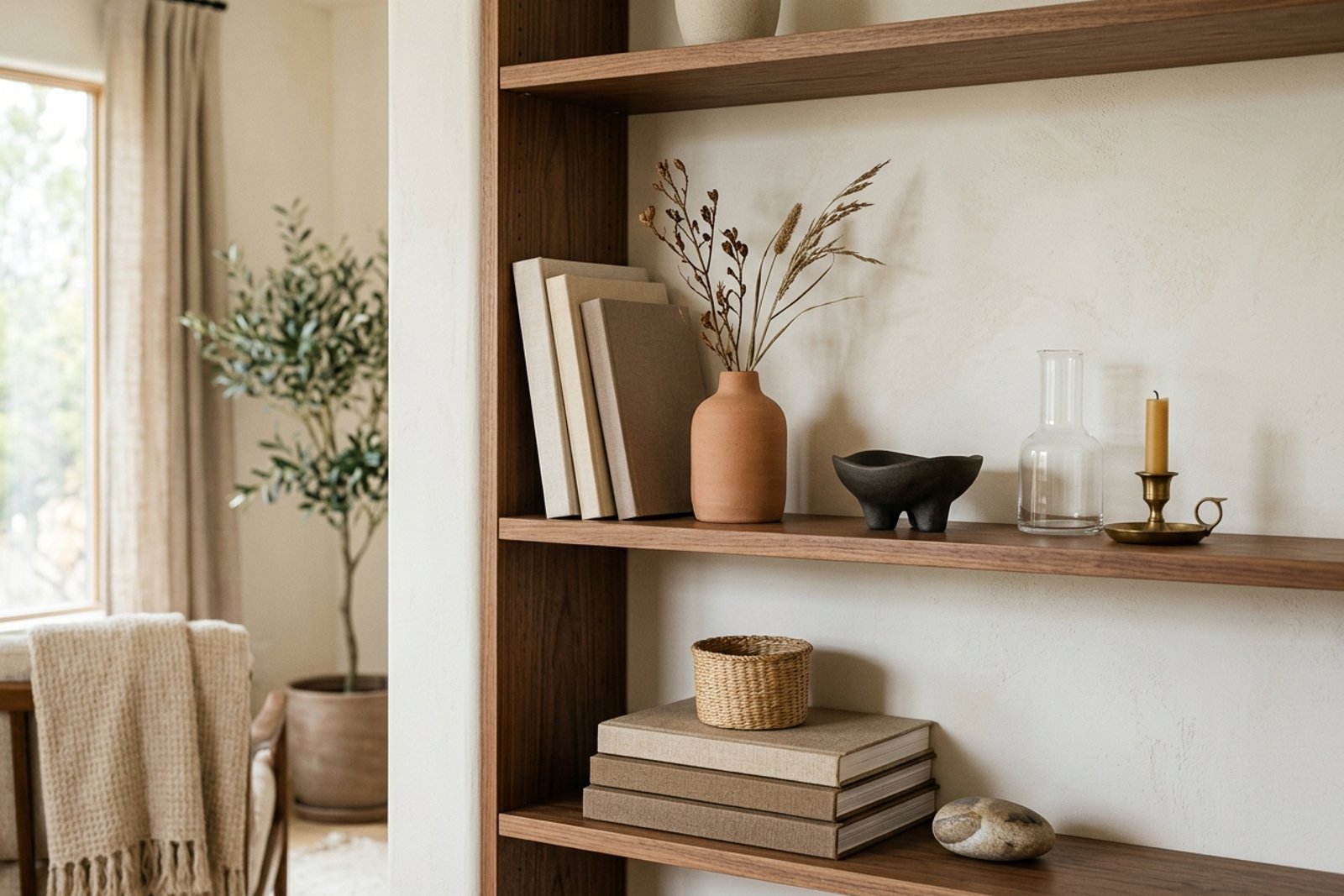
The question I ask before anything goes on the shelf
If a stranger walked through, what could they guess about you that would be true? I put this to homeowners who feel like guests in their own space, because a home works like a self portrait, and a rental stops feeling rented the moment it starts answering that question. Framed prints chosen because they were safe answer nothing. The map of a city you lived in, the spines of books you actually finished, the bowl you use every morning: those answer it. When I help residential clients edit a space, we remove the objects that could belong to anyone before we add a single new thing. Try that order here. Subtracting the anonymous does as much as any purchase on this list.
4. No sensory layer means the room still reads like a hotel
Everything covered so far is visual. A hotel room can be visually finished and still feel like a hotel room, because it has no smell, no sound, and nothing soft on it that is yours. That gap is easy to miss because it never shows up in a photo, only in the room itself once you are standing in it.
Two additions cover most of it. Pick one consistent scent, a candle or a diffuser you return to every time, so the apartment develops a signature instead of smelling like nothing. Then add one textile with real texture against your skin: a wool throw, or a rug you walk on barefoot instead of around, since touch is the sense a purely visual decorating pass always skips over. Neither change touches the walls or the lease. If the floor is cold underfoot, what a rug actually fixes on cold apartment floors covers the pad underneath.
5. The temporary mindset feeds itself
Renters delay unpacking, avoid a single wall mark even where the lease allows it, and describe their own furniture as a placeholder "until I move somewhere real." That posture is not caused by the lease length, it is a choice, and it is the one item on this list that costs nothing and still changes everything else about the room. A studio signed for one year and a house owned for ten can both be furnished under the same temporary logic, and the one year lease will feel worse for it every single day that posture holds.
Pick one change from the four sections above and make it in your first week in a space, not your last. A resident who commits early gets a home for however long they stay. A resident who keeps waiting for "the real place" gets a waiting room instead, even after five years in it.
Which ownership signal should I fix first?
Walls and displayed objects move the needle fastest, both are visible within five seconds of walking in and neither needs a special trip since you likely already own what section 3 asks for. The sensory layer is the smallest single addition and the quickest to notice, one candle lit tonight changes how the room feels by evening. Matching, unworn finishes is the slowest fix since it usually means waiting for the right secondhand piece to turn up, but it is the one that ages a room instead of just filling it further.
None of the five require a landlord's permission or touch a security deposit. They require deciding the apartment is not a placeholder, starting now instead of after the next move.
Frequently asked questions
How long until a new apartment feels like home?
There is no fixed timeline, and waiting on one is part of the problem. A unit starts reading as home the week you add the first resident mark, not after a set number of months. Renters who hang something and set objects out in week one settle in far sooner than those who leave boxes packed for "the real place."
How do I make a rental feel like home without losing my deposit?
Every change in this guide is lease safe and reversible. Command strips rated to 16 pounds hang framed art with no holes, a tension rod carries a curtain or a shelf with no hardware, and removable wallpaper peels off clean at move out. Add displayed objects and one consistent scent, and you have touched neither the walls nor the deposit. In the kitchen, renter friendly backsplash options follow the same peel off rule.
What is the 3-5-7 rule in decorating?
The 3-5-7 rule groups objects in odd numbers, usually three, five, or seven, because an odd cluster reads as arranged while an even one reads as matched. It is a useful frame for section 3 here: a shelf of five books and ceramics you chose looks considered, where a tidy symmetrical pair reads like store display.
The Noticer
For thoughtful people who notice spaces.
What did you notice?
Did something in this story make you see your own space differently?
Ask Archie which ownership signal your space is missing
Send Archie a photo of the room that still feels like a rental. Archie names which signal is missing, wall marks, mixed materials, a personal display, or a sensory layer, and gives you the one lease safe change that makes the room read as yours.
Make my room mine with ArchieAdvertisement. Archie is made by STUDIO DID IT, the studio that publishes Spatia.
Related Articles
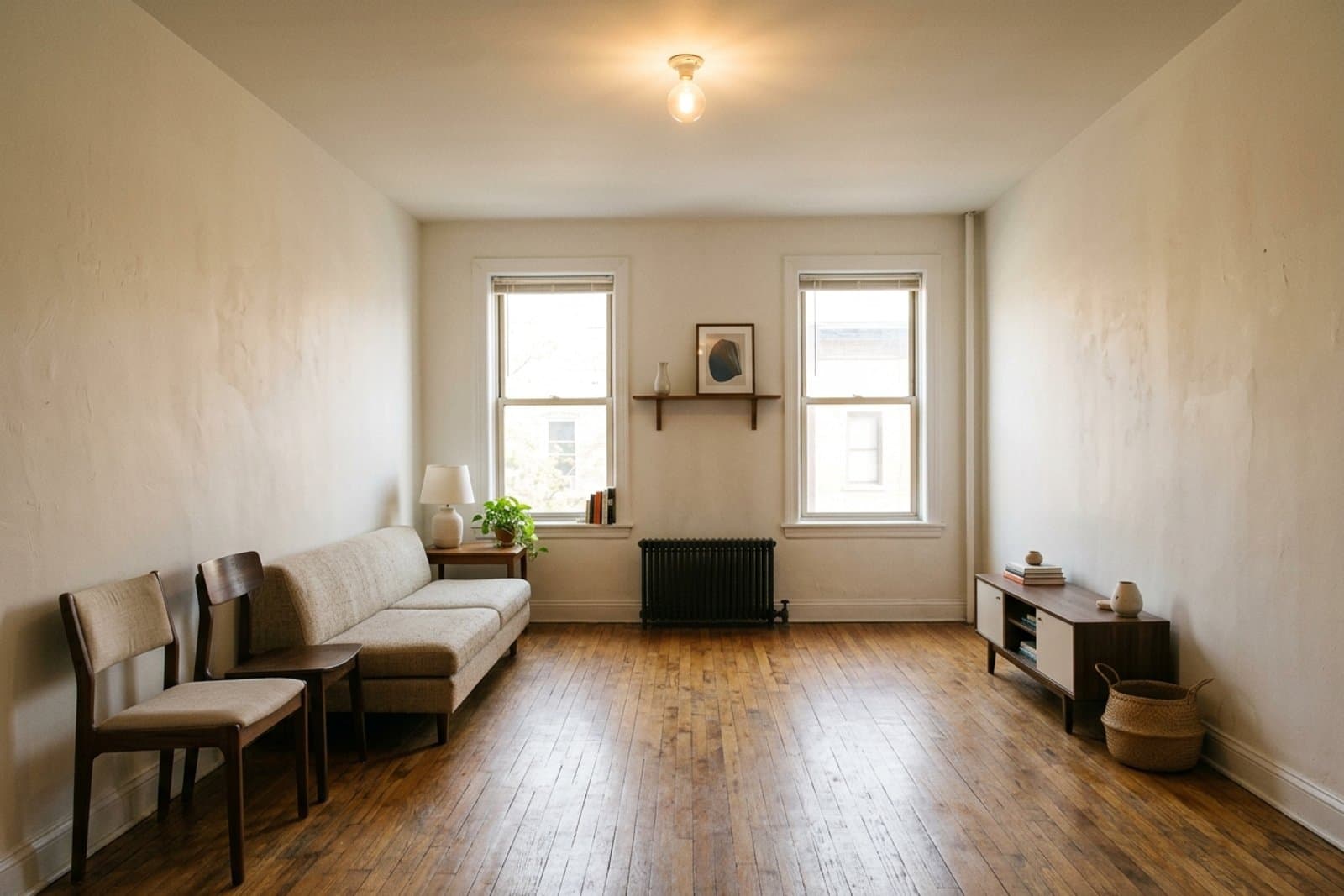
Why Does My Apartment Feel Unfinished? (5 Fixes)
Your apartment feels unfinished because a few foundational pieces were chosen wrong, not because something is missing. Fix these 5 and the room settles.
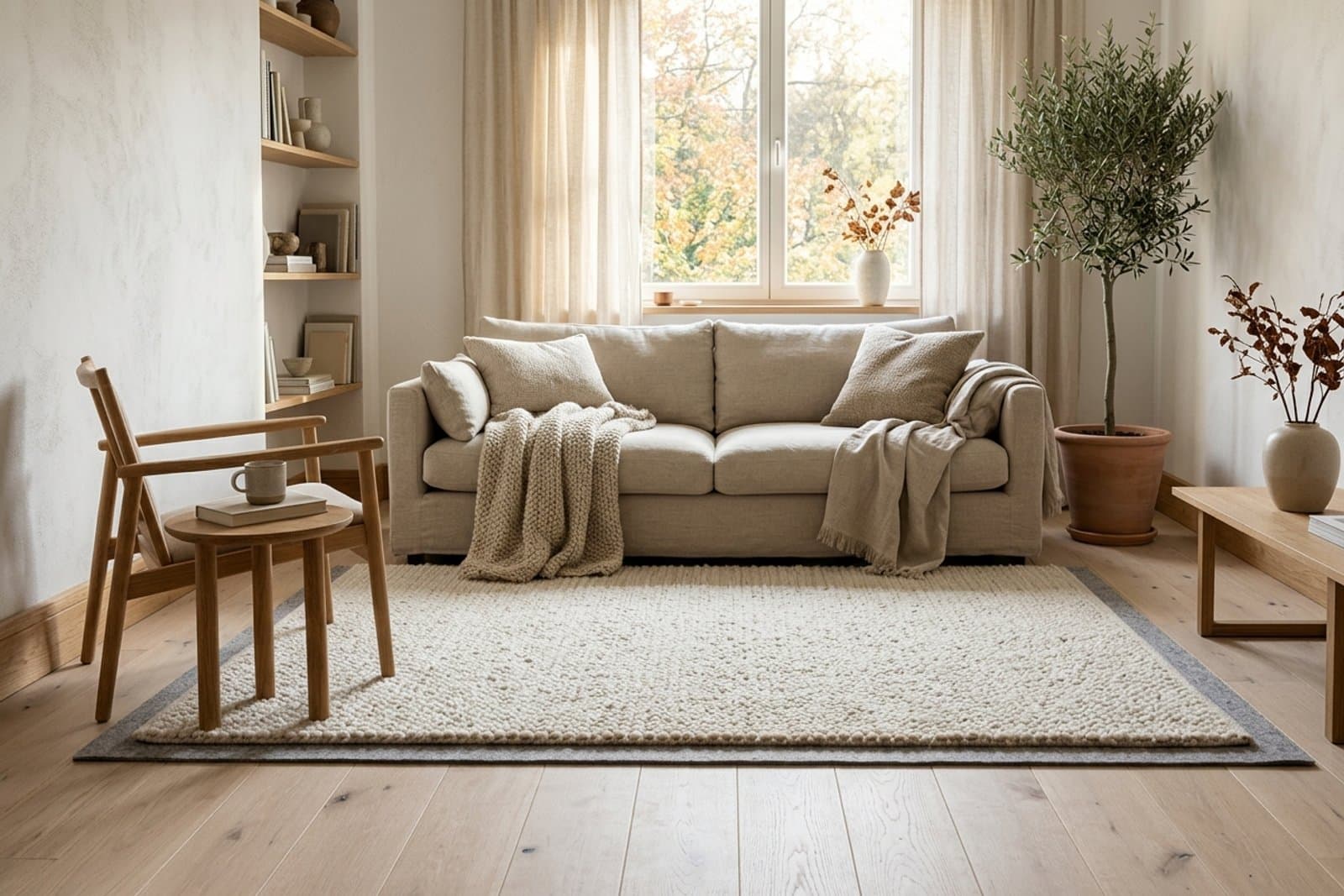
Cold Floors in an Apartment: What a Rug Actually Fixes
Cold floors in an apartment are a surface problem, not a thermostat problem. See the tested R values, and why the pad under the rug does most of the work.
Why Does My Room Feel Stuffy? (5 Real Causes)
Stuffy air comes down to stale air, trapped moisture, and no exchange path, and temperature barely enters into it. See the 5 causes and the 5 minute winter fix.