How to Brighten a Dark Room Without Painting
Brighten a dark room without painting by clearing the light path, switching heavy textiles, adding mirror bounce, and layering warmer lamps before you spend on a repaint.

How to Brighten a Dark Room Without Painting
To brighten a dark room without painting, fix the light path before you decorate. Clear the window glass, move tall furniture out of the daylight path, switch heavy curtains for light filtered panels, add one large mirror where it catches the window, and use lamps at three heights instead of one ceiling bulb. Those changes usually add more usable brightness than another white accessory.
The target is not a stark white room. It is a room where daylight can travel, surfaces stop absorbing every ray, and evening light reaches the corners. Start with the free moves, then add textiles and lamps only where the room is still losing light. If one change helps most, repeat that same principle in the next shadowed spot instead of buying random bright accessories. Let the room prove what it needs next.
This guide is for renters and homeowners who cannot repaint right now, or who want to test the room before buying gallons. If the room feels dark for deeper reasons, start with why your room feels dark. If paint is on the table, compare best paint colors for north facing rooms, bedroom lighting, and why a room feels flat before you spend.
What should you fix first in a dark room?
Fix the window path first. A dark room often has enough daylight outside, but loses it at the glass, curtain stack, furniture line, or the first dark surface inside the room. Clean the glass, pull large furniture six to twelve inches away from the window line, and open curtains so the fabric rests on the wall, not the pane.
Then watch where the light stops. If it dies at the sofa, coffee table, or dark rug, you have a bounce problem, not a window problem. A pale tray, light rug, glass table, or mirror can move that light deeper before you buy anything larger.
Do mirrors really brighten a dark room?
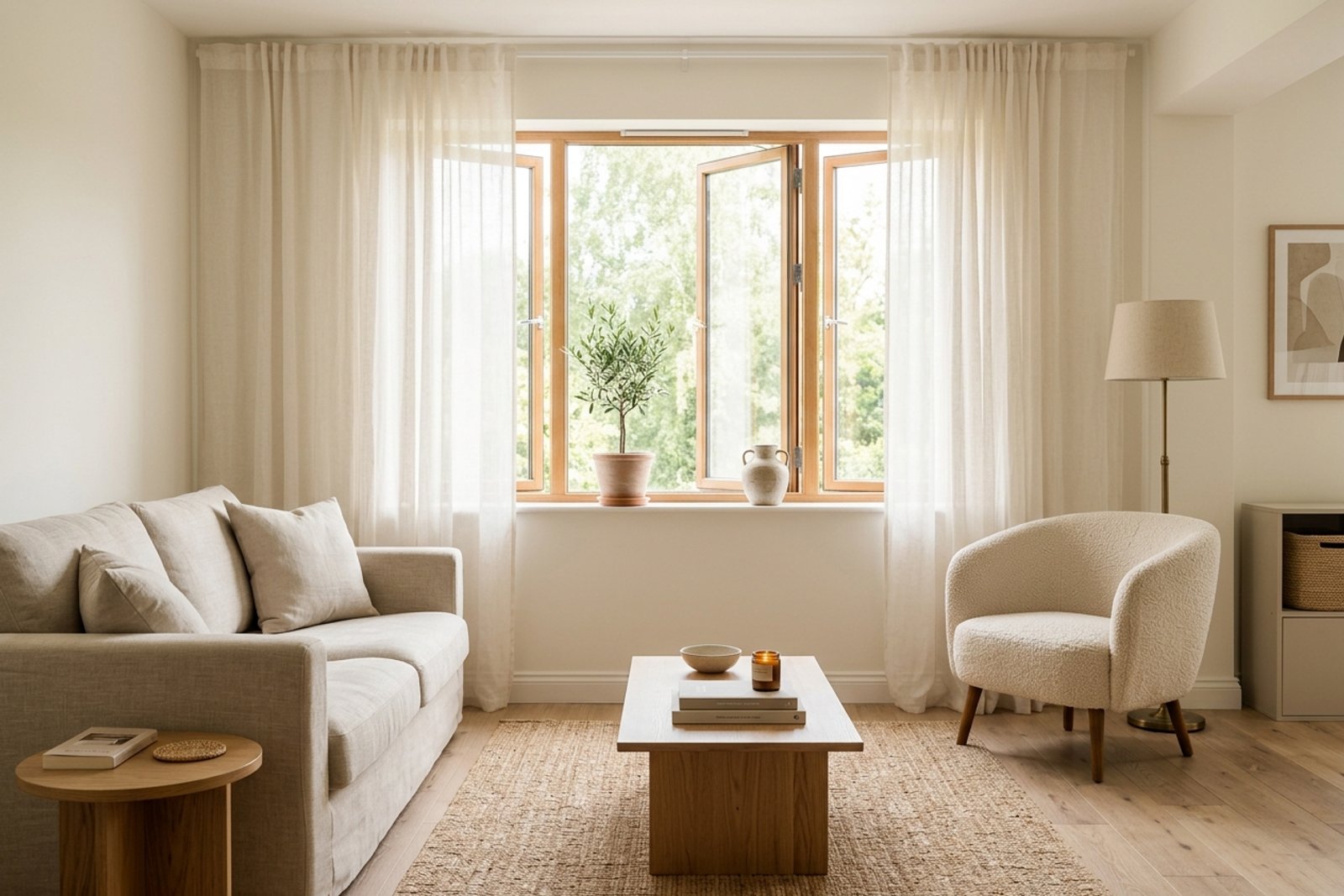
Yes, if the mirror catches light instead of reflecting another dark wall. Put one large mirror across from, beside, or at a shallow angle to the main window. The mirror should show the window, sky, a pale wall, or a lamp when you stand in front of it. If it reflects a black TV, a bookcase, or a hallway, it may make the room feel busier instead of brighter.
Scale matters. One mirror around 30 to 40 inches wide usually beats a small gallery of reflective pieces. The room reads calmer, and the eye sees one clear light source instead of scattered glints.
Which curtains brighten a room without repainting?
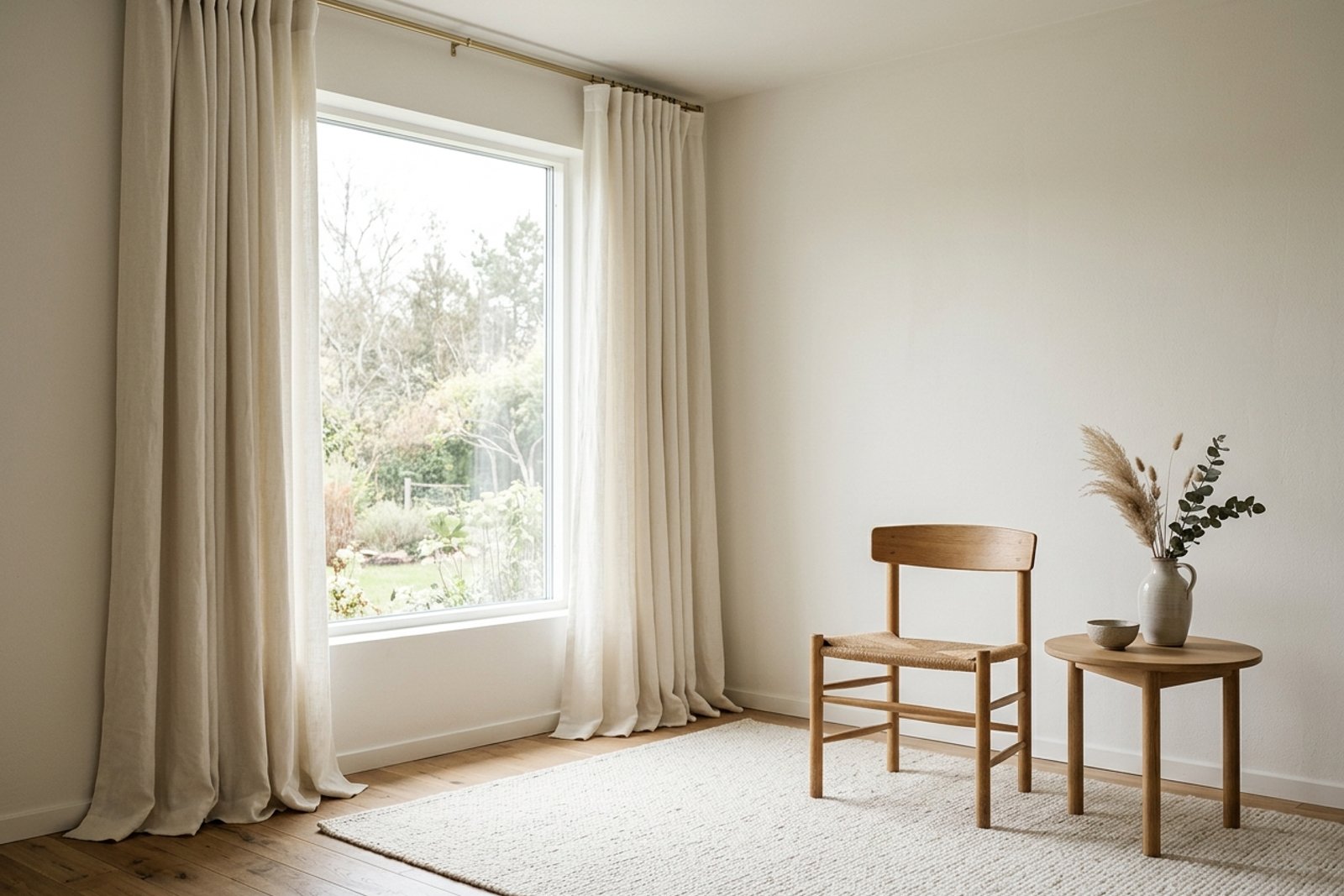
Use curtains that filter light, not curtains that swallow it. White or warm ivory sheers, linen blend panels, and cellular shades in a pale color keep privacy while letting daylight spread. Heavy velvet, dark blackout panels, and curtains hung too narrow make the room dim even when they are open.
Hang the rod high and wide: 4 to 6 inches above the window and 6 to 10 inches beyond each side when space allows. That lets the open curtain stack sit on the wall. The extra glass exposure can feel like you made the window larger without touching the lease or the trim.
What furniture and textiles make a room feel brighter?
Start with the biggest dark blocks below eye level. A charcoal rug, espresso coffee table, heavy media console, or navy slipcovered sofa can absorb more light than the wall color. You do not have to replace everything. Cover the dark center of the room first.
Useful swaps:
- A pale rug over dark flooring.
- A linen throw over the back of a dark sofa.
- A glass, oak, or travertine tray on a dark table.
- Warm white pillows with texture, not glossy shine.
- A lighter lampshade on the lamp you already own.
The point is to create landing places for light. Three pale surfaces placed in the light path can do more than ten small white accessories scattered around the room.
How do you light a dark room at night?
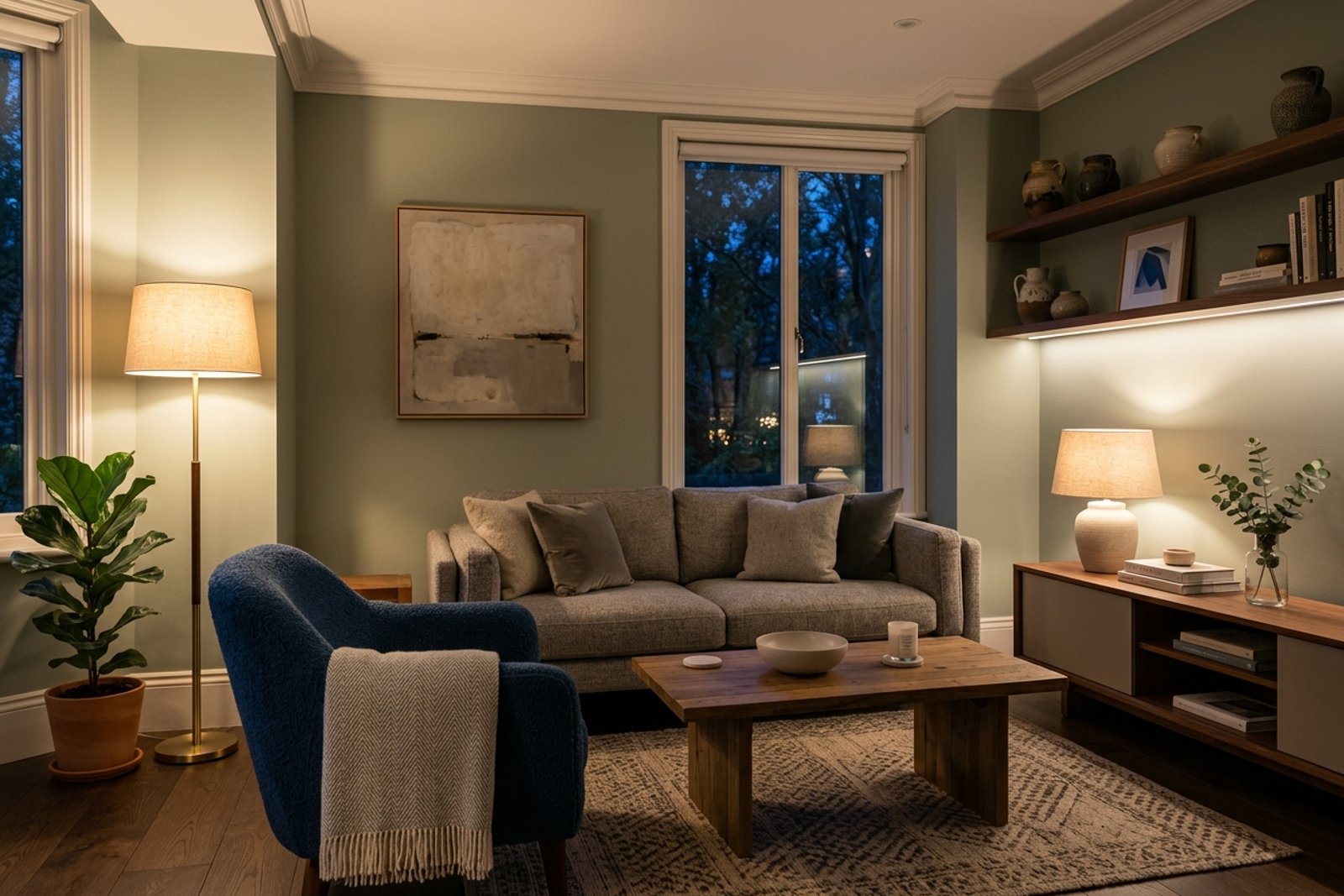
Use three heights of warm light: one high source, one seated source, and one low or corner source. A single ceiling fixture makes the center bright and the edges gloomy, which is why the room can feel dark even when the bulb is strong. Add a floor lamp near the darkest corner, a table lamp beside the main seat, and a low lamp on a shelf or console.
Bulb temperature matters. Start with 2700K warm white bulbs for living rooms and bedrooms. If the shade is beige or amber, test one 3000K bulb so the room stays clear rather than orange. Put at least one lamp on a dimmer so brightness can change from dinner to reading to evening rest.
Can plants, art, or accessories help a dark room?
They can help if they lighten the visual weight, but they cannot replace the light plan. Choose art with cream, paper, linen, or pale wood tones when it hangs in a shadowed corner. Use plants with lighter leaves near the window, and keep dense dark plants out of the only daylight path.
Skip shiny clutter. A few reflective materials help, but too many metallic frames, glass objects, and tiny mirrors create sparkle without brightness. If the room already feels visually busy, use our clean but cluttered room guide before adding more.
What is the fastest weekend plan?
Do the room in order. On Friday night, remove anything blocking the window and clean the glass. On Saturday morning, rehang or restyle the curtains so the pane is fully exposed. By Saturday afternoon, place the mirror and pale rug or textile where the daylight stops. On Sunday evening, test the three lamp heights.
Take one photo from the doorway at noon and one after sunset. If the room is brighter in both photos, stop. If daytime improved but night still fails, the lamp plan needs work. If night improved but daytime still feels heavy, the dark floor, sofa, or curtain fabric is probably doing the damage.
The simple rule
Bright rooms are not always rooms with more windows. They are rooms that waste less of the light they have. Before you paint, make the window bigger visually, give daylight something pale to hit, bounce it once with a real mirror, and light the edges after sunset.
If those changes still leave the room dim, then paint is a good next move, not a desperate one. Ask Archie to read the photo first so you know whether the next dollar should go toward curtains, a lamp, a rug, a mirror, or a new wall color.
Written by Matt Jang. Matt diagnoses dark rooms by following the light path from the window to the back wall before looking at paint chips.
See why your room still feels dark
Archie reads your room photo, window direction, furniture layout, and lamp placement so you can brighten the room before spending on paint, furniture, or contractor work.
Brighten my room with ArchieRelated Articles

Why Does My Room Feel Dark?
A dark room is usually losing light, not starved of it. Daylight gets blocked before it enters, surfaces absorb it, nothing bounces it deeper, and lamps only light the center. Fix the four light-loss points, in order, starting with the free one.

Why Does My Living Room Feel Hard to Relax In?
A living room can look finished and still make you feel tense. Check the room for five common stress signals: unclear seating, glare, visual noise, hard edges, and no obvious landing place.

How to Cool a Living Room Without AC
A living room cools down faster when you block sun early, move air by time of day, and remove heat holding decor. Use this practical summer plan before buying another fan.