French Country, Rustic, or Scandinavian? A Quick Guide to Popular Interior Styles Right Now
A clear comparison of French country, rustic, and Scandinavian interior styles: what defines each, how they differ, and how to tell which one fits you.
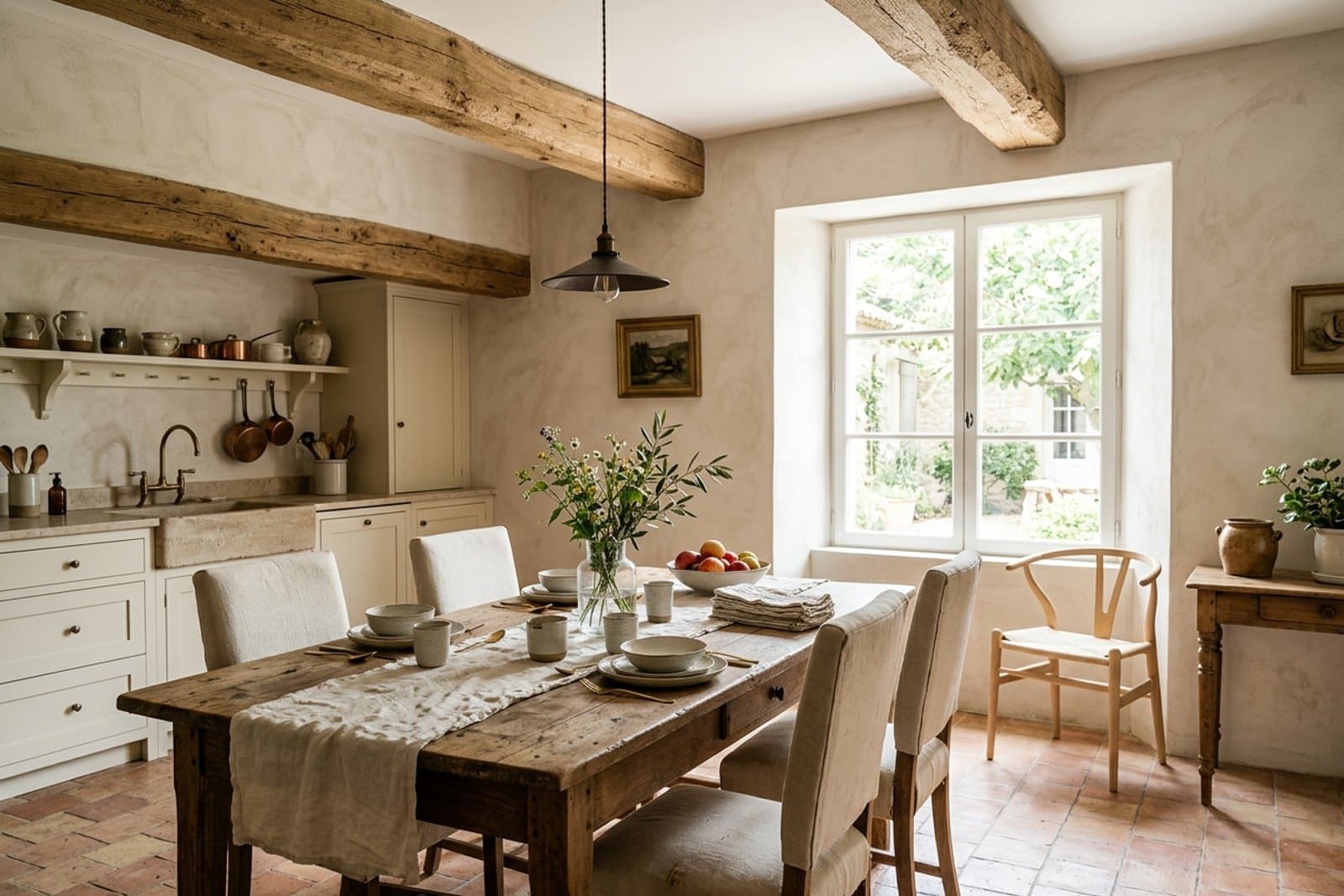
French country, rustic and Scandinavian share a common thread, warmth, natural materials, and a lived in quality, but they arrive at that feeling in very different ways. If you've been drawn to all three in your Pinterest saves and aren't sure which one you're actually chasing, this comparison should help.
The Quick Distinction
- French Country feels romantic and slightly formal, with worn elegance
- Rustic feels rugged and handmade, with visible imperfection
- Scandinavian feels calm and function first, with restraint over ornamentation
French Country: Worn Elegance
Defining Characteristics
Soft, faded color palettes (dusty blues, warm creams, muted florals), curved furniture silhouettes, wrought iron details, and materials that look gently aged rather than brand new. Think a countryside farmhouse in Provence rather than a rustic American cabin.
What's Changed for 2026
The style has shed the roosters, ruffles, and distressed faux finishes of its "shabby chic" era. The 2026 version is quieter and more curated: fewer objects with more history, hand made tile and worn patinas instead of printed patterns everywhere, and a restraint that borrows openly from the quiet luxury playbook. Design press is even pairing it with wabi sabi, the Japanese appreciation of imperfection, which tells you where the energy is: aged surfaces, not decorated ones.

Where It Shines
French country works especially well in dining rooms and kitchens, where its warmth and slight formality create an inviting but polished gathering space.
Common Mistake
Going too matchy. Pairing florals, toile, and gingham in the same room can tip into costume rather than style. One dominant pattern with solid, textured supporting pieces reads more sophisticated than several competing prints.
Rustic: Handmade and Textural
Defining Characteristics
Raw or lightly finished wood, exposed beams or brick, leather, and a color palette drawn from nature: browns, deep greens, and warm neutrals. Rustic celebrates visible material imperfection rather than hiding it.
Where It Shines
Living rooms and entryways benefit most from rustic elements, since the style's textural warmth makes high traffic gathering spaces feel welcoming rather than cold.

Common Mistake
Overdoing raw wood everywhere, which can start to feel heavy or cabin like rather than warm. Balancing rustic wood tones with lighter walls and simpler furniture silhouettes keeps the look from feeling dark.
Scandinavian: Calm and Function First
Defining Characteristics
Light woods (pale oak, birch), soft neutral palettes, minimal ornamentation, and furniture chosen for both form and function. The goal is a room that feels bright, uncluttered, and easy to live in. For a deeper look at how the style works room by room, see our full Scandinavian guide.
Where It Shines
Bedrooms and home offices benefit most, since Scandinavian design's calm, clutter free approach supports rest and focus better than a busier, more layered style would.
Common Mistake
Going so minimal that the room feels cold or unfinished. Scandinavian style relies on texture, a chunky knit throw, a wool rug, natural wood grain, to keep "simple" from tipping into "sparse."
How to Tell Which One You Actually Want
Ask yourself: when you picture the room you want to come home to, is it warm and romantic (French country), warm and rugged (rustic), or calm and bright (Scandinavian)? All three share warmth as a baseline, but the emotional tone each delivers is genuinely different.
If none of the three feels like a clean fit, that's worth paying attention to rather than forcing. Read your own saved images for what repeats rather than what impresses, and if your taste leans cleaner lined than any of these, the modern versus contemporary distinction may be the comparison you actually need.
A label is also a looser commitment than it sounds. In my own residential work I rarely deliver a room that is purely one of these three, because underneath the finishes they agree on the fundamentals: natural materials, warm tones, and surfaces that show their age honestly. A room can lean rustic in its wood tones while borrowing Scandinavian restraint in its palette, or take French country's curved silhouettes on a stricter, quieter material base.
So the question I actually ask clients is narrower than "which style." I ask them to name the two or three specific elements in their saved images that pulled them in: the worn oak, the pale floor, the iron light fixture. People who chase a magazine spread's version of a style end up with a costume. Those two or three elements are what you are really shopping for.
Mistakes to Avoid
- Choosing a style based on trend popularity rather than how it actually feels to live in day to day
- Assuming these styles are mutually exclusive, since most well designed homes borrow from more than one
- Overcommitting to one style's most extreme version (all raw wood, all matching florals, all stark minimalism) rather than a balanced interpretation
- Ignoring your home's existing architecture, which can make a strict style application feel forced
Frequently Asked Questions
Can I mix French country and Scandinavian styles?
Yes. Many homes blend French country's softer color palette and curved furniture with Scandinavian restraint, creating a look sometimes called "French Scandinavian" or "Scandi French."
Is rustic style the same as farmhouse style?
They overlap significantly but aren't identical. Rustic emphasizes raw, natural materials broadly, while farmhouse specifically references American agricultural design history and often includes shiplap, apron sinks, and specific color conventions.
Does Scandinavian design work in a small space?
Yes, often especially well. The style's light color palette and minimal clutter can make small rooms feel more open than a heavier, more layered style would.
Final Takeaway
French country, rustic, and Scandinavian styles all share warmth as a foundation but express it in different ways: romantic, rugged, or calm. Identify which emotional tone you're actually chasing, then borrow freely across the three rather than forcing a strict, single category room.
The Noticer
For thoughtful people who notice spaces.
What did you notice?
Did something in this story make you see your own space differently?
See all three styles in your actual room
Reading about styles only gets you so far. Send Archie a photo of your room and ask for a French country, rustic, or Scandinavian direction, and compare how each one actually sits with your light, your floors, and the furniture you already own.
Compare styles with ArchieAdvertisement. Archie is made by STUDIO DID IT, the studio that publishes Spatia.
Related Articles
Modern vs. Contemporary Interior Design: What's Actually the Difference?
The real difference between modern and contemporary interior design, explained clearly, plus how to tell which one actually matches your taste.

How to Choose a Home Improvement Contractor Without Getting Burned
A practical checklist for vetting a home improvement contractor: licensing, quotes, red flags, and questions to ask before signing anything.

Best Free AI Home Design Tools: A 2026 Comparison
A no hype comparison of free AI home design tools in 2026. See what each type actually does, where the free tier stops, and which one fits your room.