Scandinavian Interior Design: Why It Still Dominates Modern Homes
Scandinavian interior design endures not because it is trendy, but because it solves real problems: poor light, clutter, and how people actually live.

Trends Change. This Does Not.
Scandinavian interior design is a Nordic approach built around light, function, and material honesty rather than decoration. It has stayed relevant for more than seventy years because it solves real problems: dark winters, small homes, and visual clutter. Rooted in the mid twentieth century work of designers like Alvar Aalto and Hans Wegner, it favors natural wood, soft whites, and warm layered lighting over trend driven styling.
Interior styles rise and fade quickly. A look that defined 2018 already feels dated. A palette that ruled last year is on its way out. If you are still working out your own style, our French country, rustic, and Scandinavian comparison maps the differences between this look and its warmer cousins. The Nordic approach is a good place to start, because it holds up longer than the trend cycle.
Scandinavian design has not followed that pattern. It has stayed quietly relevant for more than seventy years, across recessions, design eras, and shifts in how we live.
From an interior architecture perspective, that endurance is structural rather than lucky. Scandinavian design was never a style applied on top of a room; it is a system built around how people actually live.
The Origins: Design Shaped by Environment
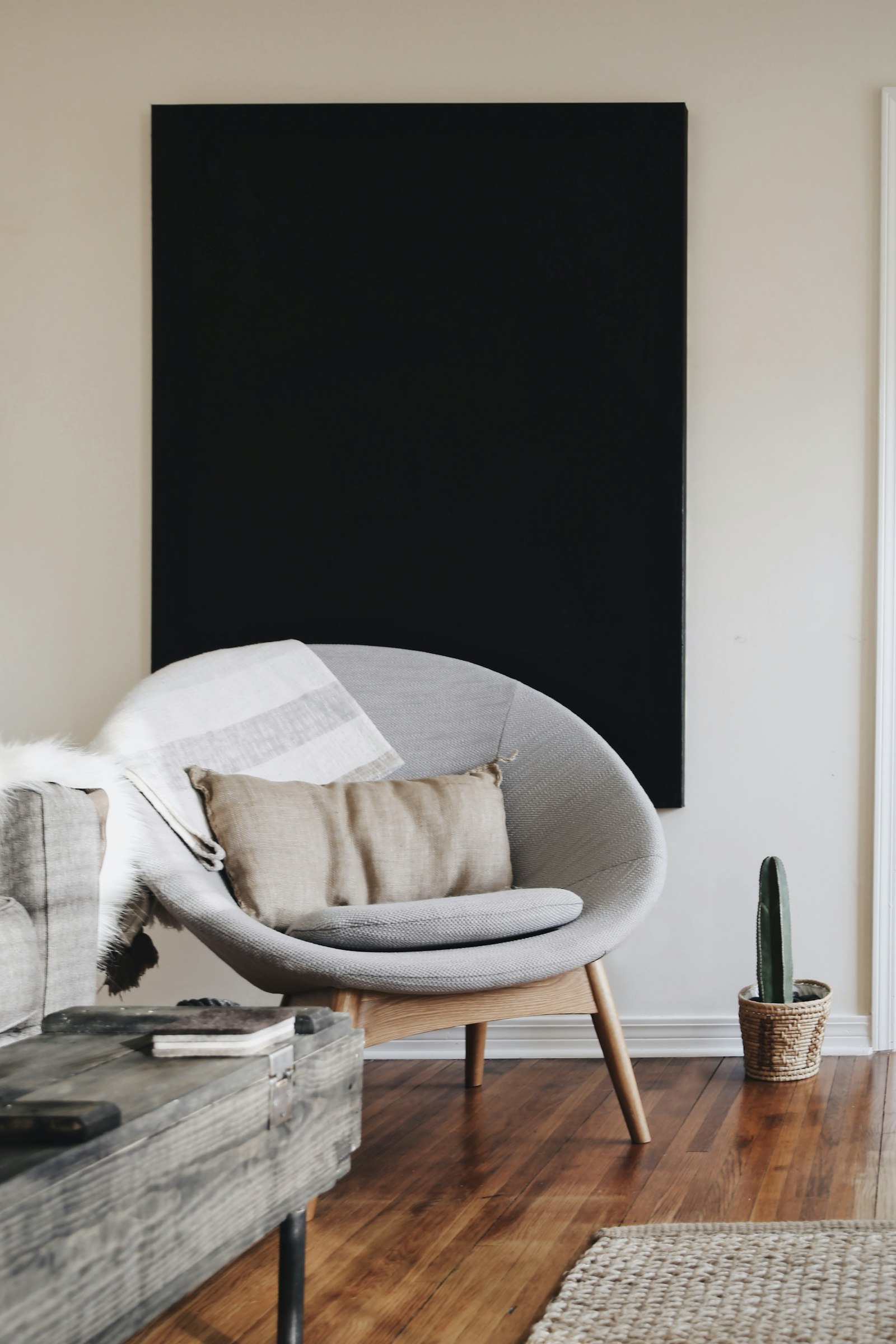
Scandinavian design was not invented to look good. It was invented to solve specific problems.
Long winters. Limited daylight, sometimes only a few hours a day. Compact homes that had to serve every function a family needed. In a Stockholm apartment in February, a poorly lit room is not a style problem. It is a quality of life problem.
Those constraints forced a design philosophy built around three things: light, simplicity, and function. Decoration was a luxury people in the Nordic region could not afford, either in space or in mood. A home had to work.
The movement crystallized in the mid twentieth century, when designers like Alvar Aalto in Finland, Hans Wegner and Arne Jacobsen in Denmark, and Bruno Mathsson in Sweden put these instincts into furniture that has now been in continuous production for sixty plus years. The Wegner Wishbone Chair, designed in 1949, still sits in dining rooms around the world. That kind of staying power is rare in any design field.
That is why the language of Scandinavian design still feels current. The constraints have softened, but the values it produced have not aged.
What are the core principles of Scandinavian design?
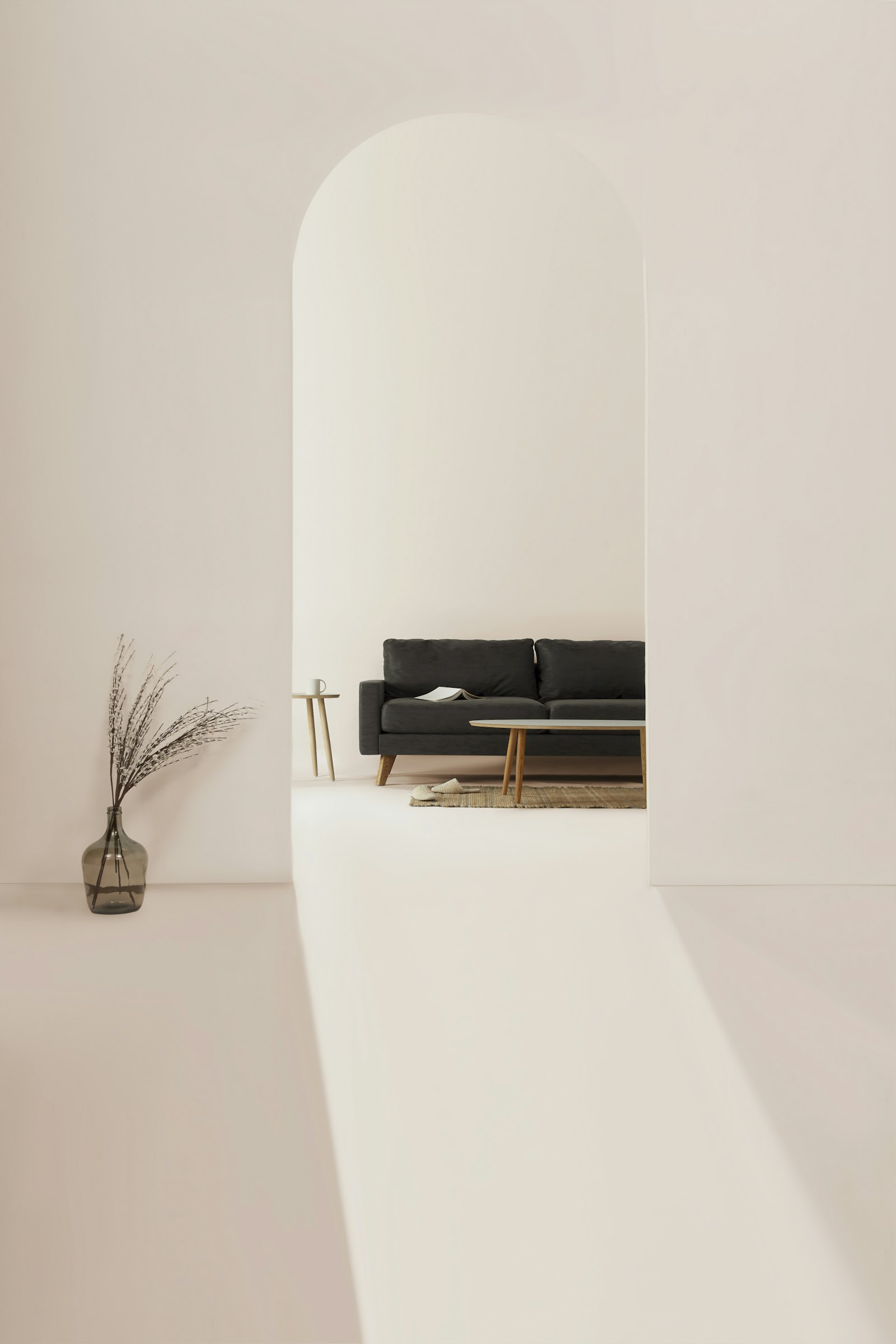
Five principles carry Scandinavian design: function before decoration, light treated as a material, honest natural surfaces, real warmth over cold styling, and a steady connection to nature. Each one solves a practical problem first, which is why the look reads as calm rather than styled. Here is how each works.
1. Function Comes First
Every object in a Scandinavian room earns its place through use.
No unnecessary decoration. No visual clutter. No "just for show" pieces sitting on a shelf to fill space.
The result is a room that is easy to live in day after day. You are not maintaining a display. You are using a space that was built for you.
This is the principle most often imitated and most often missed. A room can look Scandinavian and still feel cluttered even when it is clean. The point is not the look. The point is the test: does this earn its place?
A useful exercise. Walk into a room and pick up the first ten objects your eye lands on. For each one, ask what it does. Five answers will be honest. Three will be "it goes with the room." Two will be silence. Those last five are where the work is.
2. Light as a Design Element
In a Nordic winter, daylight is a resource. You design around it.
That meant:
- Light colored walls that reflect rather than absorb
- Reflective surfaces, polished wood, brushed metal, glass, placed to bounce light deeper into the room
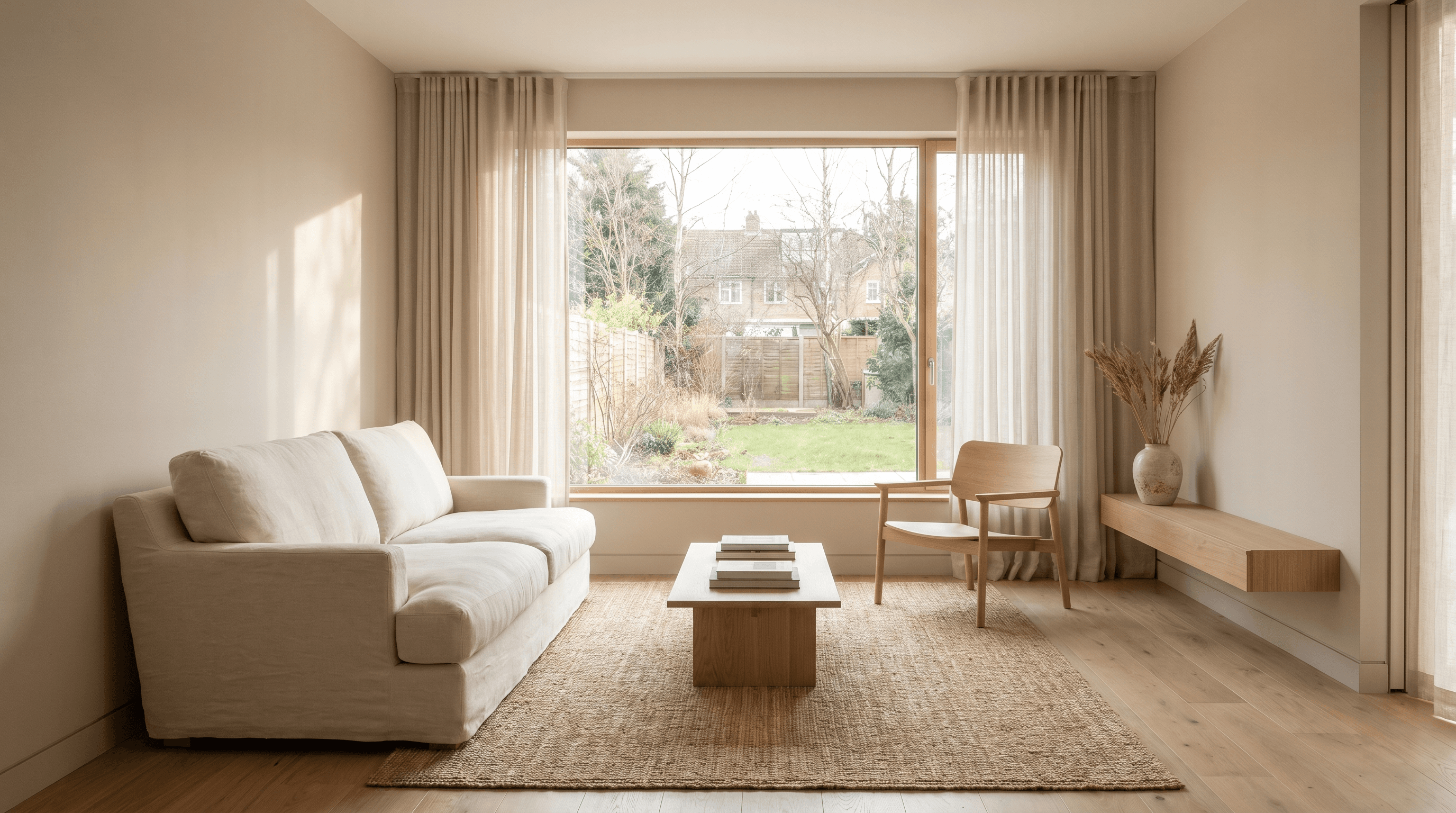
- Minimal window obstruction, sheer curtains or none at all, furniture pulled back from the glass
- Layered lighting at night, table lamps, floor lamps, candles, instead of one ceiling fixture flooding the room
The goal was never raw brightness. It was light distribution. You want light to reach every corner of a small room, not blast one wall. It is the same instinct behind fixing a room that feels dark: spread the light you already have instead of adding more of it.
This is also why Scandinavian rooms photograph well in any season. The whole room is lit, not just the part facing the window.
The night version of this principle is just as important. Nordic homes built a whole vocabulary around evening light, low pools of warm lamplight, candles on the table during dinner, sconces beside the bed. The Danish designer Poul Henningsen spent his career on exactly this problem. His PH lamp series, first produced by Louis Poulsen in 1926, uses layered shades to spread soft, glare free light in every direction, and it still shapes how Nordic rooms are lit after dark. The point is to make the dark hours feel intentional rather than dim.
3. Material Honesty
Scandinavian rooms favor materials that show what they are.
- Raw wood with visible grain
- Natural fibers, linen, wool, cotton
- Simple finishes, oil, wax, matte paint
- Stone and ceramic with their texture left intact
Materials are not hidden under high gloss veneers or plastic laminates. They are expressed. A wooden table looks like wood. A wool throw looks like wool.
This honesty is partly aesthetic and partly practical. Honest materials age well. They develop patina rather than wearing out. A solid oak floor at twenty years old looks better than a vinyl plank at five. A wool rug that has lived through ten winters looks more itself than the day it arrived.
4. Warmth, Not Coldness
This one is the most commonly misunderstood.
Outside Scandinavia, the style is often copied as a cold, all white showroom. Inside Scandinavia, that is not the goal at all. Nordic homes are warm, in fact often softer and cozier than the average American living room. The Danish word hygge describes exactly this quality, a kind of low key, layered comfort that lets a room hold you in.
Hygge is mostly a lighting decision, not a furniture one. Meik Wiking, who runs the Happiness Research Institute in Copenhagen and wrote The Little Book of Hygge, points out that Danes burn more candles per head than anyone else in Europe, and that light, rather than furniture, is what makes a room read hygge. Keep the evening layer at 2200K to 2700K, warmer than any overhead fixture you own. A rule worth keeping: any room you sit in after 5 p.m. should have at least two warm light sources, and none of them on the ceiling.
The look you see online, all white walls and one chair, is a stage set. The real thing has wool blankets, ceramic mugs, candles, books, dried flowers, a sheepskin draped over a bench. The room is edited, not emptied.
5. Connection to Nature
Scandinavian design carries a deep, quiet relationship with the outside world.
You see it in the materials, wood, wool, stone, linen, all pulled directly from the land. You see it in the palette, soft greens, dusty blues, bone whites, the colors of a Nordic landscape in low light. You see it in the plants, almost every room has a few, but never enough to feel like a jungle.
Even the windows are treated as a connection rather than an obstacle. Sheer fabric, low sills, plants on the ledge, the eye is invited outside rather than blocked from it.
What Scandinavian Design Is Not
Three corrections worth making, because they get repeated everywhere online.
It is not all white. White is the dominant background, but Nordic homes use warm whites, soft creams, oat tones, and a layered range of woods. A bone white wall next to a pale ash floor next to a honey oak bench is three different temperatures of "neutral." That layering is the point.
It is not cold. As above. The look in a magazine is one carefully styled corner. The actual room has texture, layers, candles, books, and signs of life.
It is not minimalism. Strict minimalism aims for as little as possible. Scandinavian design aims for as much as is useful, and nothing more. Those are different rules. A Scandinavian room can feel layered and full while still being calm. A minimalist room often cannot.
Here is how the three most confused approaches actually differ:
| Approach | Guiding rule | How the room feels |
|---|---|---|
| Minimalism | As little as possible | Spare, stripped back |
| Scandinavian | As much as is useful, nothing more | Warm, layered, calm |
| Japandi | Nordic function meets Japanese restraint | Low, quiet, disciplined |
The line between Scandinavian and Japandi is the one people ask about most, since the two share almost all of their values and differ mainly in furniture height and the discipline of the empty space.
Which white should you actually paint the walls?
A warm white with a cream or linen undertone, not a bright white. The undertone matters more than the saturation. A cool white wall throws blue back into the room at four in the afternoon in November; a warm white throws gold. Both read as "white" at noon, and only one of them is comfortable at dinner. This single choice is what separates the Nordic look from the dentist's office version of it.
Three warm whites do most of the work:
- Farrow & Ball Wimborne White, the creamiest of the three.
- Benjamin Moore White Dove, a warm white that stays neutral enough for trim and ceiling too.
- Sherwin Williams Alabaster, slightly softer and greyer, good where a lot of daylight would blow out a creamier white.
In a north facing room, where the daylight arrives cool and stays cool, push warmer still and test something with visible cream in it, such as Dunn Edwards Swiss Coffee. Sample on two walls and look at it in the morning, in late afternoon, and again with the lamps on. A white that only works at noon is the wrong white.
The accent rule has loosened. A fully neutral Nordic room can take exactly one bold note, a deep blue, mustard, emerald, or rust, used in one place: one cushion, one ceramic vase, one framed piece. Against ten warm whites and three woods, a single saturated object reads as alive and gives the eye somewhere to land first. Spread the same color across four pieces and it stops being an accent and becomes a theme, which is a different and much less forgiving room.
How do you use Scandinavian design in each room?
Apply the same principles room by room, adjusting only the details. Anchor living rooms with a low neutral sofa and layered lamps, bedrooms with linen and a warm bulb, kitchens with open wood shelving, bathrooms with wood against cool tile, and entryways with a bench and hooks. Function leads in every one.
The principles are the same across rooms. The application shifts.
Living Room
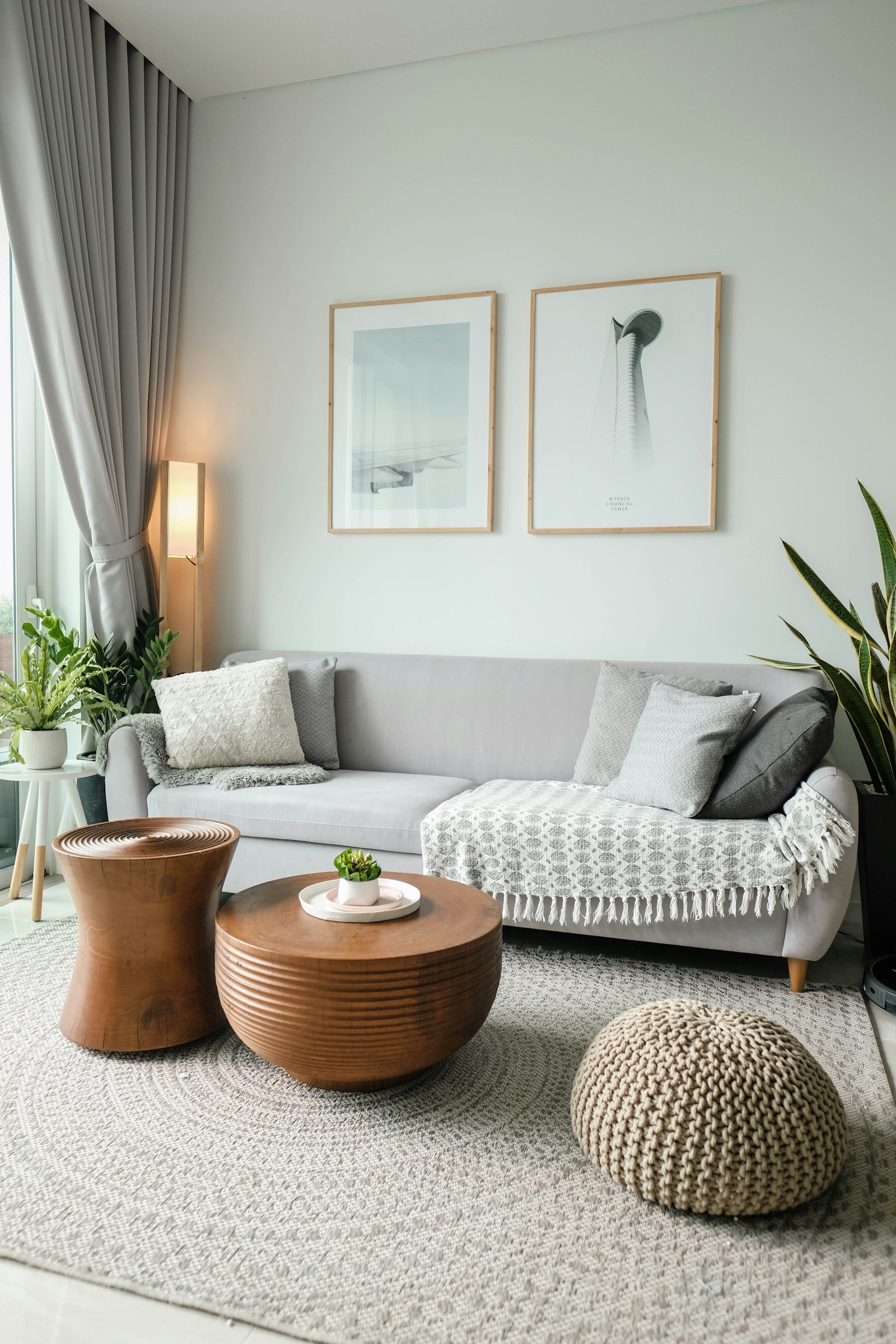
Anchor the room with a low, comfortable sofa in a soft neutral, oat, bone, light gray, soft taupe, warm putty. Low means a deck height around 18 to 19 inches, in a soft fabric: washed linen, brushed cotton, a performance bouclé. Charcoal, navy, and chocolate brown work as accents and fail as the foundation piece, because the largest object in the room sets its temperature. Add a wool throw and a single textured cushion or two, then a second wool blanket in a slightly different weave and cream on an armchair, and one sheepskin over the back of a wood chair. Sheepskin is the fastest warming move in the room; one in the right place does more than four throw pillows. Place a wood coffee table with visible grain in front. Use two lamps at different heights instead of one overhead light. Keep the wall behind the sofa mostly clear, one piece of framed art is enough.
Bedroom
Linen bedding in white, ecru, or soft gray. A simple wood bed frame, low to the floor if possible. One wool rug underfoot for the bare feet in the morning. A single bedside lamp on each side with a warm bulb, 2700K to 3000K, not the cool white of an overhead fixture. Storage tucked out of sight in a wardrobe or under the bed, no piles of clothes on a chair. In a tighter space, these Scandinavian small bedroom ideas show the same rules at a smaller scale.
Kitchen
Open shelving in wood with a small, edited collection of dishes, never crammed. Light cabinet fronts, matte rather than glossy. A wood cutting board left out as part of the daily landscape. One plant on the windowsill. A single pendant lamp over the table or island, not a row of recessed lights blasting from above.
Bathroom
The trickiest room to keep warm. Use wood accents, a stool, a small bench, a teak bath mat, against the cool tile. Linen towels in soft colors. Stone or ceramic dishes for soap and brushes, no plastic visible. A plant on the counter if the light allows.
Entryway
A wood bench for putting on shoes. A row of simple hooks at the right height for the people who live there. A wool mat that hides the dirt without looking utilitarian. One small mirror, hung at face height. That is enough.
Common Mistakes
Even with good intentions, Scandinavian rooms often go wrong in predictable ways. A few to watch for.
Going too cold. All white walls, white sofa, white rug. The room reads like a dentist's office. Add warm wood, a wool throw, a candle.
Buying everything at once from one store. A Scandinavian room is built from many sources, vintage, handmade, inherited, new, over time. A matched set of new furniture looks like a showroom rather than a home. The cheapest correction is one genuinely old piece: a reclaimed teak credenza, a burl wood coffee table, a worn leather chair, an inherited rug. Estate sales, Facebook Marketplace, Chairish, and 1stDibs all carry the mid century and 1970s end of it. Look for warm wood with visible grain and soft shapes, and buy one piece, not the set. Patina is the whole point, which is why a reproduction of the same silhouette does not do the same work.
Making every piece square. Nordic rooms go boxy when every silhouette is a right angle: square sofa arms, rectangular tables, straight legs, all in one room. One curved object fixes it, a rounded armchair, a round side table, an arching floor lamp. Stop at one or two. A room where everything curves reads like a 1970s commercial instead.
Overstyling the surfaces. A perfectly arranged tray of three objects on the coffee table is more "design blog" than Nordic. Real Scandinavian rooms have surfaces with a book, a candle, a mug, the things a person actually used today.
Skipping the warm lighting layer. Bright overhead light is the single fastest way to ruin a Nordic room. Use lamps. Use candles. The room should be dimmer at night than most American homes are.
Treating it as a color palette. Painting the walls white and calling it Scandinavian misses the whole point. The style is about how the room is used, not how it is painted.
Why is Scandinavian design still popular in 2026?
Scandinavian design still works in 2026 because the problems it solves have only grown. Digital noise, overcrowded homes, and spaces stretched across every function make a calm, edited, functional room more valuable now than at any point in the last seventy years. The style lasts because it never chased a trend to begin with.
People still feel overwhelmed. Phones, schedules, notifications, the visual noise of modern life has only grown. A calm room is more valuable now than it was in 1955.
Spaces are still too cluttered. Most homes hold more objects than the people living there can actually use. The Scandinavian instinct to edit is more useful than ever.
Homes still need to support daily life. A house is where you cook, sleep, recover, and think, whatever it looks like in a photograph, and Scandinavian design has always treated that as the brief.
The aesthetic happens to be timeless. The reason it lasts is that it never tried to be aesthetic in the first place.
How to Bring It Into Your Home
You do not need to renovate. The principles translate to any home, in any climate.
- Lead with function. Walk through a room and ask, of each object, what it does. Anything that fails the test goes into a different room or out of the house.
- Maximize light distribution. Soft whites or warm cream tones on walls. Pull furniture back from windows. Add a mirror across from a window rather than next to it.
- Expose honest materials. Replace one glossy surface with a natural one this season. A linen tablecloth, a wool throw, a solid wood cutting board left out on the counter.
- Edit the surfaces. Clear flat surfaces of decorative clutter. Leave shelves partly empty.
- Build for daily life. Choose pieces for how you actually use the room, not for how it photographs.
- Add a warm light layer. One table lamp per room, minimum. A candle on the dinner table. Lower the overheads.
- Bring in one piece of nature. A small plant, a ceramic vase with dried branches, a wood bowl on the counter.
None of this is expensive. Most of it is subtraction.
A Note on Patience
Scandinavian rooms are not built in a weekend. The best ones are built over years, a piece at a time, as the people living there figure out what they actually use.
That patience is part of the philosophy. A room that is "done" too quickly is usually a room that has been styled rather than lived in. The Nordic instinct is to wait, to live with less, and to add only what proves itself useful.
For a reader in the middle of a refresh, the practical version of this is simple. Start by removing what you do not use. Live with the empty space for a few weeks. Then, slowly, add back only what the room asks for.
Final Thought
Scandinavian design lasts because it starts with reality. Not with trends. Not with aesthetics. With how people actually live, in actual homes, on actual days.
A room built that way does not go out of style. It just keeps working.
Frequently Asked Questions
What is the difference between Scandinavian and minimalist design?
Minimalism aims at having less. Scandinavian design aims at having only what works. A Scandinavian room can feel warm, layered, and lived in, while a strict minimalist room often feels stripped back. The two overlap, but Scandinavian design always includes comfort, and minimalism does not require it.
Is Scandinavian design still relevant in 2026?
Yes. It has stayed relevant for more than seventy years because it solves problems that have not gone away: too much visual clutter, too little usable space, too little light. Specific shapes and palettes shift, but the underlying principles remain current.
Do I need a north facing or dark home to benefit from Scandinavian design?
No. Scandinavian principles were developed for low light homes, but they work in any home. In a bright space, the same approach simply produces a calmer, less cluttered room rather than a brighter one.
What colors work best in a Scandinavian interior?
Soft whites, warm cream tones, light grays, pale wood tones, and muted earth colors. For walls, a warm white with a cream undertone such as Farrow & Ball Wimborne White, Benjamin Moore White Dove, or Sherwin Williams Alabaster carries the room better than a bright white. Most accents stay quiet, soft black, muted green, dusty blue, with room for one saturated note, a deep blue or emerald or mustard, in exactly one place. The palette is built to reflect light and let materials carry the visual interest.
Is Scandinavian design expensive to achieve?
Not inherently. Much of the work is subtraction, removing clutter, opening up light, exposing surfaces you already own. The most useful investments are honest materials, solid wood, natural fiber textiles, that age well rather than wearing out.
What is the difference between Scandinavian and Japandi design?
Japandi blends Scandinavian function and warmth with Japanese restraint and craft. The two styles share most of their values, but Japandi tends to use lower furniture, darker accents, and a more disciplined approach to negative space. Pure Scandinavian rooms feel softer and more layered with textiles.
Can Scandinavian design work in a small apartment?
Yes, in fact the style was built for small homes. Compact Nordic apartments are the original test case. Light walls, low furniture, edited surfaces, and a strong sense of function are exactly what a small space needs to feel calm rather than cramped. Because the rooms are small, most pieces do two jobs: a storage ottoman that holds the throws and works as extra seating, a nesting coffee table that pulls apart when four people come for dinner, a window bench that swallows the wool blankets in summer and the linen in winter. One or two pieces working that way is usually enough to keep the room uncluttered through every season.
The Noticer
For thoughtful people who notice spaces.
What did you notice?
Did something in this story make you see your own space differently?
Want to try this in your own space?
Upload a photo of your room and let Archie, our AI design assistant, show you personalized recommendations.
Try Archie FreeAdvertisement. Archie is made by STUDIO DID IT, the studio that publishes Spatia.
Related Articles

Japandi Style: The Timeless Trend That's Still Defining 2026
Japanese minimalism meets Scandinavian warmth. Here's how to bring Japandi style into your home with paint, texture, and editing, no full renovation.
Quiet Luxury Interior Design: What It Really Means in 2026
Quiet luxury interior design signals quality through materials, proportion, and restraint. See what it means in 2026 and how to bring it into your home.

2026 Interior Design Trends: 8 Shifts That Define the Year
The 2026 interior design trends that matter: hidden design, texture over color, organic shapes, lighting as art, personal narrative, mix and match, value materials, and smart home as standard.