2026 Interior Design Trends: 8 Shifts That Define the Year
The 2026 interior design trends that matter: hidden design, texture over color, organic shapes, lighting as art, personal narrative, mix and match, value materials, and smart home as standard.

The eight interior design trends defining 2026 split into what you see and what you feel. The visual four are hidden design (no molding, flush doors, recessed everything), texture over color, organic shapes closer to a river stone than a circle, and furniture and lighting chosen as art objects. The experiential four are personal narrative over material lists, mix and match replacing tone on tone, value driven upgrades like ceramic counters and ERV ventilation, and smart home as standard infrastructure. Together they move homes from decorated to designed.
This is for anyone planning a renovation or a slow room refresh. Six of the eight need no construction at all, so you can read the list as a shopping order rather than a wish list.
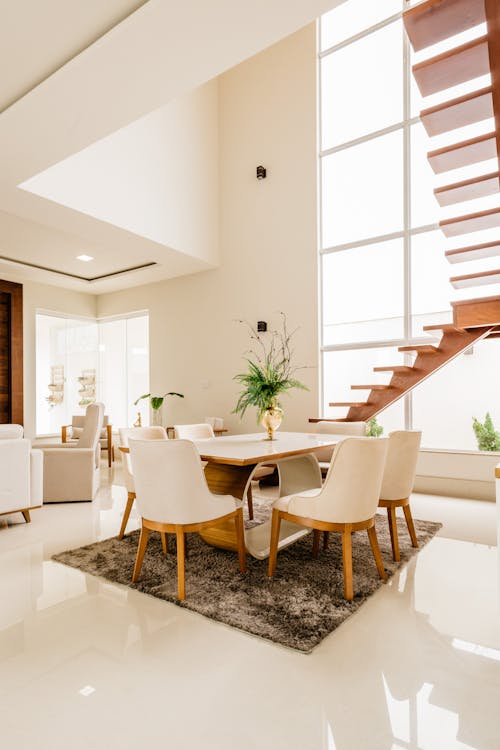
What are the top interior design trends for 2026?
Hidden design leads: molding, baseboards, door frames, and visible hardware are disappearing into the architecture. Texture replaces color as the main design decision. Geometric curves give way to organic, asymmetric shapes. Furniture and lighting are chosen as art objects rather than tools. Underneath those four, homeowners are briefing rooms by mood instead of by material, mixing woods and metals instead of matching them, spending on a few upgrades that last instead of many that show, and wiring smart systems in as infrastructure. Kitchens and bathrooms show the shift first.
| Trend | What changes | Renovation needed? |
|---|---|---|
| Hidden design | Molding, baseboards, and hardware disappear into the walls | Yes |
| Texture over color | Palettes simplify while surfaces gain depth | No, one surface at a time |
| Organic shapes | Perfect circles give way to asymmetric natural forms | No, start with a mirror |
| Art objects | Furniture and lighting chosen for authorship, not utility | No |
| Personal narrative | The brief starts with mood, not materials | No |
| Mix and match | Harmonious contrast replaces tone on tone | No |
| Value materials | Fewer, more durable upgrades instead of many cosmetic ones | Usually |
| Smart home | Sensors, CCT lighting, and automation treated as wiring | Easier during, possible after |
The through line across all eight is a change in who drives the decisions. Homeowners used to ask what a room should have. Now they ask what it should feel like, then work backward to the materials, the metals, the ventilation, and the technology that deliver it.
The four shifts you see
1. Hidden design: less visible, more intentional
The strongest trend of 2026 fits in one line: the best design is the design you don't see.
Call it minimalism as engineering rather than minimalism as an aesthetic. The goal isn't to make a room look empty; it's to remove every element that doesn't earn its place. The molding, the baseboards, the door frames, the visible hinges, all of it is disappearing into the walls.
Here's what this looks like in practice:
- No molding, no baseboards: This was once considered risky, "it'll crack," "it looks unfinished." Now it's standard in high end renovations. Clean transitions from wall to floor, with silicone matched to the wall color, create a seamless look that stays pristine for years.
- Hidden doors: Pantry entries, bathroom doors, storage, all mounted flush to become part of the wall. The result is a flat, uninterrupted surface, and a room without door frames breaking it up reads a size bigger than it measures.
- Recessed everything: Lighting, shelving, TV mounting, pushed into the architecture rather than hung on it. A fully recessed TV eliminates the bracket, the dust shelf, and the cable mess in one move.
- Materials in larger formats: Tiles have gone from 300x300mm to 600x1200mm and beyond. Fewer grout lines, fewer visual breaks. The same applies to flooring, where large square planks that read like stone are replacing narrow strips.
Visible design shows what was done; invisible design shows what was engineered. A finished room now gets judged by what the builder managed to remove.
For kitchens specifically, two details are becoming essentials: induction cooktops mounted flush (no more rim gaps that catch food) and range hoods recessed into the ceiling instead of the bulky units that block sightlines in open plan layouts. The same logic is driving full slab surfaces across our kitchen design coverage.
The most minimal rooms I have built were the most demanding to draw. Hidden design moves the cost from materials you can point at to precision you cannot: a flush door only reads as a wall if the gap around it stays even to a couple of millimeters, and a shadow gap where a baseboard used to be forgives nothing. So before you commit, ask a contractor how they will hold those tolerances, not whether they can. In my commercial work the trades most comfortable with this were the ones who talked about jigs and mockups, not confidence. If the answer is vague, choose a slim painted baseboard and spend the difference on texture, which forgives everything.
2. Texture over color: depth instead of hue
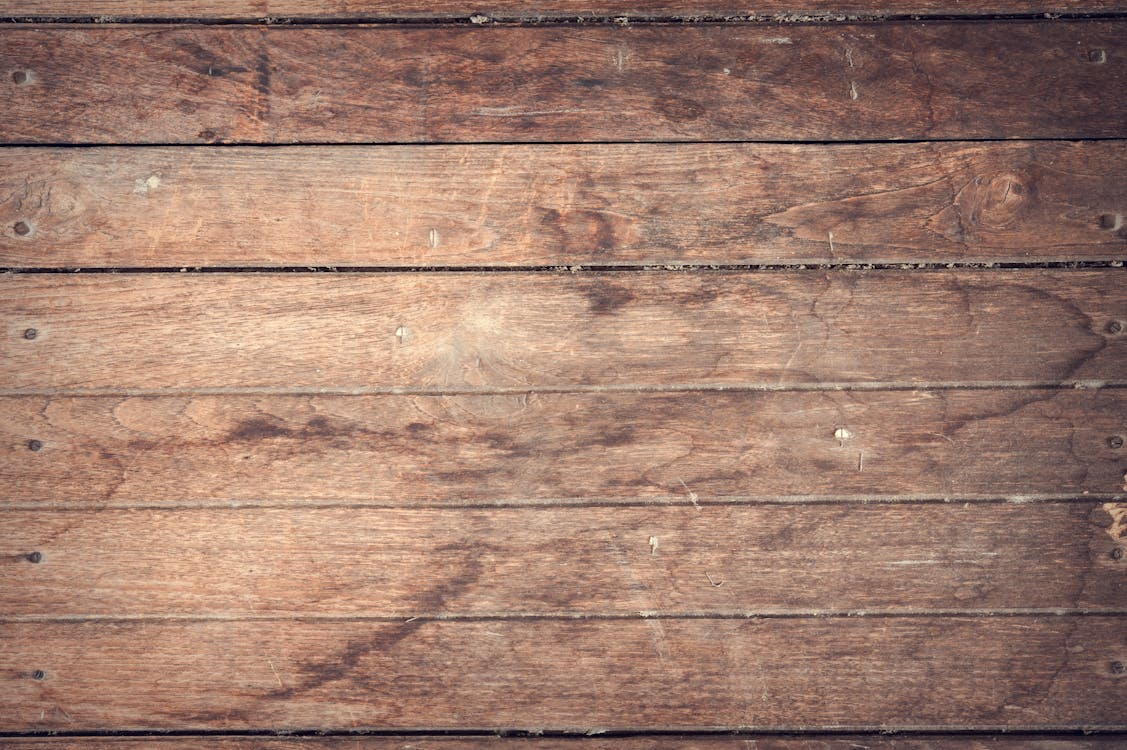
For years the interior design conversation was dominated by color. What shade of white? What tone of wood? Warm or cool? In 2026 the conversation moved from color to texture. The question changed from "what color should this be?" to "what should this feel like?", which is the same instinct behind quiet luxury interiors: spend where the hand lands, not where the eye expects a logo.
This plays out across every surface in the home:
- Wood flooring: Manufacturers are increasing the number of unique grain patterns per collection. A laminate floor that repeats its pattern every few planks reads as printed; the better 2026 products carry enough distinct planks that the repetition never registers, which is what makes the floor read as real wood.
- Tile: The conversation has moved past "what color tile?" to "how deep is this stone texture?" High end porcelain now replicates the actual surface topography of natural stone, not just the color pattern. You need to see it at full scale (600x1200mm or larger) to judge the effect.
- Wallcoverings: Premium wallpapers with deep physical texture are replacing flat silk wallpaper. The new products are thicker, more durable, and create a surface quality that flat paper can't match.
- Cabinet surfaces: Coatings cured with an electron beam are replacing standard PET laminates. Fenix NTM by Arpa Industriale is the reference point: a soft matte surface that resists fingerprints and fine scratches, solving the actual problem of kitchen doors that look worn after a year of cooking.
What this buys you is variation inside simplicity: two rooms can share the exact same white palette and feel completely different through the depth of their surfaces. The colors get quieter; the surfaces get louder. (If you're still weighing palettes, our guide to interior color psychology covers what each family does to a room's mood.)
3. Organic shapes: beyond the circle
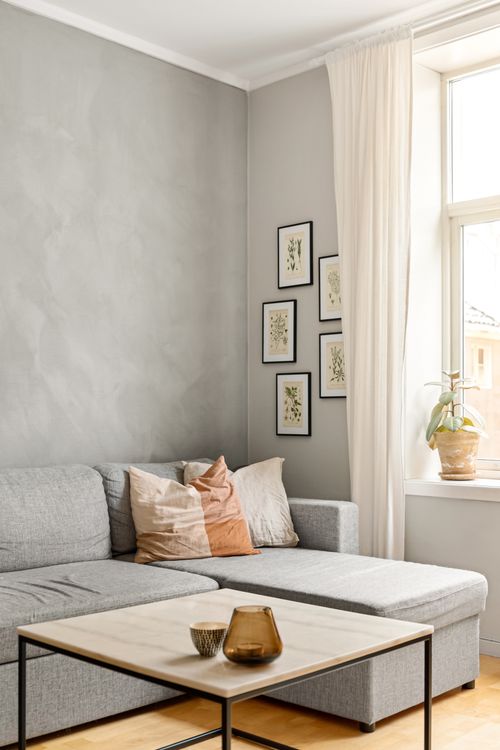
Curved furniture isn't new. Rounded mirrors aren't new. But 2026 pushes past geometric curves (perfect circles, symmetrical ovals) into truly organic, irregular forms inspired by nature.
The evolution is clear in something as simple as a bathroom mirror:
- 5 years ago: Rectangular mirror. Sharp corners.
- 3 years ago: Round mirror. Perfect circle.
- Last year: Oval mirror. Symmetrical, elegant.
- 2026: Organic pebble shape. Asymmetric, natural, like a river stone.
This extends through the whole home. Sink basins are moving from rectangular troughs to smooth, integrated forms where the countertop flows into the bowl with no seam. Column edges in open plan spaces are being softened into irregular curves. Even wall niches are abandoning strict rectangles for flowing shapes that feel like small caves.
The appeal is measurable, not just aesthetic. In a 2013 study published in the Proceedings of the National Academy of Sciences, neuroscientist Oshin Vartanian and colleagues found that people were far more likely to judge rooms with curved contours as beautiful than comparable rooms with straight edges. A perfectly rectangular room with perfectly circular accents still reads as "designed." When the shapes feel found rather than drawn, a pebble, a riverbed, the space feels less constructed and more discovered.
There is a real tradeoff: organic shapes are harder to design and harder to build. Standard construction thrives on right angles and exact measurements; every irregular curve demands more skilled craftsmanship and more detailed communication between designer and builder. Budget for that before you fall in love with the drawing.

4. Furniture and lighting as art objects
The boundary between furniture, lighting, and art has been blurring for years. In 2026 it essentially dissolves.
The old Bauhaus principle, form follows function, positioned objects as tools first. A table is for eating. A lamp is for illumination. Each object justified itself through utility.
The 2026 home flips this. A pendant light might be handblown glass in an organic form that happens to illuminate the room. A dining chair might be a sculptural object that happens to support your weight. The function is still there, but it's no longer the primary reason you chose it.
- Lighting leads the shift: Handblown glass pendants like Bocci's 28 series, sculptural ceramic fixtures, and table lamps sold through galleries are the most visible examples. You now see lighting at art fairs and art at lighting showrooms. The categories have merged.
- The price spectrum widens: When a lamp becomes art, its pricing follows art logic rather than manufacturing logic. The same bedside function can be met by something that costs less than a takeout dinner or by something priced like a small artwork, and the gap is authorship and craft as much as materials.
- Personal curation over brand matching: Instead of buying a matching furniture set, people are assembling collections: a chair from one maker, a light from another, a side table that's essentially a ceramic sculpture. The home becomes a gallery of personal taste.
When every living room had the same catalog bookcase, furniture was infrastructure. Now it carries identity, and people choose the objects in a room the way they choose what to say about themselves. (Not sure what your statement is yet? Start with our French country, rustic, or Scandinavian comparison.)
What interior colors are in for 2026?
Simpler, quieter ones. The bigger 2026 shift is that color stopped being the main event: palettes are being held steady so texture can carry the variation, which is how two rooms can share one white and feel nothing alike. Treat color as the second decision; the first is what the surface should feel like.
When a shade does need choosing, the conversation turns to undertone and light. A white that looks perfect in a bright showroom can go gray in a home with less daylight, which is why large samples belong on the actual wall. Our guide to the best paint colors for north facing rooms covers the hardest light to get right.
The four shifts you feel
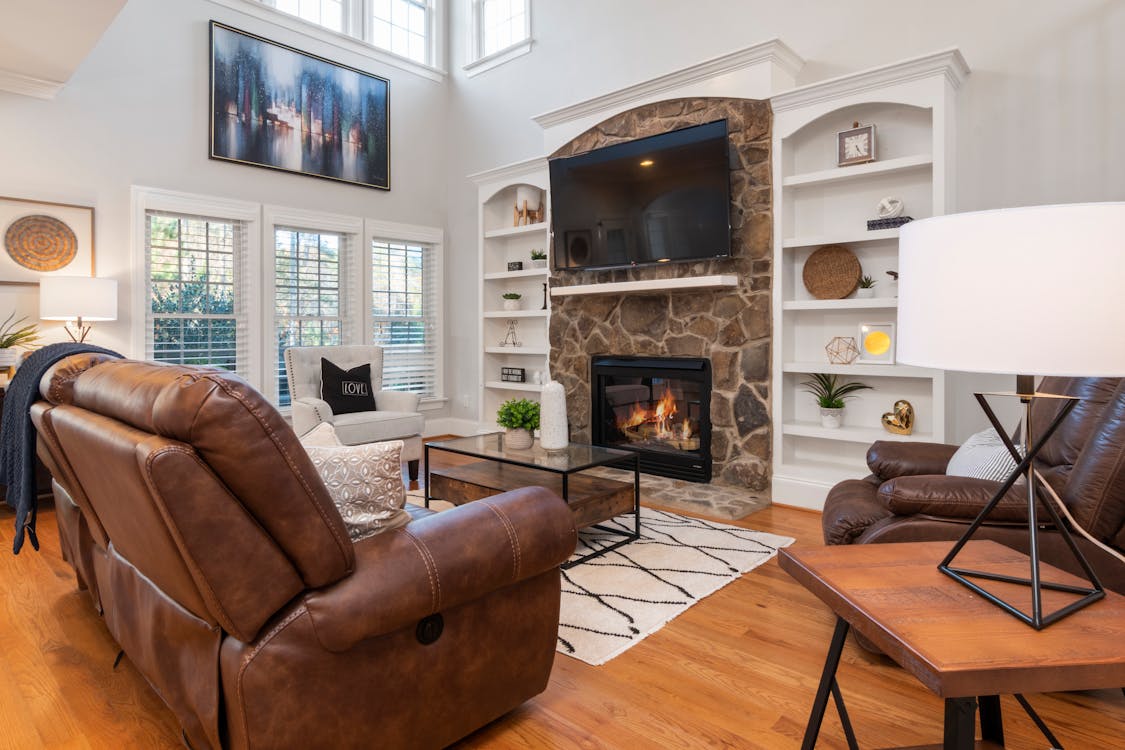
The first four change how a room photographs. The next four change how it works once you live in it.
5. Personal narrative: your space, your story
The way people brief a home has changed. The old version was a material list: paint on the walls, wood flooring, white cabinets. The new version is a mood: warm and grounded, a place where people want to stay. The materials get chosen afterward, to serve that.
This happened because the general understanding of spatial design has deepened. Years of design content, renovation shows, and online inspiration raised the baseline. A baseboard doesn't define a room's character; the room's narrative defines which baseboard, if any, belongs.
The practical impact:
- Layering personal taste: The base space might be white walls and wood floors, like everyone else's. What makes it yours is the layering: the curtain texture, the cushion colors, the rug weight, the art selection.
- Evolving over time: People are designing homes they can grow into rather than finished products. The renovation sets the foundation; living in the space adds the personality. That is a real departure from the "finish everything before moving in" mindset.
- Custom over catalog: Furniture built to the exact dimensions of a wall, with no wasted gaps, is displacing modular brand furniture, and not only for looks. A fitted piece uses space a catalog piece cannot.
6. Mix and match kills tone on tone
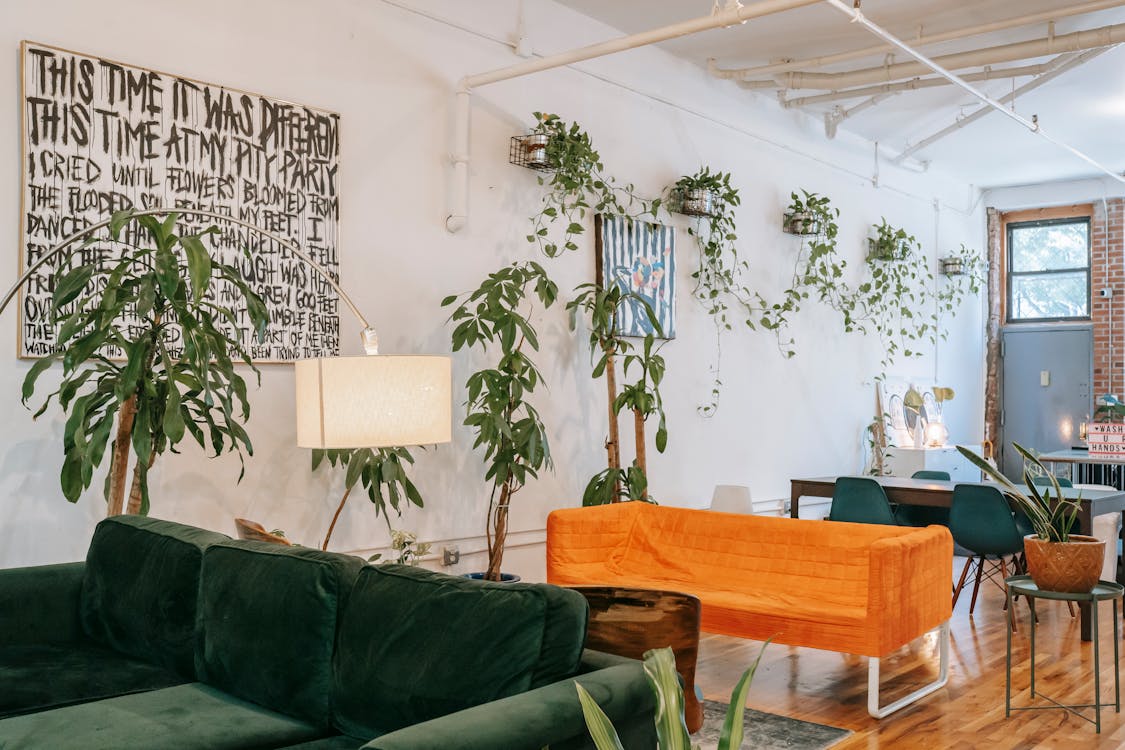
For years the gold standard of "good" interior design was obsessive color matching. Floor color matches cabinet film. Cabinet film matches door handles. Handle finish matches light fixtures. Everything in one perfectly coordinated tone. That era is over, and matching a room to a single exact tone now reads as dated rather than disciplined.
The new approach is harmonious contrast:
- Mixed wood tones: Your floor doesn't need to match your cabinets. A lighter oak floor with darker walnut shelving creates depth that tone on tone can't.
- Mixed metals: The old rule was pick one metal and stick with it. The 2026 rule is let them play. Brushed brass in one room, matte black in another.
- Mixed textures within one color: Same white palette, but the wall is matte paint, the counter is polished stone, the backsplash is textured tile, and the curtain is woven linen. One color, five textures.
The clearest example is hardware on dark wood. Deep veneers used to pair almost exclusively with gold; now the same tones are being specified with silver and brushed nickel, and the familiar combination reads new again. It is the fashion cycle pattern: the old pairing returns with a twist.
This connects back to personal narrative. If the home is supposed to reflect you, obsessive matching is the opposite of personality. Mix and match asks for more confidence and a better eye, and it produces rooms that feel chosen rather than ordered from one catalog page.
7. Material upgrades driven by value
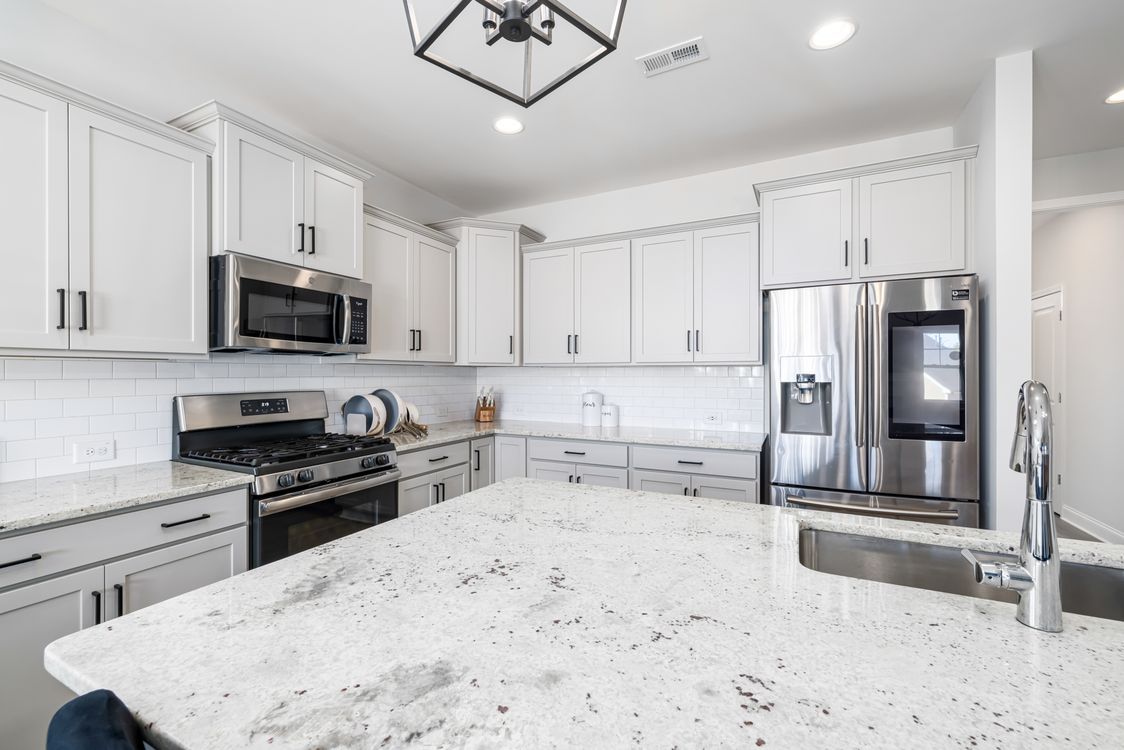
Budgets are being redistributed rather than raised: fewer upgrades that hold up over years, instead of the same money spread thin across cosmetic changes. Categories that were once premium options are becoming baseline expectations.
- System air conditioning: Ducted units hidden in the ceiling have gone from aspirational to assumed in full renovations.
- Ceramic countertops over artificial marble: More expensive upfront, but far more resistant to heat and stains. Divided over years of daily cooking, the math favors ceramic.
- ERV systems with humidity recovery: An ERV delivers the continuous mechanical fresh air that residential ventilation standards such as ASHRAE Standard 62.2 were written around, and the difference is noticeable on the first breath through the front door. A test you can run at home: leave for a weekend, then pay attention to the air the moment you open the door. That smell is your baseline, and you stopped noticing it within minutes of moving in.
- Advanced cabinet door coatings: The progression from LPM to PET to electron beam cured surfaces mirrors the broader value trend. Each generation costs more, resists scratches better, and doesn't show fingerprints.
Where the money actually goes, upgrade by upgrade:
| Surface or system | Cheaper option | Value upgrade | Why the upgrade wins |
|---|---|---|---|
| Countertop | Artificial (engineered) marble | Ceramic or porcelain | Resists heat and stains, still looks new after years of daily cooking |
| Ventilation | Exhaust fan only | ERV with humidity recovery | Continuous filtered fresh air (the target of ASHRAE 62.2), lower humidity |
| Cabinet fronts | LPM melamine | Electron beam (EB) cured | Fewer fingerprints, better scratch resistance, longer life |
| Cooling | Wall split unit | System (ducted) air conditioning | Hidden, even temperature, now close to standard |
The mindset shift is the point. The question is no longer "how do I do this cheaply?" but "where does spending more actually make my daily life better?" A ceramic counter costs more than artificial marble, and it still looks right after five years of cooking on it.

8. Smart home: present infrastructure, not future tech
Smart home technology crossed a threshold in 2026. Contractors now spec it alongside electrical wiring and plumbing, which is the same path system air conditioning took from aspirational to assumed.
What's changed is both the technology and the integration:
- Sensors with AI learning: Modern sensors learn household patterns over the first weeks of normal use and then operate with far more precision than a fixed timer, recognizing when you're home, when you're asleep, when you've left.
- CCT lighting control: Instead of LED downlights with a fixed color, smart systems let you adjust both brightness and color temperature, roughly 2700K (warm) to 6500K (cool), room by room, from a phone or automatically by time of day. Fixtures that support CCT have gotten much cheaper.
- Whole home automation: Lights that turn off when you leave a room. Curtains that close at bedtime. Heating that adjusts to your schedule. Cameras that alert your phone when someone lingers at the door. One app, one set of learned preferences.
- Applications for aging in place: With populations aging, fall detection, sleep monitoring, and activity tracking are becoming essential rather than convenient in homes with elderly family members. Our aging in place design guide goes deeper on this.
The caveat matters more than the feature list. Doing this well requires planning during renovation: centralized wiring, proper control panels, consistent infrastructure. Retrofitting into a finished space is significantly harder and more expensive. If you're renovating, run the infrastructure now even if you don't activate every feature immediately.
What items make a house look cheap in 2026?
Four details give it away: matchy tone on tone finishes, builder grade artificial marble that stains and chips, glossy melamine (LPM) cabinet fronts that show every fingerprint, and one fixed color downlight lighting a whole room. Every one of them comes from spreading a budget evenly instead of putting it where it counts.
The fix is the value mindset above: fewer, better upgrades. Swap artificial marble for a ceramic or porcelain counter. Trade the single cool white downlight for warm, dimmable, CCT lighting you can tune from 2700K to 6500K. Break up the matchy palette with mixed wood tones and mixed metals so the room reads as chosen. Cheap is rarely a price tag. It is the absence of a decision.
What ties the eight trends together
Hidden design, texture depth, organic shapes, art objects, personal narrative, mix and match, value materials, smart infrastructure. On the surface they look like separate movements. They share a single root: the shift from decorated to designed.
Decoration adds things to a space. Design shapes the space itself. The 2026 home removes visual noise, deepens the surfaces that remain, softens the geometry, makes every remaining object worth looking at, then briefs all of it around how the owner wants to live rather than what is current.
For several years the public was learning: absorbing techniques, materials, styles, figuring out what was possible. That phase is over, and the question people bring to a designer has gotten harder. It used to be what the room should have. Now it is what they actually want, which takes longer to answer and produces a home that feels less like a showroom and more like a place made for someone specific.
Frequently asked questions
Is the trend of skipping molding actually practical?
Yes. Modern silicone products matched to wall color are durable and don't yellow like old transparent silicone. The "it'll crack" concern is outdated; top contractors now consider baseboards and molding the less clean option, and resealing a joint years later is a minor maintenance task rather than a rebuild.
How do I evaluate texture when shopping for tiles or flooring?
Never judge from a small sample alone. Ask to see the panel at full size or several planks together. Manufacturers now build showroom displays specifically for this, because the texture pattern across a full wall or floor reads completely differently from a single swatch.
Are organic shapes just a passing trend?
Unlike specific colors or patterns that cycle quickly, organic shapes tap into our response to natural forms; research on curved contours (Vartanian et al., 2013) suggests the preference is built in. The specific expressions will evolve, but the move away from rigid geometry toward flowing natural shapes looks permanent.
Won't mix and match look messy if I'm not a designer?
The key is shared warmth or coolness. Oak flooring works with walnut shelving because both are warm woods. Silver hardware works on dark veneer because both read as restrained. What falls apart is mixing warm and cool tones at random.
Should I invest in ventilation or better countertops first?
Ventilation. Air quality affects every minute you are home. You notice a premium countertop when you cook; you notice the air every time you breathe. It is the less visible upgrade with the bigger daily effect.
Is smart home IoT worth it if I'm not tech savvy?
Modern systems learn household behavior on their own, so there is nothing to program. After a few weeks of normal living the system has your patterns, and the daily convenience (lights that follow you, climate that adjusts to you) is felt by everyone in the household regardless of tech comfort.
How do I start incorporating these trends without a full renovation?
Start with the easiest wins: swap a rectangular mirror for an organic shape, replace a standard pendant with a sculptural piece, upgrade one textured surface, change hardware metals so the room stops matching itself, add smart bulbs. Hidden design and most value material upgrades need renovation; the other six can be layered into any existing space.
The Noticer
For thoughtful people who notice spaces.
What did you notice?
Did something in this story make you see your own space differently?
Want to try this in your own space?
Upload a photo of your room and let Archie, our AI design assistant, show you personalized recommendations.
Try Archie FreeAdvertisement. Archie is made by STUDIO DID IT, the studio that publishes Spatia.
Related Articles

Scandinavian Interior Design: Why It Still Dominates Modern Homes
Scandinavian interior design endures not because it is trendy, but because it solves real problems: poor light, clutter, and how people actually live.

Japandi Style: The Timeless Trend That's Still Defining 2026
Japanese minimalism meets Scandinavian warmth. Here's how to bring Japandi style into your home with paint, texture, and editing, no full renovation.
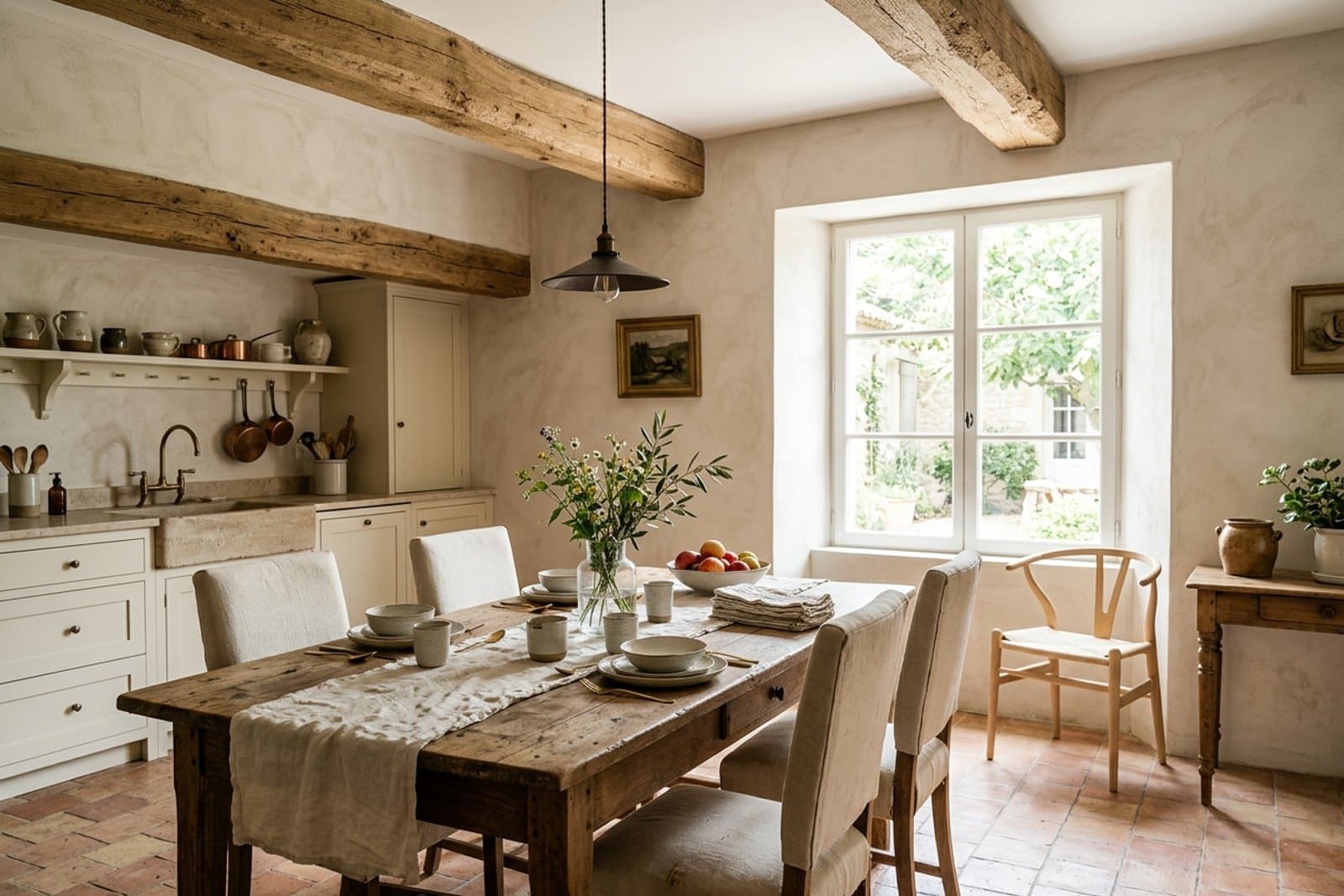
French Country, Rustic, or Scandinavian? A Quick Guide to Popular Interior Styles Right Now
A clear comparison of French country, rustic, and Scandinavian interior styles: what defines each, how they differ, and how to tell which one fits you.