How to Keep a Bedroom Cool During a Heat Wave Without AC
A heat wave bedroom needs a day and night routine before another fan. Use this no AC sequence to block heat before noon, flush stored heat after sunset, dry the room, and cool the sleep zone first.

How to Keep a Bedroom Cool During a Heat Wave Without AC
To keep a bedroom cool during a heat wave without AC, run the room on a schedule: seal out heat before the sun arrives, cut indoor heat sources, dry the air, then flush stored heat after sunset only when outdoor air is cooler. At night, cool the sleep zone first with breathable bedding, lighter layers, and a fan aimed across the upper body.
Do not treat the bedroom like a whole home cooling project. During a heat wave, the practical goal is a safe, sleepable zone from roughly 10 p.m. to 7 a.m. Start with the room you sleep in, measure the nightstand temperature, and change the pieces touching your body first. A 20 inch box fan, pale window covering, cotton or linen bedding, and a small humidity meter usually matter more than a third decorative fan.
This guide is for renters and homeowners who need one bedroom to sleep cooler during a short heat wave. If your main issue is a sticky room, start with how to cool a humid room without AC. If the heat comes from one sunny exposure, pair this with our west facing room guide and top floor apartment guide.
Why does a bedroom stay hot after sunset?
A bedroom stays hot after sunset because the room has stored heat all day. Walls, glass, floors, dark rugs, foam mattresses, and upholstered headboards absorb heat, then release it slowly when you are trying to sleep. That is why the outdoor air can feel pleasant while the bedroom still feels stale at midnight.
The fix is to stop heat from entering early, then give stored heat a path out later. In most U.S. and Canadian homes, that means closing the bedroom before late morning, avoiding indoor heat sources after dinner, and opening the room only when outside air is genuinely cooler than inside air.
What should you do in the morning to keep the bedroom cooler?
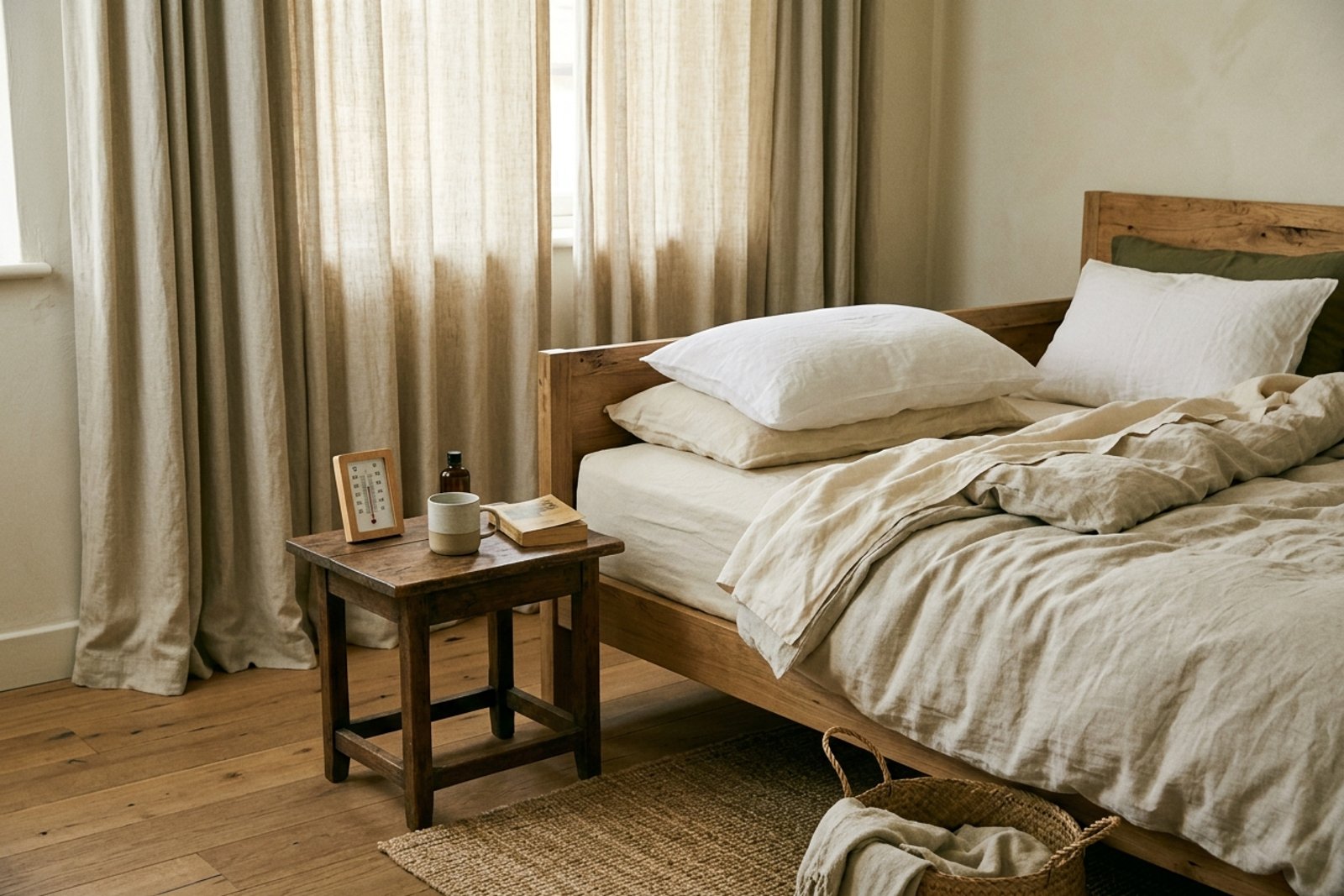
In the morning, trap the coolest air you have. Close windows as soon as outdoor temperature starts rising, usually between 7 and 10 a.m. in many summer heat waves. Close curtains, shades, or blinds before direct sun reaches the glass. A bedroom that stays sealed early may enter the evening 4 to 8°F cooler than a room left open all day.
Do a quick heat audit before leaving the room:
- Close pale curtains tight to the window, not floating far into the room.
- Turn off chargers, lamps, desktop screens, and standby electronics.
- Pull bedding open so trapped body heat can leave the mattress.
- Move wet towels and laundry out of the bedroom.
- Keep the bedroom door closed if the rest of the home gets hotter.
If the bedroom has an east window, this routine starts earlier. If it has a west window, the most important work happens before lunch because late sun can keep the room hot long after dark.
Should you keep windows open during a heat wave?
Keep bedroom windows closed during the day unless outdoor air is cooler than indoor air. Opening windows at noon often makes a heat wave bedroom worse because you invite hot air into fabric, bedding, and walls that were still relatively cool. Ventilation helps only when the replacement air is useful.
Use a simple rule if you do not have a thermometer: if the hallway, balcony, or street feels hotter on your skin than the bedroom, keep the window closed. If the outside air finally feels cooler after sunset, open the window for a timed flush rather than leaving it open all night by default.
A small digital thermometer makes this decision easier. Place one sensor on the nightstand and check the outdoor temperature on your phone. When outside temperature drops below the bedroom, you can flush. If humidity outside is high, use the humid room cooling routine first so the room does not become sticky.
Where should the fan go in a hot bedroom?
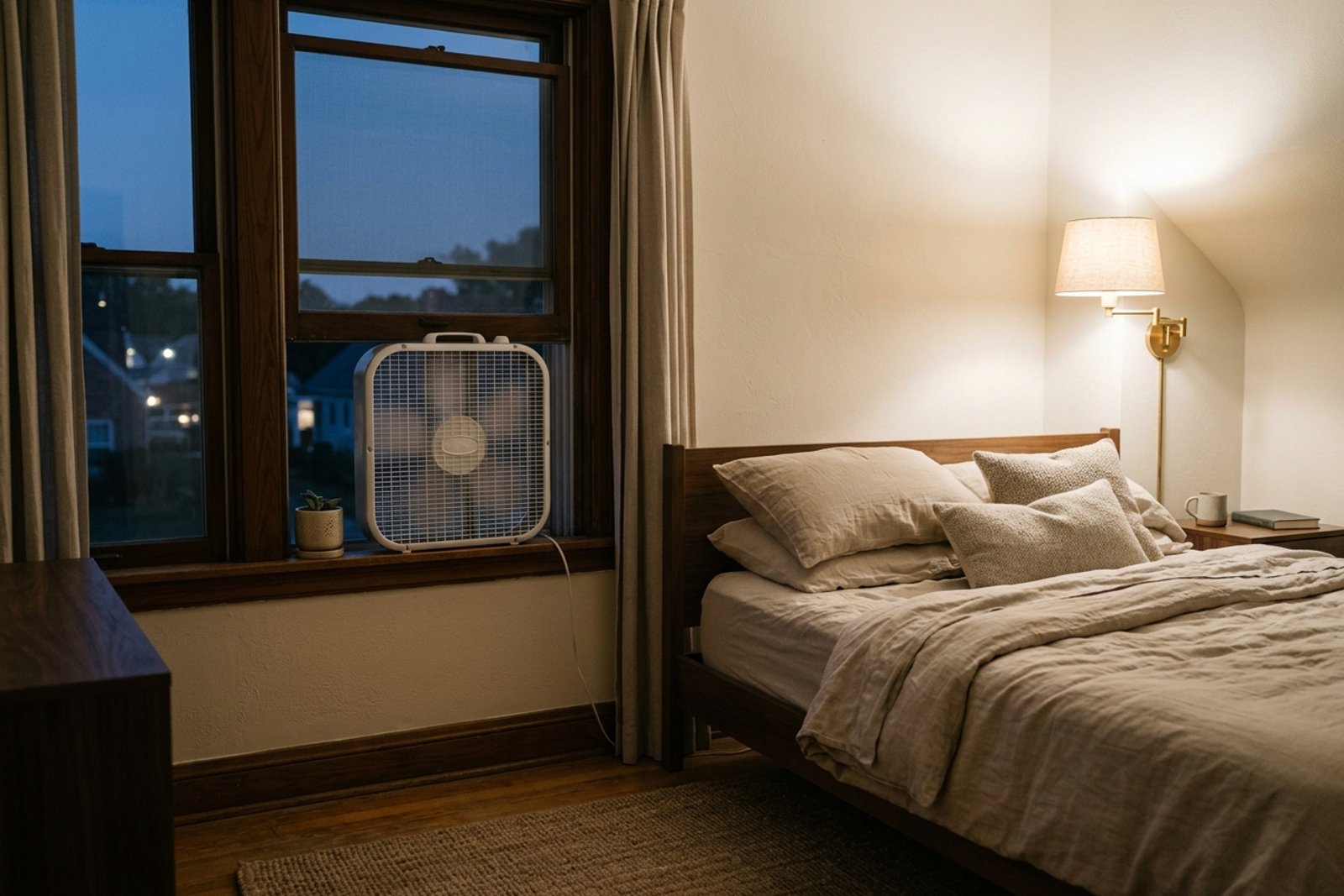
Put one fan where it can remove hot air, then use a second fan or the same fan later to cool your body. After sunset, place a box fan facing outward in the warmest window for 20 to 45 minutes. Crack a door or another window so cooler air can replace the stale bedroom air.
Once you get into bed, move airflow to the sleep zone. Aim the fan across your chest and shoulders from three to six feet away. Air moving across skin cools the body even when the room temperature changes only a little. A fan pointed at the wall or ceiling may stir the room, but it does less for sleep.
If you have only one window, do a shorter exhaust flush first, then switch to personal cooling. Our one window cooling guide covers the exact setup for rooms without cross ventilation.
What bedding keeps a bedroom cooler without AC?
Use bedding that releases heat and moisture quickly. Linen and percale cotton are the safest first swaps because they breathe, dry faster than microfiber, and feel less clingy when the room is warm. Put away foam heavy toppers, fleece blankets, sateen sheets, and thick comforters until the heat wave passes.
For a simple heat wave bed, try this stack:
- Fitted percale or linen sheet.
- One cotton or linen pillowcase per pillow.
- Lightweight cotton quilt or empty duvet cover.
- No decorative pillows on the bed at night.
- A small towel near the bed only if it stays dry.
The goal is not a perfectly styled bed. It is a surface that does not store the day's heat against your body at 2 a.m. If the mattress is memory foam, put a thin cotton or wool layer between your body and the foam before replacing the mattress.
How do you make a bedroom feel cooler before sleep?
Start the pre sleep routine two hours before bed. Stop adding heat and moisture: no hot shower with the bathroom door open, no laundry rack beside the bed, no oven heat drifting down the hall, and no laptop charging on the nightstand. Run bathroom and kitchen exhaust fans for 20 to 30 minutes after steam.
Then reset the sleep zone:
- Pull the covers back so the mattress can release heat.
- Put a cool cotton pillowcase on the pillow you use most.
- Place a glass of water where you can reach it without getting up.
- Dim lights early and use LED lamps instead of hot bulbs.
- Move pets, blankets, and extra pillows off the sleep surface if they trap heat.
If outdoor air has finally cooled, do the window fan flush before you get in bed. If outside air is still hotter or wetter, keep the room sealed and use direct airflow across the body.
What should renters avoid during a heat wave?
Renters should avoid changes that risk the lease, damage the window, or add heat while pretending to cool. Dark adhesive film, poorly vented portable AC units, candles, halogen lamps, indoor line drying, and open windows during peak heat can all make a bedroom harder to sleep in.
Be careful with heavy DIY insulation on old windows. Some films and blackout materials can trap heat against single pane glass. If the window already has cracks, warping, or a storm window, choose removable curtains and shade timing first. Take photos before adding removable film or tension rods.
Also avoid buying the loudest fan first. Noise can wake you even if the room feels cooler. A modest fan in the right position often beats a large fan in the wrong one, especially in a small bedroom where airflow only needs to reach the bed.
When is a portable AC worth it for one bedroom?
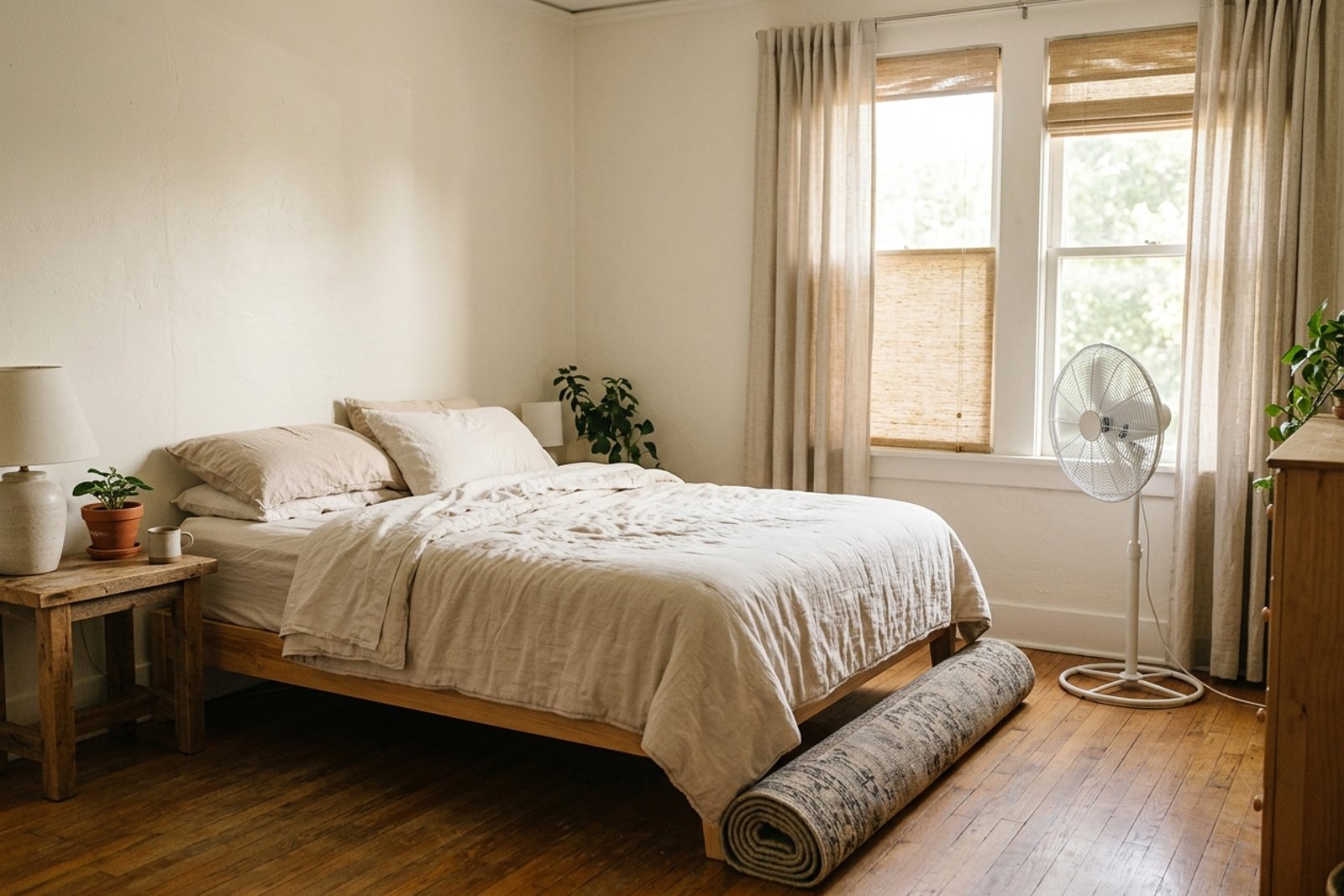
A portable AC is worth considering when the bedroom stays above the mid 80s at bedtime after you have sealed daytime heat, flushed after sunset, reduced humidity, and simplified bedding for several nights. In that case, cooling one bedroom may be the safest investment, especially for children, older adults, pets, or anyone with a health condition affected by heat.
Choose the smallest setup that solves the sleep problem. A dual hose portable unit is usually more efficient than a single hose unit because it does not pull as much cooled room air outside. Size it for the bedroom, not the whole home, and check whether the window kit fits before buying.
If you rent, photograph the window, save the manual, and avoid permanent screws unless the lease allows them. The smartest cooling plan is still staged: passive heat blocking first, airflow second, humidity control third, mechanical cooling only where the room still cannot recover.
A heat wave bedroom routine you can repeat
Use this daily rhythm until the temperature breaks:
- Morning: close windows and pale curtains before outdoor heat climbs.
- Midday: keep the bedroom sealed and electronics off.
- Late afternoon: keep sun off the glass, especially west windows.
- Dinner: stop adding steam, laundry moisture, and cooking heat.
- Sunset: compare outdoor and bedroom temperature.
- Evening: exhaust hot air if outside air is cooler.
- Bedtime: aim a fan across the upper body and use light bedding.
- Overnight: keep water nearby and do not reopen windows if outside air turns sticky.
A heat wave bedroom does not need to feel cold to be safer and easier to sleep in. It needs less stored heat, less moisture, and a clear plan for the hours when you are actually in the room.
Written by the Spatia Editorial Team. Spatia tests cooling advice through room layout, window orientation, textiles, and renter safe decisions before readers spend money on another appliance.
Plan a cooler bedroom before the next heat wave
Archie helps map your bedroom orientation, window timing, airflow path, bedding, and humidity pattern so you know which changes will actually cool the room before you buy more gear.
Plan my bedroom with ArchieRelated Articles

How to Cool a Bedroom Without AC for Sleep: 12 Moves for Summer 2026
A bedroom that sleeps cool in July is built in layers, not bought as one product. Twelve moves that stack light control, airflow, bedding, and room finish to hold bedroom temperature 6 to 10°F lower without running AC all night, starting under $250.

How to Cool a Humid Room Without AC
A humid room needs moisture control before more airflow. Use this renter safe sequence to exhaust damp air, dry textiles, place fans correctly, and make a bedroom or living room feel cooler without installing AC.

How to Cool a West Facing Room Without AC: A Renter's Afternoon Heat Guide
West facing rooms feel fine at breakfast and unbearable by dinner. Here is the renter-safe cooling sequence that blocks late-day sun, dumps stored heat after sunset, and makes a small apartment sleepable without installing AC.