Black House Paint Exterior: What to Know First
Black house paint on an exterior looks expensive and runs hot. See the real heat numbers, the colors that hold up, and the trim that makes it work.
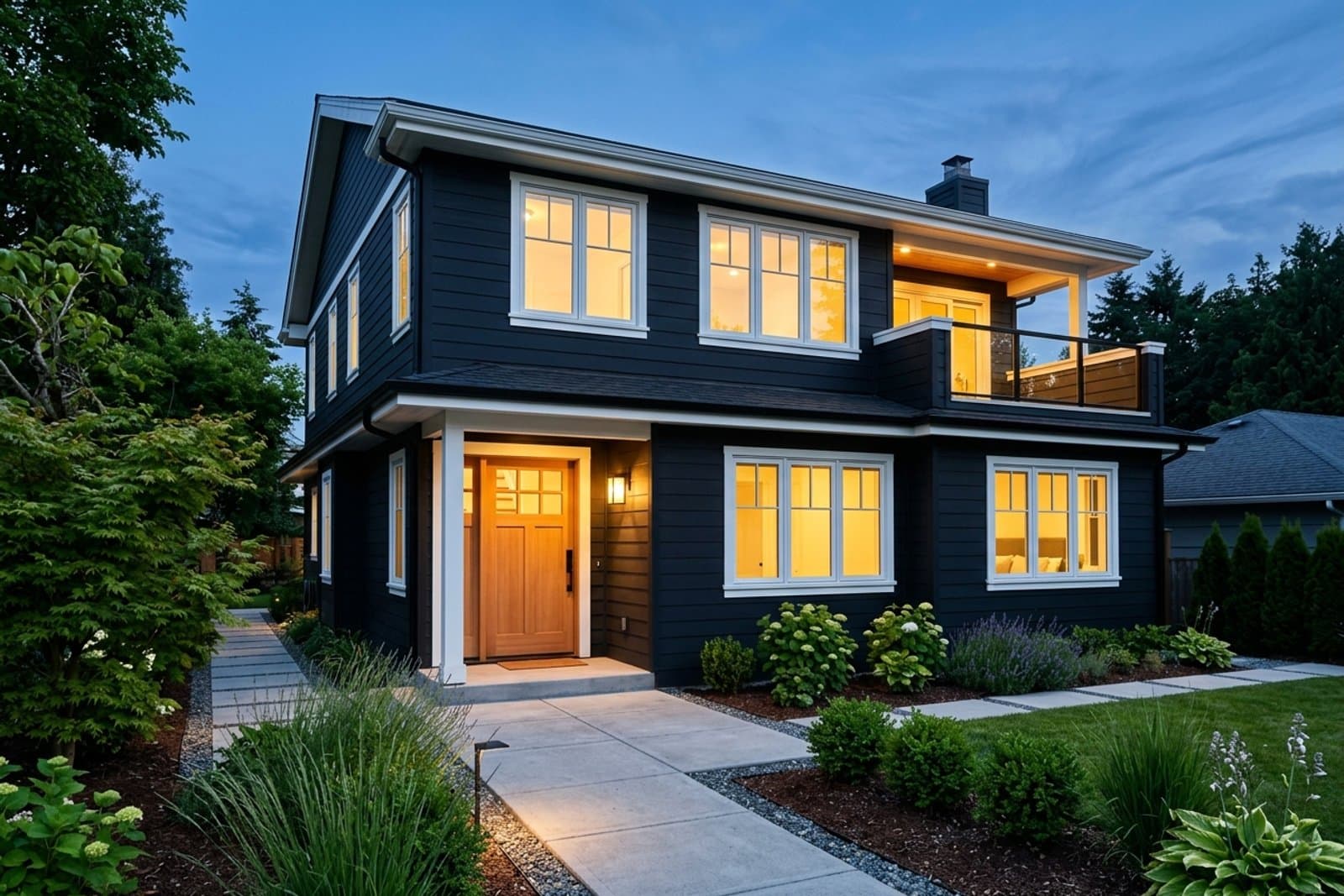
A black exterior is a good idea on the right house and an expensive mistake on the wrong one. It reads modern and hides siding seams better than any light color, but it runs hot: a 2025 study in the International Journal of Low-Carbon Technologies measured black coatings averaging 7.11°C, about 13°F, warmer at the surface than white. Decide on the material and the sun exposure first, then the shade.
This guide is for homeowners deciding whether to commit to a dark body color. For the full 2026 palette it sits inside, see our exterior color roundup, and for the selection process itself, our six step guide to choosing an exterior color.
As of late August 2026, Google Trends showed two related searches climbing together over the prior year in the U.S., "black house paint" up about 50 percent and "outdoor house paint" up about 80 percent. Two terms rising in parallel is a better signal than one spiking on its own. It means people are not just browsing the look, they are pricing the job.
Is It a Good Idea to Paint Your House Black?
It depends on your siding material and which walls take afternoon sun. Black is genuinely excellent at hiding lap seams, patched repairs, and uneven texture, which is why it flatters older houses with imperfect siding. The cost is heat and maintenance, and both are measurable.
On the heat question, the 2025 International Journal of Low-Carbon Technologies study tested 36 standard colors and found the titanium white coating averaged 7.11°C cooler at the surface than the black one. That is a surface temperature gap, not an indoor one, so a well insulated wall absorbs most of it. Where it matters is the material itself. On vinyl siding, absorbed heat can warp the panel, which is a structural problem rather than a cosmetic one. If your siding is vinyl, read the vinyl rated coating section in the exterior roundup before you go any darker than the original panel color.

What Is the Best Black Paint for Exterior Use?
Pick the product line before the shade. Exterior black depends on the resin, not the pigment, because dark colors absorb the most solar energy and fade fastest. Benjamin Moore sells Black Panther 2125-10 in both Element Guard Exterior and Regal Select Exterior, and Sherwin-Williams carries Tricorn Black SW 6258 across its exterior lines.
Then choose how black you actually want. Tricorn Black has a light reflectance value of 2.849 on a scale where 0 is absolute black and 100 is pure white, which means it is close to true black with essentially no undertone to shift on you. That neutrality is the appeal and also the risk, since a true black gives the eye nothing to hold at scale.
The softer route is a near black with a visible undertone: Iron Ore leans charcoal, Urbane Bronze leans warm brown. Both read black from the street and reveal their undertone up close, which is generally more forgiving on a house with brick, stone, or a warm roof already in play. If you want depth without going dark at all, a muted green like Evergreen Fog covers similar ground.
What Color Makes a House Look Expensive?
Not one color, a disciplined pair. Houses read expensive when the body and trim sit far apart in value and everything else stays quiet. Black is unusually good at this because it sets the widest possible contrast against white or cream trim, so the windows and rooflines snap into focus.
The failure mode is spending the contrast in too many places. A black body, white trim, a red door, and a copper porch light is four ideas competing. Pick one accent and repeat it. The reason black exteriors photograph so well is that they force this discipline: once the body is that dark, every other color has to earn its place.
Sheen matters here more than people expect. A flat or low lustre black reads deep and architectural, while a satin or gloss black on a large wall shows every ripple in the siding and every roller mark. Save the higher sheen for the door and the shutters, where the reflection is a feature rather than a flaw.
Which Home Styles Suit a Dark Exterior?
Three types take it easily: modern and contemporary homes with simple massing, modern farmhouses where black is already the trim language, and traditional or colonial homes with strong white trim and symmetrical windows. The common thread is clear architectural lines for the black to outline.
Modern homes get the most out of it, since flat planes and large glazing turn a dark body into a frame rather than a mass. Modern farmhouses were where the trend started, and the look has held up because the black is doing a structural job, separating the siding from the standing seam roof.
The colonial case surprises people. On a symmetrical facade with substantial white trim, a near black body reads historical rather than trendy, because dark painted clapboard has a long precedent in the northeast. Where dark exteriors struggle is on busy facades: multiple gables, mixed materials, and heavy ornament all get heavier when you darken them.

What Trim Color Goes With a Black House?
White for contrast, black on black for drama, and wood for warmth. The trim decision changes the whole read of the house more than the exact black you picked, so choose it first and sample the pair together rather than judging the body color alone.
| Element | Safe classic | Modern and dramatic |
|---|---|---|
| Trim | Crisp or warm white | Same black as the body, so windows read as voids |
| Front door | Natural or stained wood | A saturated accent, one color only |
| Gutters and downspouts | Match the trim | Match the body so they disappear |
| Hardware and lighting | Matte black | Aged brass against the black body |
Two practical notes. Gutters are the detail people forget, and painting them the body color rather than the trim color is the cheapest way to make a dark house look intentional. And on the door, natural wood does more for a black house than any paint color will, because it is the only warm material most black exteriors have.
Photograph the house in winter before you commit
A dark building depends on its surroundings in a way a light one never does. A black wall is close to a void, so whatever stands in front of it, a maple, a hedge, a bare winter branch, becomes the actual facade. When I judge a dark exterior, I look at the landscaping before the paint: green reads twice as saturated against near black, and a house with no planting reads twice as bare. Before you commit, photograph your house in winter, when the trees are empty and the sky is gray, because that is the season a black exterior has nothing to lean on. If the winter picture still holds, the color will work year round.
Frequently Asked Questions
Does black exterior paint fade faster than light colors?
Yes. Darker pigments absorb more solar energy, which accelerates both fading and chalking, and the effect concentrates on south and west facing walls that take the most direct sun. The answer is in the product line you buy: exterior formulations built for fade resistance, and an expectation of repainting a dark house sooner than a light one.
Is black house paint too hot in summer?
The surface gets measurably hotter, though the indoor effect depends on your wall assembly. A 2025 study in the International Journal of Low-Carbon Technologies tested 36 colors and found black coatings averaged 7.11°C, roughly 13°F, warmer at the surface than titanium white. On a well insulated wall most of that stays outside. On vinyl siding it becomes a warping risk instead.
What is the most popular black exterior paint color?
Tricorn Black SW 6258 from Sherwin-Williams and Black Panther 2125-10 from Benjamin Moore are the two most commonly specified true blacks, both sold in exterior formulations. Many houses that read black from the street are actually near blacks like Iron Ore or Urbane Bronze, which carry a charcoal or warm brown undertone and are more forgiving next to brick and stone.
Can I paint vinyl siding black?
Only with a vinyl rated coating, and only within the limited darker range those systems allow. Vinyl expands as it absorbs heat, and a panel painted darker than its original color can buckle or pull away from its fasteners. That is a material limit, so confirm your siding before you shortlist any dark color.
The Takeaway
Black exteriors work when the architecture has clean lines, the siding is not vinyl, and the trim decision was made alongside the body color rather than after it. The trend is real and the search interest is climbing, but the thing that separates a black house that looks expensive from one that looks heavy is restraint everywhere else. Sample two blacks and one near black on the actual wall, look at them at three in the afternoon on the sunniest side, and pick the one that still has depth rather than the one that just looks dark.
The Noticer
For thoughtful people who notice spaces.
What did you notice?
Did something in this story make you see your own space differently?
See black on your actual house before you buy it
A black exterior lives or dies on what it sits next to. Send Archie a photo of your house and Archie reads the fixed elements, the roof, the brick, the stone, the landscaping, then shows how a near black body color would sit against them before you commit to a single gallon.
Test a dark exterior with ArchieAdvertisement. Archie is made by STUDIO DID IT, the studio that publishes Spatia.
Related Articles
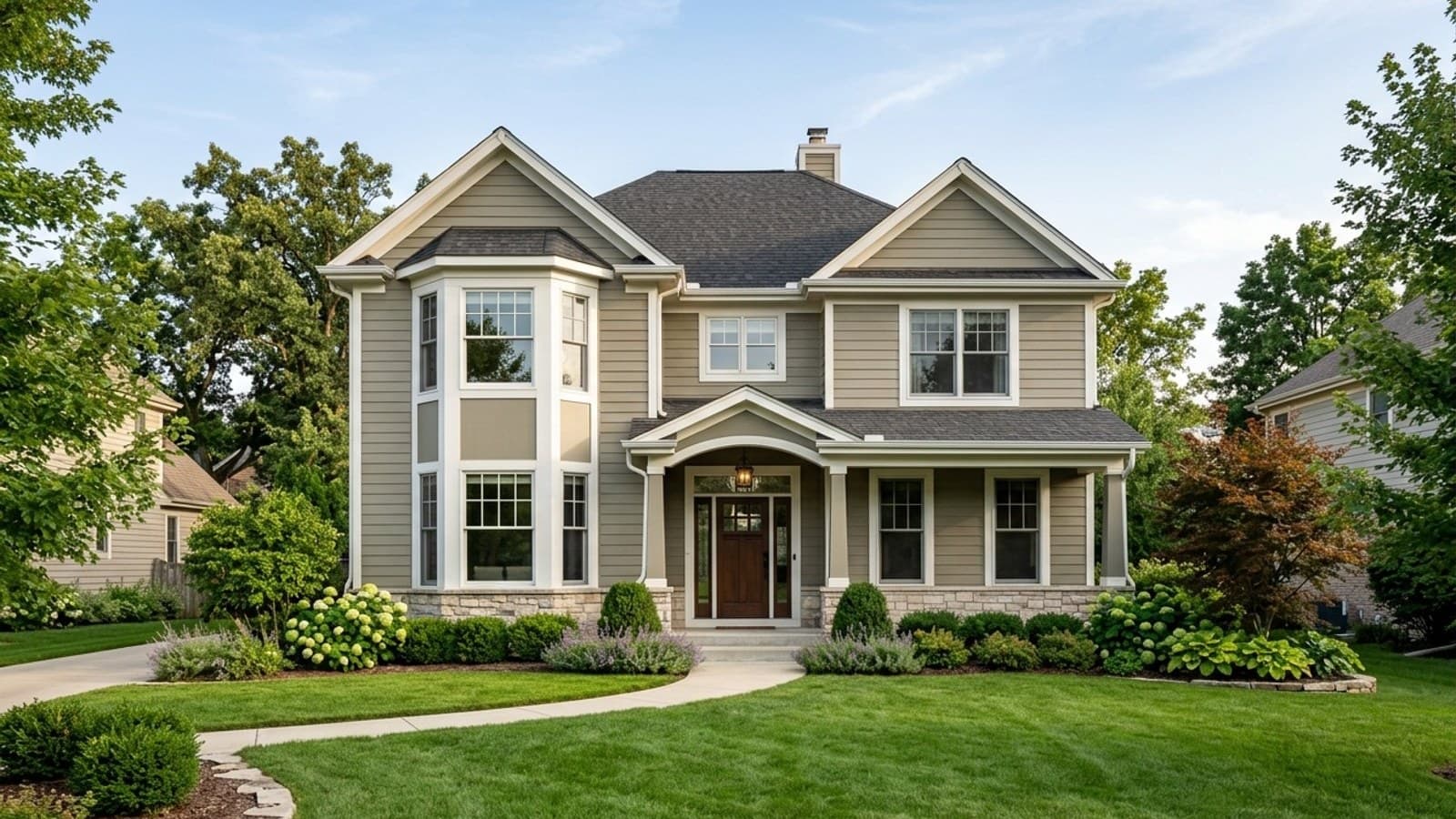
Exterior House Paint Colors 2026 (What Replaced Gray)
The exterior house paint colors homeowners are choosing in 2026, from the three Colors of the Year to what Zillow found actually raises an offer price.
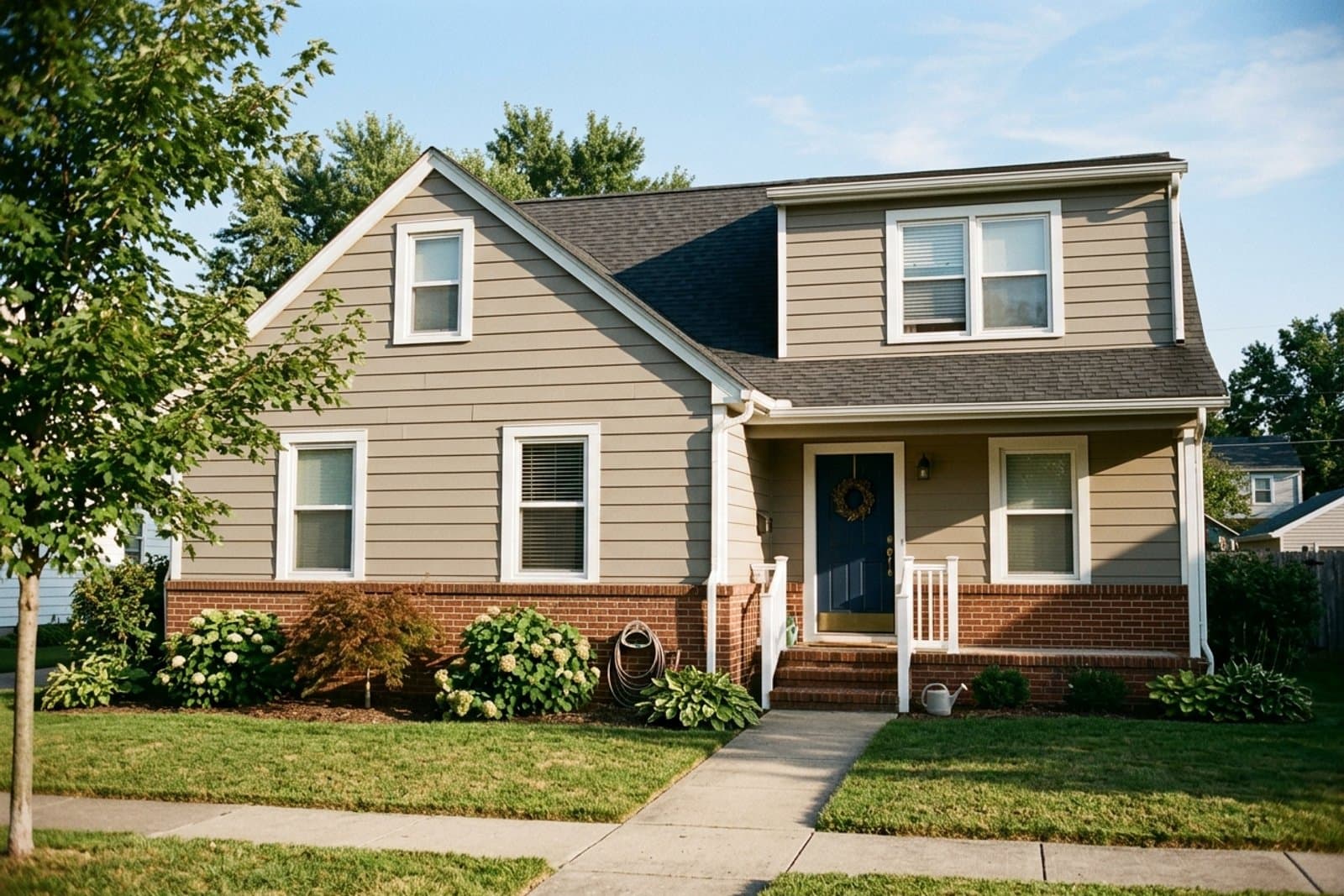
How to Choose an Exterior Paint Color (6 Steps)
A step by step system for choosing an exterior paint color you will not regret, from reading your roof and brick to testing full size swatches in real light.
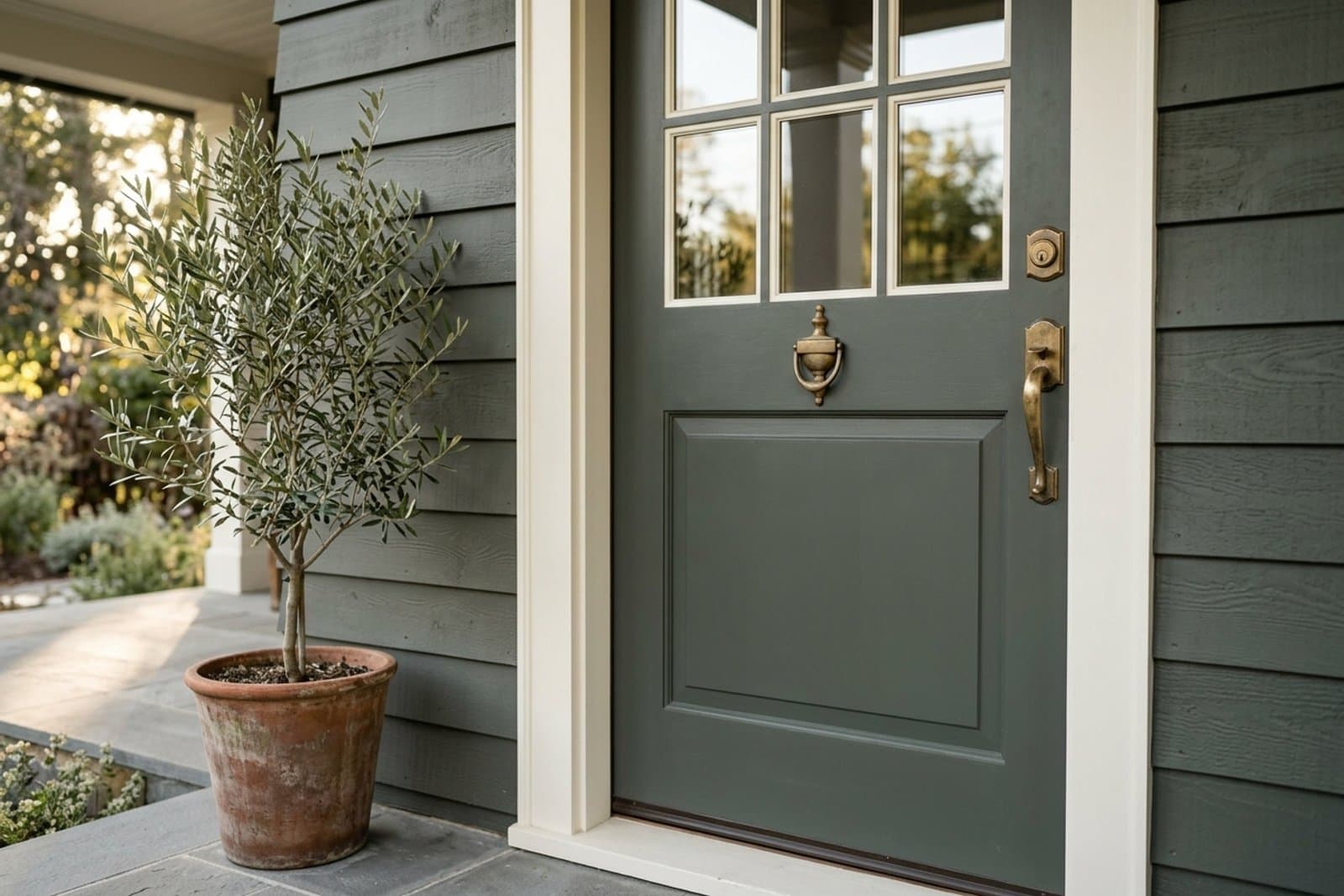
Evergreen Fog (Sherwin-Williams): Still Trending in 2026?
Why Sherwin-Williams Evergreen Fog is spiking in search again. See its real undertones, what it pairs with, and where the green-gray works best.