How to Find Your Interior Design Style (When Pinterest Isn't Helping)
You don't have a style problem. You have a clarity problem. Why endless Pinterest saving keeps you stuck, and three steps to find a direction that fits how you live.

You don't have a style problem
You open Pinterest. You scroll. You save everything. Minimal. Modern. Cozy. Luxury. Then you try to decorate your own home, and nothing feels right.
If that sounds familiar, the issue probably isn't taste. It's clarity. Most people who feel stuck decorating already have enough inspiration. What they're missing is a direction.
Why saving Pinterest ideas isn't helping
Pinterest is inspiring. It's also overwhelming. Every scroll shows you a different style, a different layout, a different lifestyle, all at once. Instead of helping you decide, it makes everything feel possible.
Possibility without filter becomes paralysis. You save more, you change direction more often, and the gap between your saved board and your actual home keeps growing.
Why this happens
Most people assume the answer is better ideas. It's usually something else. You haven't named your own design style yet.
That's why the cycle repeats. You keep saving. You keep replacing things. You never feel settled, because every new save resets the question you haven't answered.
Three signs you haven't found your style
1. You like everything
If every interior looks good to you, you don't have a filter. A style isn't a list of things you tolerate. It's a short list of things you reach for again and again.
2. Your space feels inconsistent
Mixing styles without direction reads as visual confusion. A boucle chair, a vintage cabinet, a modern lamp, and a floral rug can all be beautiful objects. In the same room, with no thread connecting them, they pull against each other.
3. You keep replacing things
New furniture, new decor, same feeling. When the underlying direction is unclear, no single object can fix it. You end up rotating pieces and waiting for the room to feel right on its own.
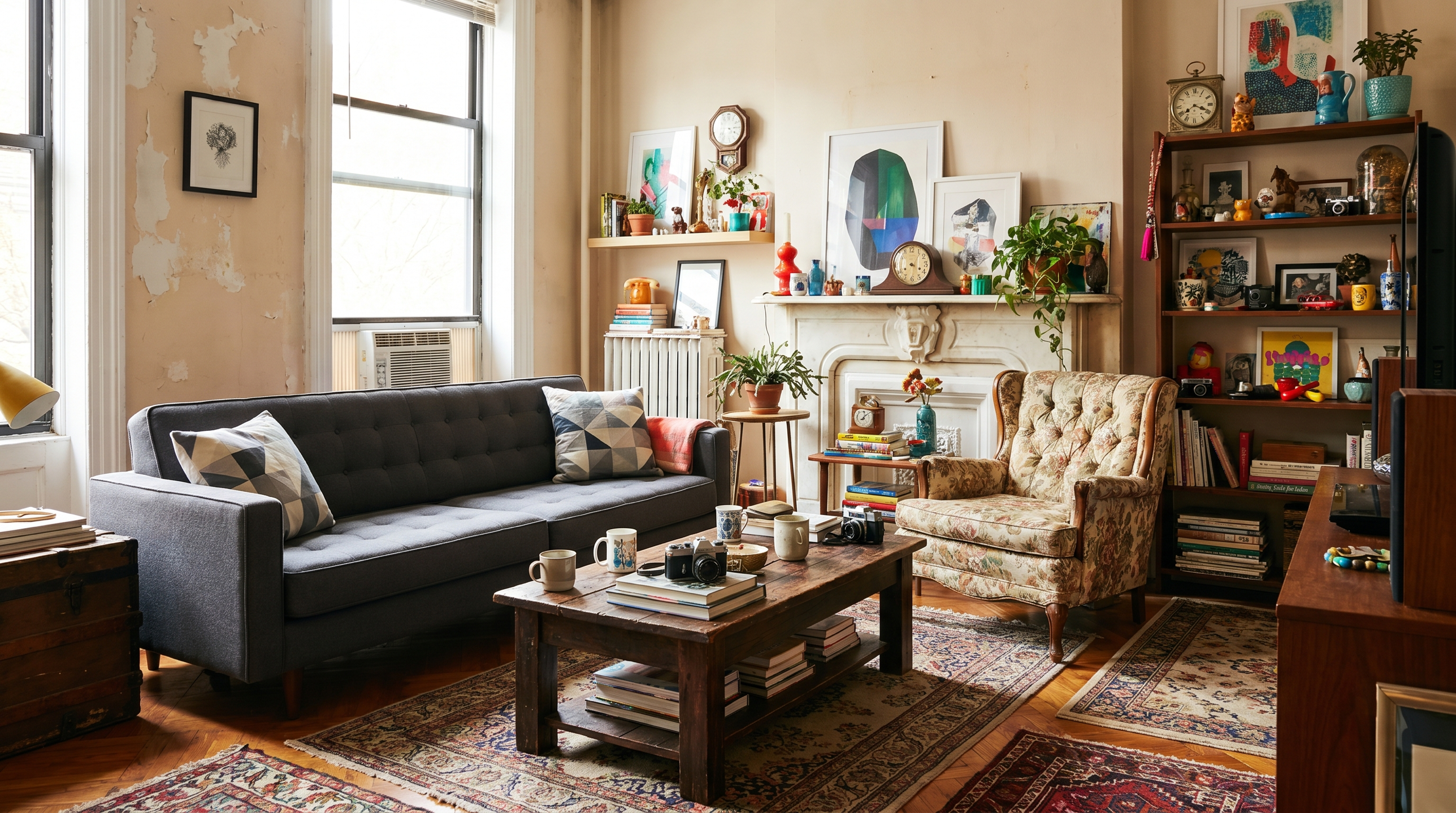
How to find your style
The shift is in the question you ask.
Stop asking, "What looks good?" Start asking, "What feels right for me?" Those are different questions and they lead to different homes.
Step 1. Understand how you live
Before style comes behavior. A few honest prompts:
- Where do I spend most of my time at home?
- What part of my current space feels uncomfortable?
- What do I really use every day, and what just sits there?
Your daily life is the floor plan your style is built on. A reading habit asks for one chair. A morning coffee ritual asks for a different one.
Step 2. Remove before you add
More inspiration doesn't produce better decisions. It usually produces more confusion.
Reduce before you expand:
- Unfollow accounts that don't reflect how you live.
- Delete saved images that no longer pull you in.
- Look only at what repeats across the ones you keep.
Clarity comes from reduction, not addition. The patterns that survive a cull are your real preferences.
Step 3. Choose one direction
You don't need five styles. You need one clear base. Examples that work as a starting point:
- Warm minimal
- Soft modern
- Cozy neutral
Everything else builds on that. Once the base is set, choosing a sofa, a paint color, or a rug stops being a fresh debate every time.
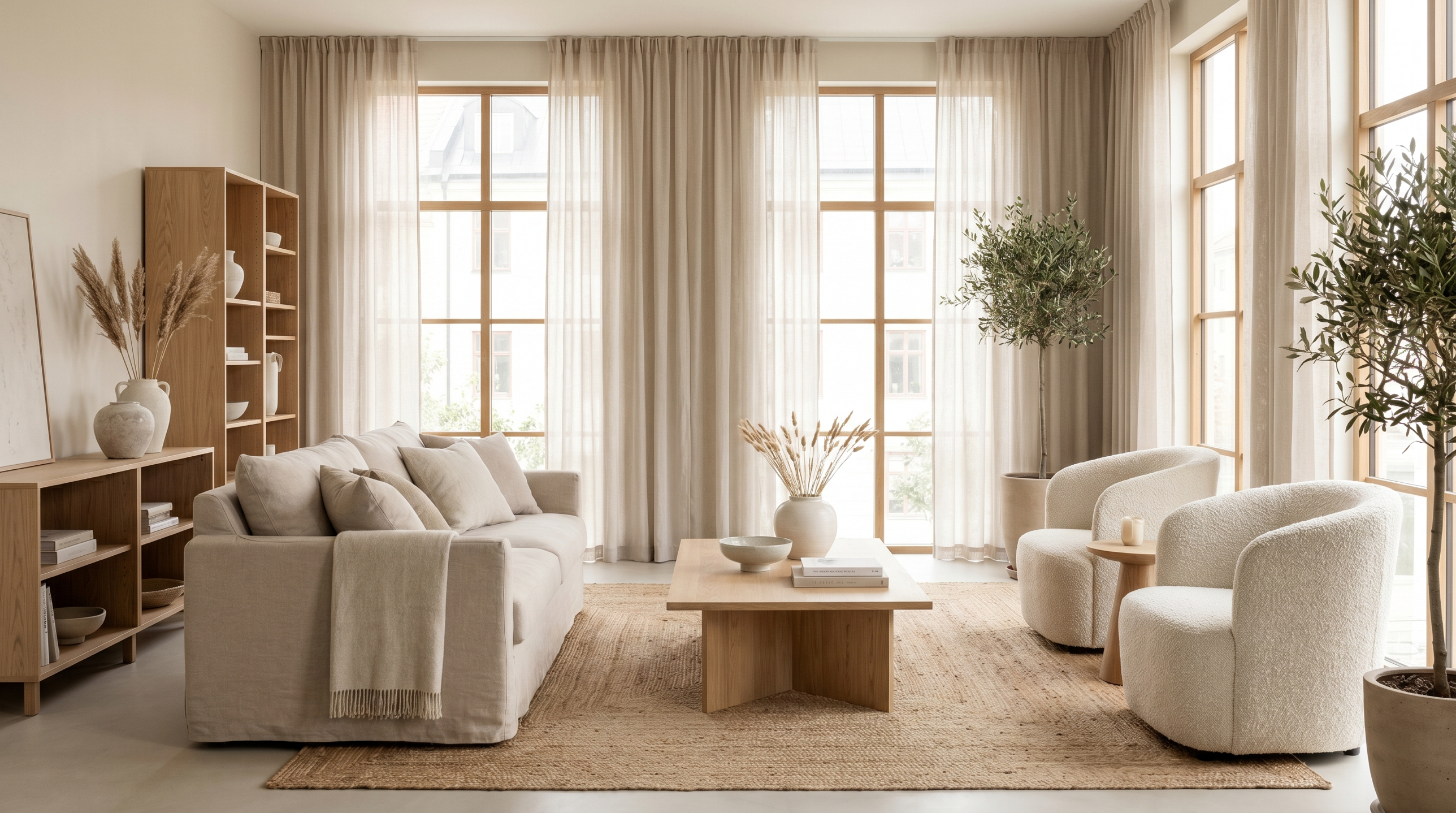
What good design looks like
The best homes are not the most expensive, the most trendy, or the most decorated. They're the most aligned with the person living in them. Walk into a room that feels settled and you can usually sense it before you can describe it.
That alignment is what every saved Pinterest image is gesturing at and rarely names directly.
Direction over ideas
If your home doesn't feel right, it's usually not because you lack ideas. It's because you lack direction.
Once direction is set, the rest gets easier. Choosing furniture takes minutes instead of weeks. Decorating becomes additive rather than corrective. The room starts to feel like you, not like a board.
Before you change your space, it helps to understand what kind of environment fits the way you live.
Frequently asked questions
How do I know if I've found my interior design style?
You stop overthinking small decisions. A new lamp, cushion, or paint chip either fits the direction you've chosen or it doesn't, and the answer comes quickly. If every purchase still feels like starting over, the direction isn't set yet.
Is Pinterest bad for finding your style?
Pinterest is fine as a tool, hard as a strategy. Use it to collect, then cull aggressively. The signal lives in what repeats across your saves once you remove the outliers.
What if I genuinely like multiple styles?
That's normal. Pick one as the base and let the others appear as accents. A warm minimal room can hold one vintage piece without becoming an eclectic room. The base sets the rules; the accents reward attention.
How long does it take to settle into a style?
Usually a season of small changes, not a single weekend overhaul. Most people find clarity faster by editing what they already own than by buying anything new.
Not sure what your style is yet?
Archie, our AI design assistant, helps you find your style in a few minutes.
Find Your Style with ArchieRelated Articles

11 Small Studio Apartment Ideas for 2026 (400 Sq Ft Formula)
The 2026 small studio playbook is no longer white walls and a giant mirror. It is warm earth tones, three zones split by rugs and light, and one classic shape per area. Here is the full 11 step formula for a 400 sq ft renter.

Living Alone Interior Design: How Solo Living Is Redefining Modern Spaces (2026 Guide)
Living alone is no longer a temporary phase. It is becoming a dominant lifestyle, and interior design is shifting with it. Homes are no longer built for families. They are built for one.

Quiet Luxury Interior Design: What It Really Means in 2026
Luxury used to announce itself with marble and chandeliers. Quiet luxury moves in the opposite direction. Here is what has changed, and how to bring it into your own home.