Decluttering After Retirement: Minimalist Living Tips for Your 50s (Complete Guide 2026)
Retirement isn't only a financial transition. It's a spatial one. These 6 minimalist living tips help you reclaim space, reduce clutter, and design a home that supports daily life in your 50s and beyond.

Retirement is not just a financial transition.
It's a spatial one.
Suddenly, you spend more time at home, and you start noticing things:
- Too much stuff
- Spaces that feel heavy
- Rooms that no longer serve you
From a design perspective, this is one of the most important shifts in life. Because your environment now directly affects your daily experience.
This is where minimalism becomes more than a trend. It becomes a necessity.
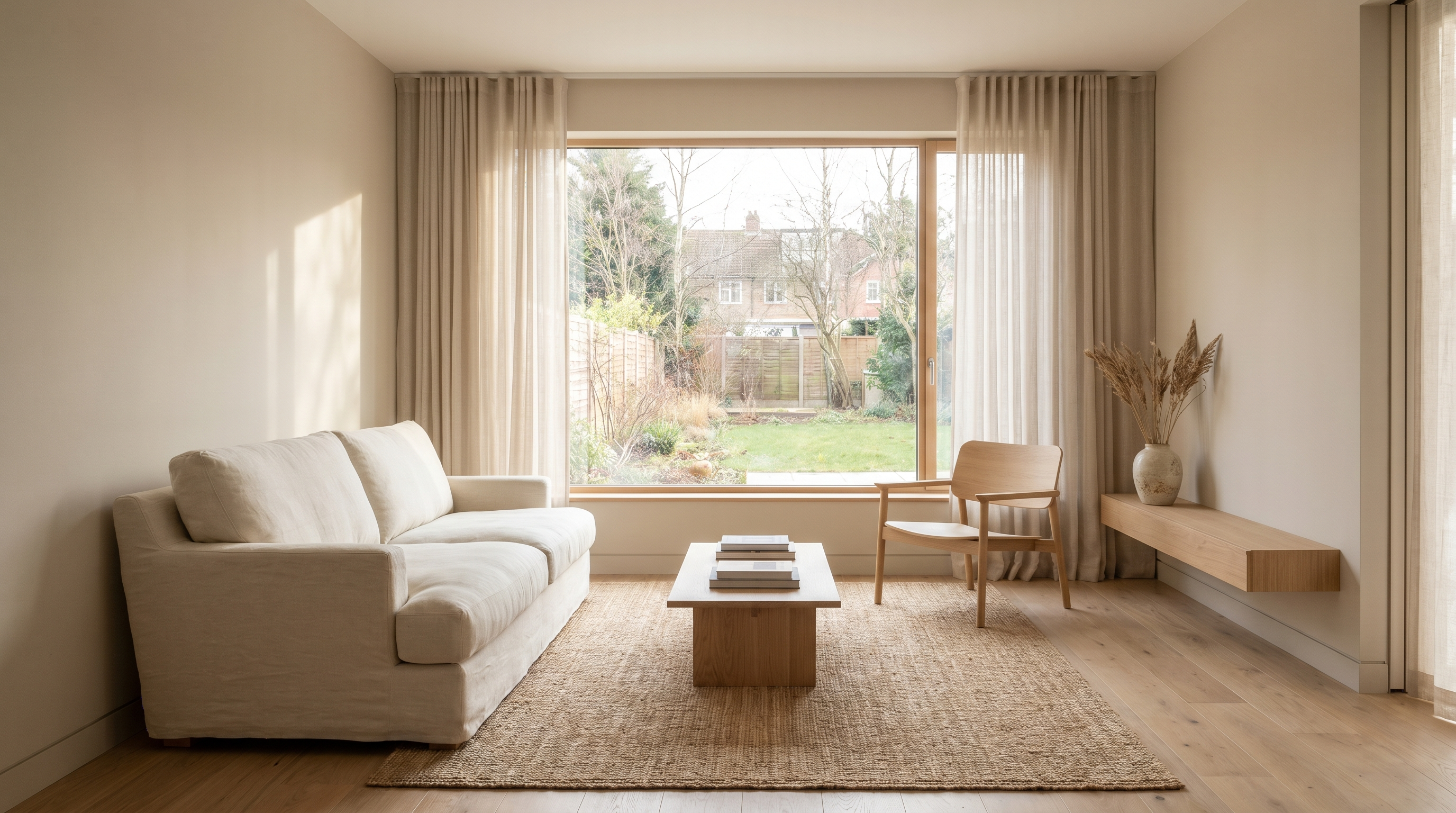
1. Start With What You Use Daily
Minimalism is not about removing everything.
It's about keeping what matters.
Focus on:
- Items you use daily
- Frequently used spaces
Look at your kitchen, your closet, and your bookshelf. The objects you actually touch each week are a small fraction of what you own. Everything else is a candidate for removal. The fastest way to feel relief in your home is to stop curating possessions you no longer touch.
2. Reduce Storage, Not Increase It
Many people declutter by adding more storage.
This is a mistake.
Storage hides clutter. It doesn't remove it.
Instead:
- Remove unnecessary items
- Keep visible space open
A home with less storage and fewer things almost always feels lighter than a home stuffed with cabinets, bins, and baskets.
Design insight: Adding storage is the most common decluttering trap. The calmest homes I've worked on have less storage, not more.
3. Simplify Furniture Layout
As movement becomes more important:
- Clear pathways
- Reduce obstacles
- Keep layouts intuitive
Furniture should support how you actually move through the space, not how the room looked five or ten years ago. A simple layout reduces friction in daily life.
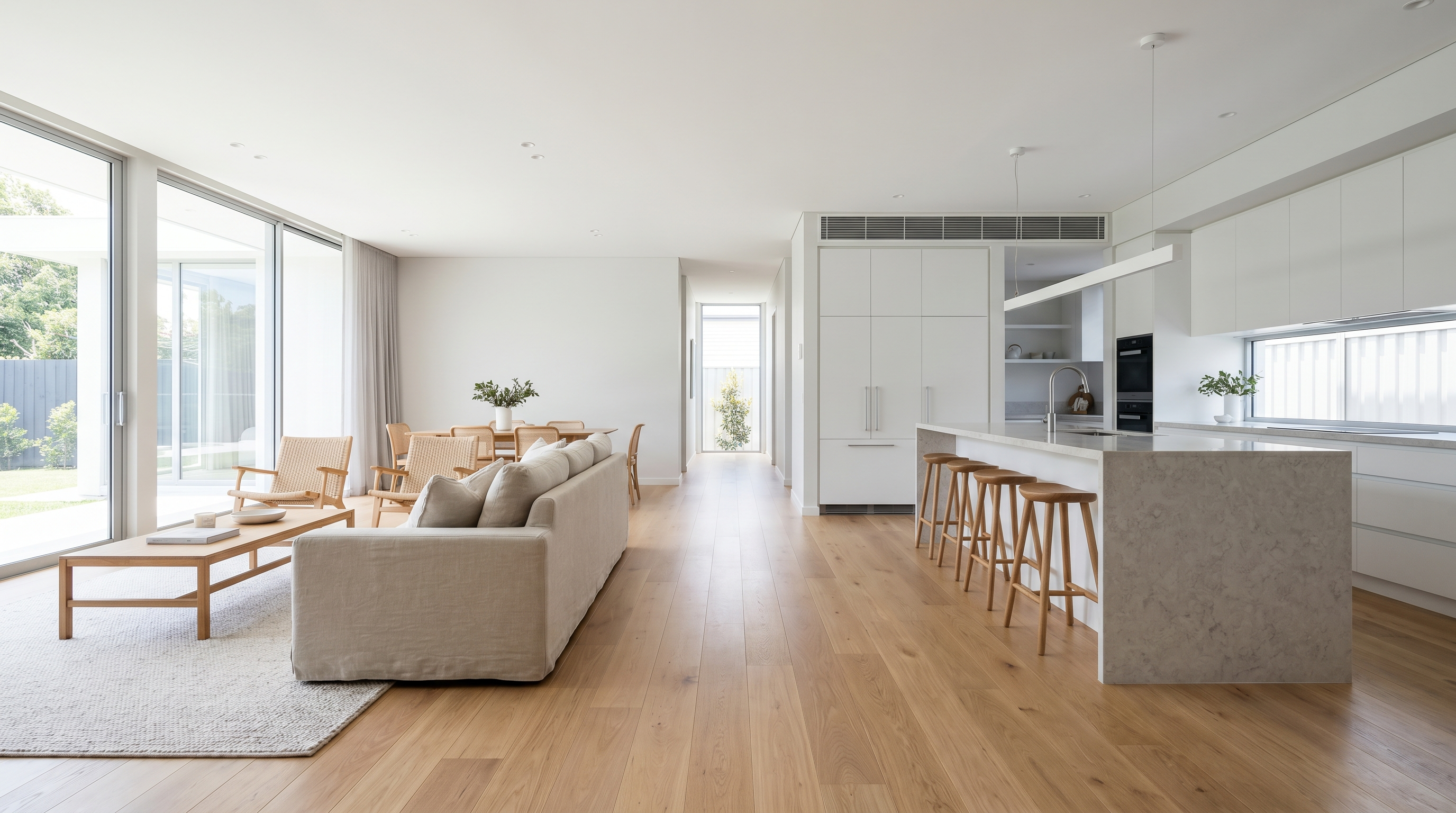
4. Choose Fewer, Better Materials
Instead of many cheap items:
- Invest in fewer, better made pieces
- Use natural textures
This creates calm and longevity. Natural wood, linen, cotton, and stone age gracefully and feel grounding underfoot, on the eyes, and to the touch.
A few practical swaps:
- Solid wood over particleboard
- Linen or cotton over synthetic blends
- Ceramic or stone over plastic
A single object made well will outlast and outperform several disposable ones, and it tends to look better as it ages instead of worse.
5. Let Go of "Just in Case" Items
Letting go of "just in case" items is one of the biggest emotional barriers to decluttering. The duplicate appliance. The cables for a device you no longer own. The clothes from a smaller size you might fit into again.
But in reality:
- Most of these items are never used
- Removing them creates immediate relief
If something has been sitting unused for a year or more, the chances you'll need it later are far smaller than the daily cost of storing it.
6. Redesign the Purpose of Your Home
After retirement, your home is no longer a "support space."
It becomes your primary environment.
Design it for:
- Comfort
- Ease
- Emotional stability
This is a quiet but powerful shift. Your home stops being where life happens around, and starts being where life happens fully.
Frequently Asked Questions
Where should I start decluttering after retirement?
Start with what you actually use daily, not with sentimental items or storage rooms. Spend a week noticing which objects you touch and which you don't. The unused items become obvious candidates for removal, and the early wins build the momentum to tackle harder areas later.
Is it really bad to add more storage when decluttering?
In most cases, yes. Storage hides clutter rather than removing it. New cabinets and bins give you permission to keep things you don't need, which is the opposite of decluttering. The goal is to reduce the volume of belongings, not to organize a larger volume more efficiently.
How do I let go of sentimental items?
Photograph them first. The memory lives in your relationship with the object, not in the object itself. For things you're truly torn on, set a 30-day box: items go in, the box gets sealed, and if you don't reach for anything inside within a month, it leaves the house unopened.
What's the difference between minimalism and just owning less?
Minimalism is intentional. Owning less is the byproduct. The goal is not to hit a low number of possessions, it's to make sure every item in your home earns its place. After 50, the difference matters: a minimalist home supports the way you actually live now, not the way you lived 20 years ago.
Final Thought
Minimalism after 50 is not about aesthetics.
It's about reclaiming space, both physically and mentally.
The homes I see age most gracefully are rarely the ones with the most beautiful objects. They are the ones with the fewest unnecessary ones, and the most room left for the person actually living there.
Want to try this in your own space?
Upload a photo of your room and let Archie, our AI design assistant, show you personalized recommendations.
Try Archie FreeRelated Articles

Senior Interior Design Ideas: 50s and 60s Comfortable Home Design, 7 Tips (Aging in Place Guide 2026)
Designing a home for your 50s and 60s isn't about trends. It's about alignment. These 7 interior design tips, backed by experts, help you create a space that feels calm, supportive, and deeply comfortable as you age in place.

Home Repair Grants for Seniors: Free Renovation Help in the U.S. (2026 Guide)
Real U.S. programs that help seniors fix their homes for free or at a reduced cost. Where to look, what's covered, and how to make the help count.

Scandinavian Interior Design: Why It Still Dominates Modern Homes
Scandinavian design has stayed relevant for decades, not because it is fashionable, but because it solves real problems in how people live.